
一项针对伦敦现场音乐产业种族不平等现象的两年期调查显示,与白人音乐活动相比,黑人和南亚裔音乐活动面临着不成比例的取消、限制和许可障碍。
face disproportionate cancellations, restrictions and licensing barriers compared with white events, according to a two-year investigation into racial inequality in the capital's live music industry.
由“黑人的命也是命:音乐”(Black Lives in Music)组织牵头的《音乐活动许可中的种族平等》(REMEL)报告估计,活动被取消、被迫转移以及无法举办,每年给伦敦造成1.27亿至1.41亿英镑的损失,预计五年内的损失将超过6.5亿英镑。
Race Equality in Music Event Licensing (REMEL) report, led by Black Lives in Music, estimates that cancellations, displacement and events prevented from taking place cost London £127m to £141m annually, with projected losses exceeding £650m over five years.
报告发现,尽管缺乏可靠证据,但非洲节拍(Afrobeats)、钻头音乐(drill)和舞厅音乐(dancehall)等流派经常被贴上“高风险”标签,而独立音乐、流行音乐和摇滚乐活动受到的审查则相对较少。
The report found that genres including Afrobeats, drill and dancehall are routinely labelled "high risk" despite a lack of credible evidence, while indie, pop and rock events face comparatively little scrutiny.
其他面临严格限制的活动还包括针对年长受众的雷鬼音乐聚会、爵士乐之夜和社区活动。
Other events facing stringent restrictions included reggae gatherings aimed at older audiences, jazz nights and community events.
这项研究对使用未经核实的警方情报表示担忧,推广商们描述称,活动往往是基于未公开的信息、网络搜索或无关事件而被取消的。
The research raised concerns over the use of unverified police intelligence, with promoters describing events being cancelled based on undisclosed information, online searches or unrelated incidents.
“黑人的命也是命:音乐”组织首席执行官查里斯·博蒙特(Charisse Beaumont)表示,尽管调查聚焦于伦敦,但所揭露的问题在全国范围内都存在。
Charisse Beaumont, chief executive of Black Lives in Music, said that although the investigation focused on London, the problems it uncovered exist nationwide.
她说:“我们一发布报告和调查征集,人们就感到很沮丧,因为他们身处伦敦之外而无法参与调查。”
"As soon as we put the report out there, the call for our survey, people were upset that they couldn't complete the survey because they were outside of London," she said.
对博蒙特而言,歧视的范围远不止于特定的音乐流派。“这是关于种族的问题。这才是最令人深感悲哀的地方。”这项为期两年的研究由市长办公室委托进行,并得到了大伦敦政府(GLA)、伦敦警察厅、英国音乐协会(UK Music)、LIVE组织、音乐家工会以及众多推广商、艺术家、场馆经营者和社区代表的协作。
For Beaumont, the discrimination extended far beyond specific music genres. "It's about race. And that's what's so deeply sad about it." The two-year study was commissioned by the mayor's office and included collaboration by the Greater London Authority (GLA), the Metropolitan Police Service, UK Music, LIVE, the Musicians' Union and a wide network of promoters, artists, venue operators and community representatives.
调查结果表明,伦敦警察厅备受争议的“696表格”(Form 696)的影响依然存在。该表格于2005年作为风险评估工具引入,后因被指歧视黑人音乐活动而于2017年被废除。
The findings suggest that the legacy of the Metropolitan police's controversial Form 696 persists. Introduced in 2005 as a risk assessment tool, it was scrapped in 2017 after criticism that it discriminated against black music events.
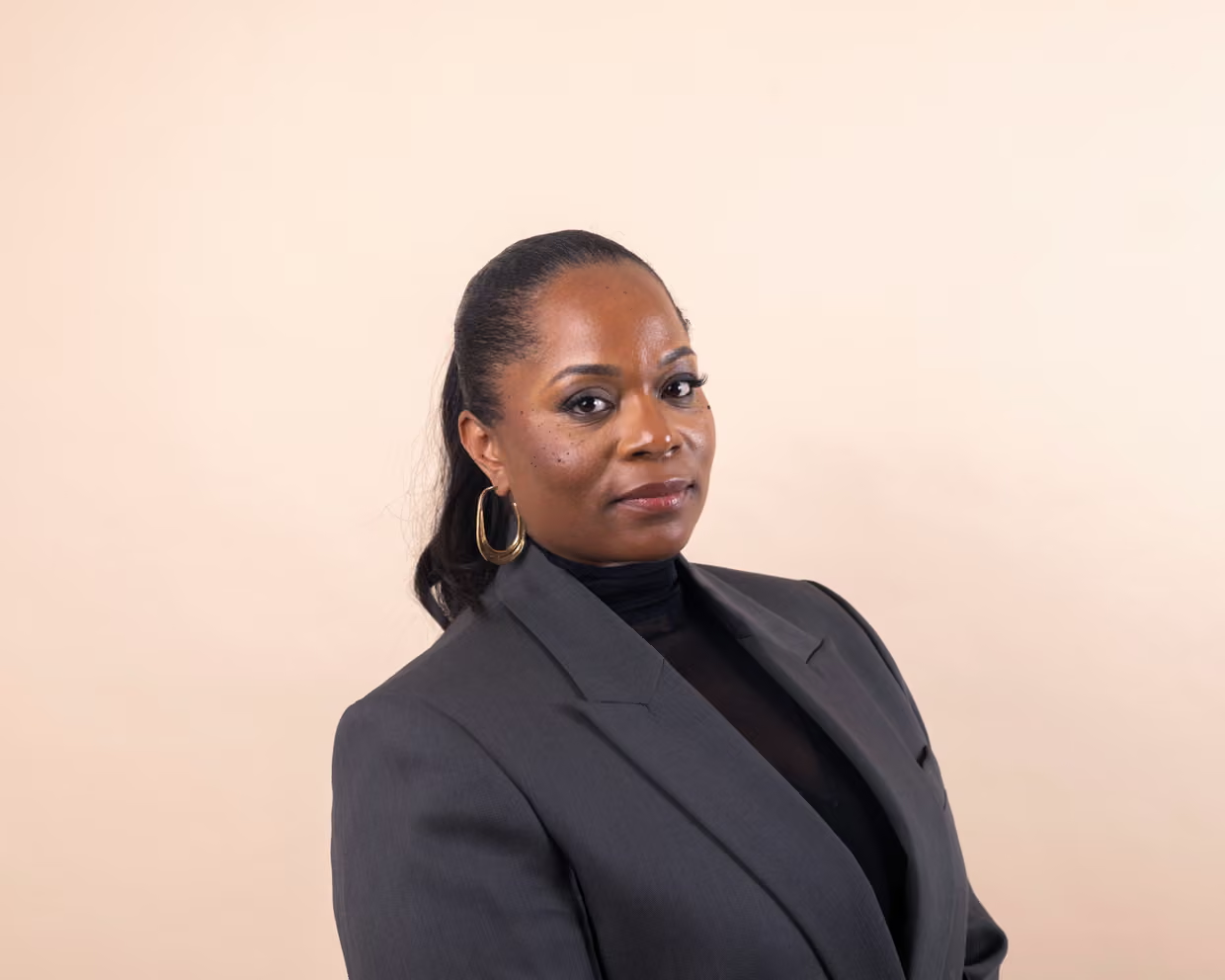
该报告的首席研究员哈基姆·史蒂文斯(Hakeem Stevens)表示,警方的审查已变得更难记录。“过去发送电子邮件和传真时,我们有书面证据。现在发生的情况是私下耳语、电话沟通,以及无法被记录的口头交谈。”
Hakeem Stevens, the report's lead researcher, said police scrutiny had become harder to document. "Back in the day when emails were sent and faxes were sent, we had documented evidence. Now what's happening is it's whispers, it's phone calls, it's conversations, verbal conversations that can't be recorded."
他表示,黑人和亚裔表演者面临着不成比例的审查,并补充道:“有些白人艺术家表演黑人音乐,他们却不会受到这种程度的审查。”研究人员发现,推广商在活动被取消时几乎得不到解释,面临高昂的安保费用,且几乎没有机会对决定提出质疑。史蒂文斯表示,经济和声誉方面的后果可能会严重影响心理健康。
He said black and Asian performers faced disproportionate scrutiny, adding: "You've got white artists that perform black music, and they don't get given that level of scrutiny." Researchers found that promoters received little explanation for cancellations, faced substantial security costs and had limited opportunities to challenge decisions. Stevens said the financial and reputational consequences could severely affect mental health.
博蒙特强调了“色彩工厂”(Colour Factory)的案例,这是一家由黑人拥有的场馆,其执照在场馆外发生一起据称与该场馆无关的事件后被暂停。
Beaumont highlighted the case of the Colour Factory, a black-owned venue whose licence was suspended after an incident outside its premises that was reportedly unrelated to the venue.
她说,店主成功挑战了这一决定,但面临巨大的经济损失,包括法律费用和员工裁员。“最终他们赢了,但他们没能拿回损失的钱,”她说。
She said the owner successfully challenged the decision but faced significant financial losses, including legal costs and staff redundancies. "In the end, they won, but they didn't get their money back," she said.
报告还发现,当发生事件时,许多白人拥有的场馆在事后会得到支持以恢复营业,而黑人拥有的场馆则被迫长期关闭。
The report also found that when incidents occur, many white-owned venues are supported back into business after incidents, while black-owned venues are forced to close for prolonged periods.
场馆所有者、推广商兼绿党议员夸梅·奥蒂恩德(Kwame Otiende)表示,额外的审查使场馆不愿举办某些活动。
Kwame Otiende, a venue owner, promoter and Green councillor, said the additional scrutiny discouraged venues from hosting certain events.
他说:“场馆方会知道,如果他们需要通过相关部门获得临时活动许可,将会遇到更多麻烦。”
"Venues will have known that they get a lot more grief from whatever relevant authorities they need to go through to get a temporary event notice," he said.
他建议,场馆可能会选择更安全的商业选择:“我大可以只播放那种中规中矩的流行音乐……我依然能赚到同样的钱。”报告提出了19项建议,包括呼吁建立更透明、基于证据的许可决策机制,以及进行独立审查、制定更明确的证据标准、更好地报告许可结果并加强问责制。
Instead, he suggested, venues may opt for safer commercial choices: "I could just put your very sort of middle-of-the-road chart music … and I'll still make the same amount of money." The report sets out 19 recommendations, including calls for more transparent, evidence-based licensing decisions, alongside an independent review, clearer evidence standards, better reporting of licensing outcomes and stronger accountability.
博蒙特说:“对我而言,成功意味着任何背景的艺术家,特别是黑人和南亚裔艺术家,都能够毫无障碍地在任何场馆表演和举办活动,这样他们也能赚钱。他们发行了专辑,进行了巡演,也许能举办1000人规模的活动,但他们能从2000人发展到5000人、2万人,再到体育场规模吗?这对我们来说不会发生。”伦敦警察厅指挥官尼拉夫·帕特尔(Neerav Patel)表示,警方将仔细考虑报告的结论。
Beaumont said: "Success would be for me, the ability for any artist from any background, particularly Black and south Asian, to be able to perform and put on events at any venue without barriers, so they too can make money "They've got an album out, they do a tour, they might be able to do a 1,000-capacity venue, but can they progress from 2,000 to 5,000 to 20,000 to stadium? That doesn't happen for us." The Met police commander Neerav Patel said the force would carefully consider the reports finding.
帕特尔说:“我们的重点仍将是为许可程序做出公平、基于证据的贡献,在平衡场馆、推广商、艺术家和当地社区利益的同时,绝不妥协于我们最终的优先事项,即保障伦敦人的安全。”
"Our focus will remain on making fair, evidence-based contributions to the licensing process which balance the interests of venues, promoters, artists and local communities while never compromising on our ultimate priority which is to keep Londoners safe" said Patel.