本期探讨新能源如何推动快速增长市场的需求,特别聚焦核聚变。我们还考察东南亚的能源投资活动,该活动在2025年已增长至超过1000亿美元,主要得益于可再生能源、电网、储能和电气化领域的大量投资。然而,该地区仅占全球能源投资的约3%至4%。
This edition looks at how new sources of energy are powering demand in fast-growing markets, with a particular focus on nuclear fusion. We also examine SE Asia’s energy investment activity, which has grown to surpass $100 billion in 2025, driven by significant investment in renewable energy, electricity grids, storage, and electrification. Yet, the region captures only about 3% to 4% of global energy investment.
从核能到电网 对于新兴市场而言,经济增长与电力需求增加相辅相成。这将需要向电网增加替代能源,并实现所有电力来源的产能扩张。
From nuclear to the grid For emerging markets, economic growth and increasing demand for power go hand in hand. It will require adding alternative energy to the grid, with capacity expansion across all sources of power.
在东南亚,经济扩张仍与排放增长紧密相连,挑战尤为严峻。企业和投资者拥抱AI等新增长动力固然重要,但以负责任且可持续的方式扩张更为重要。
In Southeast Asia, where economic expansion remains closely tied to emissions growth, the challenge is particularly acute. It is important for businesses and investors to embrace new growth drivers such as AI, but even more important to expand in a responsible and sustainable way.
参加最近结束的2026年亚洲PE-VC峰会的能源与气候科技投资者认为,东南亚正凭借新技术和商业模式取得进展,但需要创新和资本来支撑增长。
Energy and climate tech investors participating in the recently concluded Asia PE-VC Summit 2026 see Southeast Asia advancing with new technologies and business models, but requiring innovation and capital to support the growth.
布鲁克菲尔德能源董事总经理斯特凡诺·盖齐表示,叙事已从能源转型演变为能源增量。与其仅专注于替代现有能源,优先事项是扩大供应以满足不断增长的需求。
Stefano Ghezzi, managing director at Brookfield Energy, said the narrative had evolved from energy transition to energy addition. Rather than focusing solely on replacing existing sources, the priority is to expand supply to meet growing demand.
盖齐说:“我们需要所有这些技术——可再生能源、储能和电池、天然气以及核能。”
“We need all of these technologies – renewables, storage and batteries, gas, and nuclear,” Ghezzi said.
他补充道,核聚变特别是能提供一个极具吸引力的长期解决方案。运行过程中不产生碳排放,且具有大规模扩展的潜力。
Nuclear fusion, in particular, could offer a compelling long-term solution. It produces no carbon emissions during operation and has the potential to scale significantly, he added.
根据国际原子能机构的定义,核聚变是两个轻原子核结合形成一个较重原子核并释放巨大能量的过程。
Nuclear fusion is the process by which two light atomic nuclei combine to form a single heavier one while releasing massive amounts of energy, according to a definition by the International Atomic Energy Agency.
除了其提供低碳电力的潜力之外,聚变还因其潜在燃料来源的丰富性而受益,Antares Ventures合伙人米莱娜·尼科洛娃如是说。
Beyond its potential to deliver low-carbon electricity, fusion benefits from the abundance of its potential fuel sources, said Milena Nikolova, partner at Antares Ventures.
然而,TRIREC董事安德鲁·黄表示,能够并网并以商业规模发电的反应堆可能要到2028年甚至更晚才会出现。但虽然核聚变在东南亚尚未建立商业基础,该地区各国政府正积极探索该技术,他补充道。
Still, Andrew Wong, director at TRIREC, suggested that a reactor connected to the grid and capable of producing power at commercial scale might not emerge until 2028 or even later. But while nuclear fusion has yet to establish a commercial foothold in Southeast Asia, governments across the region are actively exploring the technology, he said.
全球范围内,核聚变生态系统已吸引约170亿至190亿美元的投资。正如上周在新加坡FusionX活动上所听到的,投资者可能在五到十年内开始看到退出机会。
Globally, the nuclear fusion ecosystem has attracted an estimated $17-19 billion in investment. Investors could begin to see exits within a five-to-10-year horizon, as heard at FusionX Singapore last week.
虽然核聚变需要更长的投资周期,但它仍能为投资者带来相当可观的估值提升。例如,TRIREC于2023年投资了美国的Type One Energy,当时该公司估值约为4000万美元。该聚变开发商最近完成了2亿美元的B轮融资,融资前估值达9亿美元。
While nuclear fusion requires a longer investment horizon, it can still offer investors quite significant augmented valuations. TRIREC, for instance, invested in US-based Type One Energy in 2023 when the company was valued at around $40 million. The fusion developer has recently completed a $200-million Series B round at a pre-money valuation of $900 million.
然而,要使聚变技术在东南亚获得发展,仅靠技术进步还不够。该地区需要建立能够使项目具备商业可行性和银行可贷性的监管框架和激励措施。私营部门随后肯定会介入,Ghezzi如是说。
For fusion technologies to gain traction in Southeast Asia, however, technological progress alone will not be enough. The region will need regulatory frameworks and incentives that make projects commercially viable and bankable. The private sector will then definitely step in, said Ghezzi.
就Brookfield在东南亚的更广泛能源投资而言,该公司聚焦于菲律宾、越南、马来西亚、泰国和印尼这些关键市场。
For Brookfield’s broader energy investments in Southeast Asia, the firm focuses on the key markets of the Philippines, Vietnam, Malaysia, Thailand, and Indonesia.
Ghezzi指出,这些市场经济基础雄厚、增长迅速,正处于转折点,亟需外国投资和能力来提升能源可持续性。他还补充说,监管框架也已到位,以加快能源基础设施投资的速度。气候技术仍具吸引力气候技术可能正通过“更具吸引力”的标签——如粮食安全、数据主权或能源主权——被越来越多地讨论。但根据100×100的创始合伙人Marie Cheong的说法,其背后的驱动力基本保持不变:既要满足日益增长的需求,又要应对环境挑战。
With strong economic fundamentals and rapid growth, these markets are at a tipping point where they require foreign investment and capabilities to build up energy sustainability, Ghezzi noted. Regulatory frameworks have also been put in place to make energy infrastructure investment faster, he added. Climate tech still attractive Climate technology may be increasingly discussed through the “sexier” labelling of food security, data sovereignty, or energy sovereignty. But the underlying driver remains much the same: the need to meet growing demand while addressing environmental challenges, according to Marie Cheong, founding partner of 100×100.
数据中心的发展正成为一个特别强大的催化剂。除了创造对能源和基础设施的需求外,该行业还为那些最初并非为数据中心而开发的技术开辟了新的商业化路径。
Data centre development is emerging as a particularly powerful catalyst. Beyond creating demand for energy and infrastructure, the sector is also opening up new commercialisation pathways for technologies that were not originally developed with data centres in mind.
Nikolova通过Antares Ventures的投资组合来说明这一趋势。在其当前基金中的九家公司中,没有一家最初是为了解决数据中心或半导体特有的问题而成立的。然而,如今有六家公司正在这些领域找到最快的商业化路径。
Nikolova illustrated the trend through Antares Ventures’ portfolio. Of the nine companies in its current fund, none initially set out to address problems specific to data centres or semiconductors. Yet, six are now finding their fastest routes to commercialisation in those sectors.
她说:“我们观察到,这一资本支出超级周期正作为顺风力推动着气候技术的发展。”更广泛地说,虽然存在诸多挑战,但与此同时,解决方案也存在。
“What we are observing is that this capex supercycle is working as a tailwind in climate tech,” she said. More broadly, there are a lot of challenges, but at the same time, solutions exist.
然而,Cheong指出,进展仍受激励机制不匹配或市场采纳不足的限制,而初创企业应填补这一空白并实现规模化交付。
However, Cheong pointed out, progress remains constrained by misaligned incentives or insufficient market adoption, while startups should fill the gap and deliver at scale.
正如Cheong所说,另一个瓶颈是“漏斗顶端的问题”——即早期投资不足。她说:“你需要这个早期阶段的项目管道,才能投资于后期阶段的交易。”
Another bottleneck, as Cheong put it, is a “top of the funnel problem” with the lack of early-stage investments. “You need that early-stage pipeline in order to invest in later-stage deals,” she said.
对于气候投资而言,融资并培育更深层次的早期企业群体至关重要,因为它们代表了下一代可投资资产。谁在资助东南亚的能源部门?
For climate investments, it is important to finance and develop a deeper pool of early-stage companies as the next generation of investable assets. Who is funding Southeast Asia’s energy sector?
在马尼拉举行的最近一次会议上,东南亚国家联盟(ASEAN)能源部长们承诺加大清洁能源发电力度,尽管各国仍在考虑在海湾冲突导致的供应中断背景下储备石油。部长们还同意推进东盟电网的建设,这一构想首次提出已近30年。
In a recent meeting in Manila, energy ministers from the Association of Southeast Asian Nations pledged to ramp up clean energy generation, even as the countries continued to look at stockpiling oil amid supply disruptions from the conflict in the Gulf. The ministers also agreed to ramp up the development of the regional ASEAN Power Grid, nearly 30 years after it was first mooted.
东盟在部长们会议前一周发布的《东盟能源投资2026》报告显示,东盟的能源投资已增至2025年超过1000亿美元,这一增长主要得益于可再生能源、电网、储能和电气化领域的大规模投入。
The ASEAN Energy Investment 2026 report released by the body the week before the ministers’ meeting showed that ASEAN’s energy investment has grown to surpass $100 billion in 2025, driven by significant funding in renewable energy, electricity grids, storage, and electrification.
然而,该地区仅占全球能源投资的约3%至4%,而且即使如此,其中更多资金流向了化石燃料投资——化石燃料投资占比约4%,清洁能源投资占比约3%。尽管东盟占全球能源需求的约5%和全球人口的9%。
Yet, the region captures only about 3% to 4% of global energy investment, and even then more has gone to fossil fuel investments; around 4% of fossil-fuel investment and 3% of clean-energy investment. This is despite the region accounting for about 5% of global energy demand and 9% of the global population.
事实上,东南亚能源部门的投资——包括外国直接投资(FDI)、发展融资以及相关所谓的动员私人资本流入——仍然严重不足,正如报告所指出的那样。
Indeed, investment in Southeast Asia’s energy sector – including from foreign direct investment (FDI), development financing and the associated so-called mobilised private capital inflow – remains woefully inadequate, as noted in the report.
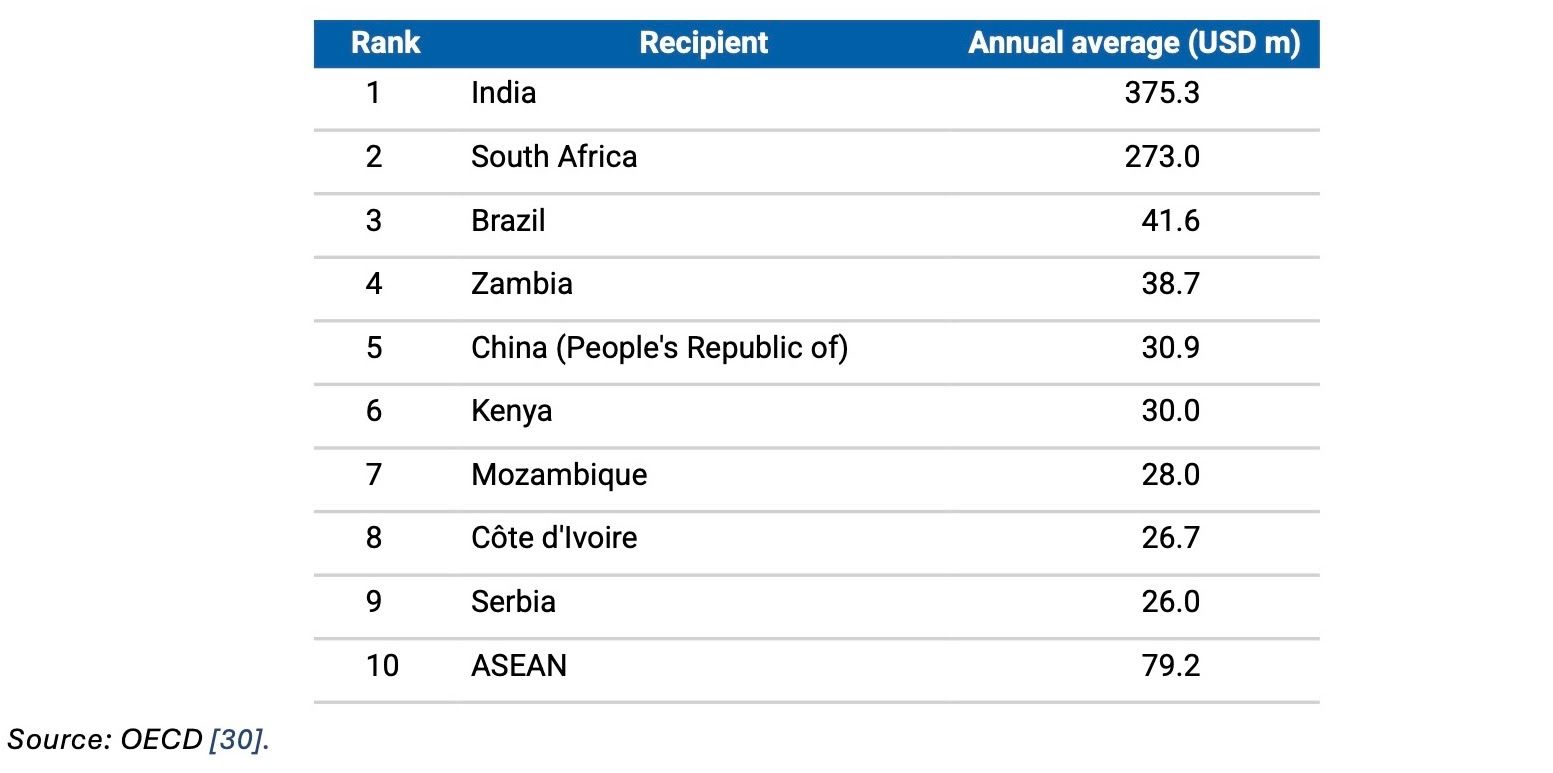
显示能源领域动员私人融资前十名接受国的表格说明,通过发展融资干预措施在东盟能源领域动员的私人资本规模相对有限。
The table showing the top 10 recipients of mobilised private finance in the energy sector illustrates the relatively limited scale of private capital mobilised through development-finance interventions in ASEAN’s energy sector.
2021-2024年能源领域动员私人融资前十名接受国 同时,发展融资支持的私人投资高度集中于少数几个市场。
Top 10 recipients of mobilised private finance – Energy sector, 2021-2024 At the same time, development finance-supported private investment is concentrated in a limited number of markets.
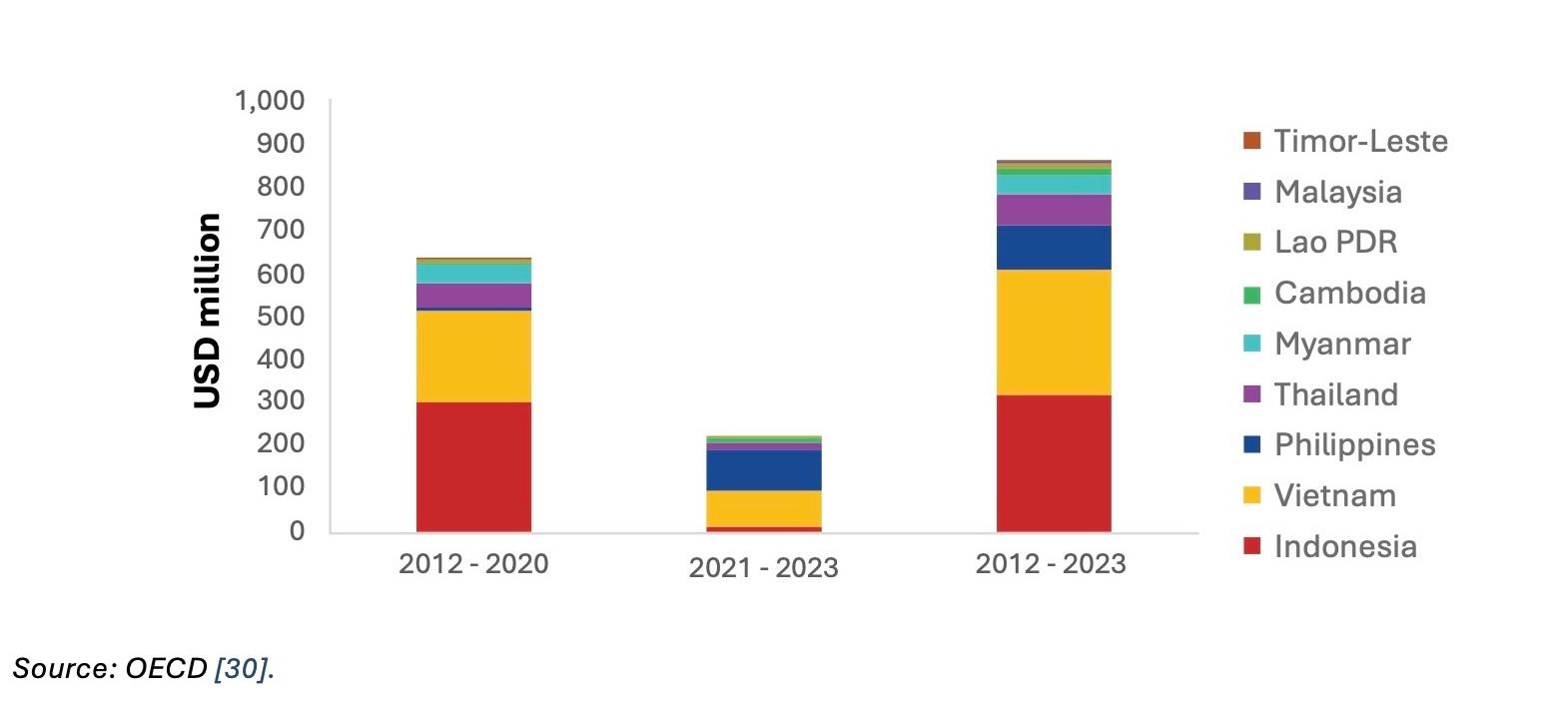
在2012年至2023年期间,印尼和越南分别占地区总额的约71%,金额分别约为3.18亿美元和2.94亿美元。然而,在2021年至2023年期间,菲律宾成为最大的接受国,吸引了约9800万美元的私人融资。
Between 2012 and 2023, Indonesia and Vietnam accounted for about 71% of the regional total, at around $318 million and $294 million, respectively. However, during 2021–2023, the Philippines emerged as the largest recipient, attracting approximately $98 million.
私人资本在能源领域的动员情况 按国家划分 此外,在审视用于动员私人资本的融资机制时,报告指出,资本流动高度依赖交易——即特定项目或设施主导了某一年的活动——而非一个多元化且持续部署的市场。
Private Finance Mobilised for the Energy Sector by Country Further, when looking at the financing mechanisms used to mobilise private capital, the report noted that the capital flows are highly transaction-driven – with specific projects or facilities skewing the activity in any given year – rather than a market with diversified and consistent deployment.
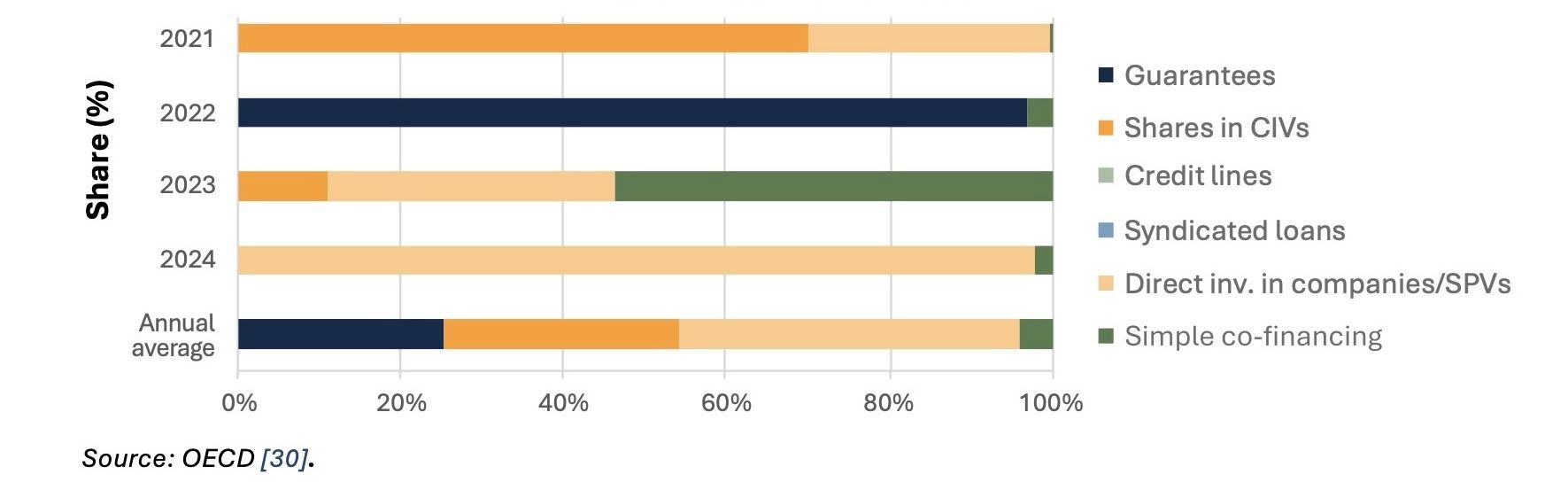
例如,在2021年至2024年期间,对公司或特殊目的载体的直接投资在动员中所占比重最大,平均约为42%,其次是集合投资载体的股份,占29%,以及担保,占25%。然而,年度构成存在显著差异。
For instance, between 2021 and 2024, direct investment in companies or special-purpose vehicles represented the largest share of mobilisation on average, at around 42%, followed by shares in collective investment vehicles at 29%, and guarantees at 25%. However, the annual composition varied substantially.
东盟能源领域通过杠杆机制动员的私人资本,2021-2024 就投资所在的市场而言,菲律宾脱颖而出,2024年在价值超过5亿美元的13项主要可再生能源交易中占了九项。关键交易包括Actis以6亿美元收购菲律宾Terra Solar 40%股权,以及其在泰国139兆瓦太阳能项目上的投资。
Mobilised Private Finance by Leveraging Mechanism, ASEAN energy sector, 2021-2024 In terms of markets where the investments were, the Philippines stood out, accounting for nine of the 13 major renewable energy deals valued at more than $500 million in 2024. Key transactions included Actis’s $600 million purchase of a 40% stake in Terra Solar in the Philippines, and its investment in a 139 MW solar project in Thailand.
菲律宾和马来西亚共同占该地区2024年49项主要项目融资交易的25项,主要集中在电力生产、电池生产以及关键矿产的开采和加工。
The Philippines and Malaysia together accounted for 25 of the region’s 49 major project-finance deals in 2024, mainly in electricity generation, battery production, and critical-minerals mining and processing.
值得注意的是,该地区多个国家是清洁能源制造和关键矿产供应链的一部分,使其成为能源相关外国直接投资的重要目的地。越南、泰国和马来西亚在中国之后是全球领先的太阳能光伏制造商。
Notably, a number of countries in the region are part of clean energy manufacturing and critical minerals supply chains, making it an important destination for energy-related FDI. Vietnam, Thailand and Malaysia are among the leading solar-PV manufacturers globally after China.
印度尼西亚生产的镍占全球产量的60%以上,在2014年至2023年间吸引了超过500亿美元的新矿业投资,占该期间全球新镍投资的90%以上。报告指出,中国投资对此起到了关键作用:2024年,中国向印度尼西亚的镍精炼行业贡献了约300亿美元,中国公司目前占该国镍精炼产能的约75%。
Indonesia, which produces more than 60% of the world’s nickel, attracted over $50 billion in new mining investment between 2014 and 2023, accounting for more than 90% of global new nickel investment during that period. The report noted that Chinese investment has been key to this: In 2024, China contributed about $30 billion to Indonesia’s nickel refining sector, and Chinese companies now account for around 75% of the country’s nickel-refining capacity.
最终,如果东盟的能源转型需要外国资本,那么随着全球资本日益集中于少数东道国经济体以及人工智能、半导体和关键矿产等战略领域,加强投资环境就变得至关重要。东南亚气候技术交易 三家早期初创企业在九月获得融资。
Ultimately, if foreign capital is needed for ASEAN’s energy transition, strengthening the investment environment becomes key as global capital becomes increasingly concentrated in fewer host economies and strategic sectors such as AI, semiconductors, and critical minerals. Climate tech deals in Southeast Asia Three early-stage startups bagged funding in September.
新加坡绿色包装公司N&E Innovations在由Tundra Capital领投的融资轮中筹得超过170万美元,而回收初创企业Life Lab Resources获得了100万美元的Pre-Series A融资。
Singapore green packaging firm N&E Innovations raised more than $1.7 million in an investment round led by Tundra Capital, while recycling startup Life Lab Resources secured $1 million in pre-Series A financing.
菲律宾的Lumio Solar也从早期风险投资公司100×100处获得了Pre-seed轮融资。
Lumio Solar in the Philippines also raised a pre-seed round from early-stage VC firm 100×100.