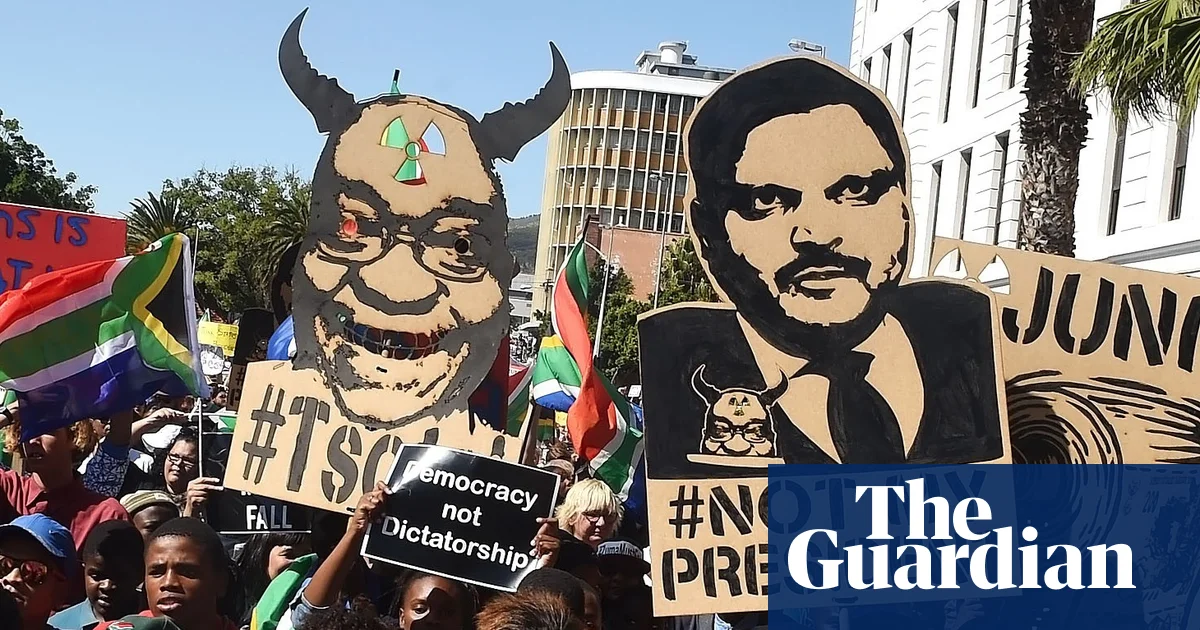
2017年,开普敦爆发针对南非总统雅各布·祖马及古普塔家族的抗议。在祖马执政期间,古普塔兄弟在国家最高层建立了腐败关系。
A 2017 protest in Cape Town against South Africa’s President Jacob Zuma and the Guptas. Under Zuma, the brothers had corrupt relationships at the highest levels of state.
两位加密货币亿万富翁向一个政党及其有志成为总理的人物投入数百万美元。一名毒贩向高级官员行贿,以确保可卡因货物安全跨境运输。人口贩卖者控制了本应制止他们的机构。一个外国势力利用总统性侵儿童的证据来左右政府政策。一个有影响力的游说团体既向执政党也向反对党成员捐款。以上皆为国家捕获的途径。
Photograph: Getty Explainer What is state capture and why does it matter? Two crypto-billionaires pour millions into a political party and its wannabe prime minister. A drug trafficker’s bribe to a senior official buys a cocaine shipment safe passage across a border. Human traffickers take control of the institutions mandated to stop them. A foreign power uses evidence of a president’s sexual abuse of children to dictate government policy. An influential lobby group donates to both a ruling party and opposition members. All are routes to state capture.
《腐败词典》将国家捕获定义为一种系统性腐败,即狭窄的利益集团控制制定公共政策的机构和流程,使其背离公共利益而转向自身利益。
Dictionary of Corruption defines state capture as systematic corruption whereby narrow interest groups take control of the institutions and processes through which public policy is made, directing it away from the common good and towards their own interests.
它可能导致形成腐败得以重复和受保护的体系。法律被设计为偏向特定企业。合同被安排为仅特定供应商符合条件。忠诚者被任命进公共公司、监管机构或司法机构。公共资源可用于巩固政党执政地位、奖励支持者并削弱对手。这种政治优势又进一步保护该网络从国家获利的能力。不同形式的捕获表现为控制主体和目标机构的差异。
It can create systems that allow access to power where corruption can be repeated and protected Laws are structured to favour particular businesses. Contracts are designed so only a preferred supplier qualifies. Loyalists are appointed to public companies, regulatory agencies or the judiciary. Public resources can keep a party in power, reward supporters and undermine opponents. That political advantage then protects the network’s ability to keep benefiting from the state. Different forms of capture are distinguished by who exercises control and which institutions they target.
精英捕获 指最强大的群体主导决策或攫取原本应归他人的利益,尤其在发展项目中。
Elite capture Where the most powerful groups dominate decisions or appropriate benefits intended for others, especially within development projects.
企业或寡头控制 涉及商业利益控制公共机构。一个例子是南非的古普塔丑闻,它说明了腐败如何在私人和政治精英之间发挥作用。在雅各布·祖马总统任期内,古普塔兄弟在政府最高层建立了关系,以赢得有利可图的国家合同并影响政治任命。
Corporate or oligarchic capture Involves business interests controlling public institutions. One example is South Africa’s Gupta scandal which illustrates how corruption can function between private and political elites. During Jacob Zuma’s presidency, the Gupta brothers developed relationships at the highest levels of government to win lucrative state contracts and influence political appointments.
腐败统治控制 以个人致富为中心。腐败统治描述的是一种政府,在这种政府中,个人基于广泛的自我致富而非公共利益来统治,掠夺国家和私人公民的财富和资源。
Kleptocratic capture Centres on personal enrichment. Kleptocracy describes a government in which individuals rule on the basis of extensive self-enrichment rather than the public interest, expropriating the wealth and resources of the state and of private citizens.
在阿尔贝托·藤森时期的秘鲁提供了一个明确的例子,说明问责制是如何被买通的。研究人员考察了该政权如何在1990年代削弱对其权力的制衡,当时情报机构首席弗拉迪米罗·蒙蒂尼奥斯贿赂了政客、法官和新闻媒体。
Peru under Alberto Fujimori offers a clear example of accountability being bought off. Researchers examined how the regime undermined checks on its power as the intelligence service chief Vladimiro Montesinos bribed politicians, judges and the news media during the 1990s.
毒品和犯罪控制 毒品控制是指毒贩获得对公共权威的影响力,以保护其运营。犯罪控制范围更广,涵盖其他非法企业,但两者都包括为政客提供资金、腐败高级安全官员以及对抵抗者使用威胁。
Narco and criminal capture Narco capture is where drug traffickers gain influence over public authority to protect their operations. Criminal capture is broader, covering other illicit enterprises, but both include financing politicians, corrupting senior security officials and using threats against those who resist.
前英属维尔京群岛首席部长安德鲁·法希在2024年因可卡因走私和洗钱被判刑,此前经过一次美国卧底行动。他通过该领土的港口促进了毒品运输,并利用其官方影响力予以保护,使公共权力沦为毒贩的工具。
The former British Virgin Islands premier Andrew Fahie was sentenced in 2024 for cocaine-trafficking and money-laundering after a US undercover operation. He facilitated shipments through the territory’s ports and protected them through his official influence, placing public powers at drug traffickers’ service.
监管控制 范围较窄,指的是监管机构与其所监管的企业或行业过度勾连,例如在食品、医药、石油或加密货币领域:偏向其利益或忽视违规行为。这可能导致更广泛的国家控制。
Regulatory capture Narrower, and occurs when a watchdog becomes excessively aligned with the businesses or industries it oversees, for example in food, pharmaceuticals, oil or crypto: favouring their interests or overlooking violations. This can contribute to wider state capture.
被破坏的监管机构本身并不能证明整个国家已被捕获;同样,每一次成功的游说活动也不等同于捕获。企业、工会和运动团体可以合法地寻求影响政策;令人担忧的是,当这种影响变得持续时。
A compromised regulator does not by itself establish that an entire state has been captured; neither does every successful lobbying campaign amount to capture. Businesses, trade unions and campaign groups can legitimately seek to influence policy; the concern is when it becomes sustained.
不当利益将好处转向狭窄群体会削弱问责制。经合组织已经指出,捕获是如何通过合法渠道实现的,包括游说和政治资金。
Improper advantage that redirects favour towards a narrow group undermines accountability. The OECD has identified how capture is achieved through legal channels, including lobbying and political finance.
打破腐败关系不仅仅需要高层的变动。公共任命需要防止裙带关系的保障措施;合同及其受益者需要接受审查。调查人员需要独立性,以便在权势圈子中追踪证据,而政治资金和游说则需要透明度。举报人必须能够在不遭到报复的情况下行动。法院、审计师、记者和公民组织需要自由来挑战决策。
Breaking corrupt relationships requires more than change at the top. Public appointments need safeguards against patronage; contracts and their beneficiaries need scrutiny. Investigators need the independence to follow evidence into powerful circles, while political finance and lobbying require transparency. Whistleblowers must be able to act without retaliation. Courts, auditors, journalists and civic organisations need freedom to challenge decisions.
对任何被指控捕获的政府,其问题很简单:谁控制其决策?谁反复受益?谁能够有效地调查这些问题?
The questions for any government accused of capture is simple: who controls its decisions, who repeatedly benefits, and who can investigate them effectively?