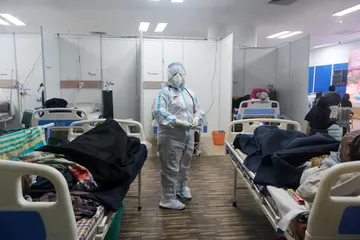
印度在疫情期间无法获得应对疫情所需的基本设备后,选择加大自力更生的力度,并发现自己被其他国家“彻底抛弃”,商务部长皮尤什·戈亚尔周三表示。
India opted to double down on self-sufficiency after Covid, when it was unable to source essential equipment to deal with the pandemic and found itself “let down miserably” by other countries, Commerce Minister Piyush Goyal said Wednesday.
“在疫情期间,我们确实认识到像印度这样拥有14亿人口的大国在供应链中断时所面临的脆弱性,”戈亚尔在新德里的新经济论坛上表示。“无论我们为个人防护设备、Covid检测套件或疫苗下订单的地方,所有国家都让我们感到被彻底抛弃。”他澄清说,这种批评并非针对任何特定国家。
“During Covid, we really recognized the vulnerabilities that a nation like India, a large nation of 1.4 billion people, had to go through when supply chains were broken,” Goyal told the New Economy Forum in New Delhi. “Wherever we had placed orders for personal protective equipment or Covid kits or vaccines, we were let down miserably by all countries.”The criticism was not directed at any particular nation, he clarified.
“当我们需要辉瑞和莫德纳疫苗时,西方国家拒绝提供给我们,”他说。“他们甚至拒绝申请将疫苗引入印度市场,尽管我们愿意放弃所有条件,因此这是一种全球现象。”作为对这一经历的回应,总理纳伦德拉·莫迪“发出了‘自力更生印度’的号召”,戈亚尔说。
“When we needed Pfizer and Moderna vaccines, the West refused to give it to us,” he said. “They even refused to make an application to get the vaccine into the Indian market, even though we were willing to waive all the conditions, so it’s a global phenomenon.”In response to that experience, Prime Minister Narendra Modi “gave the clarion call for Atmanirbhar Bharat, self-sufficient India,” Goyal said.
彭博社7月报道称,商务与工业部正在准备一份超过100种产品的清单,包括电子产品、化学品、关键药品、肥料、半导体、汽车和机械,这些产品的国内产量可以扩大以减少对进口的依赖。
Bloomberg reported in July that the Ministry of Commerce and Industry was preparing a list of more than 100 products, including electronics, chemicals, key drugs, fertilizers, semiconductors, automobiles and machinery, where domestic production could be scaled up to reduce reliance on imports.
在此次论坛上更早的时候,戈亚尔的同事阿什维尼·瓦伊舍瓦,电子和信息技术部长表示,该国现在为许多所需产品制造100%的组件。
Earlier at the forum, Goyal’s colleague Ashwini Vaishnaw, minister for electronics and information technology, said the country now manufactures 100% of the components for many products it needs.
“国家正在从‘成品’转向‘模块’,再到‘组件’,然后到‘材料’,最后到‘资本设备’,”瓦伊舍瓦说。他补充说,同样的方法也正在半导体、铁路及其他行业中被采用。
The nation is moving from “the finished product to modules to the components to the materials, and to the capital equipment,” Vaishnaw said. The same approach is being followed in semiconductors, railways and other industries, he added.