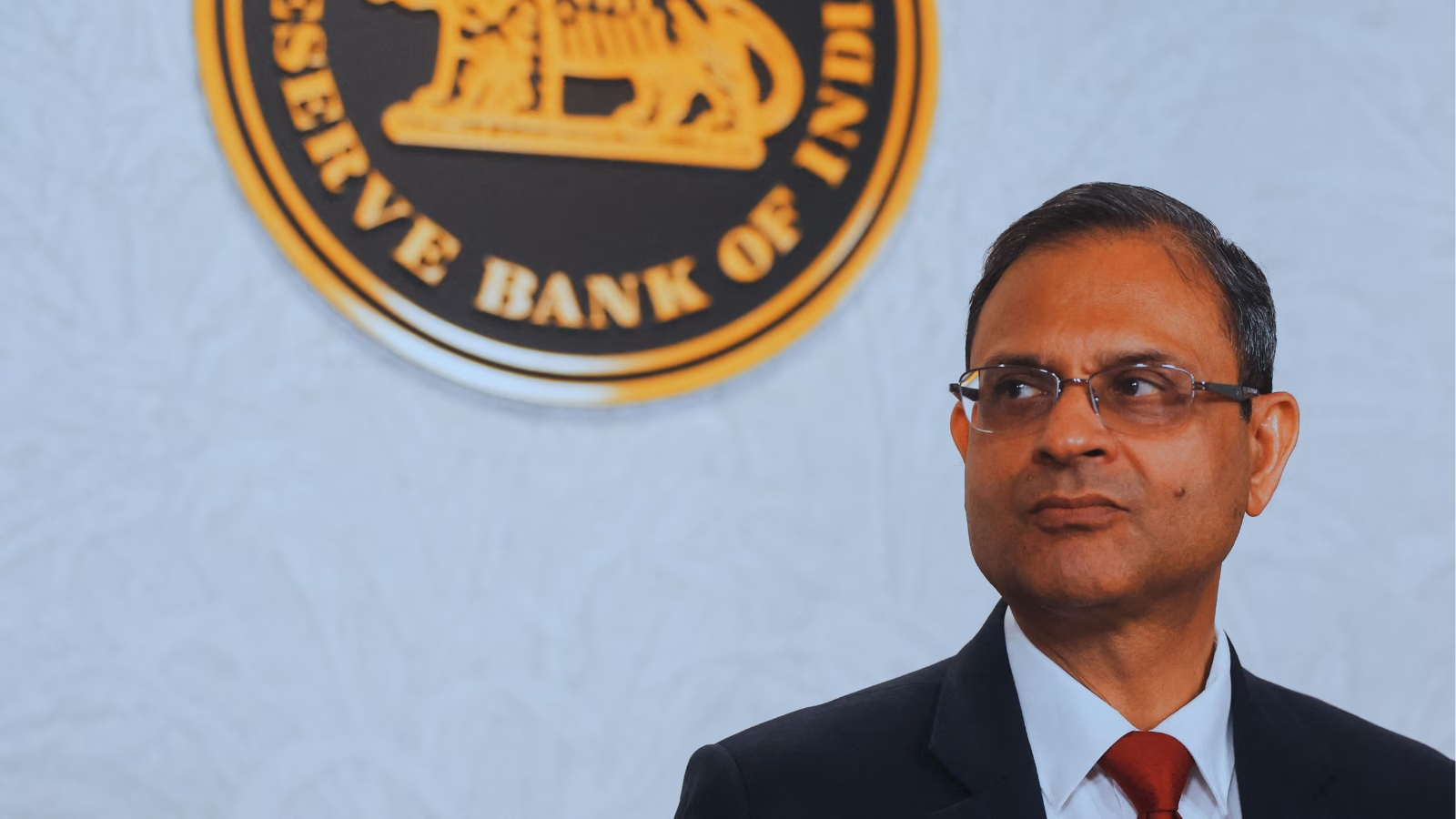
印度储备银行行长桑贾伊·马尔霍特拉表示,央行近期的外汇管制旨在限制投机性交易,不应被视为资本管制。
Reserve Bank of India Governor Sanjay Malhotra has said the central bank’s recent foreign exchange curbs are aimed at restricting speculative trades and should not be viewed as capital controls.
这些澄清措施是在印度储备银行(RBI)进一步收紧外汇管理规定的几天后发布的。这些规定旨在简化外汇交易流程。马尔霍特拉(Malhotra)重申,最近实施的外汇储备比率要求并不适用于资本账户交易。他在接受《Moneycontrol》杂志的独家采访时表示:“这绝不是资本管制措施”,并驳斥了市场关于这些规定会限制外国投资流动的担忧。他强调,非居民仍可以继续投资于股票、债券以及通过外部商业借款进行投资,并可以对冲自己的投资头寸。
The clarification comes days after the RBI further tightened foreign exchange norms to streamline trading. Malhotra reiterated that capital account transactions have been excluded from the recently imposed foreign exchange reserve ratio requirements.“This is in no way a capital control measure,” Malhotra said in an exclusive interview to Moneycontrol, dismissing market concerns that the measures could limit foreign investment flows. He said non-residents can continue to invest in equities, debt and corporate bonds, as well as through external commercial borrowings , and hedge their positions.
关于印度储备银行的干预措施:根据印度储备银行10月10日发布的通知,对于所有涉及卢比的外汇衍生品合约(其名义价值超过200万美元),授权经销商必须向印度储备银行缴纳相当于每笔交易金额20%的现金作为外汇储备金(FERR)。这项新规定将适用于那些用于对冲经常账户风险的外汇衍生品合约(即用户用卢比购买外币的合约)。马尔霍特拉指出,中央银行的这些干预措施属于监管性质,而非资本管制措施,其目的是为了促进合法的对冲活动,同时遏制投机性交易。
Governor On RBI's Interventions“In respect of all foreign exchange derivative contracts involving Rupee that are for notional value exceeding $2 million equivalent, authorised dealers shall be required to maintain with the Reserve Bank an FERR in cash, equal to 20 percent of the INR equivalent of the notional amount of each transaction,” the RBI circular dated October 10 said. The newly introduced FERR will affect foreign exchange derivative contracts involving the rupee, undertaken to hedge current account exposures where the user buys foreign currency against the Indian rupee. Malhotra stated that the central bank's interventions constituted regulatory measures rather than capital restrictions, emphasising their purpose of facilitating legitimate hedging activities while discouraging speculative trading.
在应对宏观经济挑战方面,他表示:“我们的信心来源于过去的经验——每当面临挑战时,我们总能找到相应的应对措施。这一次,由于我们的宏观经济基本面非常强劲,我们的决心也非常坚定,因此我们有信心能够确保印度的外贸部门更加稳健。”
——印度储备银行行长桑杰伊·马尔霍特拉(Sanjay Malhotra)在罗伊经济学中,州长表示,每种情况都不同;它需要不同的工具,并使我们能够改进。
Tackling Macroeconomic Challenges He further indicated that the regulatory authority stands ready to implement additional measures to facilitate controlled fluctuations in the rupee's value." So, my confidence comes from, you know, the earlier episodes where every time we have been given a challenging situation, we have come up with our own set of measures, and this time, especially given that our macroeconomic fundamentals are very strong and the resolve is very strong, we shall be able to ensure that we have a stronger external sector,"SANJAY MALHOTRA, RBI GOVERNOR On tackling macroeconomics, the governor said that every situation is different; it requires different tools and allows us to improve.
例如,俄乌战争促使我们推出印度自己的应对措施,并增强韧性。对于新冠肺炎疫情,那更多是流动性挑战。当前情况更多是外部部门挑战。因此,我的信心来自于,你知道,以往每次面临挑战性情形时,我们都能拿出自己的一套措施。这一次,尤其考虑到我们的宏观经济基本面非常稳健,决心也非常坚定,我们将能够确保外部部门更加稳固,他补充道。政策稳定性关于货币政策委员会是否会上调回购利率以稳定卢比,马尔霍特拉未作直接回应。但他承认,货币政策决策对金融稳定具有影响。
The Russia-Ukraine war, for example, prompted us to introduce India's own set of measures and strengthen our resilience. For COVID-19, that was more of a liquidity challenge. The current situation is more of an external-sector challenge." So, my confidence comes from, you know, the earlier episodes where every time we have been given a challenging situation, we have come up with our own set of measures, and this time, especially given that our macroeconomic fundamentals are very strong and the resolve is very strong, we shall be able to ensure that we have a stronger external sector," he added. Policy For StabilityRegarding whether the Monetary Policy Committee would increase repo rates to stabilise the rupee, Malhotra refrained from providing a direct response. However, he acknowledged that monetary policy decisions carry implications for financial stability.
印度储备银行最初规定,银行须为客户用于对冲经常账户敞口的外汇衍生品维持20%的现金准备金。
The RBI established an initial requirement mandating that banks maintain a 20% cash reserve against foreign exchange derivatives utilised by clients for hedging current-account exposures.
随后,该要求被扩大以涵盖所有卢比计价的外汇衍生品,包括授权银行用卢比购买外币以抵消自身资产和负债敞口的交易。
This requirement was subsequently broadened to encompass all rupee-denominated foreign exchange derivatives, including transactions where authorised banks acquire foreign currency in exchange for the rupee to mitigate exposure from their own assets and liabilities.
马尔霍特拉解释称,印度储备银行在发现外汇市场美元买入端存在集中且不成比例的投机活动后,实施了这一准备金要求。
Malhotra explained that the RBI implemented this reserve requirement following identification of disproportionate speculative activity concentrated on the dollar-purchasing segment of the foreign exchange market." We have already taken some measures to this effect.
“我们已经采取了一些相关措施。政府也采取了一些措施。如果有需要,我们将共同采取更多措施。但我们一定会确保市场秩序井然,没有过度波动,也没有过度投机;我们将采取一切必要措施来实现这一目标。”
The government has also taken some measures. And if required, together, we will take more measures. But we will certainly ensure that markets are orderly, that there is no excessive volatility, and that there is no excessive speculation; we will do whatever is required to ensure this.
我们手头有足够的工具可以部署,在确保市场有序运行方面,您不会发现印度储备银行有所不足。印度储备银行行长马尔霍特拉表示,市场参与者对卢比的走势表现出过度的悲观。他澄清说,汇率波动是市场需求和供给力量平衡的结果,央行并不追求预设的汇率目标。
We have enough tools in our kit to deploy, and you will not find RBI wanting when it comes to ensuring orderly conditions in the market.", RBI GOVERNOR According to Malhotra, market participants demonstrate excessive pessimism regarding the rupee's trajectory. He clarified that exchange rate movements result from equilibrium between market demand and supply forces, and the central bank does not pursue a predetermined exchange rate target.RBI on US Influence In Global Fiscal SpaceOn the question of US influence in the global markets, he said, "I feel it is primarily dependent on domestic growth and inflation. However, both are affected by external developments, so it is not completely insulated from what happens elsewhere."
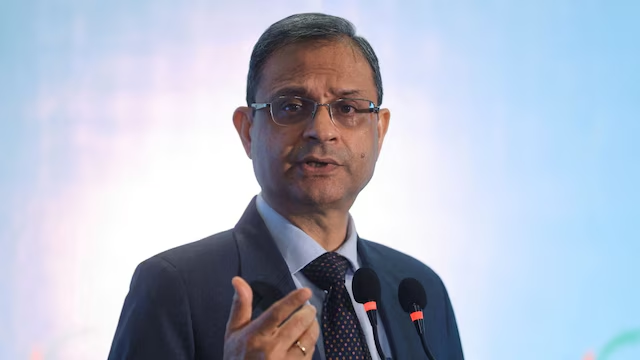
关于美国在全球财政空间中的影响,马尔霍特拉表示:“我认为这主要取决于国内增长和通胀。然而,两者都受到外部发展的影响,因此它并不完全与其他地区发生的事情隔绝。”根据马尔霍特拉的说法,全球发生的事情——包括利率——是我们在制定货币政策时会牢记的因素,因为它们不仅影响印度的增长和我们的通胀,还影响该国的实际利率或中性利率。
According to Malhotra, what is happening around the world, including interest rates, is something that we do keep in mind while deciding monetary policy, because they have an impact not only on India's growth and our inflation, but also on the country's real or neutral rate of interest.
印度储备银行行长桑杰·马尔霍特拉表示,货币政策必须考虑这些变化。
RBI Governor Sanjay MalhotraHe said that monetary policy must take these changes into account.
关于收益率,他解释说,发达经济体的高收益率源于两个主要因素:首先,这些地区经历的显著通胀意味着实际利率可能不会按比例上升;其次,这些经济体的巨额公共债务负担 necessitates 更高的利率,相较于我们自身的水平。
Regarding yields, he explained that elevated yields in developed economies stem from two principal factors: first, the substantial inflation experienced in these regions means that real interest rates may not be proportionally elevated; and second, the considerable public debt burdens in these economies necessitate higher interest rates compared to our own.
尽管存在这些差异,虽然根本原因可能因国家而异,但正如前述所述,它们仍然对全球利率和资本流动产生重大影响,因而具有相当的相关性。
Message To MarketNotwithstanding these distinctions, while the fundamental causes may vary across different nations, they nonetheless exert significant influence as previously noted, on global interest rates and capital flows, thereby bearing considerable relevance.
当被问及对市场的信息时,马尔霍特拉表示,总体信息是我们非常乐观。这不仅仅是因为印度的国内宏观经济故事。
When asked for a message to the markets at large, Malhotra said that the overall message is that we are very optimistic. Not only because of India's domestic macroeconomic story.
他说,印度固有的韧性和力量,以及我们坚定的决心——我们将在每一次事件、每一次挑战之后变得更强。我们已经采取了一些措施。政府也采取了一些措施。如果有必要,我们将共同采取更多措施。但我们一定会确保市场秩序井然,没有过度波动,也没有过度投机;我们将采取一切必要措施来实现这一目标。我们手头有足够的工具可以使用,在确保市场秩序方面,印度储备银行绝不会掉链子。马尔霍特拉补充道。
According to him, India's inherent resilience and strength, and our resolve that we will come out stronger through each episode, through each challenge." We have already taken some measures to this effect. The government has also taken some measures. And if required, together, we will take more measures. But we will certainly ensure that markets are orderly, that there is no excessive volatility, and that there is no excessive speculation; we will do whatever is required to ensure this. We have enough tools in our kit to deploy, and you will not find RBI wanting when it comes to ensuring orderly conditions in the market.", Malhotra added.