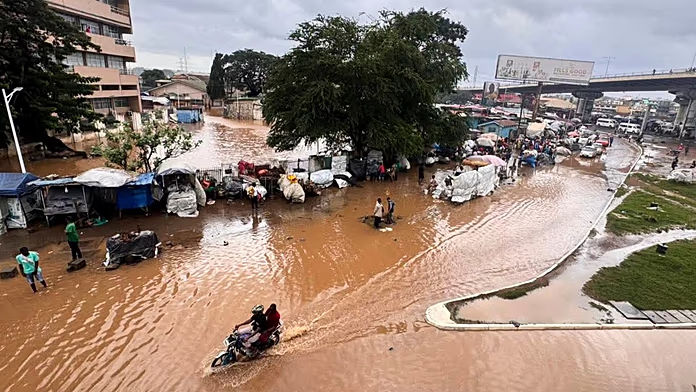
一项新的大型全球研究显示,非洲记录了全球最快的灾害韧性提升。
Africa has recorded the world's fastest improvements in disaster resilience, a new major global study has revealed.
劳埃德基金会(Lloyd's Foundation)的研究显示,自2023年以来,非洲各地区在人们抵御和从灾害及其他重大扰动中恢复的能力方面取得了最大进步。例如,北非的韧性提升了5个点,南部非洲紧随其后,提升了4个点。东非、中非及西非均提升了3个点。
Research from Lloyd's Foundation shows that African regions have made the biggest gains in people's ability to withstand and recover from disasters and other major disruptions since 2023. North Africa, for instance, recorded a five-point increase in resilience, followed by Southern Africa with four points. Eastern Africa and Central and Western Africa each improved by three points.
在肯尼亚、埃及、乌干达、阿尔及利亚和尼日利亚等国,不断扩大的互联网接入、更好的家庭防灾准备以及改善的财务韧性推动了这些进步。
Expanding internet access, better household preparedness, and improved financial resilience in countries including Kenya, Egypt, Uganda, Algeria, and Nigeria propelled the gains.
然而,研究结果也暴露出一个重大考验。在中非和西非,很少有受灾害影响的成年人收到任何预警,这让人质疑韧性的提升是否转化为对弱势群体更好的保护。是什么推动了非洲的进展?
The findings, however, expose a significant trial. In Central and West Africa, few disaster-affected adults received any warning, raising questions about whether resilience improvements are translating into better protection for vulnerable communities. What is driving Africa's progress?
这是第四期《世界风险民调》(World Risk Poll)的结果。该民调于2025年对140个国家和地区的14.3万多名民众进行了调查。这项由盖洛普(Gallup)开展的研究调查了人们对安全风险的经历,其中包括官方数据有限的国家。
This is the outcome of the fourth edition of the World Risk Poll, which surveyed more than 143,000 people across 140 countries and territories in the year 2025. Conducted by Gallup, the study examines experiences of safety risks, including in countries where official data is limited.
其韧性指数(Resilience Index)采用0到100的标尺,衡量人们承受并从重大冲击中恢复的能力。该评估涵盖四个方面:个人韧性、家庭防灾准备、社区支持和更广泛的社会条件。
Its Resilience Index measures people's ability to absorb and recover from major shocks on a scale of 0 to 100. The assessment covers four areas: individual resilience, household preparedness, community support and wider societal conditions.
互联网接入的增加可以帮助人们获取有关潜在危险的信息,而家庭防灾准备则能提高他们在紧急情况发生时的应对能力。
Increased internet access can help people obtain information about potential dangers, while household preparedness can improve their ability to respond when emergencies occur.
研究人员确定阿尔及利亚、尼日利亚、肯尼亚、埃及和乌格兰为促进地区改善的国家,尽管取得进步背后的因素各不相同。然而,这些研究结果并不意味着非洲已成为世界上韧性最强的大陆。
The researchers identified Algeria, Nigeria, Kenya, Egypt, and Uganda as countries contributing to regional improvements, although the factors behind the gains varied. The findings, however, do not mean Africa has become the world's most resilient continent.
相反,在其所研究的时期内,各地区的改善速度最快。但为什么仍有数以百万计的人收不到灾害预警?
Rather, its regions have recorded the fastest improvements over the period examined. But why are millions still missing disaster warnings?
尽管取得了进展,但研究显示,在获取可能挽救生命的信息方面存在巨大的不平等。例如,在中非和西非,受灾害影响的成年人中只有47%表示他们收到了预警。
Despite the progress, the study discloses massive inequalities in access to potentially life-saving information. In Central and Western Africa, for instance, 47% of adults affected by disasters said they had received a warning.
在全球范围内,低收入国家的人们在过去五年中经历灾害的可能性几乎是高收入国家的两倍。
Globally, people in low-income countries were almost twice as likely to have experienced a disaster over the previous five years as those in high-income countries.
较贫穷国家中近三分之一的成年人报告受到灾害影响,而较富裕国家的这一比例为16%。
Nearly one in three adults in poorer countries reported being affected, compared with 16% in wealthier nations.
然而,低收入国家中只有64%受灾害影响的成年人收到了预警,而高收入国家的这一比例为84%。
Yet only 64% of disaster-affected adults in low-income countries received warnings, compared with 84% in high-income countries.
即便发出了预警,许多人也无法作出反应。在低收入和中低收入国家,收到预警的成年人在灾害来临前采取行动的比例不到一半,而高收入国家的这一比例为71%。
Even when warnings were issued, many people could not respond. Fewer than half of warned adults in low- and lower-middle-income countries took action before disaster struck, compared with 71% in high-income countries.
劳埃德基金会全球安全证据中心(Lloyd's Foundation's Global Safety Evidence Centre)证据与洞察主任南希·海伊(Nancy Hey)表示,这些结果凸显了防灾准备的重要性。“一个预警的好坏取决于人们能用它做什么,”她说。手机能帮助拯救更多生命吗?这项研究将移动技术视为弥补灾害预警系统差距的一个重大机遇。
Nancy Hey, director of evidence and insight at Lloyd's Foundation's Global Safety Evidence Centre, said the results highlighted the importance of preparedness."A warning is only as good as what people can do with it," she said. Can mobile phones help save more lives? The research identifies mobile technology as a major opportunity to close gaps in disaster warning systems.
在全球范围内,估计有11亿成年人在过去五年中经历过灾害,但近2.2亿人事先没有收到任何预警。在未收到预警的人中,77%拥有手机,即超过1.7亿人。
Worldwide, an estimated 1.1 billion adults experienced a disaster in the previous five years, but almost 220 million received no warning beforehand. Of those not warned, 77% owned a mobile phone, or more than 170 million people.
研究还发现,当预警通过多种渠道传达时,人们更有可能采取行动。
The study also found that people were more likely to act when warnings reached them through several channels.
通过单一渠道接收警报的人中只有37%采取了行动,而通过两个渠道接收的这一比例为51%,通过三个渠道接收的则为64%。
Only 37% of those receiving alerts through one channel took action, compared with 51% reached through two and 64% through three.
这些渠道包括短信、电视和社交媒体。非洲部分地区的当地准备工作已经显而易见。根据国际红十字会与红新月会联合会的说法,马拉维的志愿者在1月极端降雨到来之前动员社区清理雨水排水管。这一举措说明了社区在恶劣天气到来之前可以采取的实际步骤。全球灾害风险降低和韧性代理负责人卡罗琳·扎斯蒂拉尔表示,有效的警告取决于人们的应对能力。
These channels include text messages, television and social media. Local preparedness is already evident in parts of Africa. In Malawi, volunteers mobilised communities to clear storm drains ahead of extreme rainfall in January, according to the International Federation of Red Cross and Red Crescent Societies. This initiative illustrates how communities can take practical steps before severe weather arrives. Caroline Zastiral, acting global lead for disaster risk reduction and resilience, said effective warnings depended on people's ability to respond."
她说:“当人们拥有信任、知识、时间和资源来保护自己、亲人和资产时,警告才能转化为行动。”富裕国家和贫穷国家共同面临的挑战虽然该研究指出贫穷国家面临更大的灾害风险,尤其是在气候变化的背景下,但它也挑战了国家财富必然使人们更具韧性的假设。研究还指出,社会韧性(包括对国家机构的信任)从2021年的63分上升至2025年的创纪录66分。
Warnings lead to action when people have the trust, knowledge, time and resources to protect themselves, their loved ones and their assets," she said. Challenge for rich and poor countries alikeWhile the study highlights poorer countries' greater exposure to disasters, especially amid climate change, it also challenges the assumption that national wealth necessarily makes people more resilient. The research also states that societal resilience, including trust in national institutions, rose globally from 63 points in 2021 to a record 66 in 2025.
然而,个人韧性从46分下降至42分,创下有史以来最低水平。劳埃德基金会敦促政府和灾害管理机构扩大警报覆盖范围,并增加对家庭准备的投入。世界气象组织早期预警服务部门负责人安德鲁·塔珀博士表示,警报必须成为一个更广泛体系的一部分,以帮助社区作出应对。他说:“如果早期预警系统不能赋予人们行动的能力,那么它就是无用的。”
However, individual resilience fell from 46 to 42, its lowest recorded level. Lloyd's Foundation is urging governments and disaster management agencies to widen warning coverage and invest more in household preparedness. Dr Andrew Tupper, chief of the Early Warning Services Section at the World Meteorological Organisation, said warnings must be part of a broader system that helps communities to respond." An early warning system is useless if it doesn't empower people to act," he said.