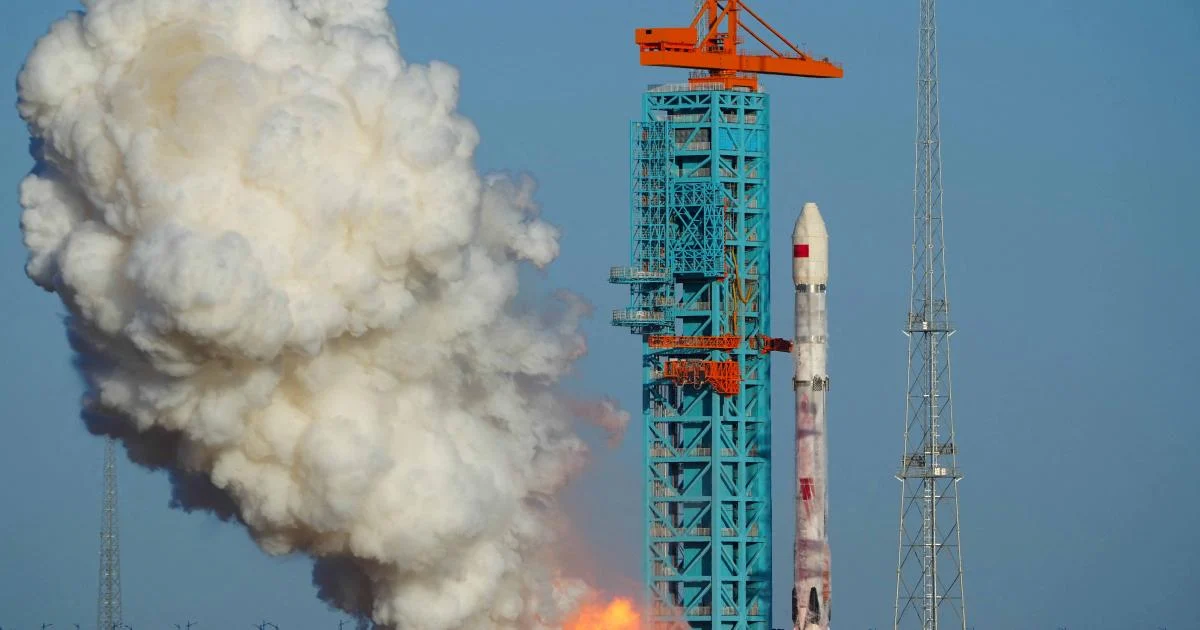
2023年8月19日早上,中国航天产业跨越了一个重要门槛。中国航天公司蓝箭航天在中国西北部发射火箭不久后,其助推器——将火箭送入轨道所必需的部件——成功分离并返回地面着陆。这是中国企业首次实现火箭陆地回收,且发生在中国首次火箭回收六周之后。当时,中国国有航天巨头在中国南海完成了该国首次火箭回收。这些事件标志着中国可重复使用火箭发射时代的到来——这一能力将释放中国蓬勃发展的航天产业的巨大潜力。
On the morning of August 19, China’s space industry crossed a major threshold. Shortly after the Chinese aerospace company LandSpace launched a rocket in northwestern China, its booster—the part needed to thrust the rocket into orbit—successfully detached and landed back on earth. It was the first time a Chinese firm recovered a rocket on land, and it came six weeks after the country’s first-ever rocket recovery, carried out in the South China Sea by China’s premier state-owned space contractor. These events mark the dawn of China’s reusable rocket launch—a capability that will unlock enormous potential in the country’s booming space industry.
华盛顿对此类发展的反应相对平淡。美国仍然进行的发射次数是其他任何国家的两倍多,轨道上的卫星数量也最多。但中国正在赶超。2020年至2025年间,中国公司每年发射的火箭数量从39次增至92次,增长了一倍多。中国实体已为数十万颗通信卫星申请许可证,中国航天公司也在快速增多。其中许多公司,如蓝箭航天,虽然成立时间较短,但已经具备创新能力。
Washington’s response to these developments has been muted. The United States still conducts more than twice as many launches and has more satellites in orbit than any other country. But China is catching up. Between 2020 and 2025, the number of rockets launched annually by Chinese companies more than doubled, from 39 to 92. Chinese entities have applied for licenses for hundreds of thousands of communications satellites, and Chinese space companies are proliferating. Many of them, such as LandSpace, are relatively new but already innovative.
这一进展既有经济影响,也有军事影响。中国公司很快可能与美国公司竞争,向全球广大地区提供基于太空的服务,如卫星互联网。与此同时,认为太空优势是赢得未来战争关键的人民解放军(PLA),也在发展多种太空能力以及一套可用于攻击卫星的武器系统。这对依赖太空进行通信、态势感知、导航、精确打击以及接收导弹预警的美国军方构成了严重威胁。
This progress has both economic and military implications. Chinese companies could soon compete with U.S. firms to provide vast swaths of the globe with space-based services such as satellite Internet. Meanwhile, the People’s Liberation Army (PLA), which sees space superiority as essential to winning future wars, is developing a range of space capabilities as well as a suite of weapons that can attack satellites. This poses a serious risk to the U.S. military, which depends on space for communications, situational awareness, and navigation, as well as for conducting precision strikes and receiving missile warnings.
中国作为航天大国的发展,应该成为美国的警钟。冷战结束后,华盛顿开始把其在太空的优势视为理所当然。它已无法再这样下去。随着北京航天工业的进步,其成本优势将使美国公司的竞争变得更加困难,而中国的军事能力也将增加太空在未来冲突中成为战场的风险。不可动摇的美国太空力量时代正在结束,华盛顿别无选择,只能适应。发射!
China’s development as a space power should be a wake-up call for the United States. After the end of the Cold War, Washington began to take its dominance in space for granted. It can no longer afford to do so. As Beijing’s space industry advances, its cost advantages will make it much harder for U.S. companies to compete, and China’s military capabilities will increase the risk that space becomes a battlefield in future conflicts. The era of unassailable U.S. space power is ending, and Washington has no choice but to adapt. BLASTOFF!
中国的航天计划可追溯到20世纪50年代,当时中国领导人毛泽东发起了现代化人民解放军和推动技术创新的努力。1970年,中国发射了第一颗卫星;20世纪80年代,它将航天技术研究列为国家优先事项。但中国航天计划的分水岭时刻出现在1990-91年海湾战争期间,当时美军熟练运用基于太空的资产,使得一个规模较小但技术先进的联盟仅用几天时间就击败了伊拉克军队。
China’s space program dates to the 1950s, when Chinese leader Mao Zedong initiated efforts to modernize the PLA and boost technological innovation. In 1970, China launched its first satellite, and in the 1980s, it made space technology research a national priority. But the watershed moment for China’s space program occurred during the 1990–91 Gulf War, when the U.S. military’s adept use of space-based assets allowed a relatively small but technologically advanced coalition to defeat Iraq’s army in just a few days.
卫星使美军能够在艰难的沙漠地形中导航,为指挥官提供更快速、更准确的战场信息,并使士兵能够在远距离上无缝协同作战。北京当时尚未意识到自己落后有多远,于是立即行动起来,以赶上进度。
Satellites allowed U.S. forces to navigate difficult desert terrain, gave commanders information about the battlefield with greater speed and accuracy, and enabled soldiers to coordinate seamlessly across long distances. Beijing, which had not realized just how far behind it was, leaped into action to catch up.
在随后的几年里,解放军的作战理论强调了先进技术在战争中的日益重要性,尤其是卫星。2000年,中国军队开始研发自己的卫星导航服务,名为北斗,以免依赖美国运行的GPS。2015年,解放军成立了战略支援部队——一个如今已不存在的组织,它整合了中国的太空、网络和电子战任务,旨在加速国家的太空进步。同年,中国政府的一份白皮书将外层空间确定为关键的国家安全领域。
In the years that followed, PLA doctrine emphasized the growing importance of advanced technology, especially satellites, for warfighting. In 2000, the Chinese military began developing its own satellite-powered navigation service, called BeiDou, so that it would not have to rely on U.S.-operated GPS. In 2015, the PLA created the Strategic Support Force, a now defunct organization that consolidated China’s space, cyber, and electronic warfare missions, with the aim of accelerating the country’s space progress. That same year, a Chinese government white paper identified outer space as a critical national security domain.
此后,中国研制出用于通信、导航以及情报、监视和侦察的航天器,这些航天器对于当年观察沙漠风暴的解放军官员来说是难以想象的。
China has since created spacecraft for communications; navigation; and intelligence, surveillance, and reconnaissance that would have been unimaginable to PLA officials who observed Desert Storm.
鼓励商业太空活动已成为中国扩大太空计划的主要工具之一。2014年,北京向私人投资开放了太空领域的部分内容,此后已有超过400家中国商业太空公司涌现。北京和地方政府通过国家支持的投资基金为商业太空企业提供融资,补贴工厂升级和火箭发射,并让私营企业获得政府测试设施和技术的使用权。2025年,商业太空任务占中国全国总量的54%,商业卫星占中国在轨航天器的84%。
Encouraging commercial space activity has become one of China’s main tools for expanding its space program. In 2014, Beijing opened parts of the space sector to private investment, and more than 400 Chinese commercial space companies have since sprouted. Beijing and provincial governments have provided commercial space firms with financing through state-backed investment funds, subsidized factory upgrades and rocket launches, and given private companies access to government test facilities and technologies. In 2025, commercial space missions accounted for 54 percent of China’s national total, and commercial satellites made up 84 percent of Chinese spacecraft placed in orbit.
中国由商业公司、国有企业、研究院所和大学组成的广泛太空产业生态系统,使该国摆脱了对GPS的依赖,并为新型国内遥感和卫星通信公司的发展铺平了道路。
China’s broad space-industrial ecosystem, composed of commercial companies, state-owned enterprises, research institutes, and universities, has allowed the country to eliminate its dependence on GPS and paved the way for the development of new domestic remote sensing and satellite communications companies.
在可重复使用火箭技术方面,美国公司SpaceX拥有巨大优势,在美国进行的发射任务中,有六次就有五次由其完成。但中国在7月和8月两次成功实现火箭助推器受控回收表明,它有望在十年内成为美国的真正竞争对手。可重复使用火箭能够显著降低发射成本并提升发射速度;如果中国掌握这一技术,将能够更轻松地发展大型卫星星座。
In reusable rocket technology, the U.S. company SpaceX has enjoyed an enormous advantage, conducting five out of every six launches in the United States. But China’s two controlled recoveries of rocket boosters in July and August suggest that it could be a real competitor to the United States within a decade. Reusable rockets drive down the cost and increase the speed of space launches significantly; should China master the technology, it could develop large satellite constellations much more easily.
可重复使用发射还将使中国能够发展空间互联网能力,以与SpaceX主导的Starlink网络竞争。Starlink是一个广泛的卫星互联网系统,其连接能力可与许多陆地网络相媲美,并且在乌克兰抵御俄罗斯的防御行动中发挥了关键作用。尽管中国公司目前仍处于该技术的早期发展阶段,但它们正在快速扩张。负责运营国网和千帆卫星星座的实体——这些星座旨在与Starlink竞争——计划在未来十年左右发射近3万颗通信卫星。
Reusable launches will also allow China to develop space-based Internet capabilities to compete with SpaceX’s dominant Starlink network, an extensive satellite Internet system with connectivity that rivals many land-based networks and which has been crucial for Ukraine in its defense against Russia. Although Chinese companies are still in the early stages of developing this technology, they are scaling fast. The entities operating the Guowang and Qianfan satellite constellations, which intend to compete with Starlink, plan to launch nearly 30,000 communications satellites over the next decade or so.
目前这些系统规模远小于Starlink(后者轨道上已有超过1.1万颗卫星),但它们有望最终成为合法的替代方案。千帆已经与巴西、哈萨克斯坦、马来西亚和土耳其达成试点协议,以使用其卫星网络。
These systems are currently much smaller than Starlink, which has more than 11,000 satellites in orbit, but they could eventually become legitimate alternatives. Qianfan already has trial agreements with Brazil, Kazakhstan, Malaysia, and Turkey for the use of its satellite network.
火箭科学 中国的商业航天发展与利用空间支持其军事现代化的能力同步增长。北京已花费数十年时间研究美国军方使用卫星的方式,如今正在发展自身的国家安全相关空间能力。根据五角大楼的报告,中国运营着超过500颗可执行情报、监视和侦察任务的卫星,此外还拥有卫星支持的定位系统,使解放军能够在全球范围内定位和追踪美军及其盟军力量。
ROCKET SCIENCE China’s commercial space development has gone hand in hand with a growing ability to use space to support its military modernization. Beijing has spent decades studying the U.S. military’s use of satellites, and it is now developing its own national security–related space capabilities. According to the Pentagon, China operates more than 500 satellites that can conduct intelligence, surveillance, and reconnaissance missions, in addition to its satellite-enabled positioning system, allowing the PLA to locate and track U.S. and allied forces around the world.
解放军战略家已将国防部的空间资产视为宝贵目标,因为美军几乎在其所谓的“杀伤链”每一步都依赖这些资产:发现目标、瞄准目标、打击目标,随后评估结果。
PLA strategists have identified Defense Department space assets as valuable targets because the U.S. military depends on them for nearly every step of what it calls the “kill chain”: finding, aiming at, and striking targets, and then assessing the results.
为了利用美军对卫星的依赖,北京正在投资反卫星武器。自2007年中国首次成功试射反卫星导弹以来,中国已发展出其他工具,包括电子战和定向能武器,这些武器能够干扰卫星信号或损坏传感器,而无需物理摧毁卫星。中国航天器还能执行日益复杂的机动:2022年,一颗名为“实践-21”的中国卫星靠近一颗废弃的中国卫星并将其移至不同轨道。
To exploit U.S. dependence on satellites, Beijing is investing in antisatellite weapons. Since 2007, when it conducted its first successful test of an antisatellite missile, China has developed other tools, including electronic warfare and directed-energy weapons, which can interfere with satellite signals or damage sensors without physically destroying satellites. Chinese spacecraft can also execute increasingly sophisticated maneuvers: in 2022, a Chinese satellite called Shijian-21 attached itself to a defunct Chinese satellite and moved it into a different orbit.
此类行为可能是良性的——它可用于修复和加注卫星或清除碎片——但也可能使中国平台能够操控其他航天器,包括美军卫星。北京摧毁美军卫星的能力可能对美军在东亚构成特别严峻的挑战,因为在此地区若发生冲突,中国对空间资产的依赖程度将远低于美国。
Such an action could be benign—it could be used to repair and refuel satellites or remove debris—but it could also enable Chinese platforms to manipulate other spacecraft, including U.S. military satellites. Beijing’s ability to take down U.S. satellites could pose an especially serious challenge for the U.S. military in East Asia, where, in the case of conflict, China would be much less dependent on space-based assets than the United States.
中国的太空崛起已经在影响更广泛的国际安全动态。2022年,在俄罗斯对乌克兰的全面入侵期间,中国企业提供了战场卫星影像,帮助俄罗斯军队开展军事行动。在伊朗战争期间,中国实体也一直向德黑兰提供卫星影像,包括约旦一处基地的影像,该基地在7月被伊朗袭击,导致三名美国军人死亡。随着中国商业太空部门的扩张,这些关系也可能随之扩大,使更多国家和没有先进太空计划的非国家行为体能够获得其带来的好处。
China’s space rise is already influencing broader international security dynamics. During Russia’s full-scale invasion of Ukraine, in 2022, Chinese firms provided satellite imagery of the battlefield that helped Russian forces conduct military operations. Throughout the war in Iran, Chinese entities have also supplied Tehran with satellite imagery, including images of a base in Jordan that Iran struck in July, resulting in the deaths of three American service members. As China’s commercial space sector expands, so could these relationships, giving more countries and nonstate actors without advanced space programs access to their benefits.
这种扩大的获取可能在自然灾害或其他紧急情况下被用于挽救生命。但它也可能使对手获得更有效地在全球范围内瞄准美国及其盟军力量的能力。
Such expanded access could be used during natural disasters or other emergencies to save lives. But it could also provide adversaries with the ability to more effectively target U.S. and allied forces across the globe.
任务关键 随着中国太空力量的增长,华盛顿已采取行动保护其一些卫星网络。美国太空军已对其一些最敏感资产的布局进行多样化,并增加了新卫星的采购。这些投资虽有用但不足以解决美国的脆弱性。鉴于中国已经具备或不久将具备的能力,现在存在许多可能的情景,在这些情景下,美国军队将不得不在卫星通信被拒绝或降级、GPS信号被干扰以及来自轨道的情报受限的情况下进行作战。
MISSION CRITICAL As China’s space power grows, Washington has moved to protect some of its satellite networks. The U.S. Space Force has diversified the placement of some of its most sensitive assets and increased procurement of new satellites. Such investments are useful but insufficient to address the United States’ vulnerabilities. Given the capabilities that China already has or will develop soon, there are now many possible scenarios in which the U.S. military would have to operate when satellite communications are denied or degraded, GPS signals are jammed, and intelligence from orbit is restricted.
美国军方应投资于新兴技术,例如惯性导航系统和量子传感器,这些技术有朝一日可能帮助其部队在没有GPS的情况下实现精确移动。它还应投资于卫星的新兴替代方案,例如高空中继,其中包括在地球附近运行的无人机或气球,能够连接通信网络;激光支持的通信,利用光传输信息且难以被干扰;以及网状网络,能够自动绕过被毁节点重新路由信号,使通信更具韧性。随着断联风险的增加,决策授权机制将比过去更加重要。
The U.S. military should invest in nascent technologies, such as inertial navigation systems and quantum sensors, which could one day help its forces move with precision without GPS. It should also invest in emerging alternatives to satellites, such as high-altitude relays, which include drones or balloons that operate closer to Earth and can link communications networks; laser-enabled communications, which use light to transmit information and are difficult to disrupt; and mesh networks, which automatically reroute signals around nodes that have been destroyed, making communications more resilient. Mechanisms for delegating decision-making will be even more essential than in the past, as the danger of disconnection increases.
华盛顿还应加大力度,培育更具竞争力的国内发射业。美国之所以在全球发射领域处于领先地位,很大程度上得益于SpaceX。虽然该公司是一项巨大资产,但其近乎垄断的地位构成风险。如果技术故障或发射基础设施受损导致SpaceX运营中断,美国发射卫星的能力将受到严重限制。今年,SpaceX宣布计划退役其主要可重复使用火箭Falcon 9。
Washington should also increase its efforts to foster a more competitive domestic launch industry. The United States leads the world in space launches largely because of SpaceX. Although the company is an enormous asset, its near monopoly is a risk. If technical failures or damage to launch infrastructure were to interrupt SpaceX’s operations, the United States’ ability to launch satellites would be severely curtailed. This year, SpaceX announced plans to retire the Falcon 9, its main reusable rocket.
Falcon 9最终将由星舰取代,星舰是一种新型高容量火箭,每次发射能将更多卫星送入轨道。但退役进程的开始已经造成发射短缺,威胁着美国太空经济的持续发展。为降低这一风险,华盛顿应继续向更多公司发放政府合同。
The Falcon 9 will eventually be replaced by Starship, a new high-capacity rocket that will carry more satellites into orbit with each launch. But the beginning of the phase-out has already created a launch shortage that threatens the continued development of the U.S. space economy. To mitigate this risk, Washington should continue awarding government contracts to more companies.
SpaceX是美国的一项巨大资产,但其近乎垄断的地位构成风险。
SpaceX is an enormous asset to the United States, but its near monopoly is a risk.
除了投资发射能力,美国还应为正在开发具有重要国家安全应用但早期阶段难以吸引足够商业需求的新兴空间技术的公司提供支持——这种做法早在本世纪第一个十年就已对SpaceX采用。联邦机构可以成为华盛顿认定为国家安全目的至关重要的技术的锚定客户,为生产这些技术的公司提供稳定的收入和合法性,从而使其得以发展。
In addition to investing in launch capacity, the United States should provide support to companies building emerging space technologies that have important national security applications but which struggle to attract sufficient commercial demand in their early years—an approach it took with SpaceX starting in the first decade of this century. Federal agencies could be anchor customers for technologies that Washington identifies as crucial for national security purposes, providing companies that make them with stable revenue and legitimacy that will allow them to grow.
识别重要的新兴技术并持续为其提供资金,是保持在太空领域领先地位的关键。不幸的是,美国在该领域的优先事项容易随着总统更替和国会变动而改变。苏联解体时,华盛顿对太空的大规模投资意愿也随之消逝。当然,美国并未完全放弃太空,这一点从航天飞机计划、阿尔忒弥斯登月任务以及美国太空军的成立等项目可见一斑。
Identifying important emerging technologies and consistently funding them is essential to maintaining a lead in space. Unfortunately, U.S. priorities in the sector have been susceptible to changes across presidential administrations and in Congress. When the Soviet Union collapsed, so did Washington’s willingness to invest heavily in space. The United States did not, of course, completely abandon space, as evidenced by projects such as the space shuttle program, the Artemis moon missions, and the founding of the U.S. Space Force.
但政府对该领域的兴趣时有起伏。相比之下,北京自20世纪90年代初以来一直坚定地推进其空间目标,随着技术演进不断调整项目,却始终不忘其终极目标。如果华盛顿希望继续与中国竞争,它也应保持其承诺的连续性。
But the government’s interest in the domain has waxed and waned. Beijing, on the other hand, has pursued its space objectives consistently since the early 1990s, revising programs as technology evolves without losing sight of its end goal. If Washington is to continue competing with China, it should sustain its commitments, too.
最后,美国将从与盟友合作中受益。北约已经在尝试分享成员国的太空专业知识并将其融入盟军行动的方式。七月,八个美国盟友启动了HALO倡议,旨在将主权军事卫星连接成一个网络,以简化通信、情报和导弹追踪。北约的“星升”项目成立于2024年,正在探索盟国领土上的发射场如何在危机期间加速进入轨道。近年来一直淡化国际安全合作的美国应重新承诺维护盟国的太空安全。
Finally, the United States would benefit from working with its allies. NATO is already experimenting with ways to share members’ space expertise and integrate it into allied operations. In July, eight U.S. allies launched the HALO initiative, which aims to connect sovereign military satellites into a network that streamlines communications, intelligence, and missile tracking. NATO’s STARLIFT project, established in 2024, is exploring how launch sites across allied territory could speed up access to orbit during a crisis. The United States, which has deprioritized international security cooperation in recent years, should recommit to allied space security.
获得盟友太空资源的访问权将在未来跨越广阔距离的冲突中至关重要,尤其是在美国自身的太空资产被摧毁的情况下。
Having access to allies’ space resources will be essential in future conflicts that stretch across vast distances, especially if the United States’ own space-based assets are taken down.
即使是最有效的现代化和韧性措施也无法充分保护美国在太空中的资产免受决心坚定的对手的威胁。数十年来,美国一直能够依赖太空优势来作战。如今,对卫星和SpaceX的过度依赖已成为主要负担。华盛顿必须在一个它不再是唯一太空大国的世界中保护自己。在新的太空竞赛中保持领先将需要既投资于太空架构,又制定备用计划,以抵消新兴多极太空时代带来的风险。
Even the most effective modernization and resilience measures will not be enough to protect U.S. assets in space from determined adversaries. For decades, the United States was able to depend on space dominance in fighting wars. Now, overdependence on satellites and on SpaceX are major liabilities. Washington must protect itself in a world in which it is no longer the sole space power. Staying ahead in the new space race will require both investing in space architecture and establishing backup plans to offset the dangers of the emerging multipolar space age.