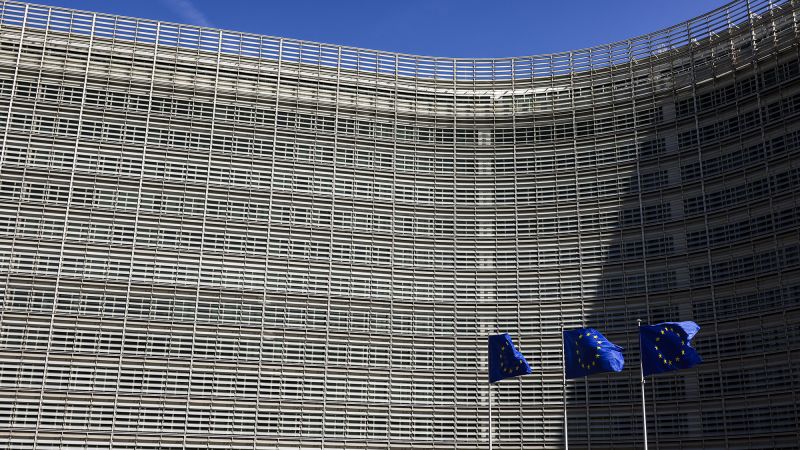
欧洲在制定全球首套全面规范人工智能技术的规则方面走在前列,但在关于如何安全使用人工智能的高层谈判中却几乎缺席。这种反讽凸显出欧洲在人工智能竞赛中远远落后于美国和中国。尽管欧洲多年前就在人工智能监管方面走在前列,但其前沿模型、数据中心和大型科技公司数量较少,难以与更大的贸易伙伴在同等条件下竞争。
Europe has been conspicuously absent from high-level talks about how to use artificial intelligence safely, despite crafting the world’s first comprehensive set of rules to govern the technology. The irony underscores how far Europe has fallen behind the United States and China in the AI race. Although Europe took the lead on AI regulation years ago, it has fewer frontier models, data centers and big tech companies to compete on an equal footing with its larger trading partners.
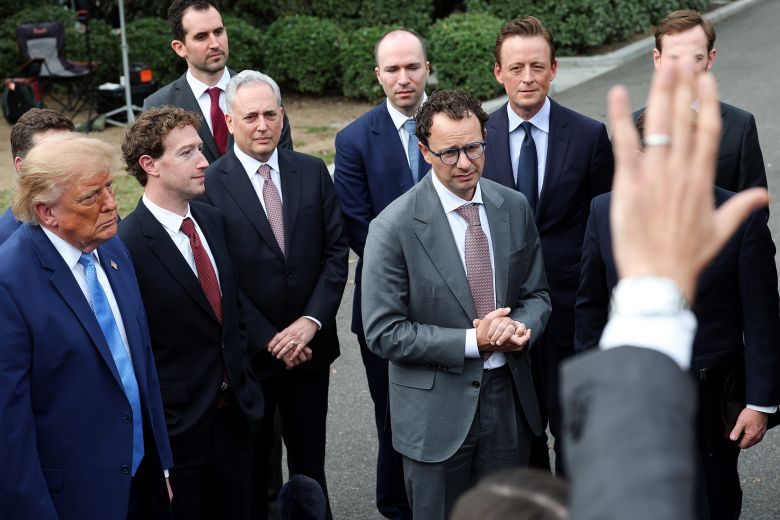
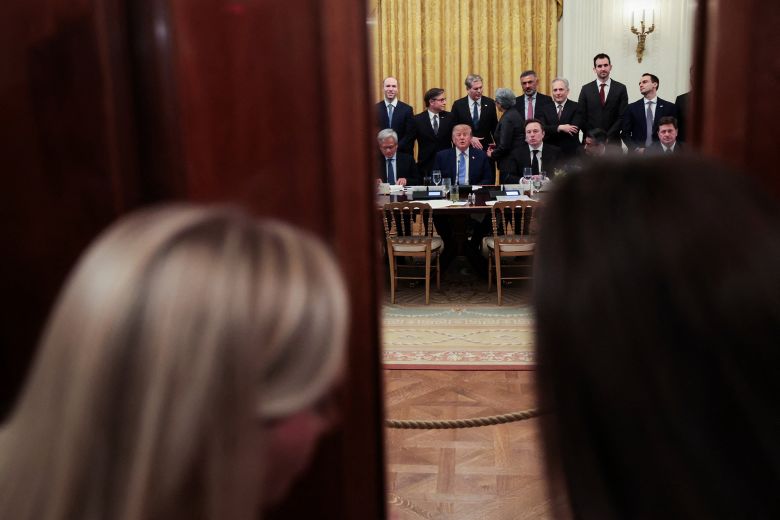
诺贝尔奖得主法国经济学家菲利普·阿吉翁警告称:“由于人工智能的非凡发展,欧洲在全球舞台上面临边缘化的严重风险。”他共同撰写了一份最近的报告,认为欧洲如果希望在人工智能时代蓬勃发展,需要紧急进行“课程纠正”。欧盟长期以来一直渴望成为“安全人工智能”的全球领导者,其战略包括处以巨额罚款。然而,随着主要来自美国的人工智能高管最近承诺“自律”以监管全球领先的人工智能模型,欧盟的做法显然并未被采纳。
“Europe is at acute risk of marginalization on the global stage because of the extraordinary developments of AI,” warned Nobel-prize winning French economist Philippe Aghion. He co-wrote recent report that argues Europe needs an urgent “course correction if it wants to thrive in the AI era.”The European Union has long aspired to be the global leader in “safe AI,” with a strategy that includes hefty fines. Yet, as mostly American AI executives recently committed to “self-police” the world’s leading AI models, it was patently clear that the EU’s approach was not the one being followed.
欧洲长期以来一直难以培育出硅谷所拥有的科技巨头。如今这一问题延伸至缺乏能够与OpenAI的ChatGPT、Anthropic的Claude或中国DeepSeek的类似工具相媲美的前沿人工智能模型。
Europe has long struggled to produce the tech giants boasted by Silicon Valley. The problem now extends to a lack of frontier AI models that can rival the likes of OpenAI’s ChatGPT, Anthropic’s Claude or comparable tools from China’s DeepSeek.
上个月,欧洲央行行长克里斯蒂娜·拉加德将欧洲的人工智能困境描述为“尴尬”。她在一次演讲中表示:“要么(欧洲)因无法保护其数据而推迟采用人工智能,从而放弃增长;要么它快速采用人工智能,变得高度依赖,并面临失去按照自身价值观组织经济自由的风险。”
European Central Bank president Christine Lagarde last month described the continent’s AI predicament as “awkward.”“Either (Europe) holds back on adopting, because it cannot protect its data, and forgoes the growth — or it adopts AI quickly, becomes highly dependent, and risks losing the freedom to organize its economy according to its own values,” she said in a speech.
总部位于巴黎的Mistral AI上周发布了一款模型,该公司称其性能可与知名度更高的美国竞争对手相媲美,为欧洲的人工智能行业带来一线希望,但尚不清楚它是否能够成为人工智能巨头产品的有力竞争对手。
Paris-based Mistral AI unveiled a model last week that it argues is on par with its better-known American competitors, providing a glimmer of hope for Europe’s AI industry, but it remains to be seen if it will provide a serious rival to offerings from the AI giants.
在关于如何监管AI模型的争论成为热议话题之前数年,欧洲立法者就起草了《人工智能法案》,旨在让公司对其工具带来的风险负责,包括在数据质量、人工监督和网络安全等方面设立严格要求。
Years before debates about how to police AI models became the topic du jour, European lawmakers drafted the AI Actto hold companies accountable for the risks arising from their tools, including strict requirements in areas for data quality, human oversight and cybersecurity.

不合规可能导致工具被强制修改,或处以年营业额(即总收入)3%的罚款,对最大的科技公司而言,这可能高达数十亿美元。
Non-compliance can result in forced changes to tools or fines of up to 3% of annual turnover, or total income, which would amount to billion of dollars for the biggest tech companies.
欧盟委员会主席乌尔苏拉·冯德莱恩在上个月的国情咨文中表示,《人工智能法案》是“设立防护栏的关键一环,它使欧洲有能力塑造全球应对该技术危害的努力”。
The AI Act is “a crucial piece to putting guardrails in place. And it puts Europe in the position to shape global efforts on how to tackle” the dangers of the technology, European Commission President Ursula von der Leyen said in her state of the union address last month.
但在实践中,该法律的执行证明十分困难,多个欧盟成员国尚未建立监管合规的主管部门。
But in practice, the law has proven difficult to enforce, with several EU member states yet to establish authorities to police compliance.
《人工智能法案》与其他科技法规如《数字市场法案》和《通用数据保护条例》一起,也导致了欧洲AI产品推出的延迟。
The law, alongside other tech regulations like the Digital Markets Act and the General Data Protection Regulation, has also contributed to delays in the rollout of AI products in Europe.
例如,Meta AI于2025年3月进入欧洲市场,而其在美国的推出早在18个月前就已开始。
Meta AI, for example, arrived in Europe in March 2025, some 18 months after its US rollout began.
Meta当时表示:“在我们继续应对复杂的监管体系时,将AI技术推向欧洲人民手中的进程比我们期望的要长得多。”
“It’s taken longer than we would’ve liked get our AI technology into the hands of people in Europe as we continue to navigate its complex regulatory system,” Meta said at the time.
监管也在制约欧洲公司。去年,欧盟统计局Eurostat对157,000家企业的调查显示,大约一半的企业表示,由于对法律后果缺乏明确认识以及担心违反欧盟严格的数据保护法,他们选择不采用AI。
Regulation holds back European companies, too. Roughly half of 157, 000 firms surveyed last year by Eurostat, the EU statistics office, cited a lack of clarity about legal consequences and concerns about violating the bloc’s stringent data protection laws as reasons not to adopt AI.
Pigment公司联合创始人Eléonore Crespo表示,《人工智能法案》及相关国家法规“正在拖慢我们的步伐”。该公司总部位于巴黎,估值超过10亿美元,专注于为企业开发AI软件。
The AI Act and related national regulations are “slowing us down,” said Eléonore Crespo, the co-founder of Pigment, a Paris-based firm valued at more than $1 billion that builds AI software for businesses. Europe’s economy needs “innovative companies” to survive.
她告诉CNN:“欧洲经济需要‘创新型公司’来生存。如果监管阻碍了我们,那就不会奏效。”
“If regulation holds us back, it’s not going to work,” she told CNN.
欧盟委员会本身也默认了监管负担。去年推出的《人工智能全能法案》(AI Omnibus)削弱了《人工智能法案》的一些要求,并将高风险人工智能系统实施规则的时间表延长至2027年12月。
The European Commission has itself tacitly acknowledged the regulatory burden. The AI Omnibus, a package of legislation introduced last year, watered down some requirements of the AI Act and extended the timeline for the implementation rules relating to high-risk AI systems to December 2027.

法律专家和人工智能研究人员表示,目前还为时过早评判《人工智能法案》是否成功,部分原因是这些规则仍在逐步实施。但人们仍对该立法能否跟上人工智能快速发展的步伐表示怀疑。
Legal experts and AI researchers say it is too soon to judge whether the AI Act has been a success, partly because the rules are still being phased in. But doubts remain about whether the legislation can keep pace with AI’s rapid-fire development.
“该法案的(禁令)总体上是合理的,透明度要求也相对明确,”旧金山研究公司Cognizant AI实验室负责任人工智能首席官阿米尔·巴尼法特米说。“高风险监管制度是薄弱环节,而且尚未开始实施,”他对CNN表示。
“The prohibitions (of the act) are broadly sound and the transparency requirements are relatively straightforward,” said Amir Banifatemi, the chief responsible AI officer at Cognizant AI lab, a research firm based in San Francisco. “The high-risk regime is the weak point, and it has not yet begun to apply,” he told CNN.
巴尼法特米指出,人工智能代理是一个潜在问题。他说,代理可能会整合来自不同供应商的工具,从而引发谁应对出错负责的棘手问题。
Banifatemi pointed to AI agents as one potential problem. He said agents may combine tools from different providers, raising thorny problems over who’s accountable if something goes wrong.
监管远不是欧洲人工智能普及面临的唯一障碍。基础设施和私营企业投资不足可能是一个更大的问题。
Regulation is far from the only barrier to greater AI uptake in Europe. A lack of investment in infrastructure and private companies may be an even bigger problem.
根据斯坦福大学以人为本的人工智能研究所的数据,去年欧洲私营人工智能投资总额约为210亿美元,而美国的投资额为2859亿美元,欧洲仅占美国的很小一部分。
Private AI investment in Europe totaled roughly $21 billion last year, a fraction of the $285.9 billion invested in the United States, according to the Stanford Institute for Human-Centered Artificial Intelligence.
该研究所最近发布的人工智能指数报告显示,美国的数据中心数量是其他任何国家的10倍,并在2025年产生了59个值得注意的人工智能模型,而中国为35个,法国和英国各为1个。
The center’s recent AI Index Report shows the United States hosts 10 times more data centers than any other country and produced 59 notable AI models in 2025, compared to China’s 35 and just one in each of France and the United Kingdom.
克雷斯波开玩笑说,欧洲在人工智能方面正处于“中世纪”。但她仍然乐观地认为,它最终将迎来“文艺复兴”。“我对潜力持积极态度,因为我看到了一些非常酷的项目,”她说,并指出欧洲正涌现出更多的人工智能公司和工具,同时也拥有深厚的技术人才。
Europe is in the “middle ages” when it comes to AI, Crespo quipped. But she remains optimistic that it will eventually have its “renaissance.”“I’m quite positive about the potential because I see some very cool projects,” she said, pointing to the emergence of more AI companies and tools on the continent as well as a depth of technical talent.

其他专家也持乐观态度,认为欧洲的工业实力和高质量数据在人工智能实际应用方面具有独特优势。
Other experts are also optimistic, arguing that Europe’s industrial might and high-quality data is a distinct advantage when it comes to exploiting real-world applications for AI.
“欧洲在制造业、能源、交通和医疗保健领域拥有深厚的工业专业知识和宝贵的领域数据,”巴尼法特米说。“这就是人工智能的经济价值最终可能被创造的地方。”
“Europe has deep industrial expertise and valuable domain data in manufacturing, energy, mobility and healthcare,” Banifatemi said. “That is where much of AI’s economic value may ultimately be created.”