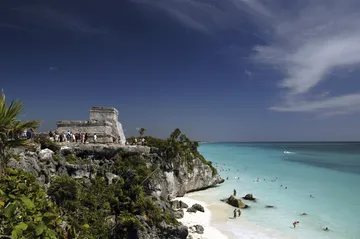
大约在2015年或2016年,图卢姆一度堪称全球最时髦的小镇。
There was a moment, around 2015 or 2016, when Tulum was the coolest town on Earth.
当时,各大时尚杂志纷纷将这座位于墨西哥加勒比海沿岸、海水呈碧蓝色的小镇捧为全球潮流引领者的圣地。“图卢姆风格”也逐渐成为一种独特的审美范式:飘逸的布料、亚麻与钩针编织制品、中性色调、光着脚丫、传统手工艺元素——这些元素将质朴优雅、环保理念以及自由奔放的精神特质融为一体,形成了当时备受追捧的波西米亚奢华风。
Every fashion magazine seemed to billboard the beach retreat on Mexico’s turquoise-water Caribbean coast as a mecca for global trendsetters. “Tulum style” came to describe a distinctive aesthetic — flowing fabrics, linen & crochet, neutral colors, bare feet, traditional craftsmanship — that blended rustic-chic, environmentalist and free-spirit ideals into the boho-luxe look of the moment.
这种热潮在2018年7月达到顶峰:当时《Vogue》杂志以模特界女王吉赛尔·邦辰为 人物,照片拍摄于图卢姆的热带雨林中,她身着拉尔夫·劳伦的印花连衣裙,被塑造成一位“气候斗士”。配文更是夸张至极:“吉赛尔:地球之母、环保活动家、时尚巨星。”自此,图卢姆正式跻身热门旅游胜地行列。
This effervescence bubbled to a peak in July 2018, when Vogue put modeling queen Gisele Bündchen on its cover, photographed in Tulum’s tropical forest in a printed floral Ralph Lauren dress and presented as a “climate warrior.”The accompanying line was deliciously obnoxious: “Gisele: Earth Mother, Eco-Activist, Fashion Superstar.”Thus came Tulum’s “it” breakthrough.
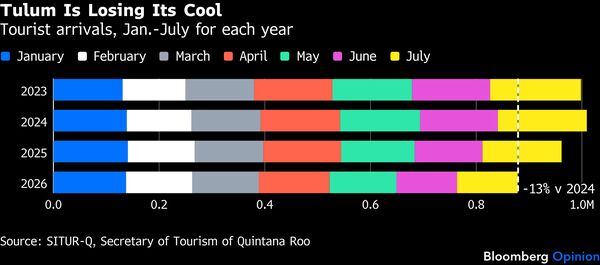
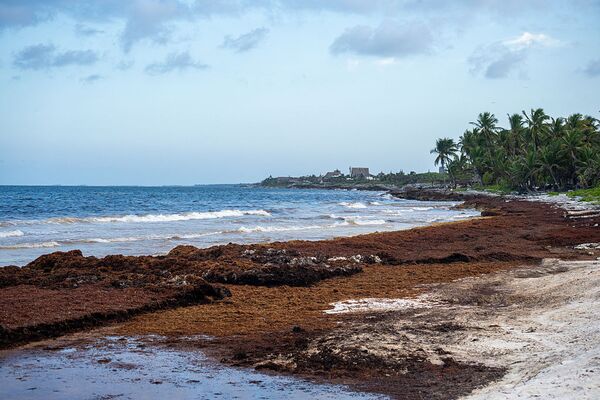
然而十年后的今天,那个承诺能带来奢华享受、绝美海景与心灵净化体验的“乌托邦式”玛雅古镇早已不复存在。如今的图卢姆正饱受过度开发、治安混乱、基础设施滞后、房地产投机以及大量马尾藻泛滥的困扰。游客们纷纷转向其他不那么浮夸的目的地:今年7月,游客数量骤降至约11.5万人次,较两年前减少了近三分之一;今年至今,当地酒店的平均入住率仅为64%,比2025年低了9个百分点。
Fast forward a decade, and that utopian version of the antique Mayan town, which promised ornamental indulgence, paradise views and a dose of spiritual cleansing, is long gone. These days, Tulum is grappling with overexpansion, insecurity, inadequate infrastructure, real-estate speculation and a stinking sargassum invasion. Tourists are fleeing to less pretentious destinations: Visitor numbers plunged to about 115,000 in July, almost a third below the level of two years earlier, while hotel occupancy has averaged just 64% so far this year, nine percentage points below 2025.
虽然从坎昆到巴亚尔塔港,墨西哥各大旅游胜地都因机票价格上涨、比索走强以及马尾藻危机而陷入困境,但图卢姆的问题似乎更为根深蒂固。毕竟,这里原本只是个小众精品旅游地,根本无法承受人气暴涨带来的压力。如今,当地仍缺乏基本的公共服务设施,包括完善的供水与排污系统;街道破败不堪,违章建筑随处可见,毒品犯罪活动也屡禁不止。
While every major tourist hotspot in Mexico, from Cancún to Puerto Vallarta, is going through difficult times due to higher airfares, the strong peso and the sargassum crisis, Tulum’s problems seem more fundamental. This is, after all, a boutique destination that couldn’t cope with its own explosion in popularity. It still lacks basic services, including proper water and sewage systems, and struggles with degraded streets, irregular settlements and drug-trafficking activity.
对于一个本应抵制不惜一切代价增长模式的地方来说,这是一个令人悲伤但可以预见的结果。2001年我第一次来到图卢姆时,这里还只是一个远离电网、宁静的田园目的地,只有悠闲的海滩营地和大约7000名居民。我亲眼目睹了它的过度开发如何成为一个令人警醒的典范,展示了糟糕的规划开发会带来什么。图卢姆现在有超过7.5万名居民——自2020年以来惊人地增长了61%——而自那次背包旅行以来,其城市足迹已扩大了好几倍,使其成为该国增长最快的城市地区之一。
It’s a sad but foreseeable outcome for a place that should have resisted the model of growth at any cost. As someone who first visited Tulum in 2001, when it was little more than an off-the-grid, bucolic destination of laid-back beach camps and about 7,000 residents, I’ve watched its overexploitation become a bracing showpiece of what badly planned development can bring. Tulum now has more than 75,000 residents — an astonishing 61% increase since 2020 — while its urban footprint has expanded several times since my backpacking trip, making it one of the country’s fastest-growing urban areas.
2023年的一项政府研究估计,到2050年,图卢姆的人口加上邻近的费利佩·卡里略·波多市,可能会超过71.6万人。
A 2023 government study estimated that by 2050, Tulum’s population together with that of the neighboring municipality of Felipe Carrillo Puerto could exceed 716,000 people.
我不是去增长狂热分子,我也明白更多游客终究是一种认可的标志。尽管如此,这种无政府式的扩张不会带来任何好处。有人可能会说,鉴于需求激增和墨西哥在城市规划方面的历史性困难,图卢姆的困境几乎是不可避免的。毕竟,全国不那么光鲜的城镇也面临着类似的基本服务短缺。至少图卢姆创造了就业和经济活动。
I am no degrowth zealot, and I get that more visitors are ultimately a sign of approval. Still, nothing good can come from such anarchic expansion. Some might argue that Tulum’s travails are almost inevitable given surging demand and Mexico’s historic difficulties with urban planning. After all, less glamorous towns across the country suffer from similar shortages of basic services. At least Tulum creates jobs and economic activity.
然而,即使我们承认这一点,一个容纳越来越多房地产和商业项目却对法律法规和环境破坏漠不关心的城镇,仍然存在严重问题。该地区的大众旅游中心坎昆就在以北80英里处,图卢姆本可以遵循一种更克制、更可持续的扩张模式。
Yet even if we grant that point, there is something deeply wrong with a town that accommodates ever more real-estate and commercial projects with scant regard for legal regulations and environmental damage. With Cancún, the region’s mass-tourism hub, just 80 miles north, Tulum could have followed a more constrained and sustainable expansion model.
问题已积累多年,从土地纠纷、疯狂的房地产投机,到专门宰杀不知情游客的暴利定价,以及当地开发商对公共海滩的缓慢吞并。夜总会和电子音乐节随之而来。到2019年,一连串药店已沿主干沿海公路林立,专门服务寻求无需处方即可购买的合法非处方药的美国人。感觉这已是末路的开始;那个带着环保宣言的波西米亚时尚仙境,早已蜕变成某种不再空灵的东西。
Problems had been building for years, from land disputes and feverish property speculation to abusive prices designed to exploit naïve tourists and the slow takeover of public beaches by local developers. Nightclubs and electronic music festivals followed. By 2019, a string of pharmacies had popped up along the main coastal road catering to Americans looking for over-the-counter legal medications without prescriptions. It felt like the beginning of the end; the boho-chic wonderland with eco-conscious manifestos was already turning into something much less ethereal.
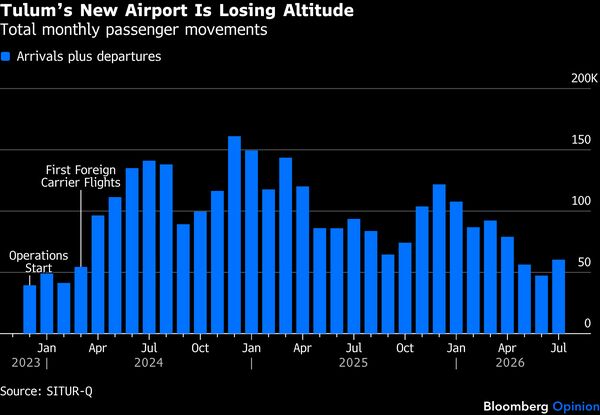
安德烈斯·曼努埃尔·洛佩斯·奥夫拉多尔总统作出有争议的决定,在丛林深处修建一座专用国际机场——即便其政府同时也在建设连接图卢姆与坎昆大型机场的玛雅列车——这助推了不断追逐更多游客的战略。然而,这座初始年客运量设计为550万的机场,并未真正“起飞”——字面意义上也是如此。它于2023年底投入商业运营,却难以吸引客流,今年以来客流量较2025年暴跌近34%,两家本地航空公司墨西哥航空和沃拉里斯航空最近宣布暂停运营。图卢姆的困境已如此明显,以至于政府推出了“图卢姆重生”战略以吸引游客回流。
President Andrés Manuel López Obrador’s controversial decision to build a dedicated international airport in the middle of the jungle — even as his administration was also developing the Maya Train line connecting Tulum with Cancún’s massive airport — boosted the strategy of chasing ever more tourists. Yet the airport, with an initial capacity of 5.5 million annual passengers, hasn’t quite taken off — literally. Opened for commercial operations in late 2023, it’s struggling to attract passengers, with traffic falling almost 34% this year so far compared to 2025, and two local airlines, Aeroméxico and Volaris, recently announcing the temporary suspension of their operations. The retreat’s troubles have become so apparent that the government has launched a “Tulum Reborn” strategy to lure visitors back.
耐人寻味的是,曾经被美丽天然井和考古遗址环绕的时尚人士天堂,已沦为社交媒体的笑柄,无数短视频和视频宣称图卢姆已死,这是一个极其虚伪的地方,一切都被包装成环保、道德和可持续,而实际上几乎无一兑现。
Tellingly, what was once a fashionista nirvana surrounded by beautiful cenotes and archeological sites has become the laughingstock of social media, with endless reels and videos proclaiming the death of Tulum, a deeply hypocritical place in which everything is marketed as eco-friendly, ethical and sustainable, when so little of it actually is.
这或许不公,但反弹反映了真实情况:图卢姆背弃了在朴素安静天堂过简易生活的承诺。它现在面临的巨大挑战,将是重新思考战略,找回最初让它与众不同的东西。
That may be unfair, but the backlash reflects something real: Tulum’s betrayal of its promise of a simpler life in an unassuming and quiet paradise. Its big challenge now will be to rethink its strategy and regain what made it special in the first place.