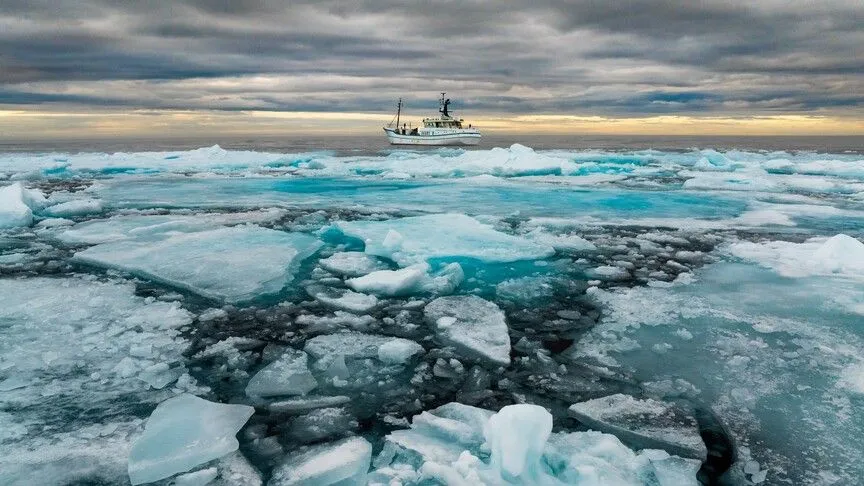
“海冰的损失正使船只能够进入北极水域,”气候专家西安·普赖尔对阿纳多卢通讯社表示。“我将这些活动视为商业驱动的行为,”挪威研究员阿里尔德·莫说,并将北极航线描述为“季节性补充”。“这条航线并非解决其他地区航运问题的万能药,”研究科学家伊丽莎白·威斯尼克表示。当一个因气候变化而被改造的地区开始吸引与全球排放相关的产业时,会发生什么?
随着气温上升加速北极海冰的消失,该地区正变得对商业航运更加可及,为贸易创造了新机遇,同时也引发了对环境成本的担忧。
‘The loss of sea ice is allowing ships to access Arctic waters,’ climate expert Sian Prior tells Anadolu‘I see these activities as commercially driven,’ Norway-based researcher Arild Moe says, describes Arctic routes as ‘seasonal addition’ ‘The route is no panacea for shipping problems elsewhere,’ says research scientist Elizabeth Wishnick What happens when a region transformed by climate change begins to attract an industry associated with global emissions? As rising temperatures accelerate the loss of Arctic sea ice, the region is becoming more accessible to commercial shipping, creating new opportunities for trade while raising concerns about the environmental costs.
中国集装箱航运公司“海传奇”在8月中旬宣布,将启动首条定期通过北极的集装箱航运服务。
Chinese container shipping company Sea Legend announced in mid-August the launching of the first regular container shipping service through the Arctic.
该航线连接中国东海岸的宁波与英国的费利克斯托,沿俄罗斯北方海路(NSR)航行,预计可将通常40天的航行时间缩短近一半。
The route connects Ningbo on China's eastern coast with Felixstowe in the UK along Russia's Northern Sea Route (NSR) and is expected to cut the usual 40-day sailing time roughly in half.
该公司将该每周一次的服务命名为“冰上丝绸之路”,以此呼应历史上连接中国与欧洲的贸易路线。
The company has branded the weekly service the "Ice Silk Road," in reference to the historic trading routes that connected China and Europe.
这一发展紧随该航线商业活动的增加。据《金融时报》报道,去年夏季记录了23次航行,而2024年为15次。韩国也在测试该航线。
The development follows a rise in commercial activity along the route, with 23 transits recorded last summer compared with 15 in 2024, according to Financial Times. South Korea is also testing the route.
8月下旬,载重2800标准箱的“泛星阿克罗”号从釜山出发,开启该国首次北极航线试航,途经白令海峡和北极海,驶向欧洲港口。
The 2,800-TEU PanStar Acro departed Busan in late August for the country's first trial voyage along the Arctic shipping route, passing through the Bering Strait and Arctic Ocean toward European ports.
与此同时,专家警告称,该航线上日益增长的商业航运可能加剧脆弱北极地区的气候影响、污染和生物多样性损失。
Meanwhile, experts warn that growing commercial shipping along the route could intensify climate impacts, pollution and biodiversity loss in the fragile Arctic.
因此,对该航线日益增长的兴趣凸显了一个气候悖论:一个因气候变化而日益通航的地区,能否承受成为全球贸易新动脉所带来的环境后果?为何船只正转向北极?
The growing interest in the route thus highlights a climate paradox: can a region becoming increasingly navigable because of climate change absorb the environmental consequences of becoming a new artery of global trade? Why are ships turning toward the Arctic?
西安·普赖尔(Sian Prior),北极清洁联盟首席顾问,对安纳多卢通讯社表示,北极航运的增加与海冰的减少同步发生。
Sian Prior, lead adviser to the Clean Arctic Alliance, told Anadolu that the increase in Arctic shipping has coincided with the loss of sea ice.
“北极理事会《北极海洋环境保护》报告显示,截至2025年的12年间,北极地区船舶数量增加了40%,航行里程几乎翻倍,”她说。
“The Arctic Council’s Protection of the Arctic Marine Environment indicates a 40% increase in the number of ships and an almost doubling of the amount of the distances being sailed in the Arctic in the 12 years to 2025,” she said.
挪威弗里德约夫·南森研究所(Fridtjof Nansen Institute)的研究教授阿里尔德·莫埃(Arild Moe)表示,虽然航线受船舶尺寸和有限运营季节的限制,但较短的运输时间对企业具有很大吸引力。
Arild Moe, a research professor at Norway-based Fridtjof Nansen Institute, said shorter transit times are a major attraction for companies, although the route remains constrained by vessel size and its limited operating season.
“就前往欧洲的运输而言,优势在于速度,劣势在于相较于常规集装箱航线,船只规模较小,”莫埃对安纳多卢通讯社说。
“When it comes to transit to Europe, the advantage is speed, the drawback is relatively small ships, compared to the regular container lines,” Moe told Anadolu.
他指出,该航线每年仅可使用约三到四个月,这意味着企业目前正在测试其是否具备商业可行性。
He said the route can only be used for about three to four months a year, meaning companies are currently testing whether it can work commercially.
《自然·地球与环境评论》(Nature Reviews Earth and Environment)上发表的一项研究发现,1980年至2024年间,九月北极海冰面积减少了35.8%。
A study published in Nature Reviews Earth and Environment found that September Arctic sea ice area decreased by 35.8% between 1980 and 2024.
与此同时,在2013年至2023年期间,进入极地规则(Polar Code)北极区域的船舶数量增加了37.3%,而航运相关的二氧化碳排放量上升了6.3%。
During 2013-2023, meanwhile, the number of ships entering the Polar Code Arctic area increased by 37.3%, while shipping-related CO2 emissions rose 6.3%.
“海冰的消失使得船舶能够进入以前被海冰覆盖的北极水域,并且在以前几乎没有机会的季节也能实现通航,”普赖尔进一步表示。然而,她也警告称,冰雪融化并不是推动活动增加的唯一因素。
“The loss of sea ice is allowing ships to access Arctic waters previously covered by sea ice and leading to access at times of the year when there was previously little opportunity,” Prior further said. She cautioned, however, that melting ice is not the only factor driving increased activity.
“然而,控制北极的欲望以及对北极资源——石油和天然气、矿产和鱼类——的需求,才是在创造新机遇,而非海冰的减少,”普赖尔说。
“It is however the desire to control the Arctic and the demand for access to Arctic resources - oil and gas, minerals, and fish - that are creating new opportunities - not the reduction in sea ice,” Prior said.
海军分析中心(Center for Naval Analyses)的高级研究科学家伊丽莎白·威斯尼克(Elizabeth Wishnick)指出,传统航运路线的中断也是使北方海路更具吸引力的另一个因素。
Elizabeth Wishnick, senior research scientist at the Center for Naval Analyses, pointed to disruptions on traditional maritime routes as another factor making the Northern Sea Route more attractive.
“伊朗的战争已经扰乱了经由红海以及波斯湾的航运,”Wishnick 在接受 Anadolu 采访时表示,她同时是哥伦比亚大学 Weatherhead 东亚研究所的杰出研究员。
“The war in Iran has disrupted shipping via the Red Sea as well as the Persian Gulf,” Wishnick, who is also a distinguished fellow at Columbia University's Weatherhead East Asian Institute, told Anadolu.
商业路线具有地缘政治意义 常规集装箱航线的出现也为这条主要由俄罗斯控制和监管的航道增添了商业层面。
Commercial route with geopolitical implications The emergence of regular container services also adds a commercial dimension to growing interest in a route largely controlled and regulated by Russia.
“自 2018 年以来,北极航道的主要货运流量是亚马尔液化天然气的出口,主要向西运往欧洲,同时也有石油向该方向运输,”Moe 说。
“The dominant cargo traffic on the NSR has since 2018 been exports of LNG from Yamal, mainly westwards to Europe and also oil in that direction,” Moe said.
他指出,中国私营企业越来越多地使用该航道向俄罗斯运输消费品和工业品。
He noted that private Chinese companies have increasingly used the route to transport consumer and industrial goods to Russia.
“我认为这些活动是出于商业驱动,尽管中国当局对北极航道的长期利益也很关注,”Moe 说。
“I see these activities as commercially driven, although Chinese authorities take an interest in the NSR over the longer term,” Moe said.
他补充说,俄罗斯在寻求中国对北极基础设施的投资时,对中国的参与变得更为宽容,尽管未来的合作仍取决于更广泛的俄中关系。
He added that Russia has become more accommodating toward Chinese involvement as it seeks Chinese investment in Arctic infrastructure, although future cooperation will depend on the broader Russia-China relationship.
Wishnick 还表示,新集装箱航线应放在更广阔的中俄北极合作背景下审视。
Wishnick also said the new container services should be viewed in the context of wider China-Russia cooperation in the Arctic.
“中国正寻求使其在北极的存在常态化,并降低北欧国家对中国在该地区角色的怀疑,”她说。
“China is seeking to normalize its presence in the Arctic and reduce the skepticism among the Nordic countries about China's role in the region,” she said.
她还将韩国的试航与首尔长期以来对与俄罗斯在北极合作的兴趣联系起来。
She also linked South Korea's trial voyage to Seoul's longstanding interest in Arctic cooperation with Russia.
“虽然我们在中国看到的可行性/盈利性驱动因素在这里也可能起作用,但我认为韩国可能将这条北极航道集装箱服务视为一种更为低调的方式,以在仍然遵守制裁的前提下与俄罗斯接触,”Wishnick 补充道。
“Although the same feasibility/profitability drivers we see in China are likely at work here, too, I think Korea may be viewing this NSR container service as a more discreet means of engaging with Russia while still maintaining sanctions,” Wishnick added.
气候悖论:冰层融化,船只增多 随着北极变得更易通航,更多的航运活动可能会给促成该航道的环境带来更大压力。
Climate paradox: melting ice, more ships As the Arctic becomes more accessible, greater shipping activity could add pressure to the environment that made the route possible.
其中一个主要关注点是黑碳,这是一种由燃烧化石燃料产生的短寿命气候污染物。当它沉降在雪和冰面上时,会降低其反射阳光的能力,增加热量吸收,加速融化。
One of the main concerns is black carbon, a short-lived climate pollutant produced by burning fossil fuels. When it settles on snow and ice, it reduces their ability to reflect sunlight, increasing heat absorption and accelerating melting.
“航运已经通过温室气体排放以及燃烧化石燃料产生的短寿命气候污染物黑碳,对冰层的消失产生了贡献,”Prior 说。
“Shipping is already contributing to the loss of ice, through greenhouse gas emissions, and emissions of the short-lived climate pollutant black carbon from the burning of fossil fuels,” Prior said.
她解释说,黑碳可以传播数百甚至数千公里,但当它在靠近北极的地区释放时,其影响尤为显著,因为更容易沉降在雪和冰面上。
She explained that black carbon can travel hundreds or thousands of kilometers, but its impact is particularly significant when released near the Arctic because it is more likely to settle on snow and ice.
“空气污染物如黑碳导致的局部变暖和雪冰融化,在北极及其附近释放时的影响是其在温带或热带地区释放时的五倍左右,一些研究已经显示,”Prior 强调。Prior 还指出,北极冰层的消失会触发更广泛的气候反馈。
“Local warming and snow and ice melt from air pollutants such as black carbon have a disproportionate impact when they are released in and near the Arctic, up to five times higher than when released in temperate or tropical regions some studies have shown,” Prior underscored. Prior also highlighted the wider climate feedback triggered by the loss of Arctic ice.
“冰层的消失使得底下的暗色陆地和水体暴露,吸收更多热量,形成一个自我维持的冰融化与热量增加的循环,”她说。清洁北极联盟的评估发现,2019 年至 2024 年间,北极所有地理范围内的黑碳排放均有所增加,极地规则区的排放量从 259 吨上升至 759 吨。
"The loss of ice results in greater absorption of heat as underlying dark land and water are exposed creating a self-sustaining cycle of melting ice and increasing heat," she said A Clean Arctic Alliance assessment found that black carbon emissions increased across all of its Arctic geographic scopes between 2019 and 2024, rising from 259 to 759 metric tons in the Polar Code area.
“航运是北纬 70 度以北黑碳的主要来源,”Prior 进一步回忆道。环境风险也不仅限于排放。
“Shipping is a primary source of black carbon emitted north of 70N latitude,” Prior further recalled. Environmental risks also extend beyond emissions.
Prior 表示,船舶交通增加会提升水下噪声,扰乱海洋野生动物,并增加石油和化学品泄漏的风险,对依赖北极海洋资源的社区造成后果。
Prior said greater vessel traffic can increase underwater noise, disturb marine wildlife and raise the risk of oil and chemical spills, with consequences for communities that depend on Arctic marine resources.
“这些影响和风险并非理论上的,它们直接关系到北方人民的日常生活,”Prior 强调。该地区的偏远性也使得应对事故变得困难。
“These impacts and risks aren’t theoretical for the daily lives of people in the North,” Prior underscored. The region's remoteness also creates difficulties in responding to accidents.
“油类和化学品泄漏是对原住民社区的重大威胁,尤其是因为在北极应对泄漏所需的设备非常有限,”Prior 说。
"Spills of oils and chemicals are a threat with major consequences for Indigenous communities, particularly since the equipment required to respond to spills is very limited in the Arctic," Prior said.
“如果发生航运事故需要救援,搜救响应将非常受限。”接下来会怎样?
"If a shipping accident happens and people need to be rescued, search and rescue response will be very limited."
目前,专家们表示,尽管北极航道有望显著缩短航程,但短期内不太可能取代传统航线。
What happens next? For now, the experts say the Northern Sea Route is unlikely to replace traditional routes, despite its potential to significantly shorten voyages.
“在可预见的未来,它只能作为季节性补充,无法取代苏伊士运河,”Moe 说。
“In the foreseeable future, only as a seasonal addition. It cannot replace Suez,” Moe said.
Wishnick 同样警告称,难以预测的冰情可能削弱集装箱航运所需的可靠性。
Wishnick similarly cautioned that unpredictable ice conditions could undermine the reliability required by container shipping.
“冰层的后退不可预测,集装箱运输所需的准时交付可能无法按计划进行,”她说。
"The receding ice is unpredictable and the on-time deliveries needed for container shipment may not work as planned," she said.
“这条航道并非解决其他航运问题的灵药,”Wishnick 补充道。
"The route is no panacea for shipping problems elsewhere," Wishnick added.
对 Prior 来说,降低在北极运营船舶的环境足迹是首要任务。
For Prior, reducing the environmental footprint of vessels that do operate in the Arctic is a priority.
“立即转用更清洁的蒸馏燃料可使黑碳排放降低 50%‑80%”,她说,并呼吁对黑碳排放进行监测和报告。
"A switch to cleaner distillate fuels immediately could result in a 50-80% reduction in black carbon emissions," she said, calling for monitoring and reporting of black carbon emissions.
Prior 警告称,扩大全北极航运的长期环境成本将超过其经济和物流收益,并指出北极冰层充当热调节器,反射太阳热量。“北极的扰动和变化不会仅限于北极,”她提醒道。“在北极发生的事情不会只停留在北极。”
Prior warned that long-term environmental costs of expanding Arctic shipping will outweigh the economic and logistical benefits, saying that Arctic ice acs as a thermoregulator and reflects the sun’s heat. “Disturbances and changes in the Arctic will not be experienced only in the Arctic,” she cautioned. “What happens in the Arctic does not stay in the Arctic.”