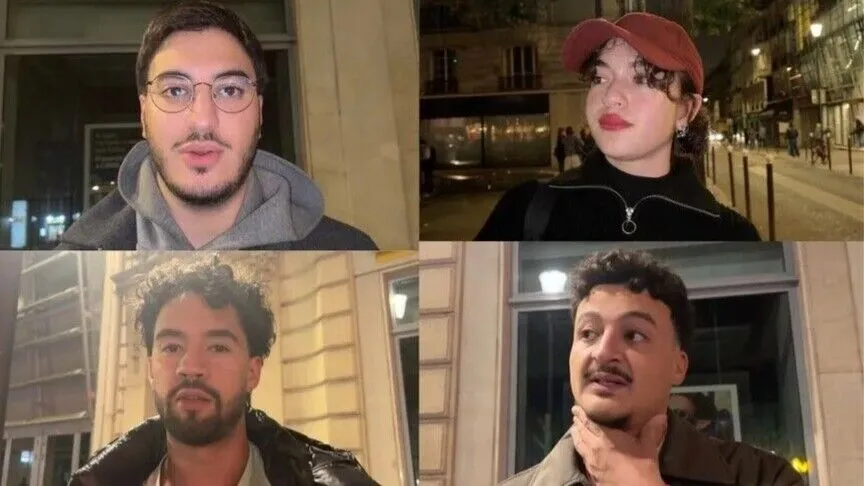
参加“NAZA”纪录片放映的法国观众表示,他们被以色列士兵的叙述所震惊,这些叙述将巴勒斯坦受害者简化为数字,而未将其视为人。
French viewers who attended screenings of “NAZA,” a documentary exposing Israel’s killing of civilians in Gaza, said they were shocked by Israeli soldiers’ accounts that reduced Palestinian victims to numbers rather than recognizing them as human beings.
该纪录片由英国《卫报》制作,奥斯卡获奖导演尤瓦尔·亚伯拉罕和拉切尔·索尔执导,于10月12日至13日在法国影院放映。影片在巴黎首映当天引起了相当大的关注,大部分票已售罄。
Produced by British newspaper The Guardian and directed by Oscar-winning filmmaker Yuval Abraham and Rachel Szor, the documentary was screened in French cinemas on Oct. 12-13. The film drew considerable interest in Paris on its opening day, with most tickets sold.
在首都两家影院观看“NAZA”的法国观众向安纳多卢通讯社分享了他们的反应。
French viewers who watched “NAZA” at two cinemas in the capital shared their reactions with Anadolu.
“我认为电影制作人非常勇敢” 法国观众肯齐表示,该纪录片解释了“NAZA”一词的含义——该词指平民伤亡——并让他深感震惊。
‘I think the filmmakers are very courageous’ A French viewer, Kenzi, said the documentary explained the meaning of NAZA, a term referring to civilian casualties, and left him deeply shocked.
他说,以色列士兵反复讨论数字和计算,几乎所有数字都代表了在加沙被杀害的人。
He said Israeli soldiers repeatedly discussed numbers and calculations, almost all of which represented people killed in Gaza.
“我们知道发生了什么,我们在谈论它,我们也在目睹它,但没想到会如此严重。而在这里,看到以色列士兵谈论这些真的让人震惊。有时你能感受到他们的悔意,有时则不然。他们说话相当冷淡。因此,这真的让我感到不安。而且,我认为这部纪录片制作得非常好。节奏很快,”他说。
“We know what is happening, we talk about it, we see it, but not to this extent. And here, it was really shocking to see Israeli soldiers talking about it. Sometimes you could sense regret, sometimes not so much. They spoke quite coldly. So, it really disturbed me. And, I think it was very well made. It went by very quickly,” he said.
肯齐指出,士兵们将他们在加沙的行动比作视频游戏。他说:“他们谈论使用人工智能来识别要杀死的人。到了某个时候,你会看到他们不再衡量他们将要杀死的人数、附带损害或NAZA的数量。”
Noting that the soldiers compared their actions in Gaza to a video game, Kenzi said: “They talk about artificial intelligence to identify people to kill. At a certain point, you see that they no longer measure the number of people they are going to kill, the collateral damage, the NAZAs.”He said the soldiers frequently referred to a “system.”
他说,士兵们经常提到一个“系统”。“看来他们似乎被洗脑,被灌输认为自己站在正义一方,直到他们亲自意识到自己所做的事情是卑劣的,”他说。
“It seemed as though they had been brainwashed and made to believe that they were on the right side, until they realized for themselves that what they were doing was vile,” he said. Kenzi recalled the soldiers repeatedly saying they “just wanted to eliminate the enemy.”
肯齐回忆道,那些士兵反复声称他们“只是想消灭敌人”。他说:“他们明确指出,所谓的‘敌人’就是3到6岁的儿童以及没有任何过错的妇女。很多时候,他们的目标是消灭某个敌方头目,结果却杀光了那人的全家,唯独留下他本人。”
“They clearly said that the enemy was children aged 3 to 6, women who had done nothing to deserve this. Often, they wanted to eliminate an enemy leader, and in the end, they killed his entire family except that person,” he said. Praising the Israeli directors, he added: “I think the filmmakers are very courageous to have initiated a project like this.”
在称赞这些以色列导演时,他补充道:“我认为这些电影制作人非常勇敢,敢于发起这样一个项目。”“这部影片触动了影院里的每一个人”23岁的法国观众伊奥娜说道:“我认为这部影片极其重要。能从这样的视角来呈现事实至关重要,因为我们常听到受害者的证词,而这部影片则呈现了施害者的叙述,他们用具体语言描述了当时的情况。”她表示,这部纪录片能帮助人们理解事实真相并站在历史的正确一边;影片中的措辞与提问方式也深深打动了她。
‘It affected everyone in the theater’Iona, a 23-year-old French viewer, said: “I think the film is extremely important. It is extremely important to have this perspective because we often hear testimonies from victims, but here we have testimonies from the attackers, who put the situation into concrete words.”She said the documentary could help people understand what was happening and stand on the right side of history, adding that the language used and the questions asked deeply affected her.
“采访者毫不避讳地使用‘种族灭绝’这个词,他直接询问这是否属于种族灭绝,而士兵们也承认了,”她说道。
“He was not afraid to use the word ‘genocide.’ He asked directly whether it was genocide, and they said yes,” she said, referring to the interviewer.
伊奥娜称,最令她震惊的是那些士兵根本不把受害者当作人来看待。她还特别提到影片中一些画面:特拉维夫的人们过着正常生活,而加沙地带的人们却在死去。“所有内容都令人触目惊心,”她说。
Iona said she found it shocking that the soldiers did not regard the victims as people. She also highlighted scenes showing people living normally in Tel Aviv while people in Gaza were dying. “Everything was extremely striking,” she said.
她强调制作此类影片并让各方发声的重要性,接着说道:“影院里有年轻人,也有年长者。显然,这部影片触动了在场的每一个人。结尾时全场一片寂静,真的非常感人。”她呼吁大家观看这部纪录片,最后以“巴勒斯坦自由”作为结语。
Emphasizing the importance of making such films and allowing everyone to speak, she added: “There was everyone in the theater — young people, older people. You could see that it affected everyone in the theater. There was silence at the end. It was extremely moving.”She urged people to watch the documentary, ending her remarks with: “Free Palestine.”
“把人简化为数字最令我震惊” 27岁的法国观众亚当表示,整部纪录片让他全程说不出话来。
‘Reducing human beings to numbers shocked me the most’ Adam, a 27-year-old French viewer, said the documentary left him speechless throughout.
“我了解背后的历史与政治背景,也知道巴勒斯坦正在发生大屠杀与种族灭绝,”他说。
“I was aware of the history and the political issues behind it, of the massacre and genocide taking place in Palestine,” he said.
但他补充说,听到体制内人士的证词仍然令人震惊,称这让这些暴行有了具体的实质内容。
But hearing testimony from people within the system was still shocking, he added, saying it gave concrete substance to the atrocities.
“总体而言,我认为这部纪录片制作和呈现得非常好,因为它提出了几个问题,尤其是通过‘NAZA’这个词对受害者进行的非人化处理。
“Overall, I think the documentary is very well made and presented, because it raises several questions, particularly about the dehumanization of victims through the term NAZA.
最终,受害者——他们喜欢称之为‘附带损害’的那些人——变得不过是一些数字。将人简化为数字,是最令我震惊的,”他说。
Ultimately, the victims, the ‘collateral damage,’ as they like to call them, become nothing more than numbers. Reducing human beings to numbers was what shocked me the most,” he said.
亚当说,巴勒斯坦的大屠杀并非始于2023年10月,并赞扬了导演们不顾以色列政府施压的勇气。
Adam said the massacre in Palestine did not begin in October 2023 and praised the directors’ courage despite pressure from the Israeli government.
“一位认识到加沙灾难性局势的采访者”另一位法国观众亚辛说,反复强调数字是这部纪录片最引人注目的元素之一。
‘An interviewer who recognized the disastrous situation in Gaza’ Another French viewer, Yacine, said the repeated emphasis on numbers was among the documentary’s most striking elements.
“他们有一位看起来客观的采访者,保持了一定的距离,认识到了在巴勒斯坦和加沙正在发生的灾难性局势,”他说,指的是亚伯拉罕。
“They had an interviewer who appeared objective, who had some distance and recognized the disastrous situation unfolding in Palestine and Gaza,” he said, referring to Abraham.
相比之下,他说,接受采访的士兵们看起来像是被战争所 conditioning( conditioning)。
By contrast, he said, the soldiers interviewed appeared conditioned by war.
“我们所看到的特拉维夫画面——那里的人们似乎很安全,日常生活相当平静——与影片结尾加沙的画面——本身就是战争与毁灭的化身——之间形成了真正的对比,”他说。
“There is a real contrast between the images we saw of Tel Aviv, where people seem safe and appear to lead fairly peaceful daily lives, and the images of Gaza at the end of the film, which embody war and destruction themselves,” he said.
“当你看到那些画面时,你会觉得那里几乎已经没有生命了。人们只是在生存。”
“When you see the images, you get the impression that there is almost no life left. People are surviving.”