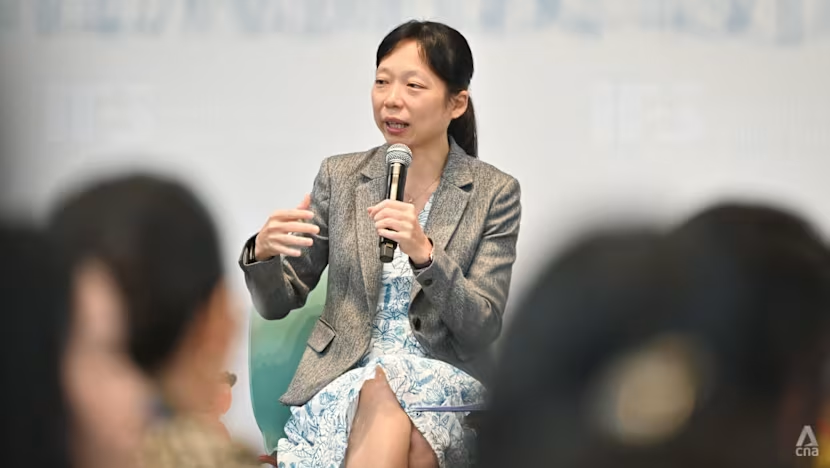
新加坡:新加坡人力部代理部长贾斯敏·劳周三(10月14日)表示,新加坡将为围绕灵活安排重新设计岗位的雇主提供补助和激励措施。
SINGAPORE: Singapore will give grants and incentives to employers who redesign job roles around flexible arrangements, said Acting Minister for Manpower Jasmin Lau on Wednesday (Oct 14).
虽然政府仍在研究从哪些行业开始推行该政策,但劳女士表示,从事此类岗位的工人必须明白,他们可能也会根据所完成的任务、产出和成果获得不同的报酬。
While the government is still studying which sectors to begin rolling out the policy, Ms Lau said that workers in such roles must understand that they may also get paid differently based on the tasks, outputs and outcomes that they deliver.
“我们正在研究几种关于灵活负荷工作的想法。外界不同人使用不同的术语——有人称之为分时工作,也有人只是说这是兼职工作。
“We are working on a couple of ideas around flexible load jobs. Different people out there use different terms – some call it fractional jobs, and some people just say it's part-time jobs.
“但基本上,我们正在尝试看看是否有办法帮助雇主重新设计他们的工作,”劳女士在政策研究所(IPS)2026年新加坡青年大会上表示。
“But basically, we're trying to see whether there's a way to help employers redesign their work,” said Ms Lau at the Institute of Policy Studies’ (IPS) Young Singaporeans Conference 2026.
这意味着雇主必须以不同的方式打包任务,使工人能够以不同的节奏工作,她在淡马锡坊举办的活动期间如是说。
This means employers would have to bundle the tasks differently, so that workers can each work at a different rhythm, she said during the event at Temasek Shophouse.
“这样做将伴随雇主获得补助和激励。我们不会期望它一开始就成为全国性规模,因为必须先在一些行业的部分雇主那里进行测试,以看看是否有效,”劳女士同时也是数字发展与信息部高级政务部长。
“It will come with grants and incentives for employers to do so. We don't expect it to be national scale right from the start, because it has to be tested with some employers in some sectors to see whether it works,” said Ms Lau, who is also senior minister of state for digital development and information.
政府正在研究哪些行业和岗位最适合此类尝试,并将从这些领域先行试点,她说。
The government is working out which industries and roles are most suited for such efforts and to start there first, she said.
这种安排将超越单纯的婚姻和生育政策或干预措施,将支持任何需要工作生活灵活性的人,劳女士表示,她也是婚姻与生育重置工作组的成员。
Such an arrangement would go beyond just a marriage and parenthood policy or intervention, and would support anyone who needs flexibility in their working life, said Ms Lau, who is a member of the Marriage and Parenthood Reset Workgroup.
该工作组由总理府部长印迪兰尼·拉贾担任主席,旨在应对新加坡的生育率下降问题,并将审视诸如财务成本、工作生活支持、照护、住房、医疗、学前教育和教育等因素。该工作组将在明年年初发布其调查结果。
The workgroup, chaired by Minister in the Prime Minister’s Office Indranee Rajah, aims to tackle Singapore’s falling fertility rate and will look at factors such as financial costs, work-life support, caregiving, housing, healthcare, preschool and education. It will release its findings by early next year.
“它也不必是永久的。你可以根据需要在特定时间段内担任这些职位,当你完成照护责任,或者孩子长大了,或者不幸的是父母已经去世,你重新全职回到职场时,你可以转到其他岗位,”她说。“断联权”刘女士还谈到了职场中正在兴起的“断联权”规范,包括在公共服务领域。
“And it also doesn't have to be permanent. You do these job roles for the period of time that you need, and when you are done with your caregiving duties, or your kids are older, or unfortunately your parents have passed on and you're returning back to the workforce fully, then you move on to a different role,” she said. “RIGHT TO DISCONNECT”Ms Lau also addressed the issue of the emerging workplace norm of having the “right to disconnect”, including in the public service.
她称其为“极其有用的做法”,但警告不要对所有人的工作时间过于规定化。
She called it an “extremely useful practice”, but cautioned against being too prescriptive in dictating working hours for everyone.
“这对我个人很重要。作为幼儿的母亲,我在某些时间段无法工作。有些人可以一直工作到晚上7点,然后回家处理自己的事情,”刘女士说,她是两个孩子的母亲。
“This is personal to me. As a mother of young children, I cannot work during certain hours. Some people can work all the way until 7pm and then go home and then do their own thing,” said Ms Lau, who is a mother of two.
“我做不到,因为我会尝试去幼儿园接孩子,于是我会暂时关闭工作。但我会在10点、11点或12点,或者我能安排的任何时间回来工作。
“I can't, because I try to pick up the kids from preschool, and so I shut off work for a while. But I come back to work at 10 or 11 or 12, whatever hours I can do it.
“所以我也不希望我们最终陷入这样的情况:人们失去这种灵活性,因为突然间我们不被允许工作,而在某些时间工作被视为不合规。”作为大型雇主,公共服务可以成为这种“断联权”的良好榜样。领导者必须以身作则,比如不要期望员工在周末回复工作消息。
“So I don't want also that we end up in the situation that people lose this flexibility, because now suddenly we're not allowed to work, and it's seen as not kosher to work at certain hours.”The public service, being a large employer, can be a good role model for this “right to disconnect”. The leaders must practise it, such as not expecting employees to respond on weekends.
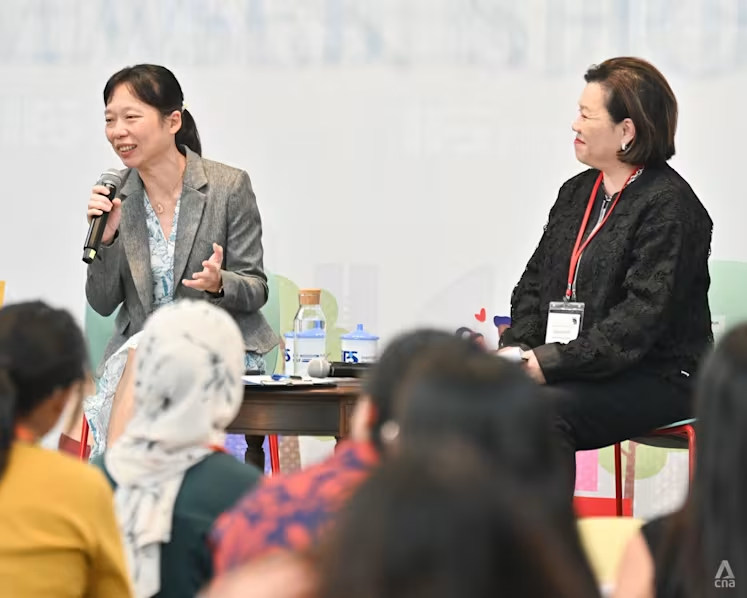
人力部代理部长刘雅婷(左)和新加坡国际事务研究所高级研究员郭Gillian博士(右)于2026年10月14日在青年新加坡人大会上。刘女士承认,当前世界的状况可能导致年轻人产生自我怀疑。
Acting Minister for Manpower Jasmin Lau (left) and Dr Gillian Koh, Senior Research Fellow, IPS (right) at the Young Singaporeans Conference 2026 on Oct 14, 2026. Ms Lau acknowledged that the current state of the world may cause young people to have self-doubts.
“我觉得我们身处这个时空的所有人,都感受到了压力、工作的压力,对未来会发生什么充满焦虑,对世界正变成什么样子充满焦虑——四周看去尽是糟糕的景象——同时你也会对自己感到不确定,不确定自己是否真的能成为最好的那个版本。如果做不到,那为什么还要有另一个新版本的你?”她说。
“I think all of us in this time and space feel the pressures of stress, work, lots of anxieties about what's going to happen, anxieties about what the world is turning out to be – which looks nasty all round – and also you feel unsure about yourself whether you can really become the best version of yourself. If you can't, then why would you have another new version of you?” she said.
不过,她说,步入伴侣关系、婚姻,继而成为父母的旅程“极其美好”,伴随着“心痛、有时流泪……有时难以言喻的喜悦交织在一起”。
However, she said that the journey into partnership, marriage and then parenthood is “extremely beautiful” and comes with a “combination of heartache, sometimes tears … sometimes indescribable joy”.
“你无法用语言形容,我觉得这构成了如此精彩的人生冒险,”刘女士说。
“You can't put it in words, and I think it makes for such a great life adventure,” said Ms Lau.
她分享道,当她在社区见到老年人并询问他们最常想什么时,他们大多时候会告诉她,他们想着自己的孩子,希望能再次见到孩子童年的模样。“他们从不谈论自己的工作、事业、房子。从不,”刘女士说。
She shared that when she meets elderly people in neighbourhoods and asks them what they think of most often, they tell her most of the time that they think about their children and wish they could see them in their childhood again. “They never talk about their work, careers, their houses. Never,” said Ms Lau.
极其私人的议题 在开场发言中,刘女士表示,任何关于家庭、为人父母和生育孩子的事都是“极其私人的”,她不喜欢将其作为国家政策来谈论。
HUGELY PERSONAL ISSUE In her opening remarks, Ms Lau said that anything about family, parenthood and having children is "hugely personal" and that she did not like to talk about it as national policy.
“每当我们把它作为国家政策来谈论,就会被告知:‘别对年轻人说教,要他们做你想让他们做的事,不管人们生不生孩子都是私事,不是政府该插手的事,’”她说。
"Every time we talk about it as national policy, we are told, 'don't preach to young people what you want them to do, whether people are having children or not is personal, and it's not something that the government should get involved in'," she said.
刘女士表示,虽然她体验过为人父母的快乐,但这不代表每个人都会做同样的选择,并补充说这源于她“非常具体的个人处境”。
Ms Lau said that while she has gone through the joys of parenting, that does not mean that everybody will make the same choice, adding that it comes from her “very specific individual personal context”.
她补充道:“对我来说,如果我们不再生育孩子,那我就不该做这份工作,我们所有人都不该再关心住房、未来或环境等议题,因为将不再有新加坡。“如果我们没有下一代或孙辈接续,这一切都毫无意义。”
She added: "To me, actually if we didn't have children anymore, then I shouldn't be in this job, none of us should care anymore about topics like housing or the future or the environment, because there is no Singapore. “There is no point in all of this if we didn't have a next generation or grandchildren come after us.
我们不妨干脆说,只要我们还能过上好日子,就过好日子,然后让未来按照人们选择的方式自行发展。那样的话,我们在公共服务中的任何人都将没有目的和意义,因为新加坡将不复存在,也没有未来。她说,塑造新加坡社会的未来是推动许多人进入政府工作的动力,并补充说,有些人,尤其是女性,对家庭和育儿问题有着非常深刻的感受。
"We might as well just say we'll have a good life while we can, and then the future will figure itself out in whatever way people choose to do so. Then there's no purpose and meaning in any of us in public service, because there's no Singapore and there's no future." She said that shaping the future of Singapore society is something that drives many in government, adding that some people, particularly women, feel very deeply about the issue of family and parenting.