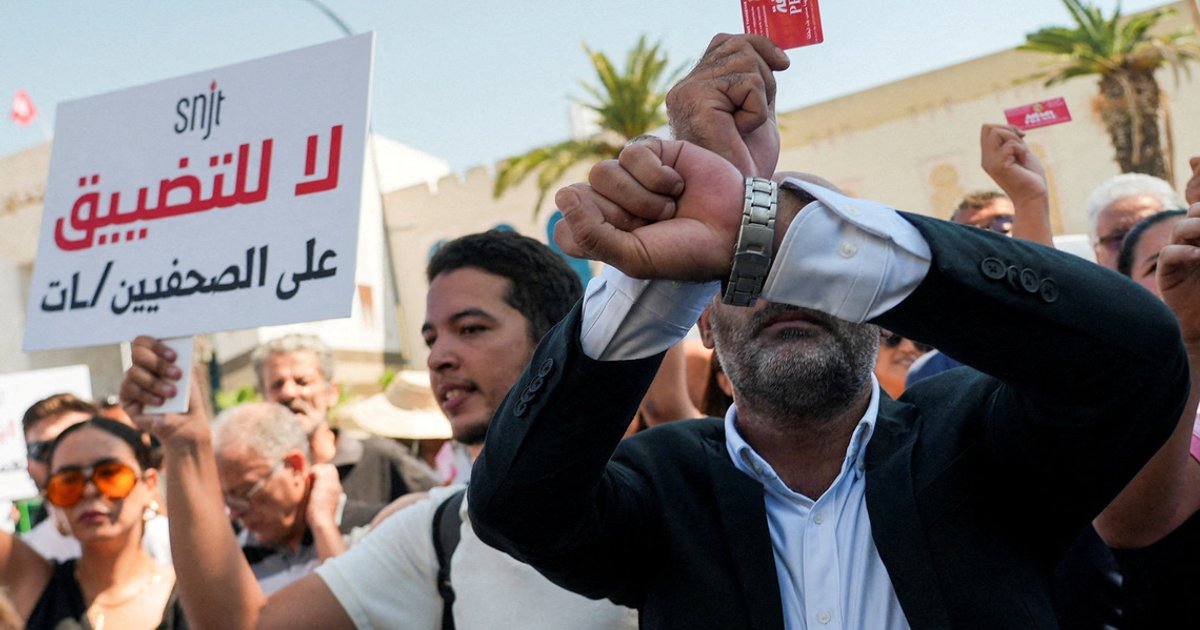
突尼斯,10月14日——2011年阿拉伯之春后,突尼斯的新闻界曾一度迎来言论自由的新局面,但如今记者们又开始如履薄冰,因为他们深知自己的报道可能让自己身陷囹圄。
TUNIS, Oct 14 - Journalists in Tunisia who enjoyed a burst of press freedom after the 2011 Arab Spring are once again looking over their shoulders in the knowledge their work may land them in prison.
2011年,独裁者宰因·阿比丁·本·阿里被推翻,突尼斯的媒体从此摆脱了束缚。然而十年后,总统凯斯·赛义德攫取了极大权力,这些来之不易的成果开始遭到侵蚀。
The 2011 overthrow of autocrat Zine El-Abidine Ben Ali unshackled Tunisia's media, but a decade later President Kais Saied's seizure of sweeping powers began eroding those gains.
人权组织指出,如今独立媒体正遭受全方位的打压。过去五年间,突尼斯在“无国界记者”组织的新闻自由指数排名中下滑了50多位,目前位列第137位。
Now, independent media face a full-on crackdown, rights groups say, and Tunisia has tumbled more than 50 places in the past five years to 137th in Reporters Without Borders' press freedom index.
“我们如今身处一片灰色地带,就像行走在布满地雷的雷区,每天都在为此付出代价,”独立媒体机构Nawaat的主编艾曼·雷兹吉说道。他感慨道,至少2011年之前各种限制措施还算明确,如今却充满了不确定性。
"We are living in a grey area, as if we were in a shifting minefield, and we pay the price every day," said Aymen Rezgui, editor-in-chief of independent outlet Nawaat, reflecting on how at least limits were clear pre-2011 versus current uncertainty.
在突尼斯的一处小花园里,约有六名记者围坐在一起抽烟、说笑,讨论着接下来要发表的报道选题——从饮用水质量到监狱现状,无所不包。他们心里清楚,任何一篇报道都可能招致法律追责。
Around him, in a small garden in Tunis, about half a dozen colleagues sit smoking, trading jokes and discussing investigations they plan to publish on subjects ranging from the quality of drinking water to conditions of prisons. They know that any of the stories could lead to prosecution.
据突尼斯全国记者工会主席齐德·达巴尔介绍,目前约有20名记者因报道或社交媒体发文而面临刑事指控,其中4人已被关押。他称这种状况在突尼斯历史上前所未有。
Some 20 journalists face criminal charges over their reporting or social media posts, with four already imprisoned, according to Zied Dabbar, head of the National Syndicate of Tunisian Journalists, who called the situation unprecedented.
赛义德曾表示自己并非独裁者,记者们完全可以自由批评当局,事实上他们也确实在这么做。当局则称相关起诉均属公正的司法行为,法律面前人人平等。突尼斯总理办公室未对置评请求作出回应。
Saied has said he is not a dictator and that journalists are free to criticize authorities and frequently do. Authorities say prosecutions are impartial judicial matters and that no one is above the law. The Tunisian prime minister's press office did not respond to requests for comment.
雷兹吉透露,Nawaat经常收到各种威胁:有的匿名发来恐吓信息,有的则是政府支持者在社交媒体上骂他是叛徒。这些威胁大多源于该媒体对监狱问题、停电现象以及水资源短缺等议题的报道。
Rezgui said Nawaat regularly receives threats — anonymously or from government supporters on social media branding him a traitor — over reporting on issues ranging from prisons to power cuts and water shortages.
该媒体还遭遇了司法层面的限制:去年政府曾下令要求其暂停运营一个月。许多其他记者也反映遭遇了类似的压力。
The outlet has also faced judicial restrictions, including a government order suspending activities for a month last year. Many other journalists report similar pressures.
上个月,独立新闻网站Al-Qatiba的主编穆罕默德·优斯菲在前往一家私人广播电台参加直播节目途中遭逮捕。法官指控他非法敛财,但他坚称这些指控纯属捏造。
Last month, Mohamed Yousfi, editor-in-chief of independent news website Al-Qatiba, was arrested on his way to a private radio station for a live programme. A judge has charged him with illicit enrichment, which he says is a fabrication.
其他被监禁的记者和媒体人士还包括知名播音员穆拉德·泽吉迪与博伦·布赛斯。他们最初被判定犯有散布虚假信息及侮辱总统罪,后来又被指控逃税。二人均否认这些罪名,称自己遭人陷害。
Other jailed journalists and media figures include prominent broadcasters Mourad Zeghidi and Borhen Bsaies, who were first convicted of spreading false news and insulting the president, and later of tax evasion. They deny the charges and say they have been framed.
部分人选择流亡:对一些人而言,尽管要付出巨大个人代价,离开突尼斯仍是避免遭遇同样命运的唯一出路。
SOME CHOOSE EXILE For some, leaving Tunisia has become the only option to avoid a similar fate, despite the personal cost.
2025年12月,独立网站Tumedia创始人、总统的直言批评者卡乌拉·布克里姆因担心即将被捕而逃往法国。
In December 2025, Khaoula Boukrim, founder of independent website Tumedia and a prominent critic of the president, left for France fearing imminent arrest.
数月后,她因撰写批评司法体系及所谓“专制统治模式”的文章,被缺席判处四年监禁。
Months later, she was sentenced in absentia to four years in prison over writings critical of the judiciary and a system of governance she described as authoritarian.
记者哈伊特姆·梅基也因公开谴责某医院太平间恶劣环境而获刑,随后被迫离开突尼斯。萨伊德的拥护者声称此类案件与言论自由毫无关联。
Journalist Haythem Mekki has also left Tunisia after receiving a prison sentence following public comments he made denouncing conditions in a hospital morgue. Saied’s supporters say such cases have nothing to do with freedom of expression.
然而,新闻自由保护组织指出,当局正日益利用司法手段来恐吓并压制持批评意见的声音。
Press freedom groups argue, however, that prosecutions are increasingly being used to intimidate and silence critical voices.
据突尼斯记者工会反映,除司法迫害外,警方还经常阻止记者在公共场所采访,有时甚至将他们扣留数小时。
Beyond prosecutions, journalists are frequently prevented by police from working in public and are sometimes detained for hours, the journalists' syndicate says.
如今多数政府部门已不再设立新闻办公室,多名外国记者也被拒绝发放采访许可,这进一步限制了独立新闻报道的空间。
Most ministries no longer have press offices, while several international correspondents have been denied accreditation, further restricting independent coverage.
许多私营电台的政治和时评节目已消失。工会表示,官方媒体日益将异见声音边缘化,不过官方通讯社突尼斯通讯社仍是罕见的例外,继续报道抗议活动、反对派活动和公民社会倡议。这种压力的影响已超越新闻编辑室。
Political and critical programmes have disappeared from many private radio stations. State media has increasingly marginalised dissenting voices, the syndicate says, though the TAP state news agency remains a rare exception, continuing to cover protests, opposition activities and civil society initiatives. The pressure reverberates beyond newsrooms.
突尼斯广播记者齐亚德·哈尼因批评一项司法裁决,于今年早些时候被判处一年监禁。他的一张照片挂在其位于突尼斯市家中的客厅里。
A photograph of Zied Heni, a radio journalist sentenced earlier this year to a year in prison after criticising a judicial ruling, hangs in the living room of his Tunis home.
他的妻子图拉娅·祖阿里表示,她和三个女儿一直难以应对他的被拘押。
His wife, Thouraya Zouari, said she and their three daughters have struggled to cope with his detention.
“我们无法接受齐亚德入狱,”她说。“我们正经历一场噩梦。”但她表示,家人决心在他缺席的情况下继续为言论自由而斗争。
"We cannot accept that Zied is in prison," she said. "We are living through a nightmare." But she said that the family was determined to carry on the struggle for freedom of expression in his absence.
“他在女儿们心中植入了面对不公与压迫不保持沉默的决心,”她谈到那些仍在社交媒体上批评赛义德并参加街头抗议的女儿们时说道。
"He has instilled in his daughters the resolve not to remain silent in the face of injustice and oppression," she said of the daughters who still criticise Saied on social media and take part in street protests.