专注于经济增长和盈利强度的基金经理们对美国股市的上涨越来越持怀疑态度。
Money managers who focus on economic growth and the strength of earnings are showing growing doubts about the rally in US stocks.
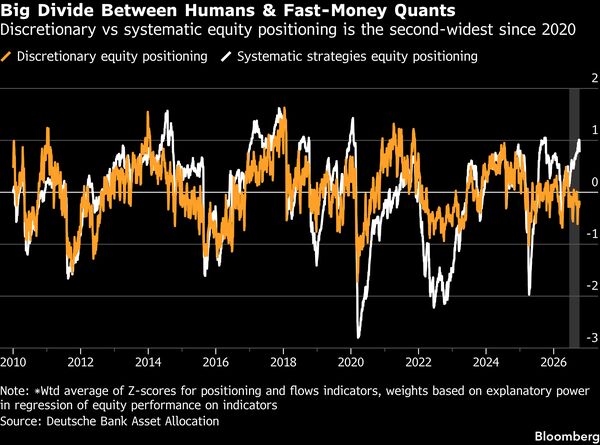
德意志银行汇编的数据显示,对高企的国债收益率、伊朗战争和顽固通胀的担忧,已推动自主投资者的股票敞口降至区间底部三分之一。与此同时,受基准指数稳步上涨和波动率下降的推动,计算机驱动的基金继续大举买入股票。数据显示,两者之间的差距——前者低配美国股票,后者超配美国股票——为2020年以来第二阔。
Worries around lofty Treasury yields, the war in Iran and sticky inflation have pushed discretionary investors’ stock exposure to the bottom-third of the range, data compiled by Deutsche Bank AG show. Meanwhile, computer-driven funds continued to snap up stocks thanks to steady gains in benchmark indexes and decline in volatility. The gap between the two, where the former is underweight and the latter is overweight US stocks, is the second-widest since 2020, the data show.
“差距从这里开始不可能进一步大幅扩大,所以其中一方很快必须让步,”该行策略师帕拉格·塔特在电话中表示。
“The gap can’t widen much further from here so one side has to give in soon,” Parag Thatte, a strategist the bank, said by phone.
如果价格继续上涨,通常对市场此前涨幅漠不关心的量化基金将不得不继续买入,最终迫使基金经理们屈服。另一方面,如果抛售再度出现,将诱使基本上缺席了近期上涨的自主投资者获利了结。
If prices keep going up, quant funds, who are typically indifferent to the scope of the market’s prior gains, will have to keep buying, eventually forcing money managers to cave in. On the flip side, a renewed selloff will tempt discretionary investors, who have been largely sitting out the recent rally, to take a victory lap.
虽然按管理资金规模计算,系统性基金不算最大的市场参与者,但它们绝对是最快的参与者之一。当它们的算法触及某个阈值,例如买入或卖出指标时,它们会立即平仓或加仓。这可能导致数百亿美元资金流入或流出主要股票指数。
While systematic funds are not considered to be the largest market participants by the amount of money they manage, they’re definitely one of the fastest. When their algorithms hit a certain threshold such as a buying or selling indicator, they instantly unwind or add positions. That could result in tens of billions of dollars that flow in or out of major stock indexes.
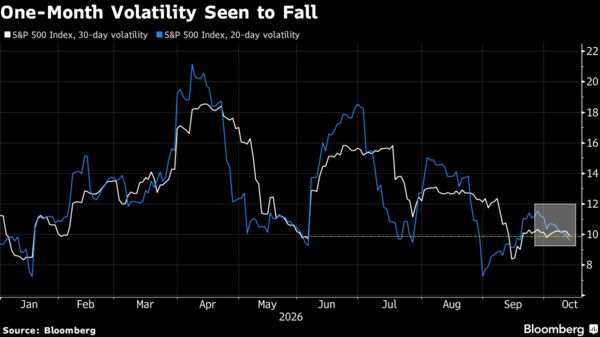
瑞银集团股票衍生品研究主管马克斯韦尔·格里纳科夫表示,随着标普500指数一个月已实现波动率接近9.9、为6月以来最低水平,波动率控制基金一直在大量买入股票。这类基金在市场平静时买入更多股票,在波动加剧时卖出。
With realized-one month volatility in the S&P 500 sitting near 9.9, the lowest level since June, vol-control funds, which buy more equities when markets are calm and sell when gyrations get more intense, have been scooping up stocks, said Maxwell Grinacoff, head of equity derivatives research at UBS Group AG.
“需要一场外生冲击才能迫使系统性仓位翻转,标普500指数需要连续出现较大的下跌日”,才能迫使“股票资金大规模流出——但我们还没有看到这种情况,”他补充道。
“It would take an exogenous shock to force systematic positioning to flip, with a string of bigger down days in the S&P 500” to force “a cascade of outflows in equities — but we haven’t seen that yet,” he added.
美国股市表现十分稳健:标准普尔500指数自3月的低点以来上涨了23%,市值增加了13万亿美元。尽管市场存在对人工智能相关股票泡沫的担忧,以及长期借贷成本升至几十年来的最高水平的顾虑,但股市依然持续上涨。该指数在过去89个交易日中从未出现过跌幅超过2%的情况,今年仅出现过两次跌幅超过2%的交易日。
US stocks have enjoyed smooth sailing, with the S&P 500 rallying 23% from its trough in March and adding $13 trillion in value in the process, despite worries around a bubble in artificial intelligence stocks and a break out in long-term borrowing costs to the highest in decades. The 500-member gauge has gone 89 trading days without a drop of at least 2%, and it’s seen just two sessions with such losses this year.
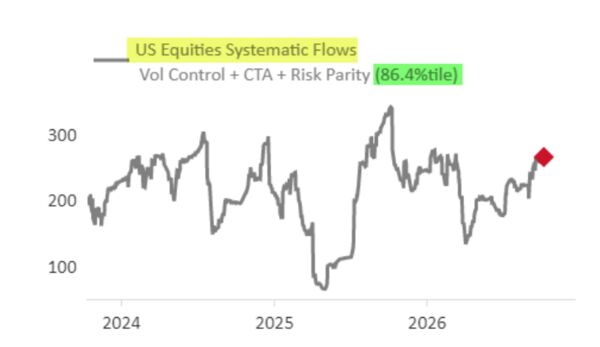
根据野村控股公司(Nomura Holdings Inc.)的跨资产策略师查理·麦克埃利戈特(Charlie McElligott)整理的数据,目前系统性基金(包括波动率控制基金、商品交易顾问基金以及风险均衡基金)的股票持仓比例已回升至第86百分位,接近今年的高点。
Equity exposure of systematic funds, which include vol control funds, commodity trading advisors, or CTAs, and risk parity funds, is now back up to the 86th percentile, near highs of the year, according to data compiled by Charlie McElligott, a cross asset strategist at Nomura Holdings Inc.
德意志银行(Deutsche Bank)的塔特(Thatte)指出,由于系统性基金的运作方式,卖出行为很可能会从波动率控制基金开始——这些基金会逐步减少其过度持有的股票头寸。这可能会增加股市出现剧烈逆转的风险;不过,只有当标准普尔500指数从峰值下跌至少5%时,波动率才会真正出现显著上升。
Given how systematic funds operate, selling may start with vol control funds unwinding extreme positioning, Deutsche Bank’s Thatte said. That would increase the risk of sharp reversals in the stock market, although there would need to be a substantial selloff, with the S&P 500 sliding at least 5% from its peak for a spike in volatility to last, he added.
塔特还解释说,波动率控制基金的买卖行为与实际波动率之间存在反比关系:股价波动幅度越大,这些基金就越倾向于降低风险(即减少股票持仓)。今年春季,由于市场对伊朗战争和经济形势的担忧加剧,波动率急剧上升,这些基金因此减少了股票持仓。如果自主交易者(discretionary traders)因担心经济增长放缓或企业盈利趋势疲软而开始抛售股票,理论上这可能会推高市场波动率,进而迫使基于计算机算法的自动化交易策略也跟随抛售股票。
The buying and selling activity at volatility control funds has an inverse relation with realized volatility: The wider the price swings, the louder the signal for the vol-control funds to de-risk. That’s what happened when volatility jumped in the spring on the back of rising concern over the war in Iran and the state of the economy. These funds reduced their equity exposure as their sensitivity to selloffs rose. If discretionary traders start selling in response to fears over weaker growth or softening corporate earnings trends, that theoretically may push volatility higher and force computer-based strategies to unwind their positions as well, Thatte said.
不过,这并不意味着股市的上涨趋势就会停止。由于自主型基金经理的股票持仓比例较低,投资者在未来几个月仍有足够的资金可用于购买股票,从而有助于防止市场出现更严重的下跌。
But that doesn’t mean the advance can’t keep on going. Low equity positioning among discretionary money managers means investors have more dry powder to buy equities in the months ahead, warding off a more severe selloff.
“肯定有一些投资者之前对某些‘优质’股票的投资力度不足,他们会在股价下跌时买入这些股票,”另类投资公司 Cohalo 的总经理科尔顿·洛德(Colton Loder)说道。“总得有一些因素出现,才能引发市场波动或导致股价持续下跌。这种系统性下跌趋势可能会持续一段时间,直到某个临界点才会停止。”
“There are certainly investors out there who have been underweight the ‘right’ equities that would step in on dips,” said Colton Loder, managing principal of the alternative investment firm Cohalo. “Something has to come along to spike volatility or create a negative equity trend. Systematic can last; it does until it doesn’t.”