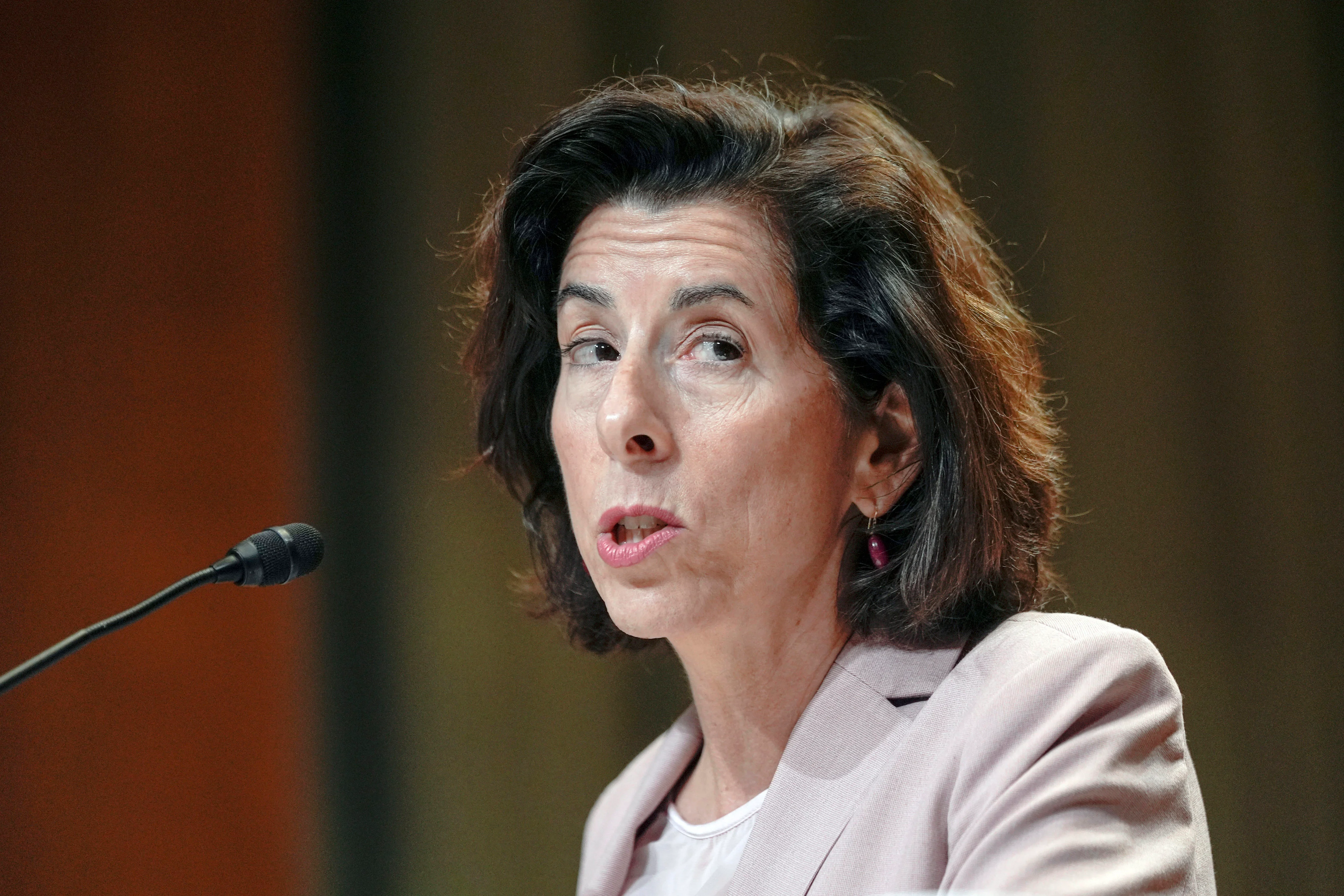
美国前商务部长吉娜·雷蒙多警告称,人工智能的快速而无节制发展有可能对美国经济造成冲击,其程度堪比当年导致美国工人失业的“中国冲击”。
The rapid and unbridled development of artificial intelligence (AI) has the potential to disrupt the US economy in a way that is comparable to the “China shock” that displaced American workers, former US commerce secretary Gina Raimondo warns.
周二,她在新德里举行的彭博新经济论坛上发表讲话时,将人工智能可能对美国就业造成的冲击,与中国制造业竞争过去对美国劳动力市场的影响相提并论。
Speaking at the Bloomberg New Economy Forum in New Delhi on Tuesday, she drew parallels between AI’s potential disruption to American jobs and the past impact of Chinese manufacturing competition on the US labour market.
雷蒙多说:“在美国,我们已经看到,在没有规划的情况下经历经济转型会发生什么……所谓的中国冲击让数百万美国人失业,并动摇了我们的国家。”
“In America, we’ve seen what happens when we move through an economic transition without planning it … [the] so-called China shock left millions of Americans out of work and it destabilised our country,” Raimondo said.
这位曾在时任美国总统乔·拜登政府任职的前商务部长提出这一观点时表示,人工智能进步带来的挑战之一,是让“我们的人民”为这项可能使他们失业的技术做好准备。
The former commerce secretary, who served under former US president Joe Biden, made the point when suggesting that one of the challenges brought by AI advancement was to “prepare our people” for a technology that could put them out of work.
“中国冲击”一词指的是,大量廉价中国进口商品涌入美国,导致美国各地工厂制造业岗位流失,从而对美国经济和劳动力市场造成的冲击。
The term China shock refers to the economic and labour market disruption in the US caused by a massive surge of cheap Chinese imports that led to manufacturing job losses across US factories.
雷蒙多将其归咎为分裂政治的根源,称这种政治“仍在动摇我们的国家,并为左翼和右翼的民粹主义火上浇油”,以此强调她对不受约束的人工智能可能给美国带来动荡的担忧。
Raimondo blamed that for being the root of the divisive politics that “was still destabilising our country and the fuel firing populism on the left and on the right”, highlighting her concerns over the potential upheaval unfettered AI could bring to the US.
她发出这一警告之际,这项新兴技术成为周二讨论的焦点。当天是2026年彭博新经济论坛的第一天,这一为期三天的活动在印度首都举行。
Her warning came as discussions of the emerging technology took centre stage on Tuesday, the first day of the 2026 edition of the Bloomberg New Economy Forum, a three-day event held in the Indian capital.
尽管雷蒙多强调了与人工智能相关的风险,但其他发言者认为,人工智能可能成为重塑全球经济的一股力量。
While Raimondo emphasised the risks associated with AI, other speakers argued that AI could prove a force in reshaping the global economy.
美国投资巨头黑石集团总裁兼首席运营官乔纳森·格雷表示,技术进步将从根本上改变消费者、企业和政府的运作方式。
Jonathan Gray, president and chief operating officer of US investment giant Blackstone, said technological advances would fundamentally transform how consumers, businesses and governments operate.
格雷将正在兴起的人工智能革命比作19世纪末美国的工业革命,认为日益强大的人工智能的普及将对经济与社会产生深远影响。
Gray compared the emerging AI revolution to the industrial transformation of the US in the late 19th century, arguing that the spread of increasingly capable AI would have far-reaching consequences for economies and societies.
“我们正经历着类似美国当年工业革命时的情形——当这种超级智能被推广到全世界后,它将彻底改变我们的生活方式、消费者的行为模式、企业的运营方式以及政府对社会的管理方式,”格雷说道。
“We’re moving from a place like we did in the US … with the industrial revolution that when you bring this super intelligence to the entire world it’s going to profoundly change how we live, how consumers live, how businesses are [being] impacted and how governments oversee societies,” Gray said.
此次论坛上,开发人工智能所需的巨额投资也是一个反复被提及的话题。各大科技公司正投入数十亿美元用于建设数据中心、完善计算基础设施并发展电力生产,以此支撑日益复杂的人工智能模型研发及广泛应用。
The scale of investment required to develop AI was another recurring theme at the forum, as technology companies pour billions of dollars into data centres, computing infrastructure and electricity generation to support increasingly sophisticated AI models and growing AI adoption.
作为黑石集团的高管,格雷表示该集团对电力行业持乐观态度,因为所有相关领域——包括科技产业、数据中心、自动驾驶汽车及机器人——都离不开电力支撑。
Blackstone’s Gray said the firm had a positive view on electricity as everything involved -including technology, data centres, autonomous vehicles and robots – used electricity.
“人工智能将从虚拟空间走向现实世界,这将带来更大的电力需求。显然,数字基础设施的重要性不言而喻,”他补充道。
“So AI is gonna move from the desktop to the physical world that’ll demand more electricity. Obviously, the digital infrastructure is hugely important,” he said.
在另一场论坛讨论中,美国联邦储备委员会理事克里斯托弗·沃勒警告称,当前的投资热潮已然在推高通胀压力。
US Federal Reserve governor Christopher Waller warned in a separate forum discussion that the investment boom was already contributing to inflationary pressures.
随着各大超大规模科技企业竞相扩建数据中心以支撑人工智能模型的运行,各类半导体的价格也随之上涨,这种影响还波及到所有需要使用同类产品的其他行业。
As hyperscalers race to build out bigger and more data centres to power AI models, they were bidding up the prices of semiconductors of all types with a spillover effect to impact anyone else using the same products.
“这正是我们目前在美国看到的情况:人工智能正在引发通胀,因为它大幅提升了其他领域的需求,”沃勒指出。
“That’s what we’re starting to see in the US. We’re starting to see AI [inducing] inflation because it’s just increasing demand in other areas,” Waller said.
他还提醒道,人工智能带来的经济效益尚需时日才能显现,因为各企业仍在摸索如何利用这项技术切实提升生产效率。“目前仍处于大量试错与实验的阶段,”沃勒说道。
He also cautioned that AI’s economic benefits would take time to materialise, as companies were still figuring out how to use the technology to boost productivity. “There’s a lot of trial and error and a lot of experimentation,” Waller said.