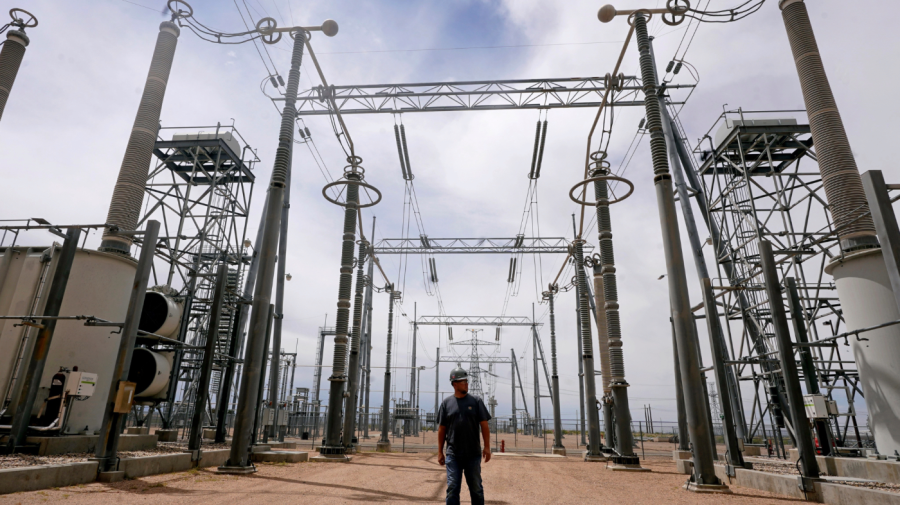
内华达州和犹他州以营商环境优越著称,正迎来制造设施、科技公司以及想要迁居此地的人员的涌入。伴随经济机遇而来的是对更多电力的需求。作为西部各州州长,我们认为这一时刻是检验该地区能否引领下一代产业、抑或落后于人的关键考验。应对这一考验需要建设我们各州竞争和繁荣所需的现代能源体系。然而,我们的社会正对电网提出更高要求,而电网并非为现代能源需求而建。
Nevada and Utah, with reputations for being excellent places to do business, are seeing an influx of manufacturing facilities, technology companies and people who want to move here. With that economic opportunity comes a need for more electricity. As governors of Western states, we see this moment as a defining test of whether the region will lead the next generation of industry or fall behind. Meeting that moment will require building the modern energy system our states need to compete and thrive. However, our society is asking more of an electric grid that was not built for our modern energy needs.
输电——即将电力从生产地输送至城市和城镇的杆塔和线路——对于家庭和企业获得可靠、负担得起的电力,以及随之而来的经济增长至关重要。多年来,渐进式升级和针对性修补帮助维持了供电,但我们今天的需求已截然不同。未来十年,先进制造、电气化和前沿技术预计将推动能源需求增长30%,这一挑战无法由各州单独应对。
Transmission, the poles and wires that move electricity from where it is produced to our cities and towns, is critical to reliable, affordable power for families and businesses, and the economic growth that comes with it. For years, incremental upgrades and targeted fixes have helped keep the lights on, but our needs are different today. Over the next decade, advanced manufacturing, electrification and frontier technologies are expected to drive a 30 percent increase in energy demand, a challenge that cannot be met by states acting alone.
内华达州和犹他州位于关键的区域输电通道上,作为贯穿西部的“能源高速公路”,在能源资源和依赖这些资源的社区之间输送电力。我州能源项目一旦延误,影响将波及整个西部,最终冲击可靠性、加剧电网拥堵并推高家庭和企业的成本。据估算,未来十年我们至少需要新建或升级12,600英里(约20,278公里)输电线路。
Nevada and Utah sit along critical regional transmission pathways, serving as energy highways across the West that move electricity between resources and the communities that depend on them. When energy projects in our states are delayed, the impacts ripple across the West, ultimately affecting reliability, increasing grid congestion and raising costs for families and businesses. Estimates suggest that we need at least 12,600 miles of new or upgraded transmission lines over the next decade.
为加快输电建设,我们需要在区域层面协作。输电建设往往按州推进,且须经多个司法管辖区许可,导致碎片化和延宕。这种做法无法满足当今能源需求所要求的规模和速度。应对未来十年的需求将需要更加协调的方式。
To build transmission faster, we need to work regionally. Transmission is often developed state by state and must be permitted by multiple jurisdictions, creating fragmentation and delays. That approach will not deliver the scale or speed of today’s energy demands. Meeting the needs of the next decade will require a more coordinated approach.
犹他州推行的“千兆瓦计划”旨在未来十年内将可靠能源产量提升一倍,这一举措体现了该地区推动能源发展的紧迫性。提升输电能力,从而让更多电力能够接入电网并输送至需求地,是该计划的核心内容。唯有如此,犹他州与内华达州的民众及企业才能用上稳定且价格合理的电力。正因如此,过去三年间,扩大能源生产、增强电网韧性以及完善输电网络始终是内华达州能源工作的重中之重。
Utah’s Operation Gigawatt, a commitment to double reliable energy production in the next decade, reflects the same urgency driving this regional effort. Increasing transmission capacity so more power can be placed on the grid and moved to where it’s needed is a key tenet within the initiative and is critical if we want reliable, affordable power for families and businesses across Utah and Nevada. Given this need, Nevada’s focus on expanded production, grid resiliency and transmission has been a cornerstone of the state’s mission for the last three years.
内华达州竭尽全力推进相关工作:通过国家能源主导委员会为超过7.2吉瓦的新建太阳能与地热项目提供支持;同时计划新建近300英里的跨州输电线路,既用于满足本州用电需求,也可向周边各州输送电力。这些举措成效显著,推动内华达州乃至整个地区朝着正确方向发展,但我们仍需继续努力。当前所需的能源基础设施建设规模庞大,这就要求我们采取全新的规划方式。
Nevada is utilizing everything at its disposal, supporting more than 7.2 gigawatts of new solar and geothermal projects through the National Energy Dominance Council and preparing to bring nearly 300 miles of interstate transmission line into connection within its borders and as a key export to surrounding states. These efforts have been monumental and keep Nevada and the region headed in the right direction, but more must be done. The scale of what we need to build demands a different approach to how we plan.
跨州输电基础设施的价值最为显著,某一州的决策也会对整个地区产生深远影响。若仍采取逐个项目、逐个辖区进行规划的方式,不仅效率低下,还会导致整个输电体系支离破碎,难以满足当下的发展需求。西部地区亟需从区域整体层面明确未来的发展方向。WestTEC正是为此而设立的首个规划机制。这一开创性的多方参与式规划方案不仅明确了所需的投资规模与优先建设的输电走廊,还阐明了各项投资如何协同运作,从而提升电网可靠性、降低用电成本并实现电力在区域内的高效调配,助力各地经济发展。
Transmission infrastructure is most valuable when it stretches across state lines, and the decisions made in one state ripple across the region. Planning project by project, jurisdiction by jurisdiction, is not just inefficient; it has produced a fragmented system that is too slow and too costly for the moment we are in. What the West needs is a shared, regional view of where we need to go. WestTEC is the first effort to provide that. This first-of-its-kind, multi-stakeholder roadmap identifies the scale of investment required, the priority corridors and critically, how these investments work together as a system to strengthen reliability, lower costs and move power across the region to serve our economies.
正因如此,犹他州、内华达州以及其他九个州均认可WestTEC的规划机制及其相关结论,并将其视为本地区未来发展的重要指引。不过,仅有规划还远远不够:我们还需切实采取行动。
That is why Utah and Nevada, along with nine other states, have endorsed the WestTEC process and its findings for the future of our region. But planning alone is not enough: We need action.
作为犹他州和内华达州的州长,我们已准备好采取行动。能源超丰倡议表明,各州在输电线路选址和许可方面发挥领导作用非常重要。我们的州正通过成立西部州长输电许可协调与协同工作组,帮助引领该地区,该工作组将提供一个持久的论坛和框架,以促进州政府的领导作用以及州政府机构、县和部落之间在西部多州和区域高压输电许可方面的协调。
As the governors of Utah and Nevada, we are prepared to act. The Energy Superabundance Initiative has shown that it is important for states to lead on transmission siting and permitting. Our states are helping lead the region by standing up a Western Governors Transmission Permitting Alignment and Coordination Task Force, which will provide a durable forum and framework to facilitate state leadership and coordination among state agencies, counties and Tribes on multi-state and regional high-voltage transmission permitting in the West.
西部一直通过建设大型基础设施和大型产业以及提出宏大理念而处于领先地位。应对当下需要同样的西部精神和毅力,而这是我们建设能源超丰未来脊梁的机遇。通过西部各州的协作,我们可以为我们的州和地区提供更强大的电网和更繁荣的未来。让我们开始工作吧!斯宾塞·考克斯(共和党)是犹他州州长。乔·隆巴多(共和党)是内华达州州长。
The West has always led by building big infrastructure and big industries and having big ideas. Meeting this moment requires that same Western spirit and grit, and this is our opportunity to build the backbone of an energy superabundant future. By working together across the West, we can deliver a stronger grid and a more prosperous future for our states and the region. Let’s get to work! Spencer Cox (R) is the governor of Utah. Joe Lombardo (R) is the governor of Nevada.