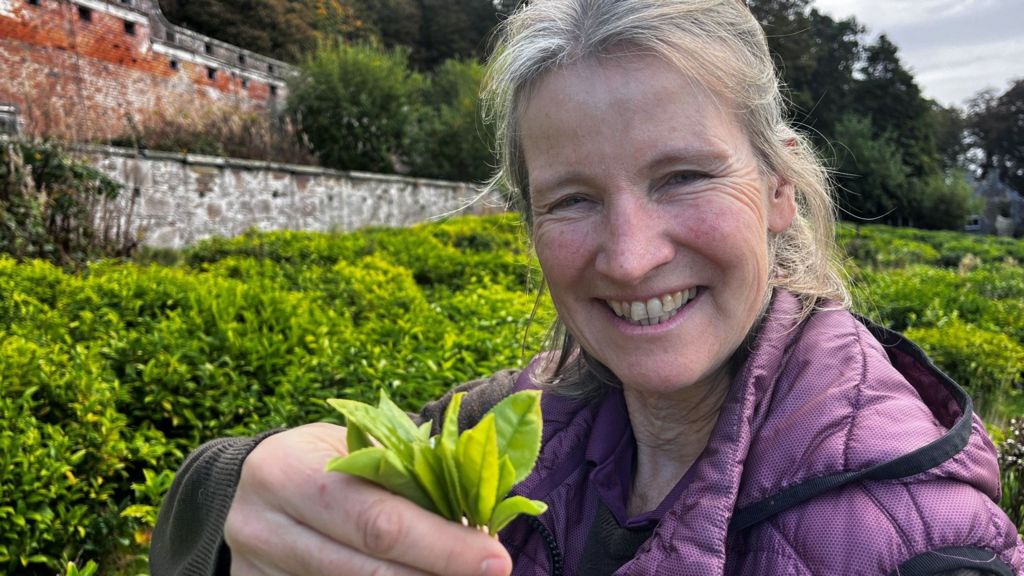
沃克-门罗是苏格兰为数不多的茶叶种植者之一。她说,酸性土壤为完美的手工酿造茶创造了理想条件。
Walker-Munro is one of a handful of tea growers in Scotland. She says the acidic soil creates ideal conditions for the perfect artisan brew.
她最昂贵的产品每包售价约40英镑,短时间内不会取代超市品牌。
Costing about £40 per packet for her most expensive product, it's not going to replace the supermarket brands any time soon.
全球茶叶种植者正面临干旱、暴雨和疾病带来的挑战,因为他们正在应对气候变暖的影响。
Droughts, intensive downpours and diseases have created challenges for tea growers across the world as they deal with the impact of a warming planet.
但一些专家认为,苏格兰相对稳定的气候可能为当地茶叶产业提供帮助。
But some experts believe Scotland's relatively settled climate could give the tea industry here a helping hand.
随着采摘季节接近尾声,苏西在自豪地为我倒上一小杯她的金色金奈特尔茶之前,摘下了最后几片茶叶——这种茶是在她家农场附近福尔法尔的一座围墙花园里种植的。
As the picking season draws to a close, Susie plucks the last few leaves before proudly pouring me a small glass of her Kinnettles Gold, which is grown in a walled garden on the family farm near Forfar.
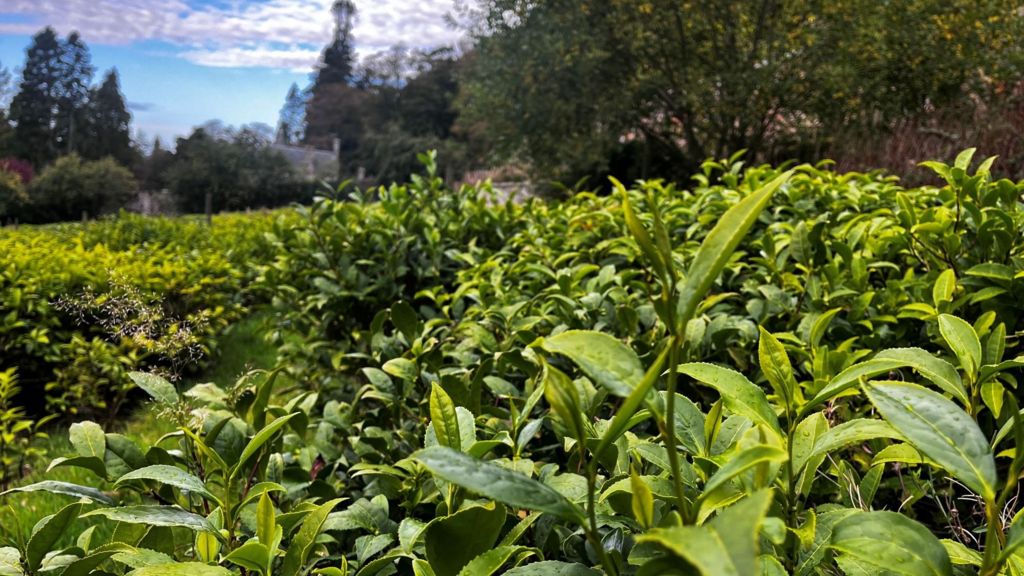
她认为,苏格兰位于北纬57度的纬度将始终成为全年种植茶叶的障碍,就像靠近赤道的国家那样。但她说,多雨的天气可能有助于提高产量。“我们的产量永远不会高,”她说。
She believes Scotland's latitude – sitting 57 degrees north - will always be a bar to having a year-round crop like those countries close to the equator. But she says wetter weather could help boost production. "Our yields are never, never going to be high," she says.
“也许随着气候变化,产量会略有增加,这取决于我们是否能获得足够的降雨。苏格兰可能是绝对理想的地方。”苏西不相信茶叶将来会成为苏格兰的主要作物。
"Maybe with climate change they might come up a bit, it depends if we get enough rain. Scotland could be absolutely ideal." Susie isn't convinced tea will ever be a major crop for Scotland.
但其他人表示,随着农民被迫多样化并适应气候变化,茶叶可能成为未来众多选择之一。重新思考我们耕作土地的方式可能是扩大作物种类的一种途径。
But others say it could be one of a numbers of options in the future, as farmers are forced to diversify and adapt to a changing climate. Rethinking the way we farm the land might be one way to extend the range of crops produced.
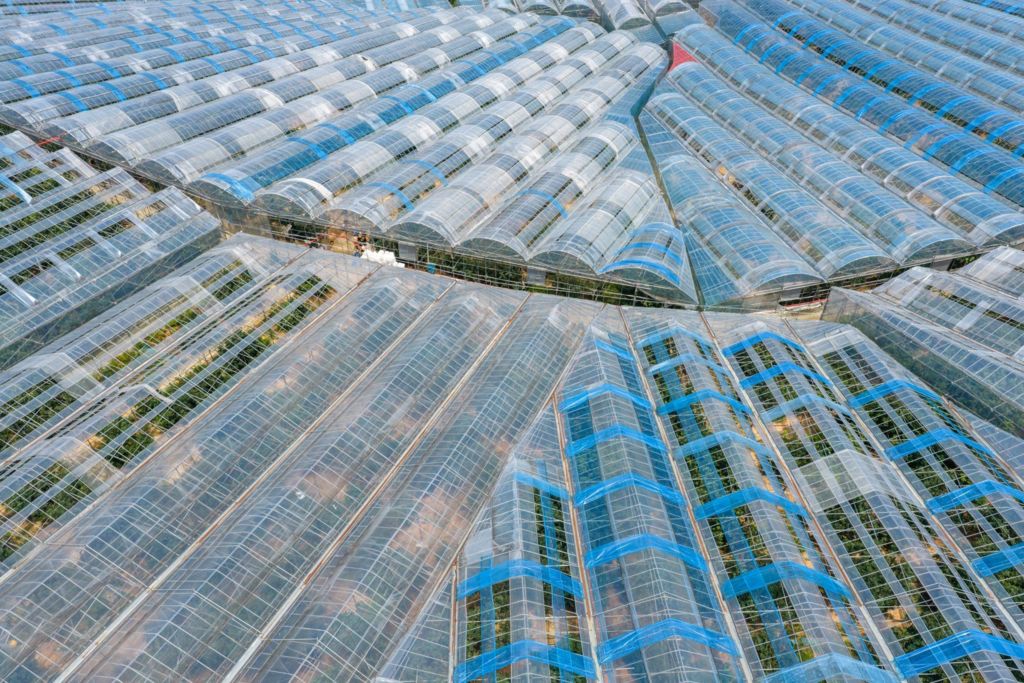
像荷兰这样的国家已经在采用玻璃温室,这在苏格兰可能会变得更为普遍。苏西说,这将是种植更多茶叶的好方法。
Countries like the Netherlands are already embracing glass houses, which could become more commonplace in Scotland. Susie says they would be a good way of growing more tea.
根据倡导组织《滋养苏格兰》的皮特·里奇所说,这也将使苏格兰能够生产更多地中海蔬菜,如番茄、黄瓜、茄子,甚至西瓜。
They would also allow Scotland to produce more Mediterranean vegetables like tomatoes, cucumbers, aubergines, and even melons, according to Pete Ritchie from campaign organisation Nourish Scotland.
他说,本世纪后期风电场提供的丰富可再生能源将使加热这些温室的成本相对较低,并减少空运里程。
He says an abundance of renewable energy from wind farms later in the century will make heating them relatively cheap and will cut down on air miles.
“我们将能够以更低的碳足迹生产这些植物,并在城市的棕地以及苏格兰的岛屿和偏远地区为人们提供全方位的稳定工作,”他说。
"We're going to be able to produce those plants with a lower carbon footprint and provide secure all-round jobs for people on brownfield sites in the cities and also on the islands and remote parts of Scotland," he says.
詹姆斯·赫顿研究所已经拥有大量玻璃温室——但它正在更进一步,通过人工创造可能在75年后存在的条件。
The James Hutton Institute already has a large number of glass houses – but it is going even further by artificially creating the sort of conditions that may exist in 75 years.
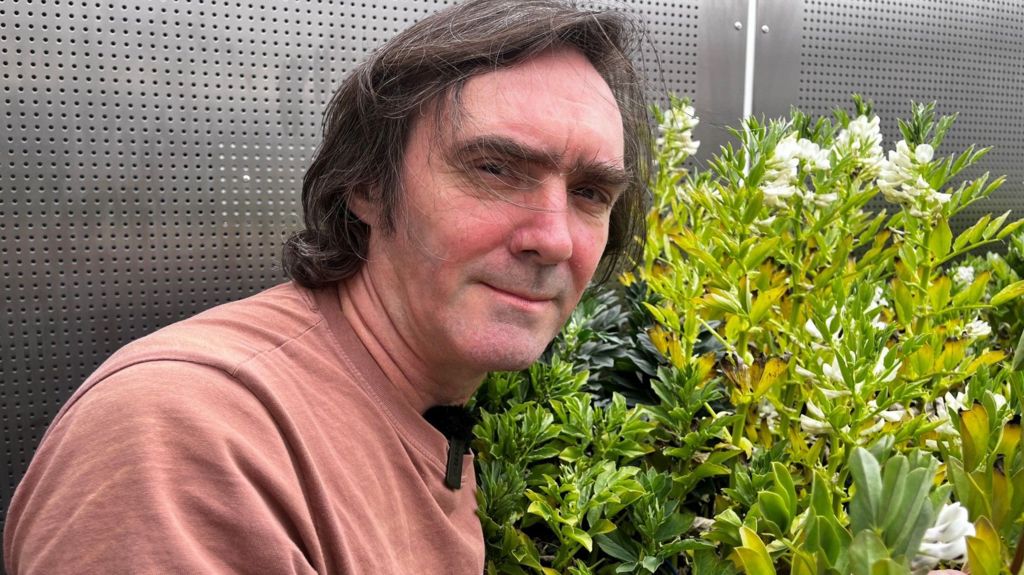
气候建模显示,到本世纪末,苏格兰将迎来更热、更干的夏季和更温和、更湿的冬季。该研究所的新型先进植物生长中心实际上是一个气候模拟器。
Climate modelling shows that Scotland can expect hotter, dryer summers and milder, wetter winters by the end of this century. The institute's new advanced plant growth centre is effectively a climate simulator.
它能够控制植物的光照、水分和养分摄入,以测试它们应对压力的能力——然后选择在面对气候变化带来的各种挑战时最有可能表现最佳的物种。
It's able to control plants' light, water and nutrient intake to test how they cope with stresses - and then select species which are likely to fare best against all that climate change can throw at them.
过去三个月,他们一直在对蚕豆进行实验,这些蚕豆每天都会被拍照,以便科学家监测其生长情况。
For the past three months they have been experimenting with fava beans, which are photographed daily so scientists can monitor their progress.
罗伯特·汉考克博士表示,他们需要从为特定环境(如炎热或干旱气候)培育作物转向培育更具普遍韧性的作物。
Dr Robert Hancock says they need to switch from breeding crops for specific environments, such as hot or dry climates, towards ones which are more generally resilient.
“我们需要现在就开始培育这些作物,并开始了解苏格兰农业的未来将会是什么样子,”他说。
"We need to start breeding those crops now and start understanding what Scottish farming's going to look like," he says.
“农民需要时间来规划,我们需要将这些作物推广给农民,并最终,最重要的是这些农民在田间的实际行动,而不是我们在气候模拟器内所做的事情。” 22世纪的农民可能只相隔一代,与今天刚进入这个行业的人。
"Farmers need time to plan, we need to get those crops out to the farmers anded. "Ultimately it's about what those guys do in the fields that matters, not what we do inside a climate simulator." The farmers of the 22nd Century are probably only a generation away from those starting out in the industry today.
这意味着当前的一批年轻农民必须认真考虑他们将传给自己子女的企业。这也意味着需要更多的精准农业、更多人工智能和更多的自动化。
That means the current crop of young farmers will have to give the closest consideration to the businesses they hand on to their own children. And that means more precision farming, more artificial intelligence, and automation.
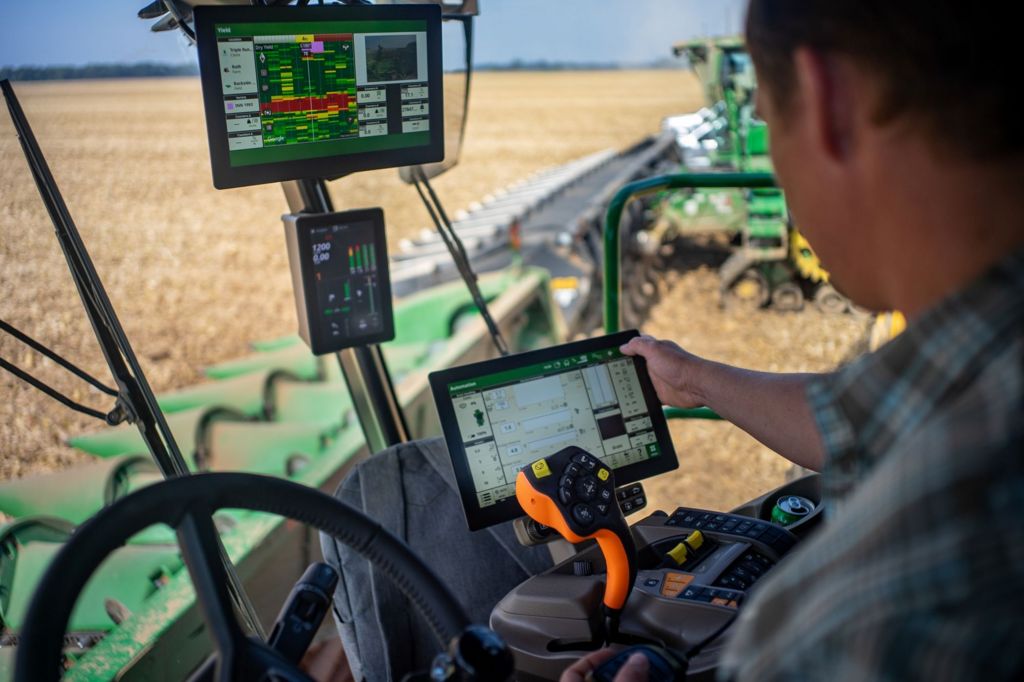
现代拖拉机和联合收割机技术含量极高,例如GPS导航,以至于考虑实现无人驾驶收获已不再是一个遥远的想法。
Modern tractors and combine harvesters are so high in technology such as GPS steering that it's no longer such a leap to consider autonomous harvesting.
但苏格兰青年农民协会主席大卫·默多克认为,传统技能将始终重要。
But the chair of the Scottish Association of Young Farmers, David Murdoch, believes traditional skills will always be important.
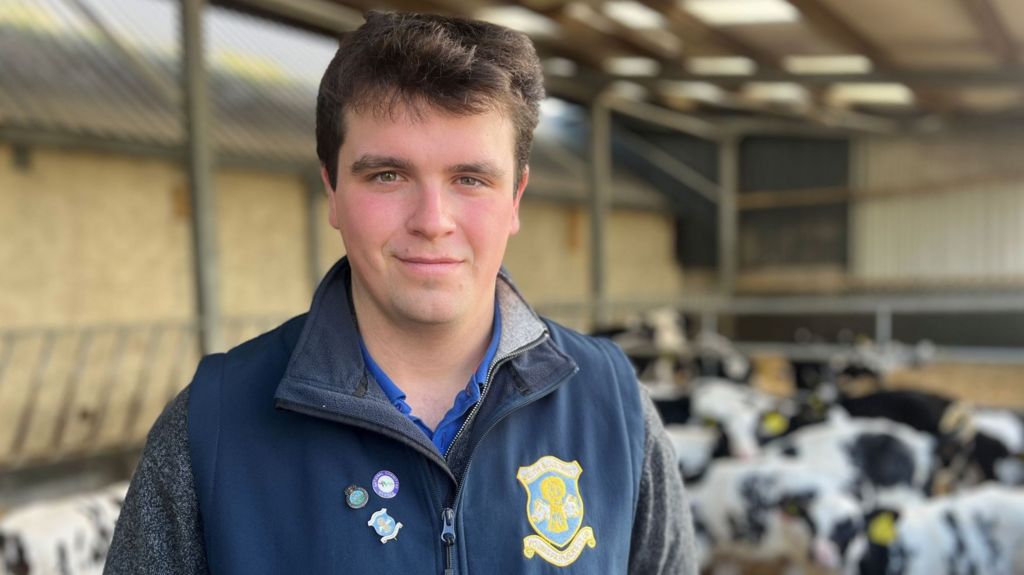
“如果你不了解你的牛,那就没有意义;但拥抱技术才能让我们保持竞争力。
"There's no point in doing it if you don't know your cattle, but embracing the technology is what keeps us competitive.
“使用更大规模的牛群和更大型的机械,以更少的人力生产更多——这就是世界的发展方向,”大卫说,他与父亲一起在北艾尔郡的贝思经营奶牛场。但推动农业未来变化的不仅仅是食品生产。
"Working with larger herd numbers and larger machinery to keep us producing more with less people - that's the way the world's going," says David, who farms dairy with his father at Beith in North Ayrshire. But it's not just food production that will drive future changes in farming.
保护和提升自然、抵消碳排放以及可再生能源生产已经在塑造明日的农场。
Protecting and enhancing nature, offsetting carbon emissions, and renewable energy production are already shaping the farms of tomorrow.
健康创新也可能发挥越来越重要的作用,肥胖药物已经显示出对蛋白质和营养密集型食品的需求。
Health innovations may also play a growing role, with obesity drugs already showing a demand for proteins and nutrient-dense foods.
随着种植条件变得更有利以及人们继续希望在本地种植,大豆、亚麻和豆类可能会成为更常见的景象。
Soya, flax and legumes could become a more common sight as conditions for growing them become more favourable and that desire to grow them locally continues.
苏格兰农村学院(SRUC)校长韦恩·鲍威尔教授预测,苏格兰将成为“欧洲的粮仓”。
Prof Wayne Powell - the principal of Scotland's rural college, the SRUC - predicts that Scotland will become "the bread basket of Europe".
目前这一头衔用于描述乌克兰,因为其拥有丰富的肥沃农业用地,并出口包括小麦、玉米和大麦在内的作物。
That title is currently used to describe Ukraine, because of its abundance of fertile agricultural land and exports of crops including wheat, maize and barley.
“气候变化正在重新绘制欧洲的农业版图,苏格兰有望成为欧洲最重要的气候韧性食品区之一,”他说。
"Climate change is redrawing the farming map of Europe and Scotland could become one of Europe's most important climate resilient food regions," he says.
“获得廉价可再生能源的可能性也可能改变苏格兰农业的经济格局——从灌溉、冷藏、食品加工等方面,使我们能够从土地和食品中获取更多价值。”过去75年里,苏格兰农村社区经历了重大变化,导致从事土地工作的人数大幅减少。
"The possibility of access to cheap renewable energy could also transform the economics of Scottish farming from irrigation, refrigeration, food processing, so that we can capture more value from our land and food." Scotland's rural communities have seen major changes over the past 75 years which have resulted in far fewer people working the land.
在保持食品对消费者可负担性的同时,使农场保持盈利将成为创新的关键驱动力。
Pressure to keep food affordable for consumers while farms remain profitable will be a key driver of innovation.
气候变化和我们自然环境的持续破坏,使得这并非一个简单的方程式就能计算得出的问题。
The changing climate and the continued destruction of our nature prevent that being a simple equation to calculate.
但农民习惯于应对变化——无论是短期、中期还是长期——到本世纪末,我们的田野很可能对今天的农民来说将变得面目全非,就像之前所有经历过变化的人一样。
But farmers are used to change – in the short, medium and long-term - and by the end of the century our fields will probably be as unrecognisable to today's farmers as all those who have gone before them.