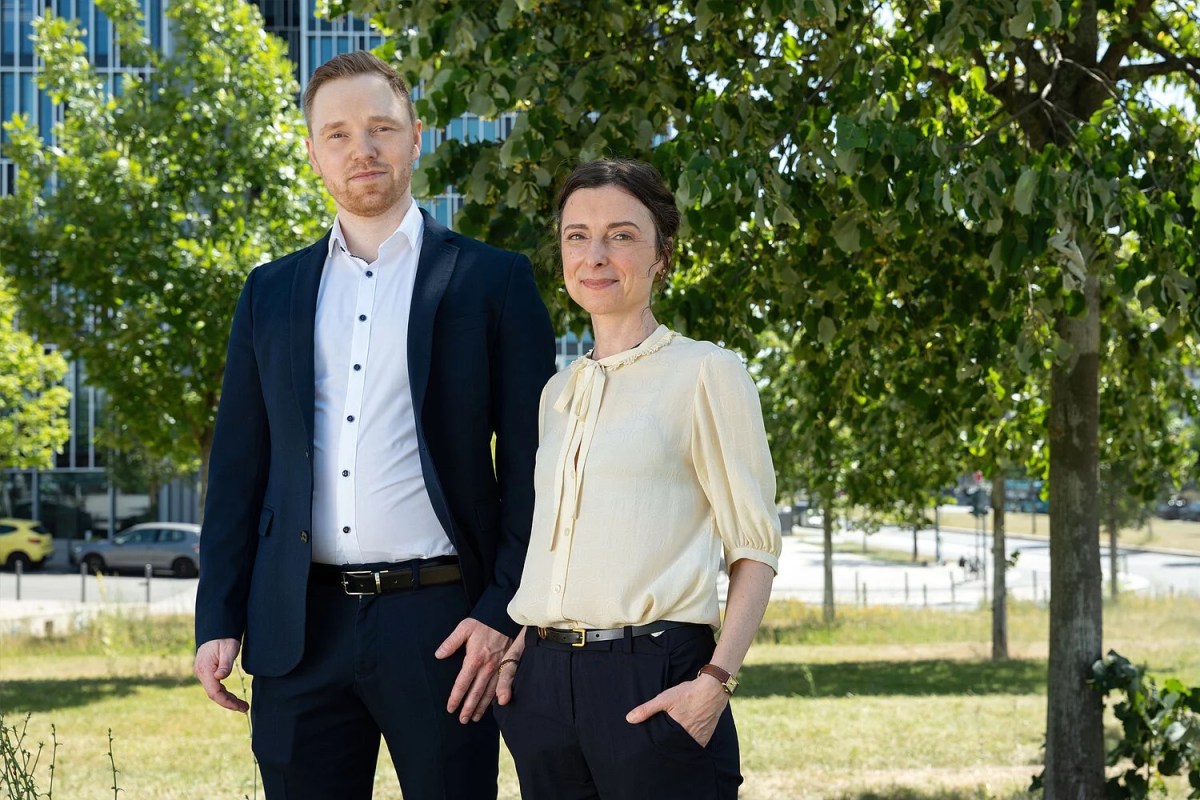
家庭健康检测产品长期以来一直饱受夸大宣传和欺诈行为的困扰。不过,德国初创公司 TimeTeller 开发了一种唾液检测试剂盒,旨在帮助人们了解自己的生物钟(昼夜节律)。该公司的首席执行官安吉拉·雷洛吉奥(Angela Relógio)与 Theranos 公司那位声名狼藉的创始人伊丽莎白·霍姆斯(Elizabeth Holmes)截然不同。
At-home health testing has been mired in overblown claims and outright fraud. But German startup TimeTeller, which has developed a saliva test kit to help anyone understand their circadian rhythm, is led by CEO Angela Relógio, who is the polar opposite of Theranos’ disgraced founder Elizabeth Holmes. Relógio is a physicist-engineer and molecular biologist who spent years researching oncology, circadian biology, and systems medicine in Germany before leaving academia to build TimeTeller.
雷洛吉奥是一位物理工程师和分子生物学家,她在德国从事了多年肿瘤学、生物钟生物学及系统医学的研究,之后才离开学术界创立了 TimeTeller。她非常清楚这种检测技术目前能够实现什么,以及不能实现什么。
She is careful about what the test can and can’t do today. It would be easy to oversell: Relógio’s last name means “clock” in her native Portuguese, and TimeTeller has the potential to reduce side effects from cancer treatment and improve outcomes by timing treatment to each patient’s internal clock. That’s also why she’s careful to warn that TimeTeller itself operates on two timelines.
虽然这种技术具有很大的潜力(例如:通过根据患者的生物钟来调整治疗方案,从而减少癌症治疗的副作用并提高治疗效果),但她也谨慎地提醒用户:TimeTeller 的功能远不止于简单地判断一个人是“早起型”还是“夜猫子型”。她解释说:“我们需要为每一种药物都精确计算出最佳的使用时机;这些数据是通过临床研究得出的。”
The long-term goal is to determine when cancer treatments will be better tolerated and most effective, and doing so much more granularly than just telling whether someone is a morning person or a night owl. But its direct-to-consumer kit won’t help patients figure that out on their own. “That is something that we need to calculate for every single medicine; we do that in the context of clinical studies,” Relógio cautioned.
据雷洛吉奥介绍,TimeTeller 开始接受直接消费者的订单,是因为长寿诊所的需求——这些诊所注重健康老龄化问题,并意识到个人的生物钟数据可以为患者提供关于睡眠、营养、光照暴露和身体活动的个性化建议。这种检测技术同样可以应用于代谢性疾病(如糖尿病)和神经退行性疾病(如阿尔茨海默病),以及女性健康领域;不过,癌症治疗仍是 TimeTeller 的核心研究方向。正是在研究癌症的过程中,雷洛吉奥做出了这一重大发现,这也促使她离开了学术界。
According to Relógio, TimeTeller started accepting direct orders because of demand from longevity clinics, which focus on healthy aging and understand that individual data on a person’s circadian rhythm can be used to offer personalized advice on sleep, nutrition, light exposure, and physical activity. TimeTeller could also apply to metabolic diseases (such as diabetes) and neurodegenerative diseases (such as Alzheimer’s), performance, and women’s health, but cancer is its core mission. It was while studying cancer that Relógio made the discovery that led her to leave academia.
她注意到,许多癌症患者因为治疗带来的副作用而中断或放弃了治疗。“作为一名科学家,我实在无法坐视不管;尤其是当我确信问题的根源可能不仅在于我们采用的治疗方法,还在于治疗的时间点时,”Relógio说道。这促使她开发出了 TimeTeller 产品的核心功能——即检测人体昼夜节律的测试工具。她当时就意识到,这个发明必须被转化为一个实际可应用的商业产品。
She noticed that many cancer patients stopped or started their treatment because of side effects. “As a scientist, that was just impossible to watch, particularly when I was convinced that part of the problem might not only be what treatment we give, but when we give it,” Relógio said. This led her to develop the circadian rhythm test at the core of TimeTeller — which she knew had to become a company. “I personally funded our first patent because I strongly believed that this discovery should not remain in scientific publications,” she said.
“我亲自为我们的第一个专利提供了资金支持,因为我相信这个发现不应该仅仅停留在学术论文中,”她说。这家初创公司最初起源于柏林的夏里特大学医院(Charité University Hospital),后来搬到了汉堡医学院(Medical School Hamburg),那里为该公司提供了患者资源和资金支持。此外,汉堡医学院还为 TimeTeller 的团队提供了保障措施:如果公司无法按时支付员工工资,医学院会为他们提供备用工作机会。
The he startup spun out of Berlin’s Charité university hospital but has since moved to Medical School Hamburg, which provided access to patients and funding. It also offered a fallback: backup employment for TimeTeller’s team of 10 if the company couldn’t pay them.
不过,这种保障措施或许并不是 TimeTeller 所必需的。在招募了生物化学家兼市场推广专家 Benjamin Dose 作为联合创始人后,该公司成功与德国最大的医疗保险公司之一 Techniker Krankenkasse 达成了合作关系。起初,这种合作仅限于为部分癌症患者报销检测费用;如今双方已准备将这项服务推广到 Techniker Krankenkasse 的 1200 万名会员中。
That’s a safety net TimeTeller may not need. Having enlisted biochemist and market access specialist Benjamin Dose as a cofounder, the startup secured a partnership with Techniker Krankenkasse, one of Germany’s largest health insurance providers. The partnership started out as a reimbursement deal in which the insurer pays back the cost of the test for a subset of cancer patients, and both sides are now ready to expand it to more of the insurer’s 12 million members, Relógio said.
尽管 Relógio 对直接面向消费者的检测服务仍持谨慎态度,但 TimeTeller 已经成为癌症患者能够实际使用的解决方案。在今天于旧金山举行的 TechCrunch Disrupt 大会上,她明确表示公司的愿景更为远大:在精准医疗领域,“时间”将成为至关重要的因素——因为“我们身体内的几乎所有生理过程都受到精确的时间调控”。
Despite her caveats about the direct-to-consumer test, TimeTeller has become a solution that cancer patients can actually access. Ahead of her appearance at TechCrunch Disrupt, where Relógio appeared on stage today in San Francisco as part of our storied Startup Battlefield competition, she made clear that the company has broader ambitions: a future in which asking “when” is central to precision medicine, because “almost every process in our body is timed.”
如果你还没有机会参加 TechCrunch Disrupt 大会,现在还为时不晚!不要错过这场盛会,看看哪家初创公司能赢得 TechCrunch 提供的奖金,以及数百位风险投资家的关注吧!
You aren’t too late to join the action at Disrupt. Come for the headliners; stay to see who wins this year’s no-strings check from TechCrunch — and the the attention of the hundreds of VCs in attendance.