
扰乱敌方指挥与控制。以火力打击敌方部队,随后以地面部队发动突击以完成任务。并且要具备足够的韧性,以在敌方反击下仍能持续作战。
Disrupt enemy command and control. Hit enemy forces with firepower, then assault with ground troops to finish the job. And be resilient enough to function despite what the enemy dishes out in return.
这就是《陆军作战方式》的核心内容,这是一份新发布的46页指南,阐述了美国陆军如何利用战术层面的行动来提升作战层面的效能。
That’s the essence of “How The Army Fights,” a new 46-page guide on how the U.S. Army can leverage the tactical to improve the operational.
“虽然《陆军作战方式》聚焦于战争的作战和战略层面,但它将影响战术单位在不同军衔层级(echelon)如何执行作战行动,”该指南如是所述。该指南由陆军副参谋长克里斯托弗·拉内夫(Christopher LaNeve)上将发布。
“While [How The Army Fights] is focused on the operational and strategic levels of war, it will affect how tactical units execute warfighting at echelon,” according to the guide, issued by Army Vice Chief of Staff Gen. Christopher LaNeve.
《陆军作战方式》(HTAF)是对近二十年来塑造陆军组织、装备和结构的小单位反叛乱战争的告别。
How The Army Fights, or HTAF, is a farewell to the small-unit counterinsurgency warfare that shaped Army organization, equipment and structure for nearly two decades.
“这些经历造就了一代很少需要在被争夺的空中机动、掩蔽其电磁特征,或在没有承包商支持的情况下维持高强度作战的部队,”指南中写道。
“These experiences created a generation of units that rarely had to maneuver under a contested sky, mask their electromagnetic signatures, or sustain high-tempo operations without contractor support,” the guide states.
如今,陆军的作战概念是多域作战(MDO),其特点是由师和旅而非排和班所进行的大单位机动战争。
Now, the Army’s operational concept is Multidomain Operations, or MDO, which features big-unit maneuver warfare waged by divisions and brigades rather than platoons and squads.
该指南代表了一种认识:陆军——或者说美国公众——最不希望看到的,是类似乌克兰战争中出现的僵局。在这场冲突中,无人机和远程制导弹药在战场上占据主导地位,以至于机动行动成为例外而非常态。
The guide represents an acknowledgement that the last thing the Army — or the American public — wants is the sort of stalemate seen in the Ukraine war. In that conflict, drones and long-range guided munitions dominate the battlefield to such an extent that maneuver has become the exception rather than the norm.
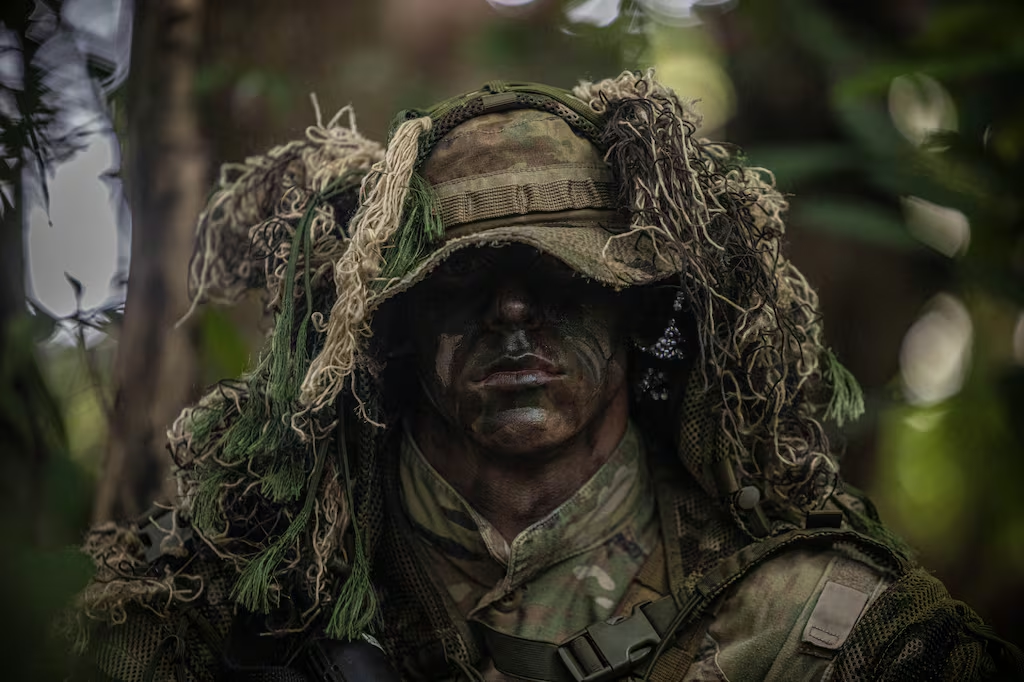
“只有地面机动才能夺取敌方所占据的领土,并违背敌方意志将其保住,”《陆军作战方式》手册强调。
“Only ground maneuver can seize what the enemy holds and secure it against the enemy’s will,” the HTAF manual emphasizes.
为了实现机动并为机动所带来的战略胜利创造可能,《陆军作战方式》突出了“陆军陆地力量的四个要素”的重要性:汇聚、打击、近战和耐力。
To enable maneuver and the possibility for strategic victory that maneuver offers, HTAF highlights the importance of “the four elements of Army land power”: Convergence, Strike, Close Battle and Endurance.
根据该文件,在汇聚阶段,美军将扰乱敌方的指挥、通信和传感系统。
During Convergence, U.S. forces disrupt enemy command, communications and sensor systems, according to the document.
例如,“指挥官对敌方指挥所实施动能打击,而电子战资源干扰备用通信系统,”HTAF 表示。“同时,远程火炮瞄准暴露的敌方雷达,同时照亮友军飞机,而友军的空间和网络能力削弱更广泛的综合防空网络。”打击要素要求陆军使用多种弹药,包括火炮、火箭弹、导弹、单向攻击无人机和徘徊弹药。
For example, “a commander executes a kinetic strike against an adversary command post while electronic warfare assets jam backup communication systems,” HTAF states. “Concurrently, long-range artillery targets an enemy radar exposed while illuminating friendly aircraft, while friendly space and cyber capabilities degrade the broader integrated air defense network.”The Strike element calls for the Army to unleash a variety of munitions, including artillery, rockets, missiles, one-way attack drones and loitering munitions.
“打击作为深层作战塑造者,使用中程和远程精确火力以及无人系统,在敌方能够影响近战之前,扰乱、削弱和使敌方力量及其后勤资源失位,”文件指出。
“Strike acts as the deep operational shaper, employing medium- and long-range precision fires and uncrewed systems to disrupt, degrade, and dislocate enemy forces and logistical assets before they can influence the close fight,” the document states.
如果融合和打击阶段实现了使敌方目眩耳聋的目标,近战即可开始。
If Convergence and Strike phases achieve the objectives of leaving the enemy dazed and blinded, Close Battle can begin.
历史上,战斗往往以部队前进歼灭敌人而告终。但HTAF承认,现代战场前所未有的困难在于,无人机似乎能够看到一切,而敌方火力可能随时倾泻而下。
Throughout history, battles have culminated with troops advancing to destroy the enemy. But HTAF acknowledges the unprecedented difficulty of a modern battlefield where drones appear to see all and enemy fires can rain down at any moment.
因此,陆军部队需要擅长伪装和欺骗,并拥有针对无人机及其他火力的自身防御武器,HTAF 表示。
Army units will therefore need to be adept at camouflage and deception, and possess their own defensive weapons against drones and other fires, HTAF states.
“近战建立在高度致命的地面机动编队之上,这些编队无法在短时间内形成,”指南写道。“它们是通过多年严格训练、制度专长和领导力建立起来的。”陆军在敌方火力下仍能发挥作用的能力,尤其是在后勤方面,尤为重要。这在伊朗战争期间已成为一个重大问题,伊朗伊斯兰共和国对波斯湾地区众多美军基地的打击迫使美军飞机重新部署,舰船则需航行数千英里以寻求补给。
“Close Battle is built on highly lethal ground maneuver formations that cannot be formed over short periods of time,” the guide reads. “They are built on years of rigorous training, institutional expertise, and leadership.”The Army’s ability to function despite enemy fire, particularly when it comes to logistics, is especially vital. This has become a significant issue throughout the Iran war, with strikes by the Islamic Republic on numerous U.S. bases in the Persian Gulf forcing American aircraft to rebase, and ships to sail thousands of miles to seek replenishment.
HTAF 的“持续性”方面涉及保护补给仓库、医疗设施和关键基础设施,以应对那些已建立反介入/区域拒止(A2/AD)能力以阻止美军前进的敌人。
The Endurance aspect of HTAF involves protecting supply depots, medical facilities and vital infrastructure against enemies that have built anti-access/area denial, or A2/AD, capabilities to keep American forces at bay.
“这一需求在今天更加凸显:作战行动剧场中没有安全区凸显了内线作战的关键必要性,”该指南指出。这也意味着确保补给能够到达前线部队。
“This requirement is even more pronounced today: the absence of sanctuary across any theater of operations underscores the critical necessity of interior lines,” the guide states. This also means ensuring that supplies can reach troops on the front lines.
“为了实现持续性并在争夺环境中维持分散部队,陆军必须将自主地面、空中和近海分发平台投入运用,以在高威胁走廊中最小化人员暴露的同时扩大吞吐量。”值得注意的是,HTAF 强调陆军需要将能力前置部署到潜在作战区域附近,以使部队能够立即行动,而不是等待来自美国的增援。
“To achieve Endurance and sustain dispersed forces in contested environments, the Army must operationalize autonomous ground, aerial, and littoral distribution platforms to scale throughput while minimizing human exposure in high-threat corridors.”Significantly, HTAF stresses the need for the Army to forward-deploy capabilities close to potential combat zones to enable troops to act immediately rather than await reinforcements from the U.S.
“近期优先事项包括建设散装燃料和弹药储存设施、储备补给、改善应急场地,以及建立持久的指挥与控制架构,以削弱节奏威胁的 A2/AD 网络,”该指南称。
“Near-term priorities include constructing bulk fuel and munitions storage, stockpiling supplies, improving contingency sites, and establishing an enduring command-and-control architecture to neutralize the pacing threat’s A2/AD networks,” according to the guide.
HTAF 还设想部队在前线自行制造和维修装备,包括“增材制造和受保障的‘维修权’授权”,这将免除从数千英里外的工厂和仓库运输物资的需要。
HTAF also envisions troops making and fixing their own equipment at the forward edge, including “additive manufacturing and secured ‘right-to-repair’ authorities” that will spare the need to transport items from factories and depots thousands of miles away.
文件指出陆军计划扩大和现代化其有机工业基地的重要性:即生产许多关键物资的 23 个政府仓库、军械库和弹药厂。
The document points to the importance of the Army’s plan to expand and modernize its organic industrial base: the 23 government depots, arsenals and ammunition plants that produce many crucial items.
“这种‘敏捷便利构架’将使得多种不同成品的生产和维修成为可能,超越历史上‘一厂一品’的工业模式,”该指南指出。
“This ‘agile facilitation construct’ will allow production of numerous different finished products and repairs, evolving beyond historical ‘one plant, one output’ industrial models,” the guide states.
同样,美国国防工业基地的承包商也必须做好在必要时提升产能的准备。
Similarly, the contractors in the U.S. defense industrial base must be prepared to surge production if needed.
“工业基地必须开发快速补给解决方案,而不是依赖和平时期的时间表,”指南中写道。尽管如此,HTAF仍特别强调人的作用。
“The industrial base must develop rapid replenishment solutions rather than relying on peacetime schedules,” the guide says. Still, HTAF takes care to laud the human component.
“在我们的作战要素核心始终是个体士兵。先进技术、无人系统和自主网络优化了杀伤链,但它们永远无法取代士兵在泥泞中执行作战时所展现的人类判断、战术纪律和身体勇气。”
“At the center of our operational elements remains the individual soldier. Advanced technology, uncrewed systems, and autonomous networks optimize kill webs, yet they can never replace the human judgment, tactical discipline, and physical courage of the soldiers executing the fight in the mud.”