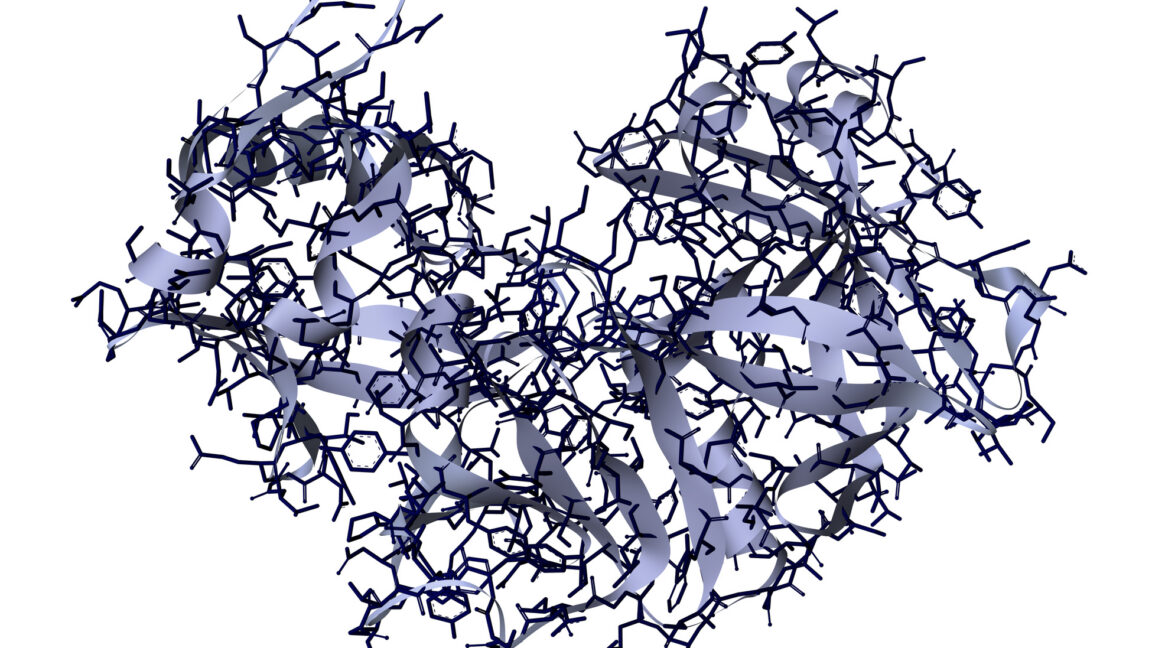
蛋白质是由肽键连接的氨基酸链。这些肽键本身极其稳定,估计半衰期达数百年。但在地球环境中,大多数蛋白质远未能保存这么久。这是因为生物体进化出了少数几种催化肽键断裂的方式,这些方式又分化出无数种专门分解蛋白质的酶。蛋白酶无处不在,通常能快速分解进入环境中的任何蛋白质。
A protein is a chain of amino acids held together by what are called peptide bonds. On their own, those bonds are extremely stable; they're estimated to have a half-life of several hundred years. But in Earth's environment, most proteins don't last nearly that long. That's because organisms have evolved a handful of ways to catalyze the break-up of peptide bonds, which have diversified into countless specialized protein-digesting enzymes. Proteases are everywhere and generally make short work of any proteins that find their way into the environment.
如今,研究人员基本上绕过了这一分化过程,利用基于AI的蛋白质设计工具,取两种蛋白酶的催化核心,并替换掉蛋白质的其余部分。所得到的酶可以被调整以特定方式切割特定蛋白质,研究人员通过用它们切割与神经系统疾病相关的蛋白质来证明了其有效性。
Now, researchers have basically short-circuited the diversification process, using AI-based protein design tools to take the catalytic core of two types of protease and replace the entire rest of the protein. The resulting enzymes could be tuned to cut specific proteins in half, and the researchers demonstrated their effectiveness by using them to cut proteins associated with neurological diseases.
基本的肽键本身并不特别引人注目——它是氨基与羧基结合并释放一个水分子形成的。正如其名称所示,氨基酸同时具有氨基和羧基,使其能够在氨基酸的两侧形成肽键。这对于构建蛋白质中发现的长链至关重要。(氨基酸还具有具有独特化学性质的侧链,这赋予了骨架特定的性质。)
The basic peptide bond isn't especially interesting-looking—it's what you get when you link an amino group to an acid, releasing a water molecule in the process. As their name implies, amino acids have both an amino and an acid group, allowing them to form peptide bonds on two sides of the amino acid. This is critical for building up the long chains found in proteins. (The amino acids also have side chains with distinctive chemistry, which gives a backbone specific properties.)