一项新的YouGov/Economist调查显示,住在数据中心附近(具体来说,大约一英里以内)的美国人本轮选举中比其他人更倾向于投票给民主党。
Americans who live near data centers—specifically, within a mile or so—have become more likely than others to vote for Democrats this cycle, a new YouGov/Economist survey suggests.
根据10月12日发布的民调,仅自5月以来,住在数据中心附近计划投票给民主党的人口比例已从54%上升至61%。全国范围内,选民偏好也有所变化,但幅度要小得多:从53%上升至55%。
Since May alone, the share of people living near data centers who plan to vote Democratic has risen from 54 percent to 61 percent, according to the poll, released October 12. Nationwide, voter preferences have shifted too, but by a much smaller margin: from 53 percent to 55 percent.
过去一年,开发商以惊人的速度获得土地租赁并开始建设新的“超大规模”数据中心——往往运营速度过快,以至于根本没有时间让周边社区深度参与分区规划过程,或者干脆选择不让社区参与。这种情况主要发生在农村和郊区,在这些地区,无论政治立场如何,似乎没有人愿意承担邻里数据中心的东道主角色。
Over the past year, developers have secured land leases and begun construction on new “hyperscale” data centers at a dizzying rate—often operating too fast to, or simply choosing not to, involve nearby communities much in the zoning process. This dynamic is mostly playing out in rural and suburban areas, where, across the political spectrum, nobody seems to want to play host to a neighborhood data center.
原因很容易理解。数据中心运行需要大量空间、能源和水资源,但相对于所需投资,它们提供的就业岗位并不多。而且它们常常是令人不快的邻居:它们的冷却系统可能会产生噪音,而且越来越多的数据中心现场配备燃气轮机,向空气中喷出黑烟。全国各地的镇议会和分区委员会 unsurprisingly 发现自己成为了反数据中心抗议的场所。
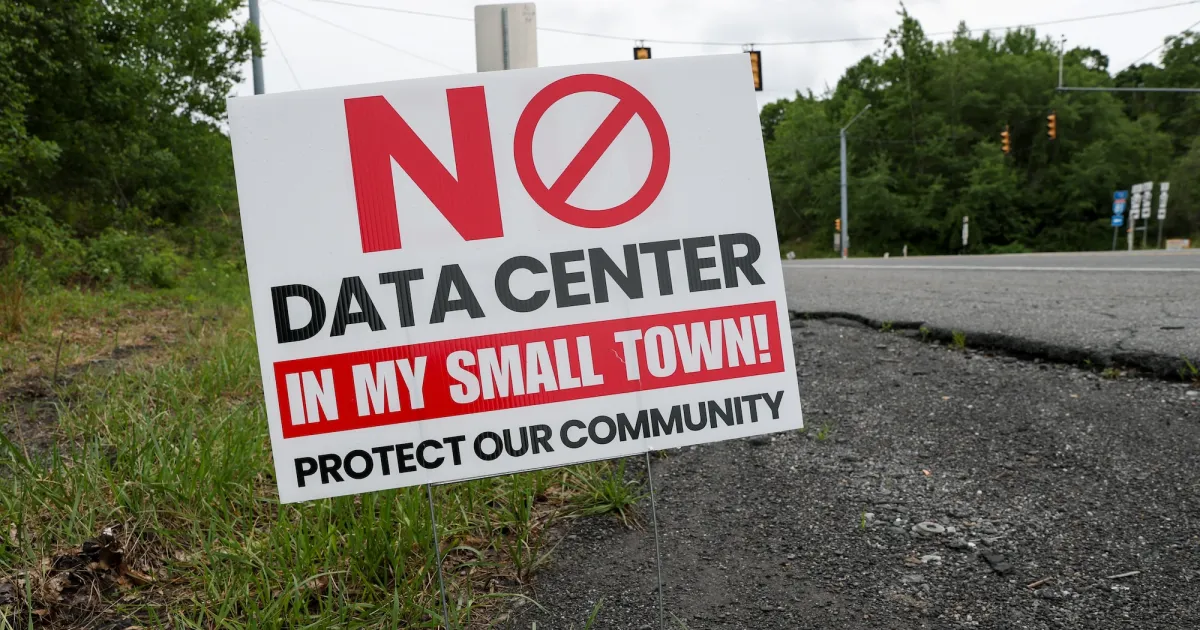
It’s easy to see why. Data centers need significant space, energy and water to operate, and they don’t provide many jobs relative to the investment they require. And they’re often unpleasant neighbors: their cooling systems can be noisy, and a growing number include onsite gas turbines that belch black smoke into the air. Town councils and zoning commissions across the country are unsurprisingly finding themselves the sites of anti-data-center protest.
最近上线的网站《数据中心反对报告》正在追踪全国范围内数据中心开发的反对情况,该网站称,目前在37个州至少有268个地方反对团体,这些团体正在组织超过30万人。根据气候媒体Heatmap的报道,2026年已有价值超过2600亿美元的数据中心项目被取消。
Data Center Opposition Report, a recently launched website tracking opposition to data center development across the country, counts at least 268 local opposition groups across 37 states, which it says are organizing more than 300,000 people. Planned data center projects worth more than $260 billion have already been canceled in 2026, per the climate outlet Heatmap.
政界人士也注意到了这一动向:两党候选人纷纷将反对建设数据中心的内容纳入竞选承诺。不过唐纳德·特朗普却逆势而行,他声称那些拒绝建设数据中心的城镇将会“落后且贫穷”,还称美国人应当任由数据中心“大行其道”。然而,这一言论似乎并未说服那些历来倾向于支持共和党的社区。据专门追踪数据中心建设情况的Cleanview Research公司向CBS提供的数据显示,目前正在建设的数据中心中,75%位于共和党占优势的州;处于规划阶段的数据中心中,80%也位于这些地区。
And politicians are paying attention: candidates from both parties are incorporating anti-data-center populism into their campaign promises. Donald Trump has bucked that trend, stating that towns that say no to data centers will be “backwards and poor,” and that Americans should let data centers “reign.”This, it seems, has not been enough to convince those communities, most of which historically lean Republican. 75 percent of data centers under construction, and 80 percent of data centers in the planning stage, are in red states, according to data shared with CBS by Cleanview Research, a company tracking data center development.
部分共和党人开始转变对数据中心的态度。例如,今年7月曾称对数据中心的担忧纯属“无稽之谈”的一位阿拉巴马州州长候选人,如今却以推行严格监管政策作为竞选纲领。不过总体而言,共和党尚未能就“数据中心建设与民众生活质量的关系”这一议题形成连贯的舆论导向。此次民调结果只是众多迹象之一,表明即将举行的中期选举结果或许会反映出这一趋势。
Some Republicans are flipping on data centers. One Alabama gubernatorial hopeful who called data center fears “bullcrap” in July, for example, is now running on a strict regulatory platform. But the GOP overall has not been able to produce coherent messaging on data centers as a quality of life issue. The new poll is one of several to suggest that upcoming midterm election results may reflect that.
正如俄亥俄州反对建设数据中心的活动人士尼克·欧文斯近日对克利夫兰新闻5台所说:“无论哪个政党,只有到了11月3日他们才会清醒过来。那些对数据中心问题保持沉默的人终将明白真相——坦率地说,两党在此事上都难辞其咎。”
As Ohio anti–data center activist Nick Owens recently told News 5 Cleveland, “The only way they’re going to wake up, whether it’s either party, is on November 3. People who are silent to the data center issue will find out, but frankly, both parties are complicit.”