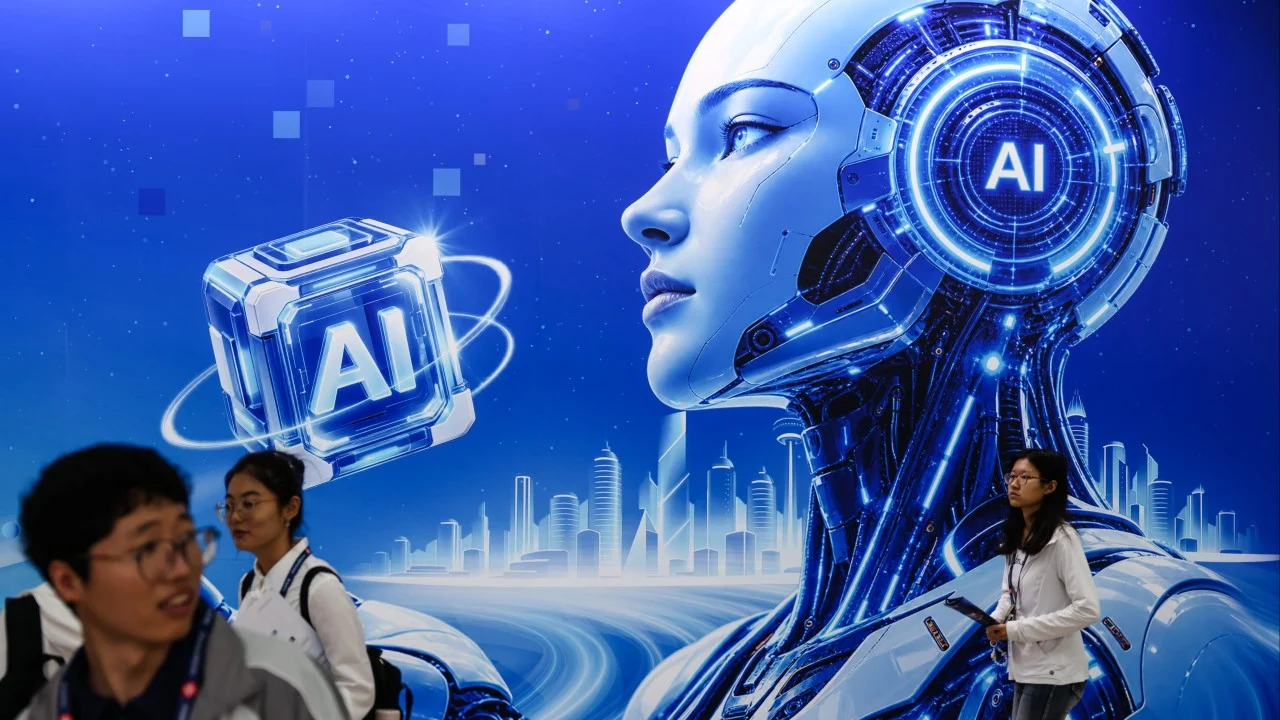
一位研究中国问题的领军经济学家表示,世界正处于由人工智能(AI)、生物技术和机器人出口驱动的“中国冲击3.0”之门槛上,其冲击力度可能超过当前的浪潮。
The world is on the cusp of a “China shock 3.0” driven by exports of artificial intelligence (AI), biotechnology and robots, which could hit harder than the current wave, a leading economist on China has said.
布鲁塞尔智库布鲁盖尔的高级研究员、法国兴业银行亚太区首席经济学家艾丽西亚·加西亚-埃雷罗(Alicia Garcia-Herrero)在华盛顿彼得森国际经济研究所(PIIE)周三主持的线上小组讨论后,接受《南华早报》在台北的采访时表示:“我们已经站在中国冲击3.0的起点上。”
“We are already at the starting point of the China shock 3.0,” Alicia Garcia-Herrero, a senior fellow at Brussels-based think tank Bruegel and chief economist for Asia-Pacific at investment bank Natixis, told the South China Morning Post from Taipei after a virtual panel hosted by the Washington-based Peterson Institute for International Economics (PIIE) on Wednesday.
她说,第三波冲击将以人工智能为核心,涵盖硬件和软件,同时还包括生物技术和机器人技术。
The third wave would centre on artificial intelligence, covering both hardware and software, along with biotechnology and robotics, she said.
加西亚-埃雷罗在采访中表示,尽管中国仍是先进芯片的主要进口国,但正在研发自己的AI硬件和软件,并计划在满足国内需求后出口这些产品。这些出口可能伴随数据中心和云服务的捆绑提供,人形机器人和工业机器人也可能随之跟进,从而产生超越当前水平的冲击。
China, while still a major importer of advanced chips, was developing its own AI hardware and software and planned to export them once domestic demand was met, Garcia-Herrero said in the interview. These exports could come alongside bundled data centre and cloud services, and humanoid and industrial robots could follow, creating a shock that would exceed the current one, she said.
她还说:“如果你考虑具身AI、人形机器人或工业机器人,就要想想这将带来怎样的巨大冲击,远超[目前的]冲击。”
“If you think about embodied AI, humanoid robots or industrial robots, think about the humongous shock that this is going to be, beyond [the] existing shock,” she said.
在小组讨论中,加西亚-埃雷罗表示,中国的廉价能源将使其拥有全球最低的计算成本,从而将其竞争优势从工业品延伸至服务业。她认为,一个在各个领域都具竞争力但大部分对进口封闭的庞大经济体,必须是“极其合理”的。
On the panel, Garcia-Herrero said China’s cheap energy would give it the world’s lowest computing costs, carrying its competitive strength beyond industrial goods and into services. A huge economy that is competitive across the board but largely closed to imports, she argued, must be “extremely reasonable”.
“中国冲击”一词是由美国经济学家大卫·奥托尔(David Autor)、大卫·多恩(David Dorn)和戈登·汉森(Gordon Hanson)推广开来的,他们的研究指出,北京在2001年加入世界贸易组织后,中国进口激增导致美国制造业岗位流失和工厂城镇衰落。
The term “China shock” was popularised by US economists David Autor, David Dorn and Gordon Hanson, whose research linked the surge in Chinese imports after Beijing joined the World Trade Organization in 2001 to the loss of US manufacturing jobs and the decline of factory towns.
“2.0”浪潮始于2018年左右,虽然也有人将其时间定在2020年代,其推动力来自更先进的制造业,包括汽车和机械。
The “2.0” wave began around 2018, though some date it to the 2020s, and has been driven by more advanced manufacturing, including cars and machinery.
欧洲和美国官员指责中国产能过剩,意味着其生产远超国内和国外需求所能吸收的量,并且以低价出口剩余产能。
European and US officials have accused China of overcapacity, meaning it produces far more than domestic and foreign demand can absorb, and of exporting the surplus at low prices.
中国方面否认了这些指控。7月28日,商务部发布题为《中国关于所谓产能过剩问题的立场》的立场文件称,北京从未刻意追求贸易顺差,其出口受创新和改革驱动,而非补贴或国内需求疲软所致。文件指出:“工业补贴与产能过剩之间没有必然联系。”
China has rejected the claims. In a position paper titled “China’s Position on the So-called Excess Capacity Issue,” published on July 28, the Ministry of Commerce said Beijing had never deliberately pursued a trade surplus and that its exports were driven by innovation and reform, not subsidies or weak domestic demand. “There is no necessary connection between industrial subsidies and overcapacity,” the paper said.
海关数据周三显示,今年前九个月中国贸易顺差达到9381.1亿美元,保持了去年创下的1.189万亿美元纪录的超越趋势。9月出口同比增长36.3%,当月对美和欧盟的贸易顺差均超过340亿美元。
China’s trade surplus reached US$938.11 billion in the first nine months of the year, customs data showed on Wednesday, keeping it on track to beat last year’s record of US$1.189 trillion. September exports jumped 36.3 per cent from a year earlier, and the month’s surpluses with both the US and the European Union (EU) topped US$34 billion.
10月7日,在美国巴黎,美国及另外14个经济体(包括欧盟)签署了一份声明,承诺在电动汽车、电池、化工、芯片和太阳能等行业采取行动应对结构性产能过剩。
On October 7 in Paris, the US and 14 other economies, including the EU, signed a statement pledging action on structural excess capacity in sectors including electric vehicles, batteries, chemicals, chips and solar power.
中国未在签署国之列。分析人士认为,这是华盛顿和布鲁塞尔试图组建一个“多边联盟”以施压北京的举措。
China was not among the signatories. Analysts have described the move as an effort by Washington and Brussels to assemble a “multilateral coalition” to pressure Beijing.
在彼得森国际经济研究所(PIIE)的小组讨论会上,与会专家对应对措施的看法存在分歧。加拿大女王大学法学副教授尼古拉斯·兰普(Nicolas Lamp)主张西方应欢迎中国投资,而非将所有贸易视为威胁。
Panellists at the PIIE event differed on how to respond. Nicolas Lamp, an associate professor of law at Queen’s University in Canada, argued the West should invite Chinese investment rather than treat all trade as a threat.
加西亚-埃雷罗(Garcia-Herrero)则对中国投资和商业合作的益处持更大怀疑态度,她表示,中国车企在欧洲的工厂很可能仅是依赖进口零部件的组装作业,且北京的安全规则限制了技术转让。
Garcia-Herrero was more sceptical about the benefits of Chinese investment and business engagement, saying Chinese carmakers’ European plants would likely be assembly operations reliant on imported parts, and that Beijing’s security rules limited technology transfer.
“中国在技术转移方面表现得非常谨慎,”她说,并补充道,这“理所当然”。“这就是为什么今天的解决方案比当时更难找到。”牛津大学公共政策教授、彼得森国际经济研究所(PIIE)非常驻高级研究员谭叶玲表示,中国需要得到保证,西方并非意在遏制、打压或包围它。她解释说,各方都需要共同寻找一条前进的道路。
“China is impressively careful with its tech transfer,” she said, adding that this is “rightly so.”“That’s why the solution is harder today than it was then.”Yeling Tan, a professor of public policy at the University of Oxford and a non-resident senior fellow at PIIE, said China needed reassurance that the West was not seeking to contain, suppress or encircle it. All sides needed to find a way forward together, she explained.
“我认为我们需要睿智且勇敢的政治家来推动这一进程,”谭叶玲说。“这是一条狭窄的走廊。但我不会说它不存在。”
“I think we need wise and courageous politicians to get us there,” Tan said. “It’s a narrow corridor. But I wouldn’t say it doesn’t exist.”