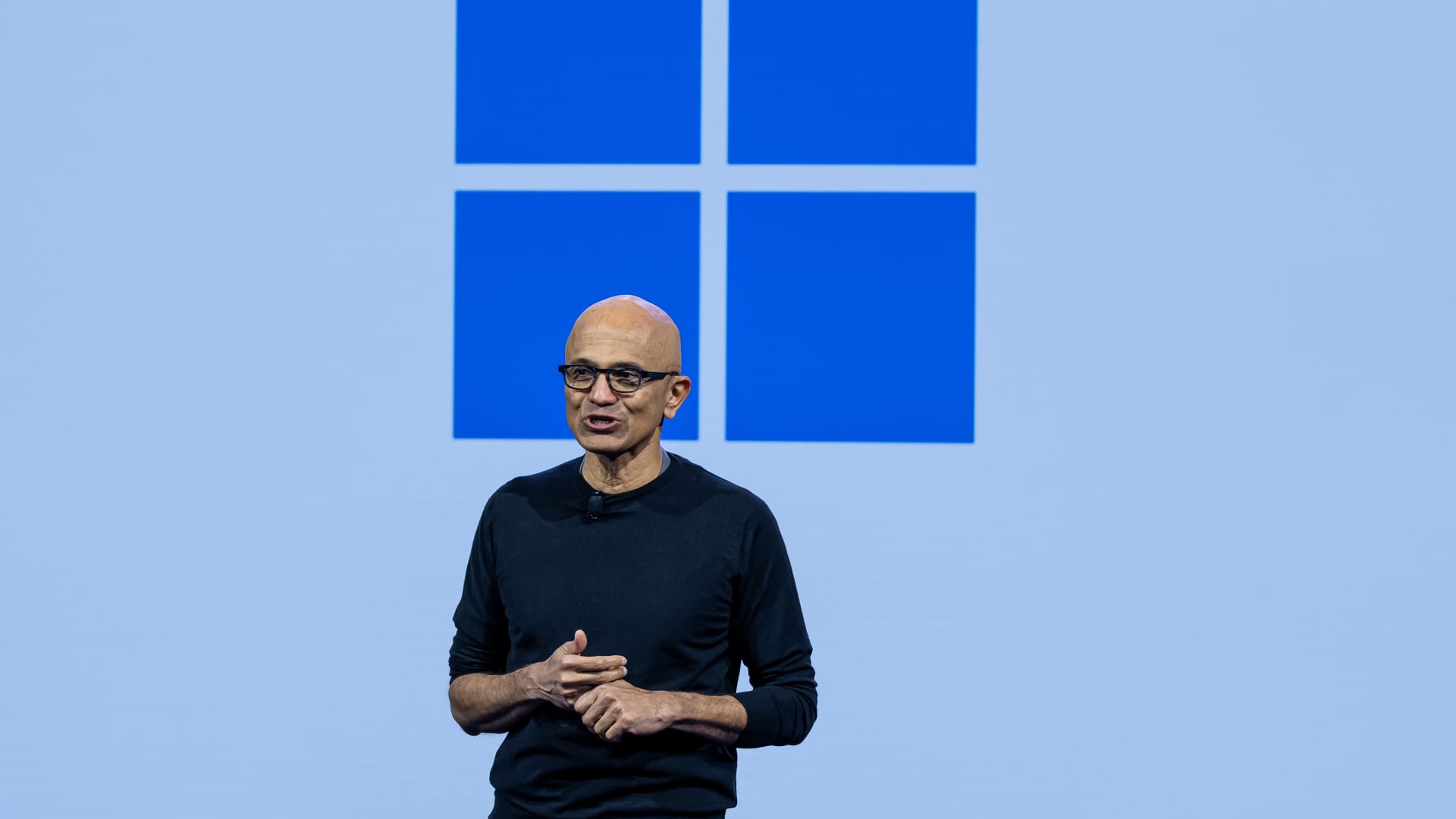
微软在经历了动荡的一年后,股价重回历史高位。那些坚持持有的投资者应当短暂享受这份喜悦——随后从这段坎坷历程中汲取教训,以便未来再次获利。在周二之前,微软上一次收于历史高位已是近一年前:2025年10月28日,每股542.07美元。第二天晚上,微软发出信号称其在人工智能基础设施上的支出将在未来几个季度加速,导致股价应声下跌约3%。
Microsoft has climbed back to record highs after a turbulent year for the tech giant's stock. Those who held on should briefly enjoy the view — and then find lessons from the rocky ride to make money again in the future. Before Tuesday, it had been almost a year since Microsoft last closed at a record: Oct. 28, 2025, at $542.07 a share. The next evening, Microsoft signaled that its spending on artificial intelligence infrastructure would accelerate in the coming quarters, sending shares down about 3% in response.
在那一刻,投资者无法预知未来将面临什么:一场残酷的、长达数月的下跌,股价跌去三分之一以上,部分原因是市场对该公司在“AI优先”世界中的未来产生了一些根本性质疑。快进到现在,微软如凤凰涅槃般反弹,重回历史收盘高位,周二收盘报543.45美元,这是近12个月来首次。尽管周三在糟糕的大盘拖累下回落近2%,但这段历程依然非同寻常。
In that moment, it was impossible for investors to know what awaited them: a brutal, monthslong decline that saw shares lose more than one-third of their value, driven in part by some existential questions about the company's future in an AI-first world. Fast forward to present, and like a phoenix rising from the ashes, Microsoft has rallied back to secure its first record close in nearly 12 months, ending Tuesday's session at $543.45. Though it pulled back nearly 2% Wednesday in a terrible market, the journey here is no less remarkable.
事后诸葛亮地说“我们早知它会反弹”很容易。但庆功并不能让你成为更好的投资者。相反,认真研究推动股价回升的动态因素才能做到这一点。我们可以从这次经历中提炼出教训,带入未来的投资实践。哪里出了问题就在这一年前,微软基本处于风头浪尖。它持有的OpenAI股份似乎每周都在增值。AI基础设施建设尚未成为政治噩梦,云业务Azure持续超预期增长。
It's easy to sit back and say, "Of course, we knew it would come back." But victory laps aren't what make you a better investor. On the other hand, a diligent study of the dynamics that got the stock back here can do that. There are lessons we can pull from this experience that we will carry forward with us. What went wrong This time last year, Microsoft was basically sitting on top of the world. It had a stake in OpenAI that seemed to get more valuable by the week . The AI infrastructure buildout wasn't a political nightmare, and cloud unit Azure was growing consistently ahead of expectations.
随后,微软脚下的地基开始松动。在2025年10月的2026财年第一季度财报电话会上,首席财务官Amy Hood(艾米·胡德)表示,该财年资本支出增速将超过上一财年。此前,Hood曾发出信号称资本支出增速将放缓。
Then, the ground underneath Microsoft started to shift. On its fiscal 2026 first-quarter earnings call in October 2025, CFO Amy Hood said its capital expenditure growth rate in that fiscal year would exceed that of the prior year. Previously, Hood had signaled for a slowdown in capex growth.
股价在财报发布后的首个交易日下跌 2.9%。市场反应表明,投资者日益担忧,与资本支出挂钩的收入增长速度不够快,无法让人对预期的支出水平感到安心。2025 年假日期间,Anthropic 的 Claude Code 凭借 Opus 4.5 模型发布迅速走红,这对微软也构成了不利影响。这个代码编写工具功能强大得多,进一步强化了 Anthropic 在前沿领域的形象。
Shares fell 2.9% in that first session post-earnings. The reaction signaled that investors were growing increasingly concerned that revenue tied to the capex spending wasn't showing up fast enough to be comfortable with the projected level of outlays. It didn't help that over the 2025 holiday season, Anthropic's Claude Code went viral on the back of the Opus 4.5 model release. This much-more capable version of the code-writing tool further brandished Anthropic's frontier image.
在此过程中,微软的 Copilot AI 助手等产品显得远不如预期那样具有吸引力,因而变现能力也大打折扣。Claude Code 及其 Claude Cowork 生产力工具的威力,还加剧了人们对 AI 将颠覆软件行业、引发 “SaaS 末日” 的担忧。观点认为,企业可利用这些新编码工具在内部开发定制应用;即便是幸存下来的包装软件,如果企业雇佣的员工减少,进而减少对按人计费的软件许可证需求,也可能受到 AI 的威胁。
In the process, it made offerings like Microsoft's Copilot AI assistant seem far less attractive and therefore monetizable than hoped for. The power of Claude Code — and its Claude Cowork productivity tool — also added fuel to concerns that AI would disrupt the software industry , giving rise to the "SaaSpocalypse." The thinking was that companies could use these new coding tools to create bespoke applications internally; and even the packaged software that would survive might be threatened by AI if companies hire fewer human workers and, by extension, need fewer per-person software licenses.
1 月 28 日收盘后微软发布财报时,市场对其地位的担忧显露无遗。结果显示,正如我们当时指出的,微软仍需改善其 “增长与支出” 比率。换个说法,在投资者眼中,微软支出过大,回报显现得不够快。随该财报发布,我们还得知,微软庞大的商业积压订单中有 45% 来自不盈利、现金流为负的 OpenAI。这一新披露同样未能提振市场情绪。
The fears around Microsoft's standing were on display when the company reported earnings on Jan. 28 after the closing bell. The results demonstrated that Microsoft still needed to improve its "growth-to-spending" ratio, as we noted at the time. Put another way, Microsoft was spending too much in the minds of investors and not showing enough of a payoff quickly enough. With that earnings release, we also learned that 45% of Microsoft's massive commercial backlog was from the profitless, cash-flow-negative OpenAI. That new disclosure didn't help sentiment, either.
次日股价暴跌 10% —— 创下自 2020 年 3 月 16 日疫情早期暴跌近 15% 以来最大单日跌幅。毋庸置疑,问题不在于需求。
Shares tumbled 10% the following session — its biggest one-day drop since falling nearly 15% on March 16, 2020, during the early days of the pandemic. To be sure, demand was not the issue.
正如我们当时所写:“微软有一些问题需要解决,要么让更多 Azure 产能上线,要么更好地平衡资本支出增长以改善利润率。近期股价下跌令人失望,但我们押注 CEO 萨提亚·纳德拉和 CFO 艾米·胡德会想出办法。”然而,围绕微软的情绪会变得更糟。一个关键担忧:微软承诺用于 Copilot 内部开发的 Azure 计算资源数量,而此时 Copilot 在激烈竞争面前被视为彻底的失望。
As we wrote at the time , "Microsoft has some issues to sort out to either get more Azure capacity online or to better balance capital expenditure growth to improve margins. The recent stock decline is disappointing, but we're betting CEO Satya Nadella and CFO Amy Hood will figure it out." However, sentiment around Microsoft would get worse. A key concern: the amount of Azure computing resources that Microsoft was committing to the internal development of Copilot, which, at this point, was being viewed as a total disappointment in the face of fierce competition.
当然有 OpenAI 和 Anthropic。但微软看起来甚至更糟,因为 Alphabet 因在 2025 年底发布 Gemini 3,从“弃儿”变成了市场宠儿。微软预留产能——进而限制 Azure 收入——用于一款甚至未真正进入 AI 话题讨论的产品,这一披露让支出担忧显得更加合理。股价下跌也是如此。正如 Melius Research 分析师本·赖茨在 2026 年 2 月 9 日下调微软评级时所写:“由于 Anthropic 的 Cowork 等因素,微软强大的 365 套件可能面临挑战,可能不得不免费赠送 Copilot 以保持相关性——损害其利润最丰厚的 Productivity(生产力)板块的增长和利润率。这一现实将消耗 Azure 的内部产能,也限制了那里的超预期表现。……Azure 缺乏超预期表现的能力与 Copilot 密不可分。如果 Copilot 的采用率和能力达不到标准,微软需要在 AI 建模和研发以及其他方面投入更多,消耗内部 Azure 产能为自己服务。我们越来越意识到,仅仅几周前我们的逻辑中的愚蠢之处——我们担心 Copilot 的困境,但因为看好 Azure 的前景而忽略了它。如果你认为 Copilot 是个失败品,它需要更多内部产能投资,因为它将不得不被免费赠送。”
There was OpenAI and Anthropic, of course. But Microsoft looked even worse now that Alphabet had gone from black sheep to market darling, thanks to the release of Gemini 3 in late 2025. The revelation that Microsoft was holding back capacity — and in turn limiting Azure revenue — for a product that wasn't even seriously in the AI conversation, made the spending concerns even more understandable. So, too, was the decline in the stock. As Melius Research analyst Ben Reitzes wrote in his Feb. 9, 2026, downgrade of Microsoft: "Due to things like Cowork from Anthropic, Microsoft's powerful 365 suite could see challenges and may need to give Copilot away just to stay relevant — hurting growth and margins in its most profitable Productivity segment. This reality will consume internal capacity of Azure, limiting beats there too. ... Azure's lack of ability to beat is inextricably linked to Copilot.
Voila - Azure 无法击败,因为微软需要为自己保留容量 - 仅此而已。这两个问题的关联因此扼杀了 Azure 的叙事,除非另有证明。新兴公司正在侵蚀微软的企业软件阵地,而且公司不仅似乎没有足够的实力来抵御它们,而且在加强防御的过程中还牺牲了收入。虽然管理层可能会争辩说这是正确的长期举措,但我们知道华尔街偏爱短期思维。
If Copilot adoption and capabilities are not up to par, Microsoft needs to spend more on AI modeling and R & D and whatever else consuming internal Azure capacity for themselves. We are increasingly realizing the folly in our logic only a few weeks ago — we were worried about Copilot woes, but overlooked it because we loved Azure's prospects. If you think Copilot is a dud, it requires more investment in internal capacity since it will need to be given away. Voila - Azure can't beat because Microsoft needs the capacity for themselves - period. The linkage of these 2 issues have thus killed the Azure narrative until proven otherwise." Upstarts were encroaching on Microsoft's enterprise software turf, and not only did the company not seem to have the horses to fend them off, but it was sacrificing revenue in the process of beefing up its defenses. While management could argue that was the right long-term move, we know Wall Street loves short-term thinking.
毫无疑问,我们在整个春天都表达了对微软表现的不满,包括四月财报之后,一直到夏季。吉姆·克雷默尤其直言不讳地批评了 Copilot,他认为付费用户相对于为微软更广泛的软件套件付费的用户数量微乎其微。公司在早六月举行的高风险 Build 大会未能提振股价,而当月将在更广泛的软件股票宇宙中掀起广泛的血腥场面。
Make no mistake, we certainly expressed our frustration with Microsoft's performance throughout the spring, including after earnings in April , and into the summer. Jim Cramer was an especially vocal critic of Copilot, believing that the number of paidrs relative to those paying for Microsoft's broader software suite was paltry. The company's high-stakes Build conference in early June wasn't enough to lift the stock, and that month would bring widespread carnage across the broader software stock universe.
微软全年低点出现在六月二十五日,股价为每股 252.83 美元。股价在七月开始回暖 — — 然后当月晚些时候发布了财政第四季度财报。那就是许多困扰股价的问题开始好转的时候。首先,公司没有上调其支出前景。虽然这不一定意味着 Copilot 开发有任何改善,但它清楚地表明投资者确实可能在恐慌中将下行风险估计过高。
Microsoft's low close of the year came on June 25 at $252.83 a share. Shares had started to perk up into July — and then came its fiscal fourth-quarter earnings report later in the month. That's when many of issues plaguing the stock started to turn around. First off, the company didn't raise its spending outlook. While that didn't necessarily speak to any improvements with Copilot development, it made clear that investors had indeed likely overshot to the downside in a panic.
此外,微软能够比华尔街预期更快地让更多 Azure 容量上线。它在实验室前沿之外的客户中增加了商业订单 — — 实际上减少了对 OpenAI 和 Anthropic 等公司的依赖,尽管这一点仍然重要 — — 这也有助于提振情绪。不仅如此,付费 Copilot 用户的数量从四月的超过 2000 万增加到超过 3000 万。
Moreover, Microsoft was able to bring more Azure capacity online quicker than Wall Street had excepted. That it grew its commercial backlog with customers outside of the frontier labs — in effect reducing its reliance on the likes of OpenAI and Anthropic, though that remains material — also helped sentiment. Not for nothing, the number of paying Copilotrs increased to over 30 million from over 20 million in April.
这也是高杠杆 Situational Awareness 对冲基金开始爆炸、缓解围绕软件的一些负面情绪的时间点。该基金由一名前 OpenAI 研究员管理,一直是“做空软件、做多硬件”交易的坚定支持者。这足以帮助股价在早些时候的八月重新回到 500 美元区间,即使 Copilot 当时尚未完全成形。时间快进到九月下旬,我们得到了最终帮助微软达到历史新高的消息。
This is also right about the time that the highly levered Situational Awareness hedge fund started to blow up, alleviating some of the negative sentiment around software. The fund, run by a former OpenAI researcher, had been a huge proponent of the "short software, long hardware" trade. That was enough to help the stock get back to the $500s in early August, even as Copilot wasn't fully figured out. Fast forward again, to late September, and we got the news that would ultimately help Microsoft reach a new all-time high.
微软推出了经过改造的 Copilot 版本,并阐述了聚焦于其已主导的企业世界的战略。不久之后,赖茨斯将微软的评级再次上调至买入,指出经过改造的 Copilot 战略以及人们对前沿实验室声誉的新兴担忧。经验教训那么,我们为什么一直坚持持有?这就是现在真正重要的问题,因为我们希望从过去一年微软股价走势中汲取教训。
Microsoft launched a retooled version of Copilot and outlined a strategy focused on the corporate world it already dominates. Not long after, Reitzes upgraded Microsoft back to a buy rating , pointing to the overhauled Copilot strategy and emerging concerns about the reputation of the frontier labs. The lessons learned So, why did we stick with it? That's the question that really matters now, as we look to pull a lesson from this past year of Microsoft price action.
首先,我们对管理层充满信心。这并不是说你应该基于希望进行投资,而是要说管理一家公司的团队是单只股票投资时需要考虑的最重要因素之一。微软首席执行官萨蒂亚·纳德拉和首席财务官艾米·胡德的业绩记录不言而喻。纳德拉于 2014 年接掌最高职位,将微软带入了云计算和软件即服务时代,而胡德一直证明自己是该领域最出色的首席财务官之一。
First off, we had faith in management. That's not to say you should invest on hope, but it is to say that the team running a company is one of the most important factors to consider when it comes to single-stock investing. For Microsoft CEO Satya Nadella and CFO Amy Hood, their track records speak for themselves. Nadella, who took over the top job in 2014, brought Microsoft into the cloud computing and software-as-a-service era , while Hood has consistently proven herself to be one of the best CFOs in the game.
胡德自 2013 年起担任微软财务负责人。其次,我们明白虽然微软正在为构建更多人工智能基础设施而燃烧巨额资本,但这笔支出是在其可控范围内。换句话说,这是一种自导自演的“创伤”,而非需求恶化这样更令人担忧的情况。因此,我们明白如果管理层决定需要转变方向,他们完全可以这样做,直到投资者对变现机会有更清晰的认识。
Hood has been Microsoft's finance chief since 2013. Second, we understood that while Microsoft was burning enormous amounts of capital to build more AI infrastructure, the spending was in its control. In other words, it was a self-inflicted "wound," and not something more concerning like a deterioration in demand. As a result, we understood that if management decided it needed to pivot, they could do so until investors got more visibility into monetization opportunities.
简单来说,这是一家需要再次证明自己的高质量公司,而不是一家靠运气成功、如今运气用尽的公司。在纳德拉的领导下,微软曾面临过颠覆,并在另一边变得更强,受益于云计算革命和对SaaS模式的接受。吉姆的一些长期投资原则在这里同样适用:拥有行业佼佼者;这是值得的:微软完全符合这一点,原因正如我们上面所阐述的。
To put it simply, this was a high-quality company that needed to prove itself again, not a company that was lucky to be successful and was now seeing its luck run out. Under Nadella, Microsoft had faced disruption before and come out stronger on the other side, benefiting from the cloud-computing revolution and the embrace of the SaaS model. Some of Jim's longstanding investment rules apply here too: Own the best of breed; it is worth it : Microsoft certainly fits the bill here for the reasons we laid out above.
管理团队堪称一流,公司稳固的资产负债表也是一大优势。恐慌从未让人赚到一分钱:今年上半年,许多投资者对“SaaSpocalypse”感到恐慌。虽然与Adobe、Figma和Intuit等公司相比,微软股票的反应可能不那么剧烈,但随着事态发展,投资者开始对企业软件公司可能面临的AI颠覆过度反应变得越来越明显。虽然由于不确定性上升,某种程度的担忧是合理的,但恐慌很可能意味着市场在下行方向上出现了过度反应。
The management team is as good as it gets, and the company's rock-solid balance sheet is a big advantage too. Nobody ever made a dime panicking : Plenty of investors were panicking about the "SaaSpocalypse" in the first half of this year. While perhaps not as acute in shares of Microsoft versus a name like Adobe , Figma and Intuit , as the move played out, it became increasingly clear that investors were starting to overreact about potential AI disruption for enterprise software companies. While some level of concern was justified because of elevated uncertainty, the panic likely meant the move was overshooting to the downside.
市场变得如此依赖算法驱动——而且由于“ETF化”,许多股票被纳入卖出订单——这也没有帮助。例如,ServiceNow的坏消息并不意味着所有人都抛售NOW股票,而是意味着许多人抛售了他们的软件交易所交易基金。最典型的例子是卖出iShares扩展科技-软件行业ETF(IGV),该基金持有从纯玩企业软件到网络安全的各种资产,没错,还有微软(目前是该基金第三大持仓)。
That the market has become so algorithmically driven — and that so many names were being bucketed into sell orders thanks to "ETFization" — also didn't help. For example, bad news out of ServiceNow didn't mean everyone sold NOW stock, it meant plenty of people dumped their software exchange-traded funds. The most prominent example is the sold the iShares Expanded Tech-Software Sector ETF (IGV), which holds everything from pure-play enterprise software to cybersecurity, and yes, Microsoft (currently the third-biggest holding in the fund).
买入并做功课,而非买入并持有:当然,承认市场存在恐慌并不意味着你可以仅仅因为自己“太酷而不屑一顾”而忽视它。
Buy and homework, not buy and hold : Of course, acknowledging that there is panic in the air doesn't mean you ignore it simply because you're too cool for school.
有时候,恐慌是有道理的(比如当负责美联储的人“根本一无所知!”)因此,如果你不打算恐慌,那你最好有充分的理由,而这只能通过做功课来获得。在微软的案例中,很明显,至少部分产能限制是由于内部推动Copilot发展的意愿造成的。如果更多的算力用于满足外部需求,Azure的增长和整体收入本来会更好。我们不喜欢这种情况,但这确实意味着我们离更好地理解问题又近了一步。
Sometimes, panic is warranted (like when the folks running the Federal Reserve "know nothing!" ) So, if you're not going to panic, you better have a good reason and you only get that by doing the homework. In the case of Microsoft, it became clear that at least some of the capacity constraint was due to that internal desire to advance Copilot. If more compute had gone to external demand, Azure growth and overall revenue would've bene better. We didn't like that that was the case, but it did mean that we were that much closer to better understanding the issue.
当然,解决问题的第一步是能够识别它。随着问题被更好地理解,我们也更清楚地知道需要做什么。因此,吉姆和华尔街的其他人开始更直言不讳地谈论扭转Copilot局面的必要性。当分析师和股东识别出他们面临的核心问题时,管理层就更难置之不理,从而可能提高他们解决问题的紧迫感。耐心是一种美德 — — 放弃价值是一种罪过:最终,一切都回到了估值。
Step one to fixing an issue, of course, is being able to identify it. With the problem better understood, we better understood what needed to be done. As such, Jim and others on Wall Street started to get more vocal about the need to turn Copilot around. When analysts and shareholders have identified a core issue they have, it's harder for management to ignore and can therefore increase their sense of urgency in addressing the issue. Patience is a virtue — giving up on value is a sin : Ultimately, it all comes back to valuation.
随着我们看到股价似乎一天天、一周周、一个月月地下跌,我们始终没有忽视市盈率。随着微软股价下跌,其市盈率也随之下降。这表明,尽管股价已经反映了诸多担忧,但盈利预期并未被大幅下调。事实上,根据FactSet的数据,盈利预期基本上是在上升。因此,股票确实变得便宜了很多,如果我们对管理层的信心是正确的,那么潜在的回报也就更大了。
As we watched shares decline seemingly day after day, week after week, month after month, we never lost track of the price-to-earnings multiple. As Microsoft's stock price declined, so too did its price-to-earnings multiple. This indicated to us that for all the concern being baked into the price, earnings estimates weren't being cut nearly as fast. In fact, the estimates were largely going up, according to FactSet data. So, shares really were becoming much cheaper, making the potential reward if our faith in management was rightly given, that much greater.
微软年初的股价大约是前瞻市盈率28倍。到6月下旬,它已经压缩到了18倍。结论:尽管我们为微软能够扭转局面感到振奋,并且从微软中赚了不少钱,但未来几年通过理解这次判断为何成功,所能赚到的钱将会更多。
Microsoft started the year at roughly 28 times forward earnings. By late June, it had compressed all the way to 18. Bottom line As thrilled as we are that Microsoft has clawed its way back, and as much money was made on Microsoft, far more will be made in the years to come by understanding why this call worked out.
通过专注于仅选择最优秀的股票(少数例外情况除外,例如当你发现一个令人难以置信的转机机会时),你就能最大程度地提高未来赚钱的机会。随后,通过尽你所能在分析中消除情绪——从希望到恐慌的全谱系——你可以更好地确保客观性。当然,当你受过良好教育时,消除情绪要容易得多,因此做好功课是不可谈判的。
By focusing on only best-of-breed names (with some exception, like when you spot an incredible turnaround opportunity), you give yourself the best chance of making money in the future. By then doing all you can eliminate emotion from your analysis — across the spectrum, from hope to panic — you can better ensure objectivity. Of course, it's much easier to eliminate emotion when you are well-educated, so doing the homework is a non-negotiable.
最后,当你完成所有这些步骤后,你就会知道自己是否持有被低估的资产。如果你确实持有价值,所要做的就是保持耐心。更常见的是,如果分析正确,这种耐心终将得到回报,就像我们在微软身上所经历的那样。有趣的是,无需重新开始,我们认为类似的动态在过去几周里也出现在Meta身上。并且,为了公平起见,如果我们当初对Alphabet多有一点耐心,我们就不会在去年它开始大幅上涨之前就退出该股票。
Finally, when you've done all that, you'll know if you're sitting on value or not. If you've got value, all there is to do is be patient. More often than not, if the analysis was correct, that patience will be rewarded, as it has been for us with Microsoft. Funny enough, without starting all over, we would argue a similar dynamic has played out with Meta in the past few weeks. And, in the interest of fairness, had we had a bit more patience with Alphabet, we would not have exited that name last year before it went on a huge run.
幸运的是,我们有足够的觉察力来认识到自己的错误,并在它可能进一步上涨之前重新买入——这凸显了Jim在数十年经验中逐渐遵循的其他几条规则:当你错了时,不要固执己见,要放下自尊。当事实变化时,你的想法也必须随之改变,或者至少,你必须重新审视你的初始假设。我们就在Alphabet身上这样做了,虽然我们错过了去年的巨幅上涨,但我们仍然及时重新买入并赚到了钱。
Fortunately, we had enough awareness to acknowledge our mistake and get back in before it could climb even higher — underscoring a few other rules Jim has come to abide over his decades of experience: don't dig in your heels when you're wrong, swallow your pride. When the facts change, so too must your mind, or, at the very least, you must gut check your initial thesis. We did it with Alphabet, and while we missed last year's monster run, we still managed to get back in in time to make money.
幸运的是,在微软的情况下,我们从未离开。(吉姆·克莱默的慈善信托目前持有MSFT、META和GOOGL。)
Thankfully, with Microsoft, we never left. (Jim Cramer's Charitable Trust is long MSFT, META, and GOOGL. )