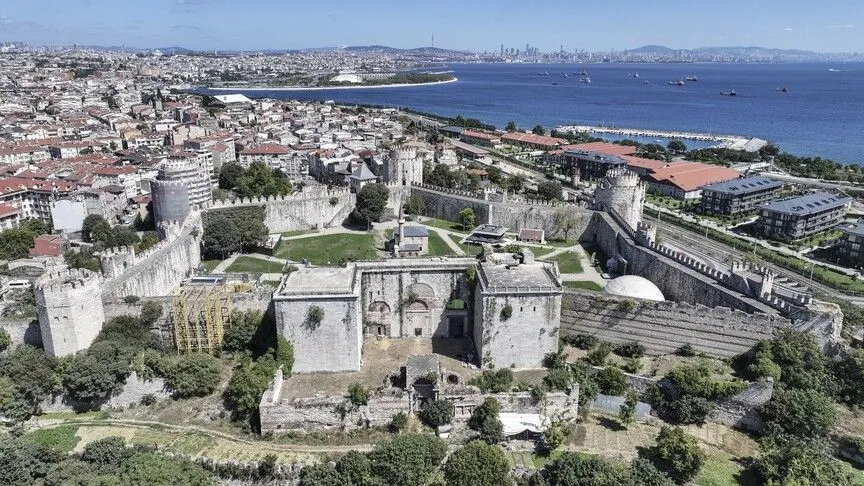
伊斯坦布尔的历史性耶迪库勒门位于城市古老陆墙南段,靠近马尔马拉海,其幸存的建筑和几个世纪的修复工作留下了拜占庭和奥斯曼时期的痕迹。
Istanbul's historic Yedikule Gate, located along the southern section of the city's ancient land walls near the Sea of Marmara, bears traces of both the Byzantine and Ottoman periods through its surviving architecture and centuries of restoration work.
该门靠近耶迪库勒要塞,位于金门以北,是安纳多卢媒体系列《通向城市历史的门》第九期的内容。该门位于陆墙第11座和第12座塔楼之间,拱门采用两层砖砌成尖拱形,并有可追溯至奥斯曼苏丹艾哈迈德三世统治时期的修复铭文。如今仅存主墙内的通道,而墙体外侧部分的第二通道已不复存在。
The gate, located near Yedikule Fortress and north of the Golden Gate, is featured in the ninth installment of Anadolu’s media series "Gates Opening onto the City's History." Situated between Towers 11 and 12 of the land walls, the gate features a pointed arch built with two courses of brick and a restoration inscription dating to the reign of Ottoman Sultan Ahmed III. Only the passageway through the main wall survives today, while a second passageway in the outer section of the walls has disappeared.
该门及其周围墙体在艾哈迈德三世和奥斯曼三世统治时期曾进行修复,反映了该建筑在奥斯曼时期的持续使用。
The gate and surrounding walls underwent repairs during the reigns of Ahmed III and Osman III, reflecting the structure's continued use during the Ottoman period.
该门曾连接城墙内部区域与耶迪库勒周边地区,如今仍是伊斯坦布尔拜占庭和奥斯曼建筑遗产的重要组成部分。
Once connecting the area within the city walls to the surroundings of Yedikule, the gate remains an important part of Istanbul's Byzantine and Ottoman architectural heritage.
伊斯坦布尔米德尼耶特大学艺术史教授卡迪尔·佩克塔斯向安纳多卢透露,耶迪库勒门位于伊斯坦布尔陆墙南端,该陆墙延伸至马尔马拉海。
Kadir Pektas, a professor of art history at Istanbul Medeniyet University, told Anadolu that Yedikule Gate stands near the southern end of Istanbul's land walls, which extend toward the Sea of Marmara.
他说,该门在拜占庭时期用于防御,奥斯曼时期则兼具防御和安全功能。
He said the gate served defensive purposes during the Byzantine period and was used for both defense and security during the Ottoman era.
“如今仅存通向主墙、大墙的门洞部分——即拱门。外墙部分已不复存在,”佩克塔斯说。
"Today, only the section of the gate that opens onto the main, large walls—the arch—remains. The outer wall section has not survived to the present day," Pektas said.
他指出,19世纪的照片显示,该地点曾有一座第二座拱门形门廊,而考古研究表明,它可能可追溯至拜占庭或晚期拜占庭时期。
He noted that 19th-century photographs suggest a second arched gateway once stood at the site, while archaeological research indicates that it may date to the Byzantine or Late Byzantine period.
描述幸存的结构时,佩克塔斯说:“这是一个尖拱门,由两层砖砌成。在这方面,它具备奥斯曼风格的所有特征。”他还强调了拱门上方一处可追溯到艾哈迈德三世时期的修复铭文。
Describing the surviving structure, Pektas said: "It is a pointed-arch gate, built of brick in two courses. In this respect, it bears all the hallmarks of the Ottoman style." He also highlighted a restoration inscription above the arch dating to the reign of Ahmed III.
他表示,墙壁上还有另外两处铭文,分别可追溯到艾哈迈德三世和奥斯曼三世时期,表明该地区在18世纪进行了大规模修复工作。
Two additional inscriptions along the walls, dating to the reigns of Ahmed III and Osman III, indicate extensive restoration work in the area during the 18th century, he said.
佩克塔斯认为,由于与耶迪克勒地牢的关联,耶迪克勒门可能经历了比城市城墙上其他门更为广泛的修复。
Pektas suggested that Yedikule Gate may have undergone more extensive restoration than other gateways in the city's walls because of its connection to the Yedikule Dungeons.
他说:“这是一座直接通往耶迪克勒地牢的门,在奥斯曼时期也曾被使用。18世纪的这些连续修复很可能与通往耶迪克勒地牢有关。”他补充说,曾经可见于门面向城市一侧的浮雕如今已经消失。
"It is a gate that leads directly to the Yedikule Dungeons and was also used during the Ottoman period. These successive repairs in the 18th century were likely related to access to the Yedikule Dungeons," he said. He added that figurative reliefs once visible on the city-facing side of the gate have since disappeared.