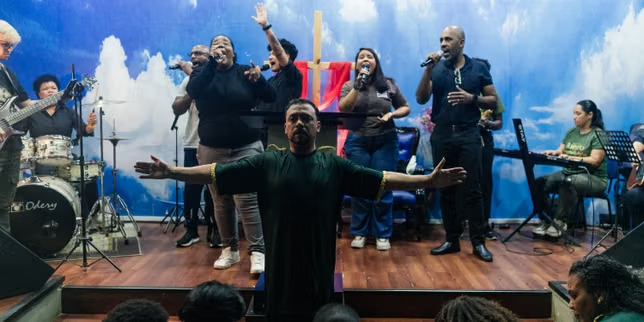
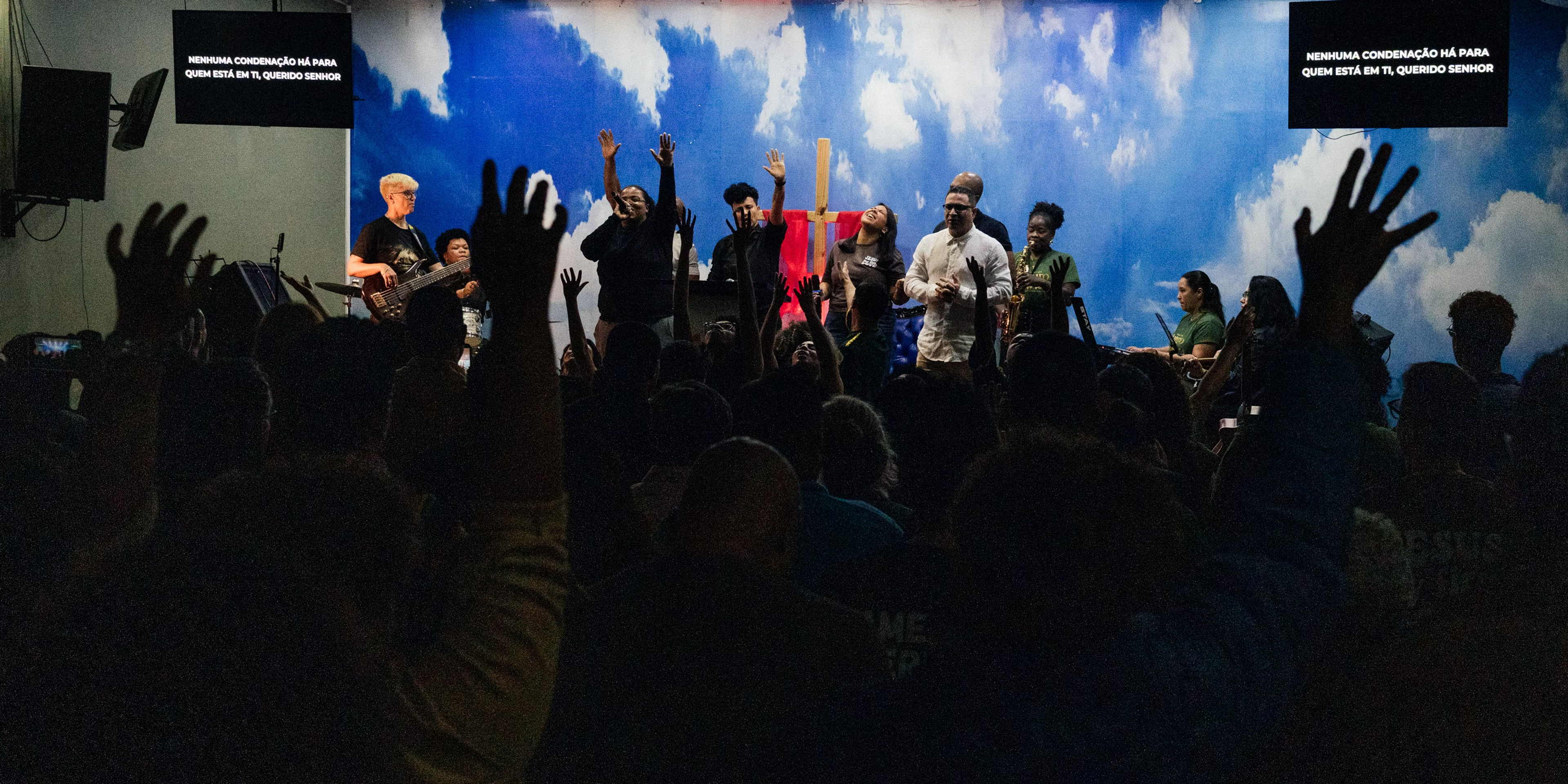
9月27日周日上午,约10名信徒聚集在里约热内卢郊区一处宽敞明亮的共享办公空间里。大家一边喝着大壶装的咖啡、吃着巧克力曲奇,一边在轻松的氛围中探讨《福音书》中的段落。55岁的弗拉基米尔·德奥利维拉·索萨牧师脖子上挂着十字架,手里拿着麦克风,鼓励大家毫无顾忌地分享自己对经文的感悟。“在这里,人们不只是来倾听,更是来发言的!”这位性格开朗、热心肠的牧师说道。
Around 10 worshippers gathered in a modest, brightly lit coworking space on the outskirts of Rio de Janeiro on the morning of Sunday, September 27. Over a large thermos of coffee and some chocolate cookies, they discussed a passage from the Gospel in a relaxed atmosphere. With a microphone in hand and a cross around his neck, Pastor Vladimir de Oliveira Souza, 55, encouraged them to share their reflections on the text, openly and without filters. "Here, people don't just come to listen, but to speak!" said the jovial, warm-hearted pastor.
自2014年起,这个名为“Redençao Baixada”(意为“巴伊沙达的救赎”)的新教团体便为那些对教会政治化现象感到厌倦的信徒提供了避风港。自上世纪90年代以来,巴西的教会数量激增,但不少教会却沦为极右翼势力的工具。现任总统候选人弗拉维奥·博索纳罗在10月25日举行的第二轮选举中目前处于领先态势,正如他的父亲——前总统雅伊尔·博索纳罗(2019-2023年在任)一样,他也依靠颇具影响力的牧师来维系福音派群体的支持。
根据宗教研究所(ISER)与民意调查机构Quaest于9月23日发布的调查数据,福音派信徒占巴西总人口的29%。
Since 2014, services at the evangelical group Redençao Baixada ("Redemption Baixada") have offered a haven for those weary of seeing churches – whose numbers have multiplied in Brazil since the 1990s – placed at the service of the far right. Like his father, former president Jair Bolsonaro (2019-2023), presidential candidate Flavio Bolsonaro, who is leading in the race ahead of the second round scheduled for October 25, has relied on influential pastors to maintain his support among evangelicals, who make up 29% of the population, according to a study published on September 23 by the Institute for Religious Studies (ISER) and polling agency Quaest.
不过,尽管10月8日发布的Datafolha民调显示,69%的福音派信徒表示会把票投给弗拉维奥·博索纳罗,而只有25%的人支持左翼总统卢拉,但仍有不少信徒对信仰被政治化感到不满。宗教研究所专门研究宗教问题的人类学家莉维亚·雷伊斯指出:“2018年和2022年的总统选举期间,许多人——尤其是女性——离开了教会,因为她们认为政治因素导致了群体间的分裂。”同样由宗教研究所与Quaest联合开展的调查显示,81%的福音派信徒反对在选举期间的礼拜或宗教活动中涉及政治议题。
But while 69% of evangelicals said they would vote for Flavio Bolsonaro, compared to 25% for left-wing president Luiz Inacio Lula da Silva, according to a Datafolha poll released on October 8, many worshippers have grown weary of the politicization of their faith. "Many people left their churches [during the presidential elections] in 2018 and 2022, mainly women, because they saw politics causing divisions," said Livia Reis, an anthropologist specializing in religious issues at ISER. According to the joint ISER and Quaest study, 81% of evangelicals opposed political issues being raised during services or religious events during election campaigns.