
印度尼西亚国有银行在进入第三季度财报时,贷款仍在快速增长,但政府推动更多贷款的举措正使其面临日益上升的信贷和融资风险。
Indonesia’s state-owned banks are heading into third-quarter earnings with loans still growing rapidly, but the government’s push for more lending is exposing them to rising credit and funding risks.
国有贷款机构被要求做更多以支持经济增长,而其对国有企业的大规模敞口使其面临重组损失的脆弱性。更广泛的银行体系也面临融资成本上升以及低收入借款人还款能力下降的问题。
State lenders are being asked to do more to support economic growth, while their large exposure to state-owned enterprises leaves them vulnerable to restructuring losses. The broader banking system is also facing expensive funding and weaker repayment capacity among lower-income borrowers.
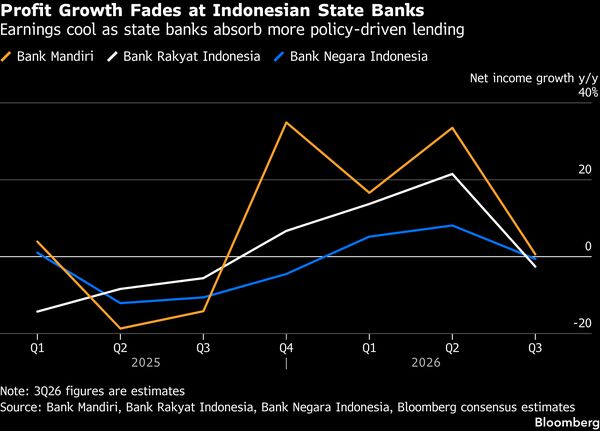
分析师预计,印尼 Mandiri 银行(PT Bank Mandiri)的净利润与去年同期基本持平,而印尼 Rakyat 银行(PT Bank Rakyat Indonesia)和印尼 Negara 银行(PT Bank Negara Indonesia)的利润可能分别下降约2.6%和0.6%。
Analysts expect net income at PT Bank Mandiri was broadly flat from a year earlier, while profits at PT Bank Rakyat Indonesia and PT Bank Negara Indonesia may have slipped about 2.6% and 0.6%, respectively.
政府已将约299万亿印尼盾(170亿美元)的现金存放在这些贷款机构,以增强流动性并支持更多贷款,这些资金将一直存放至2027年7月。
The government has placed about 299 trillion rupiah ($17 billion) of its cash with the lenders to bolster liquidity and support more lending, with the funds set to remain there through July 2027.
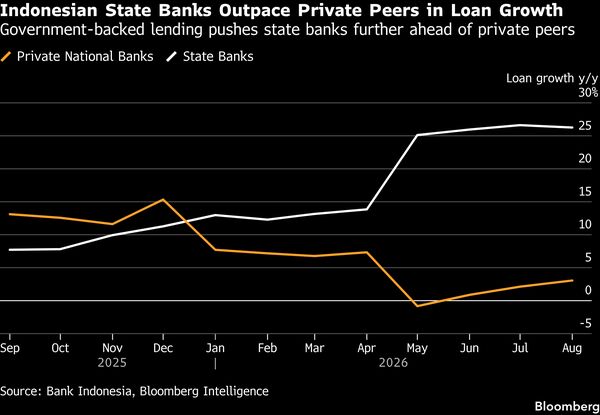
根据印尼 Maybank Sekuritas 分析师 Jeffrosenberg Chenlim 和 Faiq Asad 的报告,截至8月,行业贷款较去年同期增长13.7%,增长主要由投资和流动资金贷款带动。然而,之前录入的高成本存款可能导致融资成本在下半年保持高位,而“部分压力”仍存在于消费和小企业贷款领域。
Industry loans grew 13.7% from a year earlier in August, led by investment and working-capital borrowing, according to Maybank Sekuritas Indonesia analysts Jeffrosenberg Chenlim and Faiq Asad. However, previously booked high-cost deposits may keep funding expenses elevated through the second half, while “some pressure persists” in consumer and small-business loans, they wrote in a report.
尽管经济增长稳健,这些风险仍在显现。借贷成本上升和购买力下降正在挤压低收入家庭,而私人消费占GDP的比重超过一半,但在第二季度的增速低于整体经济。
Those risks are emerging despite solid economic growth. Higher borrowing costs and weaker purchasing power are squeezing lower-income households, while private consumption, which accounts for more than half of GDP, grew more slowly than the broader economy in the second quarter.
银行的半年披露也指向同样的压力。印尼 Negara 银行(BNI)表示,利率上升已开始提高其存款成本;印尼 Mandiri 银行(Mandiri)则称,流动性紧张和贷款收益率下降正在侵蚀其利润空间。Mandiri 还在零售贷款方面更加谨慎,以保护贷款质量。
The banks’ first-half disclosures point to the same squeeze. BNI said higher rates had begun to raise its cost of deposits, while Mandiri said tight liquidity and lower loan yields were weighing on margins. Mandiri has also been more selective in retail lending to protect loan quality.
在BRI,压力主要集中在小额信贷领域,不过该银行表示,这一业务板块已显现“初步稳定迹象”,新增不良贷款较一年前下降了27.8%。
At BRI, stress has been concentrated in micro lending, though the bank said the segment was showing “early stabilization,” with new bad loans down 27.8% from a year earlier.
一个可能更大的风险来自印尼的国有企业。总统普拉博沃·苏比安托(Prabowo Subianto)政府正大力推进该领域的改革,这增加了弱势企业进一步重组的可能性。此举可能迫使国有银行为潜在的贷款损失预留更多资金,从而进一步挤压其盈利。
A potentially bigger risk comes from Indonesia’s state companies. President Prabowo Subianto’s government is pressing ahead with an overhaul of the sector, raising the prospect of more restructurings among weaker firms. That could force state banks to set aside more money for potential loan losses, further pressuring earnings.
根据彭博智囊(Bloomberg Intelligence)的数据,国有企业贷款占BNI总贷款规模的约20%,在曼迪利银行(Mandiri)则占18%。这些数据并未显示哪些借款人最终可能会被重组,但它们表明,如果更多陷入困境的企业需要政府支持,潜在损失可能集中在哪些领域。
Loans to SOEs account for about 20% of BNI’s total lending and 18% at Mandiri, according to Bloomberg Intelligence. The figures do not show which borrowers may ultimately be restructured, but they indicate where potential losses could be concentrated if more troubled companies require government support.
彭博智囊的高级信用分析师郭瑞娜(Rena Kwok)表示,国有企业的重组给这些银行带来了“有限但日益上升的资产质量风险”。她补充说,高度集中的信贷敞口可能使银行容易受到信贷成本突然上升的影响。
The restructuring of state firms poses “modest but rising asset-quality risks” to the banks, said Rena Kwok, a senior credit analyst at Bloomberg Intelligence. Concentrated exposures can leave banks vulnerable to sudden jumps in credit costs, she added.
郭瑞娜指出,未来6至12个月,银行面临的主要风险包括“政策驱动的增长超出资金供给能力”、国有企业可能进行的重组,以及消费贷款和中小企业贷款的持续疲软。
The main risks to the banks in the next six to 12 months are “policy-led growth outrunning funding,” potential SOE restructurings and continued softening in consumer and small-business loans, Kwok said.