和华尔街上的许多人士一样,双线资本的维塔利·利伯曼也养成了密切关注外国持有美国债券情况的习惯,试图从中发现是否有因唐纳德·特朗普实施的零和贸易政策而引发的抛售潮迹象。月复一月,他注意到一些反常现象。
Like many on Wall Street, DoubleLine’s Vitaliy Liberman has made a habit out of keeping tabs on foreign ownership of US debt securities, looking for signs of any broad-based pullback in retaliation for Donald Trump’s zero-sum trade policies. Month after month, he noticed something peculiar.
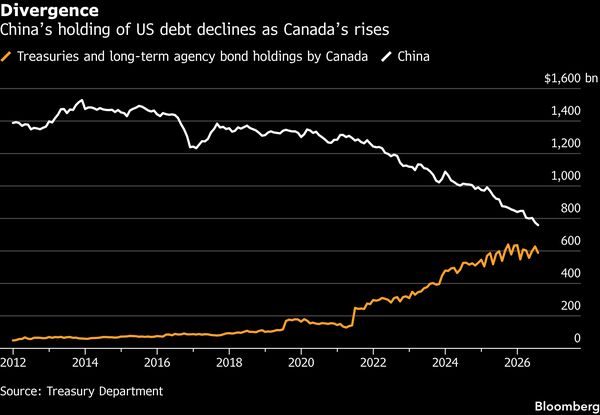
在仔细查阅外国债权人名单时,利伯曼惊讶地发现:尽管在双方互征关税的贸易摩擦中加拿大民众普遍抵制美国商品,但该国持有的美国国债数量却增长迅猛。事实上,短短五年间,加拿大悄悄积累了近6000亿美元的美国国债及联邦住房机构发行的债券,持仓规模增长了四倍有余。
As he combed through the list of foreign creditors, Liberman was struck by just how aggressively Canada’s stockpile had grown, despite a widespread boycott of US goods in a tit-for-tat tariff war. In fact, all told, the country quietly amassed nearly $600 billion of Treasuries and bonds backed by federal housing agencies, more than quadrupling its position in just five years.
百思不得其解的利伯曼——这位专门研究抵押贷款债务的专家——开始四处打听。令他惊讶的是,得到的答复全都如出一辙。“华尔街上最聪明的人都说:‘不是加拿大在买,而是‘那个加拿大’在买。’”他回忆道。所谓“那个加拿大”,他解释道,指的就是中国。
Puzzled, Liberman — a mortgage-debt specialist — started asking around. The answer, to his surprise, was always the same. “The smartest people on the Street said, ‘It’s not Canada. It’s the Canada,’” he said. And by “the Canada,” he explained, they meant China.
根据美国官方统计,自2016年特朗普首次竞选总统并开始抨击中国以来,中国便持续减持美国国债,目前持仓规模已降至6180亿美元,仅为原先的一半。自2024年特朗普再次当选总统以来,中国持有的由联邦政府担保的抵押贷款债券数量也减少了近50%。
By the official US count, China has steadily culled its Treasuries since Trump began lambasting the country during his first run for the White House in 2016, paring its holdings in half to $618 billion. Its reported ownership of federally backed mortgage bonds has also sunk by nearly 50% since the start of 2024, the year Trump was reelected.
作为美国最大的债权国之一,中国的这种减持行为一直是债券市场的隐忧所在。过去两年间,“抛售美国资产”的论调不时在市场上甚嚣尘上。
That pullback, by one of the biggest US creditors, has been a perennial worry in the bond market, where talk of a so-called Sell America trade has flared periodically over the past two years.
过去七个月里,伊朗战争引发的通胀冲击进一步加剧了债券市场的压力,推动美国长期借贷成本升至近25年来的最高水平。与此同时,外界也愈发担忧全球各国是否还能继续消化美国每年为弥补2万亿美元财政赤字而大量发行的国债。
The inflation shock of the Iran war has increased the pressure on the bond market over the past seven months, helping drive the US government’s long-term borrowing costs to the highest in nearly a quarter century. So, too, have worries about the world’s willingness to keep absorbing the ever-increasing supply of debt the US sells each year to cover its $2 trillion deficit.
不过,多位投资者、分析师以及华尔街策略师指出,加拿大的相关数据反映出一种策略——这一策略扰乱了美国财政部的统计结果,也掩盖了中国在为美国日益扩大的财政赤字提供资金方面所发挥的关键作用。
But several investors, analysts and Wall Street strategists say the Canadian tally points to a tactic that has thrown off the Treasury Department’s figures — and masked how crucial a role China continues to play in financing America’s widening deficits.
据他们分析,中国官方并未抛售这些证券,而是将其转移至其他国家的非美国托管银行,这样一来这些资产就不会被计入中国的持有量统计中。按照这一逻辑,其他国家的中国持有量便出现了异常增长。此外,这一做法还能让外界误以为中国正在切断美元回流美国的渠道,从而彰显自身的金融实力,为挑战二战结束以来一直主导全球贸易的美元体系创造条件。
Far from dumping its securities, they say, Chinese officials have instead just been moving them to non-US custodian banks in other countries, meaning they wouldn’t beed to China in the Treasury data. And that, the theory goes, has resulted in unusual jumps in holdings elsewhere. What’s more, it’s also had the benefit of giving Beijing the appearance of shutting off its flow of dollars back to the US, flexing its financial might as it seeks to challenge the dollar-based system that’s dominated global trade since the end of World War II.
长期以来,北京方面始终对海外资产的具体构成严格保密。目前也并无直接证据能证明加拿大持有的美国国债激增与中国在当地的银行机构有关。中国国家外汇管理局拒绝置评;加拿大金融机构监管局则表示不会就所监管机构的客户活动发表评论。美国财政部也未对置评请求作出回应。
Beijing has long kept the composition of its overseas assets a closely guarded secret. Moreover, there’s no direct evidence linking the jump in Canada’s holdings to banks there working on China’s behalf. China’s State Administration of Foreign Exchange declined to comment, while Canada’s Office of the Superintendent of Financial Institutions said it doesn’t comment on the client activity of those it oversees. The US Treasury Department didn’t respond to a request for comment.
十多年来,市场上一直流传着中国为掩盖真实持有情况而在全球范围内调整资产配置的猜测。这一传言最早始于2014年:当时有报道称,比利时持有的美国国债数量在短短五个月内增长了40%以上,使其一跃成为美国国债的最大持有国之一。当时和现在一样,外界普遍认为这背后是中国在发挥作用。
Speculation that China has been shifting its portfolio around the world to mask its true origin has percolated in markets for over a decade. The chatter first started in 2014 after Belgium’s reported Treasury holdings surged over 40% in just five months, turning it into one of the biggest holders of the securities. Then, as now, China was widely seen as the reason.
不过,这种投机行为恰恰反映出特朗普执政时期的一个难题:尽管众多国家都渴望让美元不再处于全球金融体系的核心地位,但目前仍没有任何其他货币能在国际贸易中发挥与之相匹敌的作用。当各国获得的美元超出自身需求时,当地的金融机构和中央银行通常会将这些资金用于购买美国国债。
But the speculation underscores a Trump-era dilemma: As eager as many countries are to unseat the dollar from its role at the heart of the global financial system, no other currency has been able to rival its use in international trade. When countries pull in more dollars than they need, local financial institutions and central banks typically invest them in US Treasuries.
“事实上,中国在‘隐藏’美元储备方面做得远比‘摆脱对美元的依赖’要好,”曾长期跟踪美国财政部数据并就此撰写大量文章的美国前财政部官员布拉德·塞茨尔说道。从诸多层面来看,中国如今已成了自身成功的“人质”。
“The story here is that China has been much better at hiding its dollars than it’s been about getting out of the dollar,” said Brad Setser, a former US Treasury official who has long tracked the department’s data and written extensively on the topic. In many ways, China has become a hostage to its own success.
中国逐步发展为世界制造业大国及第二大经济体,其蓬勃发展的出口产业也因此积累了大量美元。多年来,这形成了一个互惠互利的良性循环:对美出口推动了中国经济增长,而中国用这些美元购买的美国国债则有助于压低美国的利率水平。
The country’s transformation into the world’s manufacturing powerhouse and its second-largest economy left its booming export businesses awash in dollars. For years, this created a mutually beneficial feedback loop. Those US-bound exports turbocharged the economy, while the dollars it recycled into Treasuries helped hold down American interest rates.
然而,由于中国对全球其他国家的贸易顺差已突破1万亿美元,它几乎没有其他合适渠道来安置这些美元。若大量抛售美元,很可能推高人民币汇率,进而抬高中国出口产品的成本;而大量抛售所持有的美国国债则会导致市场债券供应过剩,进而使这些债券的价值大幅缩水。
Yet with a trade surplus of over $1 trillion with the rest of the world, China has few other places it can easily park its dollars. Dumping them would risk pushing up the value of its own currency, the yuan, and making its own exports more expensive. Selling the Treasuries it owns would likely drive down the value of its portfolio by flooding the market with bonds.
“这些资产对中国而言仍是一大负担,”法国外贸银行亚太区首席经济学家艾丽西亚·加西亚-埃雷罗说道。“大规模抛售将导致剩余投资组合出现市值缩水,推动人民币汇率上涨,还会让中国面临美元资金无处安置的难题。”尽管中加两国近期都与特朗普政府关系紧张,但并无明显迹象表明中国会将更多外汇储备转移至加拿大的银行。事实上,两国过去也屡次发生摩擦,比如2018年加拿大逮捕华为高管孟晚舟一事。
“These holdings remain a significant liability for Beijing,” said Alicia Garcia-Herrero, chief economist for Asia Pacific at Natixis. “Large-scale sales would crystallize mark-to-market losses on the remaining portfolio, push the yuan higher, and leave China with the problem of where to park the dollars.”There’s no obvious reason why China would have shifted more of its holdings to banks in Canada, even if both countries have been at loggerheads with the Trump administration. The two have also clashed periodically in the past, including over Canada’s decision to arrest Huawei Technologies executive Meng Wanzhou in 2018.
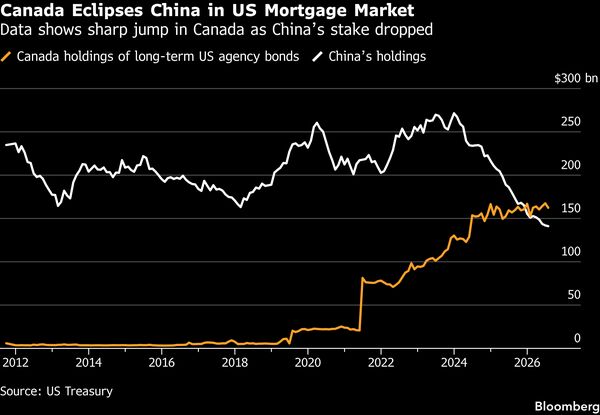
不过许多分析人士认为,中国很可能是导致其在加拿大持有的美国国债规模激增的幕后推手。数据显示,中国在加拿大持有的美国机构抵押贷款支持证券规模从2021年中期的约210亿美元激增至约1620亿美元。这一增长格外引人注目,因为加拿大金融市场规模较小且参与者有限。从历史数据来看,日本、中国台湾以及中国大陆才是最大的外国持有者。
But many analysts see China’s hand as the likely reason for the sharp jump in the country’s reported holdings. The spike in the amount of US-backed mortgage securities in Canada — from about $21 billion in mid-2021 to around $162 billion — has drawn particular attention because it’s a smaller market with fewer big players. Historically, Japan, Taiwan and China were by far the largest foreign holders.
接受彭博社采访的十余位抵押贷款领域投资者及策略师均表示,他们从未见过或听说过加拿大投资者大量购入美国机构抵押贷款支持证券。加拿大多家大型金融机构也证实,它们并未积极参与此类购买活动。
A dozen mortgage investors and strategists interviewed by Bloomberg said they have neither seen nor heard of Canadian investors buying US agency mortgage-backed securities in significant amounts. Some of the country’s largest financial institutions said they haven’t been active buyers, either.
“加拿大投资者购买抵押贷款证券的情况根本不在讨论范围之内,”纽文资产管理公司的证券化信贷部门负责人尼克·特拉瓦利诺说道。
“Canadian mortgage buying has not been a topic of conversation,” said Nick Travaglino, head of securitized credit at Nuveen Asset Management.
不过也有人并不认同中国是导致加拿大相关投资增长的唯一原因。范达研究公司的资深宏观策略师亚历克斯·埃特拉指出,这或许反映了加拿大对冲基金进行的相对价值套利操作——即买入现金形式的美国国债及机构证券,同时利用期货进行套期保值。
Not everyone is convinced that China explains all of Canada’s uptick. Alex Etra, a senior macro strategist at Vanda Research, said it could reflect relative-value trades by the country’s hedge funds, which buy cash Treasuries and agency securities while hedging them with futures.
“虽然我不敢断言所有这些资产都归中国所有,”曾任纽约联邦储备银行经济学家的埃特拉说道,“我们目前都只是在摸索着了解大概情况,处理其中的各个环节,但至今仍无人能掌握全貌。”不过对中国而言,隐藏其在美国持有的资产信息或许能带来政治与战略上的好处,尤其是能营造出中国正在与美国“脱钩”的印象。去年,中国人民银行行长潘功胜在讲话中隐晦地批评了以美元为核心的全球金融体系,警告称在地缘政治冲突中,主导性货币往往会被当作“武器”来使用。
“I’m not quite comfortable saying clearly this is all China,” said Etra, a former New York Fed economist. “We’re all sort of groping at the elephant and dealing with different pieces of it, but nobody has a picture essentially.”Nevertheless, for China, obscuring the location of its US assets could carry political and strategic advantages, particularly by giving the impression that it’s decoupling from the US. In a speech last year, People’s Bank of China Governor Pan Gongsheng made a thinly veiled criticism of the dollar-based global financial system, warning that a dominant currency tends to be “weaponized” during geopolitical conflicts.
2022年,美国及其盟友冻结了俄罗斯约3000亿美元的海外资产。今年8月,美国财政部长斯科特·贝森特威胁称,将与伊朗有业务往来的实体排除在美元支付体系之外。目前这类举措尚属有限,但这一动向却引发了中国方面的不满——中国是伊朗石油的主要进口国之一。
The US and its allies froze roughly $300 billion of Russia’s assets held abroad in 2022. Treasury Secretary Scott Bessent in August threatened to cut entities off of the US dollar system for working with Iran. The actions have been fairly limited so far, but the prospect drew a rebuke from China, a major buyer of Iranian oil.
不过,和其他国家一样,中国也缺乏容易实施的替代方案。正因如此,法国外贸银行分析师加西亚-埃雷罗长期以来一直对美国发布的“中国持有的美债规模近十年大幅下降”这一数据持怀疑态度。她和其他分析人士一样,认为其中相当一部分资金只是被转移到了加拿大。
Yet, like other countries, China has few easy alternatives. For that reason, Natixis’s Garcia-Herrero said she has long been skeptical of the US data showing that China’s holdings have fallen sharply over the past decade. Like others, she suspects a good bit of it has just been moved to Canada.
“如果一个国家拥有巨额贸易顺差,其持有的美国国债规模不可能以如此快的速度减少,”她说道,“这些可都是数额庞大的资金啊。”
“If you have that huge trade surplus, you cannot reduce US Treasury holdings at that speed,” she said. “These are big chunks of money.”