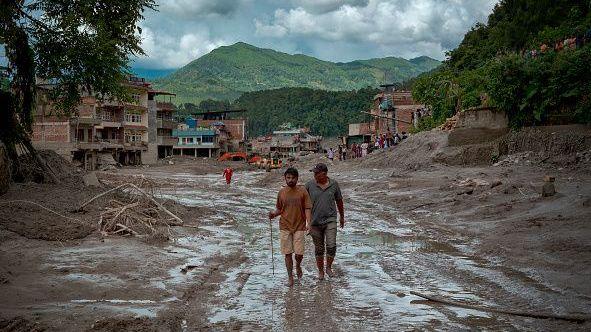
尼泊尔总理巴伦德拉·沙阿在最近的联合国大会上用大量篇幅警告喜马拉雅山地区气候相关灾害威胁日益加剧,回顾了八月份袭击该国的毁灭性泥石洪水。
Nepal's Prime Minister Balendra Shah used much of his speech at the recent UN General Assembly to warn of the growing threat of climate-related disasters in the Himalayas, recalling the devastating debris floods that struck his country in August.
但他提出的雄心勃勃的倡议——将地区竞争对手印度和中国以及尼泊尔联合起来应对这些共同威胁——才引起特别关注。
But it was his ambitious proposal to bring together regional rivals India and China, alongside Nepal, to tackle these shared threats that drew particular attention.
沙阿呼吁成立喜马拉雅气候韧性机制,以加强跨境灾害响应以及科学数据和专业知识的共享,这一地区是世界上环境最脆弱、地缘政治最敏感的地区之一。
Shah called for the creation of a Himalayan Climate Resilience Mechanism to strengthen cross-border disaster response and the sharing of scientific data and expertise in one of the world's most environmentally fragile and geopolitically sensitive regions.
他说:“让喜马拉雅山成为国际合作的实验室,而不是信息碎片化的前线。”
"Let the Himalayas become a laboratory of international co-operation rather than a frontier of fragmented information," he said.
尼泊尔外交部一位要求匿名的高级官员表示,该提议仍处于早期阶段。
A senior official at Nepal's foreign ministry, speaking on condition of anonymity, said the proposal was still at an early stage.
“总理的提议提供了政治方向。我们部门正与其他相关机构合作,提出一个初步框架,以此为基础建立共同理解,”该官员说。
"The PM's proposal has given a political direction.
印度和中国尚未正式回应该提议。BBC已联系两国外交部寻求评论。
Our ministry is working with other relevant agencies to put forward a preliminary framework which can be the basis for building common understanding," the official said. Neither India nor China has formally responded to the proposal.
但尼泊尔真的能够将这两个地区巨头聚在一起,共同应对这一地区长期存在激烈领土争议的共同气候威胁吗?
The BBC has contacted their foreign ministries for comment.
印度和中国拥有一条约3500公里(2175英里)长的有争议边界,大部分位于喜马拉雅山地区。他们之间的领土主张竞争曾导致战争、致命冲突以及在实际控制线(LAC)沿线反复发生军事对峙,实际控制线是事实上将双方控制地区分隔开的边界。
But can Nepal really bring the two regional giants together to confront a shared climate threat in a region where they have long been locked in bitter territorial disputes? India and China share a disputed frontier stretching roughly 3,500km (2,175 miles), much of it across the Himalayas.
但长期以来一直是两国摩擦根源的这些山脉,如今也面临着紧迫的气候威胁。
Their competing territorial claims have led to a war, deadly clashes and repeated military stand-offs along the Line of Actual Control (LAC), the de facto boundary separating areas under their control.
喜马拉雅地区的气温上升速度快于全球平均水平,加速了冰川退缩和永久冻土融化,导致山体滑坡、岩崩、雪崩和冰川湖泛滥洪水的风险日益增加。
But the mountains that have long been a source of friction between the two countries are also facing an urgent climate threat.
此类灾害可能跨越国界,对下游地区的生命、基础设施和生计构成威胁,使得共享喜马拉雅山脉的各国之间的合作日益重要。
Temperatures in the Himalayan region are rising faster than the global average, accelerating glacier retreat and permafrost thaw and contributing to growing risks of landslides, rockfalls, avalanches and glacial lake outburst floods.
国际山地综合发展中心(ICIMOD)3月发布的一份报告发现,印度教喀什喜马拉雅(HKH)地区的冰川正以加速的速度融化,自2000年以来的冰损失速度相比1974-1999年期间已经翻倍。
Such disasters can sweep across national boundaries, threatening lives, infrastructure and livelihoods far downstream - making co-operation between the countries sharing the Himalayas increasingly important.
更往东,在青藏高原,冰川面积在过去六十年中已缩小了24%。中国科学院山地灾害与环境研究所所长康世昌在接受中国《人民网》采访时如此表示。
A report by the International Centre for Integrated Mountain Development released in March found that glaciers across the Hindu Kush Himalaya (HKH) region are melting at an accelerating pace, with the rate of ice loss having doubled since 2000 compared with the 1974-1999 period. Further east, on the Qinghai-Tibet Plateau, glaciers have shrunk by 24% in area over the past six decades, Kang Shichang, director of the Chinese Academy of Sciences' Institute of Mountain Hazards and Environment, told China's People's Daily Online.

专家表示,冰川退缩可能导致冰川湖扩大,增加突发性、潜在毁灭性洪水的风险,这种洪水可能跨越国界,威胁尼泊尔、印度和不丹等国。流经这些国家的几条主要河流发源于青藏高原。
Experts say the retreat of glaciers can cause glacial lakes to expand, increasing the risk of sudden, potentially devastating floods that can cross borders into countries such as Nepal, India and Bhutan. Several major rivers flowing through these countries originate on the Tibetan Plateau.
据《人民网》报道,青藏高原目前拥有超过14,000个冰川湖,总面积超过1,100平方公里。而且危险不仅限于洪水。
The plateau now has more than 14,000 glacial lakes, covering over 1,100 sq km, according to People's Daily. And the dangers extend beyond flooding.
美国地球物理学会(AGU)2024年发表的一项研究预测,由于暴雨增多,未来几十年喜马拉雅地区和西藏的山体滑坡危害将显著增加。
A 2024 study published by the American Geophysical Union projected a significant rise in landslide hazards across the Himalayas and Tibet in the coming decades due to increased rainstorms.
虽然绝对增加幅度最大的地区预计仍是已经脆弱的地区,包括印度的加尔瓦尔和库马昂地区以及尼泊尔,但相对增加幅度最大的地区预计将出现在青藏高原。
While the largest absolute increases are expected in already vulnerable areas, including India's Garhwal and Kumaon regions and Nepal, the greatest relative increase is projected on the Tibetan Plateau.
风险的增加使得合作更加紧迫。但印度和中国过去在喜马拉雅环境问题上的合作努力进展甚微。
The growing risks make co-operation more urgent. But past efforts by India and China to work together on Himalayan environmental issues have made little progress.
两个亚洲大国在联合国气候谈判中经常找到共同点,反对西方要求减排的诉求,并主张发展中国家不应承担与工业化国家相同的负担。
The two Asian powers have often found common ground at UN climate negotiations, pushing back against Western demands for emissions cuts and arguing that developing countries should not bear the same burden as industrialised nations.
然而,它们尚未签署专门协议,以共同应对喜马拉雅地区气候变化的影响。
Yet they have no dedicated agreement to jointly address the impacts of climate change in the Himalayas.
2009年,印度和中国同意开展联合研究,探讨全球变暖对喜马拉雅和西藏冰川的影响。
In 2009, India and China agreed to undertake joint research into the impact of global warming on glaciers in the Himalayas and Tibet.
在访问北京之后,印度时任环境部长Jairam Ramesh宣布,喜马拉雅地质瓦迪亚研究所和中国寒旱地区环境与工程研究所将就该项目开展合作。但根据一位参与该工作的科学家的说法,该倡议并未取得进展。
Following a visit to Beijing, India's then environment minister Jairam Ramesh announced that the Wadia Institute of Himalayan Geology and China's Cold and Arid Regions Environmental and Engineering Research Institute would collaborate on the project. But the initiative went nowhere, according to a scientist involved in the effort.
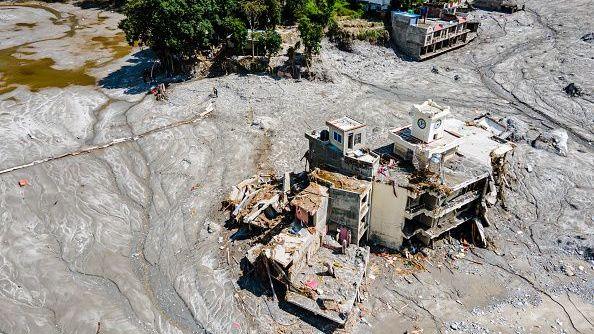
“我们与中方只举行了一次会议,之后就没有任何进展了,” 退休冰川学家、瓦迪亚研究所冰川学项目负责人DP Dobhal博士说。“之后发生了什么,没人知道,” 他补充道。
"One meeting was held between us and the Chinese side and that was it, nothing came out of it," said Dr DP Dobhal, a retired glaciologist who headed the glaciology programme at the Wadia Institute. "What happened after that no one knows," he added.
自2000年代初以来,印度和中国曾达成协议,根据该协议,北京在汛期向印度提供雅鲁藏布江和萨特莱杰江(两条发源于西藏的主要河流)的水文数据。
Since the early 2000s, India and China had agreements under which Beijing provided flood-season hydrological data on the Brahmaputra and Sutlej, two major rivers originating in Tibet.
但2025年8月,印度外交部国务部长Kirti Vardhan Singh在议会表示,这两项协议均已到期。中国自2023年6月起停止共享雅鲁藏布江的数据,而印度自2022年以来未收到萨特莱杰江的任何数据。
But in August 2025, India's junior foreign minister Kirti Vardhan Singh told parliament that both agreements had expired. China had stopped sharing data on the Brahmaputra in June 2023, while India had received no data on the Sutlej since 2022.
中国尚未公开解释此次中断的最新原因。但Singh表示,当中国在2017年因与印度发生紧张军事对峙而扣留类似信息时,北京曾将原因归咎于其在西藏的水文监测站出现技术问题。
China has not publicly explained the latest interruption. But when it withheld similar information in 2017, amid a tense military stand-off with India, Beijing blamed technical problems at its hydrological monitoring stations in Tibet, Singh said.
一些分析人士认为,印度和中国最近关系的缓和——表现为高层政治互动以及通过喜马拉雅路线恢复跨境贸易的举措——中透露出一丝希望。
Some analysts see a glimmer of hope in the recent thaw between India and China, marked by high-level political engagement and moves to revive cross-border trade through Himalayan routes.
这些发展表明,三国在探索气候相关合作方面可能有更多空间,”国际危机组织东北亚地区高级分析师威廉·杨说。
"These developments suggest there might be more room for the three countries to explore climate-related co-operation," says William Yang, senior analyst for North East Asia at the International Crisis Group.
但他表示,北京可能仍会对与印度和尼泊尔的任何重大协议保持谨慎,因为边界争端仍未解决。
But he says Beijing is likely to remain cautious about any major agreement with India and Nepal, as border disputes remain unresolved.
一个主要障碍是,理解气候风险所必需的信息也可能具有军事价值。
One major obstacle is that information vital for understanding climate risks can also have military value.
“气候科学家可能认为必不可少的研究数据,在两军对峙的争议边界环境下,可能被国家安全机构视为战略情报,”英国皇家联合服务研究所(RUSI)印太项目副研究员沃尔特·拉德威格说。该机构是总部位于英国的国防与安全智库。这种紧张局势也阻碍了过去应对跨喜马拉雅边界灾难的努力。
"What climate scientists might see as essential research data might look like strategic intelligence to the national security establishment in an environment where two militaries face each other across a disputed frontier," says Walter Ladwig, an associate fellow in the Indo-Pacific Programme at the Royal United Services Institute (RUSI), a UK-based defence and security think tank. Such tensions have also hampered past efforts to tackle disasters that cross Himalayan borders. The Kathmandu-based International Centre for Integrated Mountain Development (ICIMOD) has spent more than three decades promoting regional co-operation, including on flood early-warning systems.
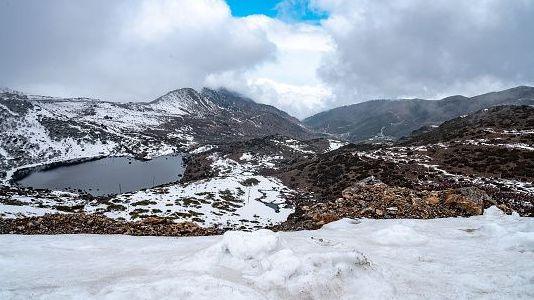
总部位于加德满都的国际综合山地发展中心(ICIMOD)已有三十多年致力于推动区域合作,包括洪水预警系统。但进展缓慢。
But progress has been slow. "There are certain highly sensitive issues in transboundary matters like comprehensive data of river flows that countries might not want to share, particularly upstream countries," says Arun Bhakta Shrestha, a former senior specialist at ICIMOD.
“在诸如河流流量综合数据等跨境事务中,存在某些高度敏感的问题,各国可能不愿分享,尤其是上游国家,”前ICIMOD高级专家阿伦·巴克塔·什雷斯塔说。他表示,各国应改为专注于分享关于灾害风险的较不敏感信息。
He says countries should instead focus on sharing less sensitive information about disaster risks. Dr Uday Kala, head of the Centre for Climate Change and Disaster Management at India's IIT Mandi, suggests starting with practical steps - jointly identifying high-risk glacial lakes and cross-border hazards, agreeing on basic data-sharing protocols and monitoring standards, and exchanging critical warnings without delay.
印度曼迪理工学院气候变化与灾害管理中心主任乌代·卡拉博士建议从实际步骤入手——共同识别高风险冰川湖和跨境灾害,就基本数据共享协议和监测标准达成一致,并及时交换关键预警。
"Climate change is moving the baseline itself; catching up with the previous disaster is no longer enough.
“气候变化正在改变基线本身;仅仅赶上过去的灾难已经不够。我们需要预见下一次灾难,”他说。印度和中国是否愿意采取甚至这些步骤仍然不确定。
We need to anticipate the next one," he says. Whether India and China are willing to take even these steps remains uncertain.
对于尼泊尔来说,挑战在于说服其两个强大的邻国搁置分歧,共同应对共同的气候威胁。
For Nepal, the challenge is to convince its two powerful neighbours to put aside their differences and work together to tackle a shared climate threat.