在《大卫·弗鲁姆秀》这一期节目中,大卫·弗鲁姆讨论了特朗普总统宣布的与俄罗斯的柴油协议、政府对乌克兰的放弃,以及特朗普为何在获得甚少回报的情况下却付出如此之多。
In this episode of , ’s David Frum discusses President Trump’s announced diesel deal with Russia, the administration’s abandonment of Ukraine, and why Trump is giving up so much to gain very little.
随后,大卫从基辅连线乌克兰记者、《眼泪与希望之地:乌克兰史》作者伊利亚·波诺马连科。大卫和伊利亚讨论了乌克兰的历史、其在与俄罗斯战争持续进行中的现状,以及特朗普政府为何似乎对乌克兰如此敌视。最后,大卫总结了为何关于东欧奴隶制历史的文献如此之少。
Then, David is joined from Kyiv by Illia Ponomarenko, a Ukrainian journalist and the author of the new book . David and Illia talk about the history of Ukraine, its current state as the war with Russia rages on, and how and why the Trump administration seems so hostile to the country. Finally, David concludes with discussion about why so little literature exists about the history of slavery in Eastern Europe.
大卫·弗鲁姆:那些希望美国采取更亲俄立场或贬低乌克兰事业的美国人——即美国副总统及其周围的人——他们会坚持认为这场战争是关于北约扩张的。但当你真正倾听实际的俄罗斯人时,他们会说:不,不,不;这完全是关于雅罗斯拉夫智者的。从俄罗斯的角度来看,这与北约扩张无关,除非他们在用英语对易于相信的美国人说话时才提这一点。
David Frum: Those Americans who want the United States to take a more pro-Russian point of view or who denigrate the Ukrainian cause—the vice president of the United States and the people around him—they will insist that this war is about NATO expansion. But when you actually listen to actual Russians, they say, No, no, no; this is all about Yaroslav the Wise. And from a Russian point of view, this is not about NATO expansion, except when they’re talking in English to gullible Americans.
大卫·弗鲁姆:大家好,欢迎收听《大卫·弗鲁姆秀》。我是大卫·弗鲁姆,《大西洋月刊》的撰稿人。本周我的嘉宾是伊利亚·波诺马连科,他是《眼泪与希望之地:乌克兰史》的作者,该书将由布鲁姆斯伯里出版社于十一月出版。伊利亚和我将讨论乌克兰的深层历史、俄罗斯最近对乌克兰城市发动的无人机和导弹袭击,以及乌克兰人对特朗普政府抛弃他们的感受。
David Frum: Hello, and welcome to The David Frum Show. I’m David Frum, a staff writer at The Atlantic. My guest this week will be Illia Ponomarenko, author of a new history of Ukraine, Land of Tears and Hope, available from Bloomsbury in the month of November. Illia and I will discuss the deep history of Ukraine, the recent onslaught of Russian drones and missiles on Ukrainian cities, and how Ukrainians feel about their abandonment by the Trump administration.
本周的书籍也将聚焦东欧。这并不是一本已经存在的书。这是一本我想阅读的书,我为此布置了一项研究任务,让一些勇敢的东欧研究者为我撰写一本书,以便我能更深入了解如今乌克兰、波兰和俄罗斯这片土地的深层历史。
This week’s book will also be Eastern European–focused. It’s not a book that exists. It’s a book that I would like to read, and I set out a research assignment for some intrepid Eastern Europeanist to deliver a book I would like to know more about in, again, in the deep history of the lands that are now Ukraine, now Poland, and now Russia.
但在与伊利亚的对话或书籍讨论之前,我想先谈谈美国-乌克兰故事中最近最令人震惊的转折。
But before either the dialogue with Illia or the book discussion, some opening thoughts about the most shocking recent turn in the U.S.-Ukraine story.
当我和伊利亚录制对话时,我们尚未知道特朗普政府即将发布的一项公告——该公告宣称、想象或提出(或无论用什么词),关于一种很可能是“空头支票”的东西。这不是真正的交易;而是一项巨额采购,正如特朗普总统所说的那样——对俄罗斯柴油燃料的巨额采购,供应给美国。
When Illia and I recorded our dialogue, we did not yet know about this announcement that was pending from the Trump administration, declaring or imagining or proposing, or whatever the word is, for what is likely vaporware. Not a real deal; a big purchase, a massive—in the words of President Trump—a massive purchase of Russian diesel fuel for the United States.
我上周末写了一篇文章,详细列出了事实和数据,说明所谓的这笔交易实际上成就微乎其微。美国是柴油超级大国。它很可能是地球上最大的柴油生产国。我们不能完全确定这一点,因为我们不知道中国到底生产多少,但美国很可能是世界上最大的柴油生产国。它当然也是世界上最大的柴油出口国。而且它生产的柴油远多于国内使用量。因此,它每天大约出口一百五十万桶柴油燃料。
Now, I wrote an article for this past weekend with the facts and figures about just how negligible an achievement this so-called deal really is. The United States is a diesel superpower. It’s probably the largest producer of diesel on Earth. We don’t exactly know that for sure, because we don’t know really how much China produces, but probably the United States is the largest producer of diesel in the world. It is certainly the largest exporter of diesel in the world. And it produces much more than it uses at home. So it exports about a million and a half barrels of diesel fuel a day.
美国卡车司机、农民和其他使用柴油燃料的人所面临的油价快速上涨,并不是因为美国市场甚至北美市场发生了什么。美国有时会从加拿大进口少量柴油,因为从加拿大进口然后从墨西哥湾沿岸出口,比完全依赖自身资源供应美国更为便利。油价上涨的原因是全球市场的扰动。重要的是世界柴油需求和供应,而不是美国的需求和供应。
The reason American prices have been rising so fast for truckers and farmers and others who use diesel fuel is not because of anything that’s happening in the U.S. market, or even the North American market. The United States imports a little diesel fuel from Canada because it’s easier sometimes to import from Canada and then to export from the Gulf Coast than to supply the United States entirely from its own resources. The reason that the price has been rising is because of disturbances in the global market. What matters is world demand and world supply of diesel, not U.S. demand and U.S. supply of diesel.
现在,如果这笔俄罗斯交易真的存在,它不过是几小时的美国产量和美国消费量。这不是一件大事,也不会改变世界油价,因为俄罗斯没有多少柴油可供出售。虽然俄罗斯本应是柴油的大生产国,但其石油设施遭到乌克兰导弹和无人机袭击的破坏极其严重,以至于俄罗斯几乎没有可供出口的柴油。事实上,自7月起,俄罗斯就对柴油实施了出口禁令。
Now, if this Russian deal exists at all, it’s a matter of a few hours’ worth of U.S. production and U.S. consumption. It’s not a big event, and it won’t change world prices because Russia doesn’t have a lot of diesel to sell. Although Russia to be a big diesel producer, Russian oil facilities have been damaged so intensely by Ukrainian missile and drone fire that Russia has very little diesel to contribute. In fact, Russia has had an export ban on diesel since July.
如果俄罗斯真的有柴油可售,它只能从其他消费国那里挪用;比如印度。而通过将印度的柴油转向美国,这对美国毫无帮助,因为美国国内已经有足够的柴油。这只会让印度的生活稍微艰难一些,而且根本不会改变世界油价,因为全球供需并未发生任何变化。整件事完全是个无意义的空谈。
If Russia has any diesel to sell, it’s going to take it from another consumer; India, maybe. And by diverting diesel oil from India to the United States, it doesn’t do anything for the United States, which has more than enough diesel here at home. It makes life a little tougher for India, and it doesn’t change the world price at all, because nothing happens in global supply and demand. The whole thing is a complete nothingburger.
但它确实做了两件重要的事情。首先:俄罗斯人在特朗普内圈面前晃动了一种前景——如果美国对俄制裁被解除,他们将获得巨额财富。而且这已经迈出了解除那些制裁的第一步,并让美国走上了与乌克兰对抗的道路,因为特朗普总统现在必须担心:只有当乌克兰停止袭击俄罗斯能源设施时,他才能获得俄罗斯的柴油,而乌克兰之所以如此行动,是为了报复俄罗斯对其城市、学校、历史学会和医院的袭击,以及对其平民人口的攻击。他们通过袭击俄罗斯能源基础设施来削弱俄罗斯的战争能力。
But it does two things that are important. The first is: The Russians have dangled in front of the Trump inner circle the prospect of enormous wealth for them if American sanctions on Russia are dismantled. And it’s taken a first step toward the dismantling of those sanctions and put the United States on the path to confrontation with Ukraine, because President Trump now has to worry the only way he can get Russian diesel is if the Ukrainians stop attacking Russian energy facilities, which they are doing in retaliation for the Russian attacks on their cities and schools and historical societies and hospitals, on their civilian population. They have struck back against Russian energy infrastructure to cramp Russia’s war-making ability.
特朗普总统现在已经制造了一种情况,即他表面上想要对柴油做点什么、也许还想让他内圈中的很多人致富的目标,与乌克兰的自卫产生了冲突,而他实现自己愿望的唯一方式就是命令乌克兰停止自卫。我们已经看到特朗普对乌克兰的施压:他出于自己的原因,正在剥夺乌克兰的作战能力,而这对美国司机、美国农民、美国卡车司机甚至一点帮助都没有。
President Trump has now created a situation where his goal of seeming to do something about diesel and maybe also enriching a lot of people who are in his inner circle is in conflict with Ukraine’s self-defense, and the only way he can get what he wants is by ordering Ukraine to stop defending itself. And we have seen already Trump’s pressure on Ukraine: He is taking away Ukraine’s war-making ability for his own reasons, in ways that will not help American motorists even slightly, American farmers, American truckers.
当然,他也没有做任何事情来解决波斯湾的冲突,而正是由于波斯湾的冲突,欧洲和亚洲失去了大量柴油供应——因为这些地区的国家正是从那里获取燃料的。
And of course, he is doing nothing to bring about a resolution of the conflict in the Persian Gulf, which has removed so much diesel fuel from Europe and Asia because that’s where those countries get their supplies from.
自从第二个总统任期开始以来,特朗普一直把乌克兰视为一种个人冒犯。现在,这其中有很多东西有点难以理解,但也许我们根本不需要去理解它。你知道,当我当时在撰写关于特朗普“虚假柴油交易”的报道时,一位编辑问我,而我不得不回答:我其实——当然,我不知道这个问题的答案。我的直觉——仅仅是一种直觉——是,特朗普在十年前进入政坛时,比现在更像一个有自知之明的骗子。如今他可能有点迷失:真正陷入了一个幻象的世界,在他自己看来,他已经分不清什么是真实,什么是谎言。
Trump from the beginning of this second presidency has taken Ukraine as a kind of personal affront. Now, a lot of this is a little hard to understand, but maybe we don’t need to understand it. You know, when I was working on my story about Trump’s vaporware diesel deal, an editor asked me, And I had to answer, I don’t actually—of course, I don’t know the answer to that question. My instinct—it’s just an instinct—is that President Trump was much more of a self-aware con man when he entered politics a decade ago than he is now. He now may be kind of lost: truly in a world of illusions, where he no longer himself knows what is true and what is a lie.
但这并不重要,因为无论这些是欺骗他人还是欺骗自己,都有一条贯穿始终的主线。主线是:他被通过与俄罗斯做交易为自己和他人带来巨额财富的前景所诱惑。他愿意牺牲乌克兰的生命、安全和独立来满足自己的野心。他把乌克兰的自我主张和自卫视为一种无礼和挑衅的行为——不是针对那些试图入侵、侵略和吞并乌克兰的人,而是针对他自己。因为乌克兰让他感到烦恼,他不喜欢它,他想让它消失。
But it doesn’t matter, because there’s a consistent through line, whether these are deceptions of others or deceptions of himself. The through line is: He just is tantalized by the prospect of vast wealth for himself and others by doing deals with Russia. And he’s willing to sacrifice the lives and security and independence of Ukraine to his ambition. And he treats Ukraine’s self-assertion and self-defense as an act of impudence and defiance—not against those who are trying to invade and aggress and annex Ukraine, but against himself. Because Ukraine bothers him, and he doesn’t like it, and he wants it to go away.
他留给所有美国人的,是美国外交政策史上最可耻的篇章之一。一个正在捍卫自身国家主权、在最艰难的条件下以最高形式的人类勇气进行反击的民族。他们只向美国索取能够自卫的手段,却被特朗普总统以我们无法理解的原因拒绝了这些手段,而这些原因没有一个看起来是好的。我希望所有能听到我声音的人能与我一起,对特朗普总统对美国民主美名和美国世界领导地位所造成的损害表达震惊和羞耻。现在是我与伊利亚·波诺马连科的对话。
What he’s leaving all Americans with is one of the most shameful passages in the history of American foreign policy. A people that are defending their national sovereignty, that are fighting back under the most difficult conditions with the supremest forms of human bravery. Who ask only from the United States the wherewithal with which to defend themselves, and who are being denied that wherewithal by President Trump for reasons we can’t understand, but none of which look good. I hope anyone who can hear my voice will join me in sharing their dismay and their shame at what President Trump has done to the good name of American democracy and American world leadership. And now my dialogue with Illia Ponomarenko.
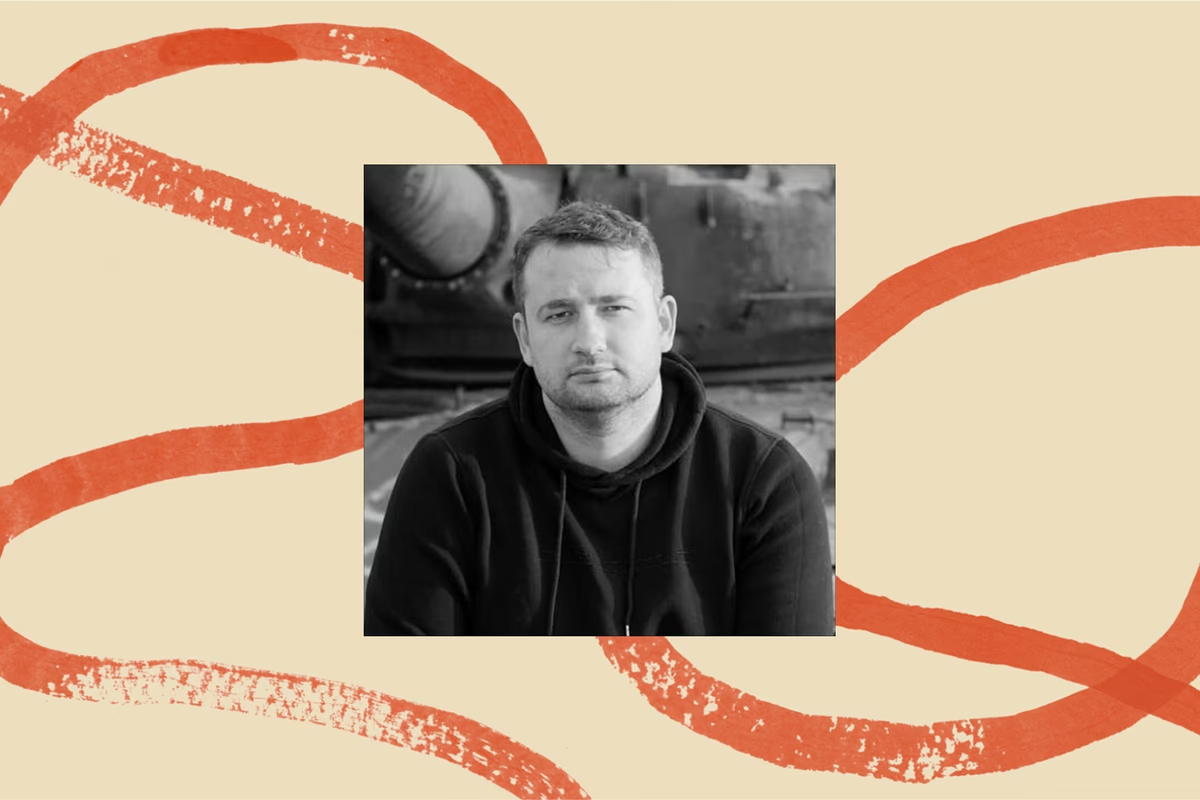
弗鲁姆:伊利亚·波诺马连科出生于1992年,地点是乌克兰东部顿涅茨克地区的一个小镇。他在马里乌波尔国立大学学习。2014年俄罗斯入侵他的家乡地区时,伊利亚开始了他的记者生涯。他从未停止。
Frum: Illia Ponomarenko was born in 1992 in a small town in the Donetsk region of eastern Ukraine. He studied at Mariupol State University. When Russia invaded his home region in 2014, Illia began his career as a reporter. He has never stopped.
他的第一本书《》,于2024年出版,获得全球赞誉。由于疾病阻断了他参军的道路,他转而投入到一场更深层的斗争:关于乌克兰是否拥有自身历史的斗争。他的新书《》,从斯拉夫部族和维京人讲起,经过哥萨克人、苏联恐怖和广场运动,直至今日这场战争,讲述了乌克兰的故事。该书将于下月出版。现在就订购。
His first book, , was published in 2024 to global acclaim. Illness closed his path to military service, so he turned to a deeper fight: the fight over whether Ukraine has a history of its own. His new book, , tells the Ukrainian story from the Slavic tribes and the Vikings through the Cossacks, Soviet terror, and the Maidan to this very war today. It will be published next month. Order it now.
伊利亚·波纳连科,欢迎来到伊利亚·波纳连科:您好。感谢您的邀请。
Illia Ponomarenko, welcome to Illia Ponomarenko: Hello. Thanks for having me.
弗鲁姆:伊利亚,您写了这部关于乌克兰的深刻动人的历史,我想完整地讨论它,但过去几天乌克兰发生的事件如此戏剧化、如此可怕,我认为我们必须从这里开始。
Frum: Illia, you have written this deeply moving history of Ukraine, and I want to address it in full, but the events of the past days in Ukraine have been so dramatic and so horrible I think we must start there.
那么请告诉我们,我们现在正处于十月初,请告诉我们目前的情况以及过去几天您国家发生了什么。
So tell us, we’re speaking in the early part of October, tell us the situation as it is now and what has happened in the past days to your country.
伊利亚·波纳连科:嗯,当然,任何新闻的核心和焦点都是基辅,这座首都城市,以及正在发生的事情。基辅上空的空战已经持续数日数周,无人机、导弹不断袭击,昼夜不停。
Illia Ponomarenko: Well, of course, the centerpiece of any news and the spotlight is Kyiv, this capital city, and what’s happening. The air battle over Kyiv that’s going on nonstop for days and weeks already, with drones, missiles. Never stopping, day and night.
因此,首都的防御和保障首都生命安全成为核心关注点。俄罗斯人真的在试图彻底摧毁这座城市的存在,制造恐惧,中断交通、正常的粮食供应和供水。分隔城市的第聂伯河上的桥梁至关重要。因此,俄罗斯人已经转向这种战术——试图彻底瘫痪国家的核心——制造恐惧,迫使投降,因为在这场战争的第五年,他们无法取得任何实质性的军事成功。
So the central attention is given to the defense of the capital and to preserving life in the capital. And Russians are really trying to abrupt the very existence of the city, to instill fear, to abrupt transportation, normal food supply, water supplies. Bridges over the Dnipro River that divides the city, which is extremely vital. So Russians have switched to this tactic of trying to absolutely paralyze the very heart of the country—to install fear, to enforce the capitulation, since they can’t get any substantial military success for the fifth year of this war.
但我必须说,你知道的,我住在基辅市郊外,也在基辅州的几个地方、在郊区生活。但我尽可能多地把时间花在城里,在很多方面只是为了和我的城市在一起,身处其中。我想说的是,在过去的三天里,正如我在社交媒体上所说的那样,空战——这种持续的进攻——整个环境变得压力小了一点,平静了一些。我想说,这是我的感觉,乌克兰人设法——乌克兰军方设法克服了这种突如其来的打击和震惊,并设法适应了这种新局势。
But I must say that, you know, I live just outside Kyiv in suburbs, and also in several places in Kyiv Oblast, in the outskirts. But I spend as much time as I can in the city, in many ways just to be there with my city, in there. And I would say that over the last three days, which is what I said on social media, the air battle—this constant attack—the entire environment had become a little less stressful, a little calmer. I would say I think, this my feeling, that Ukrainians managed—the Ukrainian military managed to overcome this surprise and shock and managed to adapt to this new situation.
我认为,如果这种情况持续下去,我们或许可以说,俄罗斯人在每天空袭基辅的能力方面已经减弱了。因此,乌克兰人采取了又一个行动来适应俄罗斯的做法,而且这种较量一直在继续、继续、再继续。所以这是一场乌克兰的适应与俄罗斯企图使这座城市陷入瘫痪之间的持续战斗。
And I think if the situation continues, we might say that Russians have weakened in terms of their ability to strike Kyiv on the daily basis. So Ukrainians have made another move to adapt to what Russia does, and it goes on and on and on. So it’s constant battle between Ukrainian adaptation and Russian attempts to paralyze the city.
弗鲁姆:让我来尝试提供一点背景。我认为,从西方世界、从许多美国人的角度来看——我们离得太远了。这似乎是一个关于俄罗斯进攻、乌克兰防守的无休止的故事。但从9月底前后开始,俄罗斯对乌克兰首都的空袭确实加剧了,并伴随着一些新技术、一些新方法。其最初的影响是极具毁灭性的。与9月下旬到10月初之前的情况相比,人员伤亡要大得多,破坏也大得多。所以,你所说现在正逐渐失去势头并略显疲软的,正是这场新战役——这场从9月底和10月初开始加剧的战役吗?
Frum: Let me try a little context. I think from the point of view of a lot of people in the Western world, in the United States—we’re so far away. It seems like this is an endless story of Russian attacks, Ukrainian defense. But there was a true intensification of the Russian air attack on the capital of Ukraine beginning at about the end of September, with some new technologies, some new methods. And the first effect was very devastating. A much greater loss of life, much greater damage than had been the case until the later part of September, the beginning of October. And so it is this new campaign—this intensified campaign at the end of September, beginning of October—that you say is now running out of impetus and faltering a little bit?
波诺马连科:就成功抵达并袭击首都的无人机数量——俄罗斯无人机——而言,其数量明显减少了。因此,过去几天基辅上空的爆炸声少了很多,这是件好事。这让我们感到振奋,因为军方也报告说,许多新技术和反制技术正被应用于拦截俄罗斯的喷气式无人机,而这些无人机是极难对付的目标。
Ponomarenko: It gets significantly visibly weaker in terms of the number of drones, Russian drones, that made it to the capital and strike. So there are far less booms in the sky over Kyiv over the last few days, which is good. Which is something that enlightens us, because the military also reports a lot of new technologies, counter-technologies that are being applied to intercept jet-powered Russian drones that are super difficult targets to get.
弗鲁姆:这些喷气式无人机,这是新情况——因为在此之前,无人机都是慢速的。如果武器操作手足够敏捷、熟练,它们可以用点五十口径机枪击落。但喷气式无人机的移动速度快得多,因此无法被机枪拦截。你需要更先进的技术来拦截喷气式无人机。
Frum: These jet-powered drones, this is the new—because drones, until now, have been slow. And they could be shot down with a .50-caliber machine gun if the weapon-wielder was fast and skillful enough. But a jet-powered drone moves much faster, and so can’t be intercepted by a machine gun. You need a much more sophisticated technology to catch the jet-powered drone.
波诺马连科:是的。基辅日常生活中令人鼓舞的画面之一,总是能在街头看到配备机枪的皮卡——有时是M2勃朗宁机枪——它们属于试图击落这些东西的机动防空小组。
Ponomarenko: Yeah. One of the bright pictures of life in Kyiv is always seeing, in the streets, pickups with machine guns—sometimes it’s M2 Browning machine guns—with the mobile air-defense groups that try to shoot these things down.
但当谈到喷气式无人机时,这本质上是下一步,特别是当涉及到批量生产的喷气式无人机时,这就成了一个巨大的问题。因为它们的飞行速度达到每小时700、600公里。所以这是一个极其复杂的拦截目标。而且它们很便宜;它们很轻松、简单。它们的规模庞大。因此乌克兰城市上空可能会出现成群结队的这种无人机。
But when it comes to jet-powered drones, which is the next step essentially, and especially when it comes to mass-produced, jet-powered drones, it’s a huge problem. Because they move at velocity of 700, 600 kilometers per hour. So it’s an insanely complicated target to get. And they are cheap; they are easy, simple. They are massive. So could be swarms of them over the Ukrainian cities.
尽管如此,在几周内我们就开始有了应对这一问题的新方案。你知道,乌克兰的防御在许多方面由众多私营公司组成,它们提出了许许多多的技术解决方案。目前,乌克兰各家公司推出了五六种由发动机或喷气式动力驱动的拦截无人机原型机。它们刚刚在视频中展示了拦截这些俄罗斯喷气式无人机的首批成果,仅仅是首批成果。
Nonetheless, within weeks we started getting new solutions to this. There are—you know, Ukrainian defense in many ways is comprised of many, many private companies that suggest many, many technical solutions. Right now we have five or six prototype interceptor drones that are engine-powered, or jet-powered, that are being presented by various companies in Ukraine. And they are simply showing the first results, just the first results, on videos intercepting these Russian jet-powered drones.
因此,令人惊奇的是,进展非常快。俄罗斯针对基辅的整个战役是一场震撼。它很尖锐。它以极其惊人的速度迅速加剧。但与此同时,乌克兰对此的反应非常迅速且敏锐。因此,我们面临的重大问题是我们能否启动一款运行良好的成功原型机的批量生产。从本质上讲,这正是这场战争的运作方式。
So surprisingly, it goes fast. The entire Russian campaign against Kyiv was a shock. It was sharp. It intensified really quickly and shockingly. But at the same time, the Ukrainian response to this is very fast and very sharp. So our big question is whether we could launch the mass production of a successful prototype that works well. And this is exactly, essentially, how this war works.
弗鲁姆:乌克兰正在深入打击俄罗斯的目标,特别是能源生产目标,而且打击范围越来越深入俄罗斯境内。有报道称——我不知道该对这些报道给予多大程度的重视——俄罗斯地面部队出现了投降现象,俄罗斯地面部队的表现也在恶化,这让我们觉得,这场战争中可能正在发生比你所描述的单纯打击与反击、创新与反创新循环更深层次的事情。
Frum: Ukraine is striking deeply at Russian targets, especially energy-production targets, ever farther into Russia. And there are reports—I don’t know how much weight to put on them—of surrenders among Russian ground troops, of deteriorating performance among Russian ground troops, that make us think that maybe something deeper is happening in the war than just the strike, counter-strike—the cycle of innovation and counter-innovation you describe.
波诺马连科:但同时,这场战争的另一个战线是实际的战场战争,它正沿着乌克兰南部和东部冻结的前线展开。我们面临这样一种情况:乌克兰军队正处于俄罗斯进攻最重要(如果不是最重要的话)的轴线之一,即克拉马托尔斯克和斯拉维扬斯克等城市附近——这里仍由乌克兰控制的顿巴斯工业核心区,也是乌克兰东部要塞城市带。
Ponomarenko: But also, another front of this war is actual battlefield war, that’s happening along from the frozen front line in Ukraine’s south and east. And we have a situation in which Ukrainian military, in one of the most important, if not the most important axis of Russian attack, which is near the cities of Kramatorsk and Sloviansk—the very core of the industrial part of Donbas that’s still under Ukrainian control, and also the belt of the fortress cities in Ukraine’s east.
乌克兰军方经过数月非常谨慎、非常秘密的行动,设法给当地的俄罗斯军队造成了非常、非常严重的惨败。这就是为什么我们会看到俄军士兵投降的照片,因为他们被包围了;他们被俘虏了。这就是乌克兰军方取得战术成果的方式,这是相当公开的,而且可以独立证实。他们还设法切断了俄军对这些堡垒城市进攻的通道之一:正如我们所称的北部钳形攻势。
The Ukrainian military, over the months of very careful, very clandestine operations, managed to inflict a very, very serious defeat to local Russian forces. So that’s why we get pictures of surrendered Russian troops, because they got encircled; they got captured. That’s how the Ukrainian military, and it’s pretty open, and it could be independently verified that Ukrainian military have tactical gains. And also they managed to cut off one of the accesses of Russian attacks on these fortress cities: the northern claw, as we call it.
因此,乌克兰尽管遭受了所有的轰炸,尽管俄罗斯方面表现得十分虚张声势,但在战场上却取得了相当显着的战术成功。在这个历时五年的战争规模中,这些成功令人印象深刻。弗拉姆:你能告诉我们目前美国对乌克兰援助的状况吗?
So Ukraine, despite all the bombs, despite all the bravado from the Russian side, Ukraine has pretty significant tactical successes on the field, on the battlefield. Which are pretty impressive on the scale of this war, five years on. Frum: What can you tell us about the present state of American assistance to Ukraine?
特朗普政府已经切断了对乌克兰的援助。你们获得的美国武器是由你们的欧洲伙伴和盟友付费的。是否有任何美国情报流向乌克兰?你们是否正在获得任何非物质援助?或者说,乌克兰的态度是否真的像从华盛顿特区看的那样充满敌意?
The Trump administration has cut off aid to Ukraine. Such American weapons as you get are paid for by your European counterparts and allies. Is there any American intelligence flowing to Ukraine? Is there any non-material assistance you’re getting? Or is the attitude truly as hostile in Ukraine as it seems to be from the point of view of Washington, D.C.?
波诺马连科:当然,目前我们远未达到上一届美国政府执政时期的状态——那时美国会持续不断地向乌克兰提供大量且切实有效的援助。您说得对,如今美国向乌克兰提供的援助实际上是由欧洲各资助方通过“珍珠计划”出资采购的。这些援助主要包括各类物资、技术维护服务,目的就是帮助乌克兰妥善维护那些美国制造的武器装备。
Ponomarenko: Well, of course, we are very far from being in the place where we’ve been under the previous administration when we had consistent and very serious and very regular packages of assistance. Right now, you are right to say that what’s being delivered to Ukraine from the United States is being purchased as part of the Pearl program by European backers. It’s mostly about supplies, technical maintenance, things that help maintain the U.S.-made hardware in possession of Ukraine.
美国参与援助的另一重要方面便是情报工作。必须指出的是,尽管乌克兰政府与美国之间存在诸多复杂矛盾,但这种情报共享仍是乌克兰从外部获得的最关键支持之一,因为它能挽救无数生命,能提前预警俄罗斯的导弹袭击。这些正是美国给予乌克兰的实际帮助。
Very important part of this American participation is, of course, the intelligence. And I must say that despite all the complexities or all the complications that Ukrainian administration has with the United States, this intelligence sharing is one of the most important things that Ukraine has from outside the country, because it’s about saving lives. It’s about giving early warnings about Russian missile attacks.
从弗拉基米尔·泽连斯基总统的角度来看,他与唐纳德·特朗普的沟通方式,以及他努力维持与美国及特朗普政府之间相对稳定关系的种种举措,核心目的都是为了保障情报渠道的畅通。毕竟我们绝不愿失去这一宝贵资源——它直接关系到无数生命的安危以及乌克兰的防空安全。
This is what we get from Americans, essentially. So in many ways, what you see, from the point of view of [President Volodymyr] Zelensky—the way he talks to Donald Trump, the way he tries to preserve a more or less stable relationship with the United States and with the Trump administration—it’s about intelligence. Because this is something that we would be extremely, extremely reluctant to lose. Because it’s about saving lives; it’s about air defense.
弗鲁姆:能否请您概括一下如今乌克兰民众对美乌关系的看法?另外,在美国对乌援助虽有所减少但尚未完全中断的当下,美国为乌克兰做了哪些贡献呢?
Frum: Can you offer any generalization about how Ukrainians today feel about their relationship with the United States? And what the United States has done for them as it has become less generous, but not yet zero generosity?
波诺马连科:嗯,我其实是在努力向你展示乌克兰公众中普遍存在的一种态度。当然,很多人感到不满。很多人为此感到压力重重,因为我们一直认为坚如磐石、像地球本身一样一成不变的事物之一,就是美国的支援。国会两院以及白宫都存在两党支持。我们一直以为我们的利益与美国的利益百分之百契合,我们曾认为这是坚不可摧、无法动摇的。
Ponomarenko: Well, I’m really trying to give you a very average attitude that’s been present in the Ukrainian public opinion. Of course, a lot of people are dissatisfied. A lot of people are stressed about this, because one of the things that we always thought of as unshakable, as static as the Earth itself, is the American support. Bipartisan support in both house chambers of the Congress, in the White House. We always thought that our interests are 100 percent complacent with America’s interests, and this is what we thought was unshakable and unmovable.
我不会对你撒谎,唐纳德·特朗普依然是乌克兰最不受欢迎的人物之一。原因有很多,主要是因为他针对乌克兰说过的很多话。我无法对你撒谎,在乌克兰人眼中,这种形象也对美国这个国家的形象,或者美国人民的形象产生了非常恶劣的影响。这其中涉及许多情绪。我们必须明白,战争,身处战争之中,是一件非常情绪化的事情。这里面充满了许多激烈的言辞;对此也有许多强烈的情绪。
I am not going to lie to you that Donald Trump remains one of the least popular figures in Ukraine. Because of many reasons, mostly because of a lot of words that he said about Ukraine. And I cannot lie to you that this image also affects really badly on the image of the United States as a country, or on the United States as a people, in the eyes of Ukrainians. A lot of emotions are involved into this. We must understand that war, being at war, is a very emotional thing. It’s about a lot of strong words; a lot of strong thoughts about this.
但我不会说这里有很多人不再尊重美国,不再认为美国是自由世界的领袖、这个自由世界的基石。尽管过去几年发生了种种事情,人们依然认为美国可能会在不久的将来随时回归其存在感、立场和领导地位。
But I would not say that a lot of people here still respect the United States, still consider America to be the leader of the free world, the cornerstone of this free world. And despite everything that has happened over the last couple of years, still consider America to be probably back anytime soon in terms of its presence and its posture and its leadership.
所以我想说的是,你知道,当然,情绪是非常复杂的。对于美国人,大家的感情非常情绪化。我不能说我同意从我的一些乌克兰同胞那里听到的关于美国人和美国援助的很多看法。我真的在努力,而且我认为把本届政府、政客们的所作所为、他们关于我们的言论,与他们实际做的事分清,是极其公正和合理的。同时,我也试图提醒我的乌克兰同胞,直到今天,依然有这么多的美国人在支持乌克兰。
So I would say that, you know, of course, feelings are very complicated. Feelings are very emotional about Americans. I cannot say that I agree with a lot of those things that I hear from my fellow Ukrainians about Americans and American aid. I really try, and I think it’s extremely fair and just to separate what this administration, what politicians do, what they say about, about us, what they do. And also, I try to remind my fellow Ukrainians of how many Americans do support Ukraine up to this day.
我们在政治谱系的两端都获得了百分之六十到百分之七十的支持率。我怎么强调这一点都不为过,在经历了这一切之后,大洋彼岸有这么多人如此热切地支持乌克兰——这个他们在战争爆发前可能从未听说过的国家——这是非常值得感激的,也是我们深深拥有的。
We have figures between 60 and 70 percent on both sides of the political spectrum. I cannot stress this enough that, after all these years, having so many people across the ocean being so eager in terms of supporting Ukraine—the country that they probably never heard about before this war—is something that is to be deeply appreciated and something that is very ours to have.
弗鲁姆:对于我们这些像你一样,相信美国作为自由世界担保人的角色、并且相信这句话内涵重大的人来说,这是一个耻辱的时刻。乌克兰人民对于美国这一世界角色偏离的耐心,或许有一天还会有理解甚至是原谅,这种感受在这里也存在,并且理应被感受到。
Frum: For those of us who, like you, believe in the role of the United States as the guarantor of the free world, and who believe that the phrase means something, this has been a shameful hour. And the patience, and maybe someday the understanding and even forgiveness of the Ukrainian people to this deviation from America’s role in the world, is felt here too, and should be felt.
让我来谈谈你的书。再次说到书名,正如你所说,它是充满情感的。它不是那种写着第一章、第二章的经典历史,我们——你像电影导演一样从一个场景跳跃到另一个场景,跨越了许多年,并且运用了非常引人注目的手法。
Let me talk to you about your book. And again, the title is It is, as you say, it’s emotional. And it is not a classic history written with chapter one, chapter two, that we—you jump like a film director from scene to scene, and pass over a lot of years, and have a very arresting technique.
弗鲁姆:乌克兰是世界上最新成立的国家之一。或者说现今的乌克兰国家是世界上最新成立的国家之一,创立于1991年。你让我们感受到了乌克兰文化、语言、情感的古老。你是如何处理政府的新、宪法的新、国家的新,与该国家所建立的一切之古老之间的这种对比的?
Frum: Ukraine is one of the world’s newest states. Or the present Ukrainian state is one of the world’s newest states, founded in 1991. You make us feel the antiquity of Ukrainian culture, language, sensibility. How do you manage this contrast between the newness of the government, the newness of the constitution, the newness of the state, and the antiquity of everything that the state is built on?
波诺马连科:关于现代乌克兰,有一点非常有趣。我说的是在2014年革命之后建设起来的国家,这是乌克兰生存的最新阶段。因为乌克兰作为一个政治实体还非常年轻,特别是在作为一个高度独立思考、把自己感觉得是一个独立民族国家、不作任何人的后院、也不作俄罗斯的后院方面。但就感觉自己是一个实体、一个国家、一个拥有自己家园的民族而言,这对乌克兰来说是一件非常新鲜的事,即使同它仅仅35年的独立相比也是如此。
Ponomarenko: That’s a very interesting thing about modern Ukraine. By saying , I mean the country that was built after the revolution of 2014, which is the newest phase of Ukrainian existence. Because Ukraine is very young in terms of being a political entity, especially when it comes to being very independently thinking, sensing itself as an independent nation-state, not someone’s backyard, not as also Russia. But in terms of feeling itself like an entity, a country, a nation with its own home. It’s a very new thing to Ukraine even compared to its just 35 years of its independence.
与此同时,乌克兰人——以及作为一个人群、一个族裔的乌克兰人民总体上——有着非常悠久的历史记忆。许多对我们最珍贵的事物,那些构成我们文化、我们关于传统的日常思考、我们在夜里给孩子们讲的童话故事的一部分,其中许多事物都可以追溯到中世纪。可以追溯到早期现代,比如乌克兰哥萨克。它们可以追溯到基督教诞生之前的时期,即古代斯拉夫部落。
And at the same time, Ukrainians—and Ukrainian people in general as a people, as ethnicity—have a very long historical memory. And a lot of things that are dearest to us, that are part of our culture, of our everyday thinking about traditions, of the fairy tale that we tell to our children through the night, and many of those things date back to medieval times. Date back to the early modernity, like Ukrainian Cossacks. They date back to pre-Christian times, ancient Slavic tribes.
你知道的,当我写这本书的时候,当我意识到这一点时,连我自己都感到惊讶:我们有多少事物来自我们的日常传统、来自我们的节日庆典、来自我们的俗语,这些都可以追溯到基督教诞生之前的时期,追溯到几千年前。我们生活中的许多事物都可以追溯到那个时代——当时还没有乌克兰,无论是作为民族,还是作为国家,甚至连这个词都没有。但它们与我们同在。
You know, when I was writing this book, it was a surprise even to me when I realized this: how many things we have from our everyday traditions, from our holiday celebrations, from our sayings that we get back from pre-Christian times, from thousands of years ago. A lot of things in our life go back to those times—when there was no Ukraine, neither as a nation, neither as a state, neither as in, even in a word in this. But they live with us.
弗鲁姆:我认为这是美国人特别难以理解的一点。那些希望美国采取更亲俄立场或贬低乌克兰事业的美国人——美国副总统及其身边的人——他们会坚称这场战争关乎北约扩张,关乎当年苏联存在时对米哈伊尔·戈尔巴乔夫的口头承诺。然后呢,好吧,1994年的《布达佩斯备忘录》里是怎么说的?
Frum: I think this is something that Americans especially have a hard time understanding. Those Americans who want the United States to take a more pro-Russian point of view or who denigrate the Ukrainian cause—the vice president of the United States and the people around him—they will insist that this war is about NATO expansion, about verbal undertakings to Mikhail Gorbachev back when there was a Soviet Union. And then what, well, what does it say in the Budapest Memorandum of 1994?
但当你真正倾听实际的俄罗斯人的说法时,他们会表示,从俄罗斯的角度来看,这与北约扩张无关,除非他们是用英语在对轻信的美国人说话。对他们而言,这场战争关乎乌克兰作为一个文化、一个政治实体、一个社会是否还存在,还是说你们只是一种迷人的、原始的、乡村的俄罗斯人,不明白你们需要归属于伟大的母亲俄罗斯这个更大的实体。
But when you actually listen to actual Russians, they say, And from a Russian point of view, this is not about NATO expansion, except when they’re talking in English to gullible Americans. For them, this war is about whether Ukraine exists—as a culture, as a polity, as a society—or whether you’re just sort of charming primitive, rural Russians who don’t understand that you need to belong to the greater entity of Mother Russia.
你在书中对此进行了很多论述,关于乌克兰的独特性。也许可以从这个问题开始:那么,基辅市的建立与莫斯科市的建立相隔了多少年?
And you talk a lot about that in the book, about the distinctiveness of Ukraine. And maybe begin with this question: So, how many years separate the founding of the city of Kyiv from the founding of the city of Moscow?
波诺马连科:哇。要回答我们所知的基辅市是何时建立的,甚至是一个复杂的问题。因为有大量的证据,科学家之间也有大量的争论。但让我们试着把基辅作为一个延续的城市的起点定在罗马帝国灭亡的时期左右。而当谈到莫斯科时,很多人几乎没有意识到这一点。他们把基辅和乌克兰、以及最终成为乌克兰的地方,还有最终成为俄罗斯的地方想象成一种模式,即莫斯科孕育了基辅,孕育了乌克兰。它是大俄罗斯传统的一个分支。但与此同时,情况恰恰相反。
Ponomarenko: Whoa. It’s even a complicated question to answer when the city of Kyiv, as we know it, was founded. Because there are lots of evidence, lots of arguments among scientists. But let’s try to set the beginnings of Kyiv as a continuous city around the fall of the Roman Empire’s time. And when it comes to Moscow, a lot of people barely realize that. They imagine Kyiv and Ukraine and what ended up being Ukraine, and then what ended up being Russia, as in the model that Moscow gave birth to Kyiv, gave birth to Ukraine. It’s an offshoot of great Russian tradition. But at the same time, the situation was just exactly vice versa.
这里曾有古代的基辅——那是作为我们祖先的那些人的一个古代伟大王国。那些人在其鼎盛时期、繁荣期过去多年之后,曾在森林里建立了一座非常遥远的堡垒,名为莫斯科。所以从本质上讲,那些城市、那些最终成为俄罗斯历史核心的土地——我们说的是弗拉基米尔市、苏兹达尔市,也就是俄罗斯的核心——他们是定居者。
There was ancient Kyiv—ancient great kingdom of those people who are ancestors. And those people, once upon a time, many years after their best time, after their blossoming time, they established what was a very distant fort in the forest that was named Moscow. So essentially, those cities, those lands that ended up being the historical core of Russia—we’re talking about the city of Vladimir, of Suzdal, the very core of Russia—they were settlers.
他们是从诸如历史上的基辅等地去到那些地方定居的,因为人们在寻找土地、新的领土。所以,简单的真相是,最终成为乌克兰的东西孕育了最终成为俄罗斯的东西——而不是相反。
They were settled from, say, historical Kyiv to those places, because people were seeking land, new territories. So, simple truth is that what ended up being Ukraine gave birth to what ended up being Russia—not vice versa.
但与此同时,当我提供这些信息、向读者传达关于过去以及东斯拉夫人民、俄罗斯人、乌克兰人、俄罗斯人的这些共同根源的想法时,我并不坚持那种非常民族主义、非常激进且被简化的观点,即乌克兰是唯一一个在久远过去拥有根源、而其他人则没有的国家。我认为俄罗斯人和乌克兰人有着共同的起源,白俄罗斯人也是如此。
But at the same time I do give this information, I do provide the reader with these thoughts about the past and the common roots of Eastern Slavic peoples, Russians, Ukrainian people, Russians. But at the same time, I do not stick to this very nationalistic and very radical and simplified view that Ukraine is the only country that has the roots in this long past, and no one else does. I think that Russians and Ukrainians have a common origin, and also Belorussians.
但乌克兰——我们现在在乌克兰所拥有的——拥有这些根源中最大比例的部分。这就是我对此的立场。我之所以写这本书,是因为在今天的乌克兰,生活的一个非常重要的部分就是回归这些根源,珍视这一点。不再将我们自己和这个国家视为俄罗斯的后院,而是将其视为一个可以追溯到中世纪、古代,曾是人类文明这一地区基督教摇篮的国家。这片土地上拥有非常古老、非常美丽且在许多方面独特的历史奇迹。当前乌克兰生活中民族觉醒的很大一部分,就是回归其根源,即古老的根源。
But Ukraine—what we have right now in Ukraine—has the biggest share of these roots belonging to it. So that’s my position about this. And why I wrote about this book is that in Ukraine of today, a very important part of life is getting back to these roots, appreciating this. Stopping to think about us, ourselves and this country as the backyard of Russia—but a country that has its roots back through to the Middle Ages, to ancient times, that was the cradle of Christianity in this region of human civilization. That has very ancient and very beautiful and in many ways unique historical wonders in this land. A huge part of Ukrainian life right now in this national awakening is getting back to its roots, its ancient roots.
弗鲁姆:在更近的时期——我的意思是过去几百年里,乌克兰不仅与俄罗斯邻居,还与波兰人及其犹太少数族裔陷入了非常严峻、血腥、复杂的历史纠葛。这些交织在一起的故事有时会产生强烈的情感共鸣,但有时也非常丑陋和血腥。你经常谈到这一点:关于乌克兰与波兰的两重性、乌克兰与犹太人的两重性,以及乌克兰与俄罗斯的两重性。
Frum: In more recent times, and by that I mean the past few hundred years, Ukraine has been entangled in very grim, bloody, complex relations with not only with the Russian neighbors, but with Poles and with its Jewish minority. And these swirl together in stories that are sometimes very powerfully resonant, but sometimes very ugly and bloody. And you talk about that a lot: about the Ukrainian-Polish duality, the Ukrainian-Jewish duality, as well as the Ukrainian-Russian duality.
波诺马连科:我是谈过这些。关于这一点,我的核心观点是乌克兰是一个非常富饶的国家。乌克兰是一个非常美丽的国家。正因如此,它有着非常悲惨的历史。历史学家蒂莫西·斯奈德在乌克兰享有极高的人气,他将乌克兰列为所谓“血骨之地”的一部分,这一看法残酷地正确。因为乌克兰凭借其所有的财富、所有的地理位置,一直是许多帝国的目标,这些帝国都想占有乌克兰及其财富、地理位置、人力资源和智慧。
Ponomarenko: I do talk about this. And my central point in this regard is that Ukraine is a very rich country. Ukraine is a very beautiful country. And because of this, it has a very tragic history. And Timothy Snyder, historian that is insanely popular in Ukraine, he was just brutally right to include Ukraine as part of the so-called bloodlands. Because Ukraine, with all its riches, with all its geographical position, it has always been a target for many empires that wanted to possess Ukraine and its riches. And its geographical positions, its human resources, its brains.
所以在很多方面,乌克兰的历史——我在筹备这本书时自己也意识到了这一点——我意识到我们作为一个民族,乌克兰人民本质上在几个世纪里一直在这个闭环中打转:试图获得独立和自己的国家地位,然后又再度失去它。并成为新帝国的强大动力,以及为新战争、新帝国输送资源的捐赠者。例如,俄罗斯帝国在很多很多方面就是建立在对乌克兰财富的征服和占有之上的。
So in many ways, the Ukrainian history—and I realized it myself as I was preparing for this book—I realized that we are essentially as a people, Ukrainian people have been moving for many centuries in this closed circle of trying to get independence and its own nationhood, and losing it again. And becoming a powerhouse for new empires and a donor of resources for new wars, new empires. Such as the Russian Empire was in many, many ways built on the conquest and possession of Ukrainian riches.
斯大林的苏联也是如此。希特勒极度渴望将乌克兰作为其“生存空间”的一部分,因为乌克兰是一片非常肥沃的土地。这是一片非常宜居的土地。
Same goes about Stalin’s USSR. Hitler wanted Ukraine badly as part of his Lebensraum, because Ukraine is a very fertile land. It’s a very pleasant land to be on.
乌克兰是人类文明的重要组成部分,在那里成为一位卓越的领导者实属幸事。拥有了乌克兰,便拥有了极其丰饶的疆土与资源。然而,历史总是陷入这样一个恶性循环:无数战争接连不断,随之而来的便是惨烈的流血冲突、民族间的仇恨与暴力,以及社会紧张局势。犹太人与波兰人等群体都曾深受其害。因此,本书的核心观点便是:这片土地因接连不断的战争与悲剧而成了“泪之土地”。
Ukraine is a part of human civilization where it’s really good to be a master in. You have a really rich empire if you have Ukraine. And this moving on this vicious circle of history, it always comes with insane blood, with insane national intra-ethnic feuds, violence, social tensions. Such as with Jewish population, with Polish population. So my very central point of this book eventually is that it’s a land of tears because of many, many wars; many, many tragedies.
人类历史上诸多最惨痛的悲剧都发生在这片土地上,皆因各方势力为争夺领土而相互厮杀。但这也是一片充满希望的土地——我们期盼着,在这场可能令乌克兰再度失去自由与独立的战争中,至少这一次——历经数个世纪之后——我们能够打破这一恶性循环,守护住这个民主、自由且强大的乌克兰,让它不再成为孕育新帝国与新战争的温床。
Some of the worst tragedies of human history happened in Ukrainian lands between parties that wanted to possess this land. But also a land of hope, because we hope that with this independent Ukraine and in this war in which Ukraine may again lose its freedom and its independence, there is hope that at least at this time—for the first time in many, many centuries—we could break through this vicious circle, and upheld this democratic, free, strong Ukraine that would never be a powerhouse and a donor for new empires and new wars.
弗鲁姆:我在加拿大长大,那里曾是海外乌克兰知识分子活动的重要中心。我不想把话说得太绝对,但就我年少时的经历而言,海外乌克兰知识分子群体往往偏向保守反动:他们极端民族主义,极力维护乌克兰及其过往的一切。因此他们常认为,乌克兰人与波兰人之间的流血冲突虽可追溯至17世纪,但在第二次世界大战期间最为激烈。
Frum: I grew up in Canada, which was the center of a lot of diaspora Ukrainian intellectual activity. And I don’t want to make this too much of a generalization, but I would say, when I was young anyway, that diaspora Ukrainian intellectual activity tended very much to the reactionary side: ultra-nationalist and very defensive of Ukraine and all that it had done. And so there was a tendency to say, to think that the bloodshed between Ukrainians and Poles, it stretches back to the 1600s, but was very intense during the Second World War.
自1991年以来,特别是自2014年以来,乌克兰文化中最令人瞩目的地方——在您的书中也极其明显——在于它拥有这样一种能力:既能讲述民族自豪感的故事,又能包容民族耻辱,而不让这些耻辱损及未来。同时,还要理解乌克兰人和波兰人有着非常纠葛的历史,乌克兰人和犹太人也有着纠葛的历史以及许多苦难。然而,通过认清全部真相以及乌克兰民族身份的所有组成部分,某种崭新的、现代的、开明的事物便能从中孕育而生。
And what has been striking about Ukrainian culture since 1991, and especially since 2014, and very much in your book, is the ability to tell a story of national pride while integrating national shames, without letting those shames detract from the future. And understanding that Ukrainians and Poles had a very tangled history. Ukrainians and Jews have had a tangled history, a lot of suffering. And yet something new and modern and liberal can emerge from this by recognizing the full truth and all the components of the Ukrainian national identity.
波诺马连科:在我的书中,我特意避开了激进的观点或对这片土地历史的理想化。我非常明确地指出——我认为这是一个非常公正的说法——乌克兰是一个非常复杂的聚落。从历史上看,它是一个非常残酷的地方。就为了这个国家以及在这个国家流下的所有鲜血而言,这是一个非常可怕的地方。它是世界的十字路口之一,许多人都曾想成为这里的主人。
Ponomarenko: In my book, I specifically stay away from radical views or idealizing the history of this land. I state it very clear, and I think it’s a very just thing to say that Ukraine is a very complicated place. It’s a very brutal place in history. It’s a very terrible place in terms of all the blood that was shed for this country, and in this country. It’s one of the crossroads of this world where many people wanted to be a master in.
所以我特别指出,例如在犹太人被屠杀和大屠杀的情况下。比如说,我们有乌克兰民族英雄博格丹·赫梅利尼茨基,他率领了自17世纪以来乌克兰哥萨克最大、最广泛的起义,几乎导致乌克兰民族在旧波兰王冠下建立。如今,尤其是在过去的100年里,博格丹·赫梅利尼茨基被奉为偶像。他的雕像随处可见,他出现在乌克兰货币上,他被视为乌克兰民族创始之父的象征。
So I specifically say that when it comes to, for instance, the killings of Jewish and pogroms. For instance, we have a national hero of Bohdan Khmelnytsky, who led the greatest and the biggest rebellion of Ukrainian Cossacks since the 17th century, that almost led to the installment of the Ukrainian nationhood within the old Polish crown. And right now, especially in the last 100 years, Bohdan Khmelnytsky is idolized. It’s his own monuments. He’s on Ukrainian money. He’s the symbol of the founding fathers of the Ukrainian nationhood.
但与此同时,乌克兰历史上最黑暗的一页之一是这些起义期间犹太人口所受到的待遇,因为17世纪乌克兰哥萨克对波兰王冠的起义是极度贫困、在宗教和金钱方面受到极端压迫的人民的愤怒爆发。这是对他们所生活的体制的愤怒,贵族在宗教压迫下几乎不受惩罚。因此,犹太人自然成为了这个同样对他们不公的体制的一部分的替罪羊。Frum:因为波兰贵族离得很远,而犹太人就在隔壁。
But at the same time, one of the darkest pages of Ukrainian history is the way the Jewish population was treated during those uprisings, because the uprising of Ukrainian Cossacks against the Polish crown in the 17th century was the outburst of anger of extremely poor people. Of extremely oppressed people in terms of their religion, in terms of their money. It was an outburst of anger against the very system they were living in, with nobles being absolutely unpunishable with religious oppression. So it naturally fell upon Jews, as part of this system that was also unjust toward them in this regard. Frum: Because the Polish nobles were far away, and the Jews were neighbors right next door.
Ponomarenko:是的;那是一个非常复杂的社会体系。例如在17世纪,犹太人被强加了税收等义务,或者他们是唯一被允许从事银行业务的人。还有那些你欠债的人、收税的人、经营酒吧的人,或者垄断饮料生产的人。
Ponomarenko: Yeah; it was a very complicated social system. In which Jews, for instance, when it comes to 17th century—in that period, for instance—Jews were laid upon with duties like taxes, or they were the only ones that are allowed to with banking operations. And who loves people who you owe money, or who collect taxes, or who run bars, for instance.
所以这涉及很多仇恨,很多不公。试着向一个非常愤怒的农民解释——他被抢劫过,一直很贫困,极度贫困,在基本事务方面几乎没有受过教育——当情绪爆发时,试着向这些人解释,向这个随时准备拿起武器、实施屠杀的愤怒人群解释,比如说,犹太人对此并不负有责任;他们也在最后的时刻挣扎求生。
Who have monopoly on producing drinks, for instance. So it was about a lot of hatred, about a lot of injustices. And try to explain to a very angry peasant—who has been robbed, who has been poor, extremely destitute, who has barely any education when it comes to basic things—when emotions go through, try to explain to these people, to this angry crowd ready to take up arms and commit massacres, that, for instance, Jews are not guilty of this; that they are surviving also on the last wheels.
总体而言,乌克兰历史充满了这样的事情。而在我的书中,我并不代表任何激进派。我不提供任何正当理由。我解释事情是如何发生的,发生了什么。但我不美化。我只是代表一个非常普通的、年轻的乌克兰人说话,他思考这个国家时没有民族主义,没有激进观点,也没有试图美化乌克兰及其历史的企图。
So in general, Ukrainian history is full of such things. And in my book, I do not represent any radical. I do not provide any justifications. I explain how it happened, what happened. But I do not idealize. And I simply speak on behalf of very average, young Ukrainian that’s thinking about this country with no nationalism, with no radical points, with no attempts to idealize Ukraine and its history.
乌克兰是一个复杂的地方。此外,关于这个国家,特别是当谈到今天的乌克兰时,重要的是,我从自己国家的日常生活中亲眼所见。我们已经克服了许多过去拖累我们的东西。我们提到了乌克兰-犹太关系。尽管有这样的过去,尽管有可以追溯到20世纪的血腥 pogrom 历史,如今乌克兰的情况是,乌克兰首席拉比是乌克兰胜利的坚定支持者,他基本上一生都在倡导支持乌克兰。
Ukraine is a complicated place. And what’s important also about this country, especially when it comes to the Ukraine of today, is that I see it with my own eyes from everyday life in my country. That we have overcome a lot of those things that drag us down from the past. We mentioned Ukrainian-Jewish relations. Despite all this past, despite such a bloody history of pogroms dating back to 20th century, what we have right now in Ukraine is that the chief rabbi of Ukraine is a hard advocate for Ukrainian victory, and he spends basically entire his life advocating support for Ukraine.
他的儿子,他的养子,作为志愿者在武装部队中为乌克兰而战牺牲。就伊斯兰教而言,例如,我们有一位首席穆夫提,曾是乌克兰的首席穆夫提——即乌克兰穆斯林社区的最高宗教领袖——他辞去了职务,现在是乌克兰军队的一名战场医护人员。如今,乌克兰有犹太裔总统。
His son, his adopted son, died fighting for Ukraine as a volunteer in the armed forces. When it comes to Islam, for instance, we have a chief mufti, former chief mufti of Ukraine—which is the top priest, or top clergyman, for Ukrainian Muslim community—he resigned from his position, and he’s a battlefield medic with the Ukrainian military. We have Jewish presidents as of now.
弗鲁姆:我有时会想,当我的孙子孙女或曾孙辈来到基辅时,向他们解释基辅最高的雕像是赫梅尔尼茨基——他在犹太历史上仅次于希特勒,堪称最大的恶棍之一——而基辅第二高的雕像将是泽连斯基总统。
Frum: Well, I sometimes think that it’s going to be fascinating to explain when my grandchildren or great-grandchildren visit Kyiv that the biggest statue in Kyiv is Khmelnytsky—who ranks along with, just behind Hitler as one of the greatest villains in Jewish history—and the second-biggest statue in Kyiv will be of President Zelensky.
波诺马连科:我不太确定,因为乌克兰人往往对当下的领袖持高度批评的态度。弗鲁姆:只要他还活着,当然。
Ponomarenko: I’m not sure about this, because Ukrainians tend to be highly critical towards the leader that they have as of the moment. Frum: While he’s alive, sure.
波诺马连科:是的;就目前而言,确实如此。真正拯救这个国家并持续前进的一个因素是,我们倾向于对任何形式的权威保持极度批评。因此,泽连斯基本可以成为战争英雄,也可能是以压倒性胜利当选的总统。但乌克兰人总是很快陷入爱慕,又很快感到不满并极度批评,甚至比那更快。
Ponomarenko: Yeah; as of the moment, yeah. One of the things that really saved this country and continues moving forward is that we have a tendency of being extremely critical towards any sort of authority. So, Zelensky might, could have been like a war hero. He could be a president that was elected by a landslide. But it always happens that Ukrainians fall in love very quickly, and they get dissatisfied and extremely critical very quickly, even quicker than that.
但说到——你对纪念碑提出了很好的观点。我在基辅市中心散步时,会看到一座纪念伟大犹太作家舒勒姆·阿列克谢姆的雕像。我们在基辅市中心还有他的纪念馆。还有——这个词怎么说?是带有纪念牌的标牌。它标示着戈尔达·梅厄出生并成长的建筑。她是基辅的女孩。
But when it comes to—you have a very good point about monuments. I take a walk in downtown Kyiv, and I see a monument for Sholem Aleichem, the great Jewish writer. We have a museum for him in downtown Kyiv. We have—what’s the word for this? It’s the placard with the commemorative placard, commemorative plate. Toward, yeah—that marks the building where Golda Meir was born and raised in Kyiv. She’s a girl from Kyiv.
与此同时,我们有许多犹太场所。这里有中东料理餐厅,而重要的是,这些餐厅常常与穆斯林的清真餐厅同在一条街上。基辅最重要、最受欢迎的餐厅之一叫“Musafir”,提供克里米亚鞑靼美食。它像一家穆斯林餐厅,给人一种穆斯林归家的氛围和穆斯林料理的感觉。我可以举出很多这样的例子,即使在一个以斯拉夫族群为主、拥有基督教教堂等的国家。
At the same time, we have a lot of Jewish places. There are Middle Eastern cuisine restaurants, and what’s important in this is that they often share the same street with Muslim places, with halal places for Muslims. One of the most important and popular Kyiv restaurants is, it’s called Musafir. It’s Crimean Tatar food. Like a Muslim place that gives you, essentially, gives you a vibe of a Muslim homecoming and Muslim cuisine. And I can give you a lot of examples of such things in a predominantly Slavic country with Christian churches and all those things.
但我的国家真正让我感激的——我对此深有感触——是我看到在这个国家里,那种使命感将不同的信仰、宗教、许多族群凝聚在了一起。我真的很喜欢我的乌克兰这一点。
But what I really appreciate about my country—and I really feel about this—is that I see that in this country, with its feeling of purpose that unites confessions, religions, many ethnicities. I really like this, about my Ukraine.
弗拉姆:好的,让我问你关于另一个痛苦的历史篇章。特别是在最近几周,有人试图煽动可以追溯到第二次世界大战期间的波兰与乌克兰之间的敌意。波兰和乌克兰曾对重叠的领土提出过主权要求。战争的起伏有时对波兰有利,有时对乌克兰有利。这导致了可怕的大屠杀。波兰一直是乌克兰争取自由斗争中不可或缺的盟友,但在政治上一直有人试图某种程度上触动、推波助澜那些过去的痛苦记忆,以期斩断波兰与乌克兰的关系。这在乌克兰文化中是如何体现的?这在乌克兰政治中是如何体现的?
Frum: Well, let me ask you about another painful historical passage. And there’s been, especially in very recent weeks, an attempt to stoke Polish-Ukrainian animosities that date back to the events of the Second World War. Poland and Ukraine had claims on overlapping territories. The ebb and tide of wars sometimes favoring the Poles, sometimes favoring the Ukrainians. Led to terrible massacres. And Poland has been an indispensable ally of Ukraine in its struggle for freedom, but there have been attempts politically to sort of trigger, push those painful memories of the past in a way that would sever the Polish-Ukrainian relationship. How does that play in Ukrainian culture? How does that play in Ukrainian politics?
波诺马连科:我也可以十分自信地讲,在乌克兰政治中绝对不存在可以称之为“波兰问题”的东西。没有人谈论波兰。没有人谈论复杂的波兰与乌克兰历史。普通的乌克兰人——特别是那些不与波兰人在推特上争论的人——普通的乌克兰人认为波兰是一个邻国,它没有浪费任何时间,就像我们一样,去争取独立。它在经济上取得了巨大的成功。本质上,这就是如果我们没有浪费时间,乌克兰本可能成为的榜样。
Ponomarenko: I too confidently can say that something that could be called “a Polish question” is absolutely absent in Ukrainian politics. Nobody talks about Poland. Nobody talks about the complicated Polish-Ukrainian history. Average Ukrainian—especially when it comes to those who are beside arguments on Twitter with Poles—average Ukrainian thinks about Poland as a neighboring country that has not wasted any time, just like we did, with its independence. That has gained enormous successes as an economy. Essentially the example of what could have happened to Ukraine if we haven’t wasted our time.
弗拉姆:我的意思是,你们两个——1989年的波兰几乎和1989年的乌克兰一样穷。
Frum: I mean, both of you—Poland in 1989 was almost as poor as Ukraine was in 1989.
波诺马连科:是的,如果不比我们更穷的话。如果不比我们更穷的话,是的。
Ponomarenko: Yeah, if not poorer. If not poorer, yes.
弗鲁姆:波兰做出了一系列非常大胆的自由市场选择,撕掉了绷带,采取了真正的——我在1990年就在现场。当时很艰难。但波兰实现了令人瞩目的增长。自由市场政策已经见效,波兰如今正朝着成为一个完全发达的国家迈进——如果它还不是一个完全发达的国家,那也只是一步之遥。
Frum: And Poland made a series of very bold free-market choices, ripped the bandage off, took a real—I was there in 1990. It was tough. But Poland has had this remarkable growth. The free-market policies have paid off, and Poland is now on its way to becoming a fully developed—if it’s not already a fully developed country, it’s minutes away from being a fully developed country.
伊利亚·波诺马连科:这非常酷。在这方面非常令人印象深刻。我写书以及我在社交媒体和各处的全部存在,其核心观点就是:我试图像一个普通、简单的乌克兰人那样说话,这个人没有极端的政治立场。一个普通、简单的乌克兰人会说波兰是个很酷的地方。他们能够取得这样的成就非常令人印象深刻。如果我的记忆没错的话,有两百万乌克兰人居住在波兰并在波兰工作。
Illia Ponomarenko: It’s very cool. It’s very impressive in this regard. And my entire point in my book, and in my entire presence on social media and everywhere, is that I’m trying to talk like an average, simple Ukrainian, that has no extreme political views of this. An average, simple Ukrainian says that Poland is a cool place. It’s very impressive that they have achieved this. Two million, if my memory doesn’t fail me, two million Ukrainians live in Poland and work in Poland.
我们也花大量时间使用波兰的机场,总体上把波兰作为一个枢纽。不仅用于军事补给等等,还用于替代那些由于战争而无法获得的物资。
And we spend a lot of time using Polish airports, in general using Poland as a hub. Not only for, you know, the military supplies and everything, but also for substituting things that are not available to us because of the wartime.
大多数人——如果我们需要机场的话,乌克兰境内的大多数人仍然会前往波兰过境,以到达机场并前往任何地方旅行。因此,看到波兰方面将乌克兰人和波兰人之间这段复杂的历史常被用作政治工具,我感到非常悲伤。
Most of the people go—if we need airports, most of the people in Ukraine still go to Poland to cross the border and to get to the airports and travel for anything. So, it’s really sad to see that from the Polish side, we see that this complicated history between Ukrainians and Poles often gets used as a political tool within Poland.
我可以肯定地说,在乌克兰没有人谈论这件事,因为我们头上有更紧迫的问题,说实话。但我必须说,这确实令人悲伤,看到除了那些炽热的修辞和围绕此事的政治博弈之外,我们还看到一些相当具体的事情正在发生,这让我感到相当震惊。比如,对在波兰的乌克兰人持续进行的令人震惊的袭击。这些事件正在发生。它们在新闻中频繁出现,出现频率之高,以至于忽视它们实在令人难以接受。
I definitely can say that nobody talks about this in Ukraine, because we have far more pressing problems on our heads, to be honest. But I must say that it’s really sad, and it was pretty shocking to me to see that, beyond those fiery rhetorics and playing politics about this, we have pretty material things happening. Like continuing and shocking attacks on Ukrainians in Poland. That’s happening. They are popping up in the news, way too frequent, which is kind of shocking to disregard.
弗鲁姆:你在书中非常动人地写到的一件事,正如你所说,乌克兰人对此有着强烈的感受,那就是欧盟的旗帜。你在书中有一段非常富有诗意的描述,讲的是在2014年“广场革命”之前,乌克兰正在谈判一种欧盟的“准成员国”身份,此时欧盟的旗帜开始出现。我认为在欧洲大多数地区,欧盟旗帜与渔业法规、食品安全、空气[管制]联系在一起——你知道,就是你能在冰箱里使用什么样的冷却剂。一系列枯燥的官僚技术细节,目的只是为了确保商品和服务能够跨越国界流通。
Frum: One thing that you very eloquently write about is something that Ukrainians, as you say, do feel strongly about, and that is the flag of the European Union. And you have this very poetic passage in the book where you describe as Ukraine was negotiating a kind of auxiliary membership in the European Union, just before the Maidan in 2014, that the European flags began to appear. And I think in most of Europe, the European flag is associated with regulations on fishing, food safety, air [control]—you know, what kind of coolant you can use in a refrigerator. A series of boring bureaucratic technicalities to make sure that goods and services can move across borders.
它不再是某种鼓舞人心的理想。它只是一堆规则。但你非常动人地描述了,对乌克兰人而言,它变成了一种理想。
It isn’t any kind of inspirational idea anymore. It’s just a bunch of rules. But you describe very movingly how, for Ukrainians, it became an idea.
波诺马连科:我们对这面欧盟旗帜作为象征有着相当悠久的历史。这可以追溯到20到25年前,当时乌克兰人开始大规模地思考向西发展,基本上是在远离俄罗斯。
Ponomarenko: We have a pretty long history of this European Union flag of being a symbol. It dates back to 20, 25 years ago, when Ukrainians started massively thinking about going west, essentially turning away from Russia.
从根本上说,这是关于我这一代人——20多岁、30多岁的人们——的崛起。正是在我们的童年时期,我们开始从学校里学到诸如民主之类的东西。人权;法治。我们开始把这些视为非常正常的事——非常值得追求的东西。
Essentially it’s about the emergence of my generation, of the people in their 20s and 30s. It is in our childhood that we started getting things like democracy from school. Human rights; the rule of law. We started understanding this as something very normal—something very good to aspire to. So I’m not sure if I had this in my book.
所以我不确定我是否在书中提到过这一点。但早在2013年底的“欧洲广场”革命初期,在马里乌波尔,我们曾举行过一个小型集会,以支持与欧盟的联系协议。我记得自己带领着一小群朋友、学生以及几位讲师,大家都举着欧盟旗帜,沿着马里乌波尔的大街前进。
But there was, in early days of Euromaidan revolution, it was late 2013 in Mariupol. We had a little rally in support ofg this association agreement with the European Union, and I remember myself leading a small crowd of my friends, students, and also a couple of lecturers. And all holding this European flag and moving through Mariupol avenues.
它一直是一个希望的象征。它一直是一代人的象征,这一代人与我们的父母有着相当大的不同。它一直是一个象征,象征着我们真心渴望来到这样一个地方:在那里,我们最大的问题是规章制度——你知道的,我们空调的温度、枯燥的法律、关于百分比的争论。这只是一种理想化、非常浪漫的梦想,梦想着乌克兰克服许多拖累我们的事物。
It has always been a symbol of hope. It has always been a symbol of a generation that is pretty different from our parents. It has always been a symbol of us really wanting to be in this place where our biggest problem is regulations—you know, the temperature in our ACs, boring laws, these arguments over percentages. It’s just an idealized, very romantic dream of Ukraine overcoming a lot of things that drag us behind.
这也是一个浪漫的梦想,梦想着乌克兰作为一个民族、一个国家,更接近我们本来的样子。在我们的心态、审美品味以及方方面面,都非常现代,非常西方化。这代人与西方当下的任何一代人实际上并无不同。
And a romantic dream of Ukraine as a nation, as a state. Just getting closer to who we were. Very modern, very Westernized in our mindsets, in our tastes and everything. A generation that is really not different from any generation right now in the West.
但我们曾拥有一个与我们的价值观格格不入的国家,尤其是在维克托·亚努科维奇(Viktor Yanukovych)总统任内存在极度腐败的情况下。这个国家,这个在莫斯科庇护下的黑手党国家,与我们的价值观——与我们对未来的渴望、我们对国家的构想、我们希望国家成为的样子——变得如此格格不入,以至于它最终引发了一场革命。而其象征意义就在于朝着那个方向前进:在那里,人们争论空调温度是他们最大的问题,而不是像我们过去那样。
But we had a state that was incompatible with our values, especially when it comes to hyper-corruption during the [Viktor] Yanukovych presidency. And this state, the mafia state, under the wing of Moscow, has become so incompatible with our values—with our aspirations for the future, with the way we think about our country, the way we want it to be—that it essentially led to a revolution. And the symbol was moving towards that place where people argue about ACs as their biggest problems, instead of us.
弗鲁姆:距离那场独立广场革命已经过去了十二年。历史学家书写过去。我不知道你是否把自己视为历史学家。我不知道你的下一本书是否也将关于历史,但有时他们会禁不住对未来发表一番评论。你能展望一下并说——如果未来的你能够再写一本书中的一个章节,那一章会是什么样子?
Frum: It’s now a dozen years since that revolution in the Maidan. Historians write about the past. I don’t know if you consider yourself an historian. I don’t know whether your next book will also be in history, but sometimes they’re tempted to make a comment about the future. Can you look out and say—if your future self could write one more chapter of the book, what would that chapter look like?
波诺马连科:如果可以的话,我希望在历史、在书里写下一篇后记,讲述乌克兰在战争结束后是如何走到这一步的。因为我的结尾并不是一种绝对积极的模式。我这本书的结尾是关于希望的。它将读者带回到2022年俄罗斯全面入侵开始的那一刻。我并没有向自己和读者承诺胜利。我没有向自己和这场胜利承诺成功。我并没有说乌克兰会赢。我在谈论希望,本质上我书中的最后一个词是。那种我们将会取胜的希望——我们将打破我们刚才一直在讨论的这个恶性循环。
Ponomarenko: If I could, I would want to give an afterword in the history, in the book, about the way it came to be for Ukraine after the end. Because I end not on a strictly positive mode. My book’s ending is about hope. It brings a reader to a moment when the full-scale Russian invasion starts in 2022. And I’m not promising myself and the reader a victory. I’m not promising myself, and the victory a success. I’m not saying that Ukraine will win. I’m talking about hope, and essentially the last word in my book is . The hope that we will prevail—we will break through this vicious circle that we have been discussing right now.
这是我脑海中浮现的意象之一,我在书的结语中表达了这一点,那就是圣诞节的概念。基辅傍晚的平安夜,在寒冷的夜晚,在战后的第一个圣诞节。从节日氛围的角度来看,基辅是庆祝圣诞节最美丽的地方之一,这里有着圣诞的气息。
And one of the images that I had in my head, and I expressed in my final words in this book. is this idea of Christmastime. Christmas Eve in Kyiv in the evening, in the frosty night, in the first Christmas after the war. Kyiv is one of the most beautiful places to celebrate Christmas in terms of the spirit, the spirit of Christmas here.
我希望能写一篇后记,讲述在自由、独立的乌克兰,战后的这个第一个圣诞节将如何度过。因为这就像欧盟的旗帜一样——这是一个梦想。这是值得渴望的事情。这是值得期盼的事情。这意味着我们的希望成真了:拯救了这个国家,并把它交给我们、传给我们的孩子们。
And I would want to write an afterword of how this first Christmas after the war in free, independent Ukraine would take place. Because it’s just like the European Union flag—it’s a dream. It’s something to aspire to. It’s something to hope for. And it would mean that our hope came true: of saving this country and giving it, handing it over to our children.
战后基辅的圣诞节,在独立的乌克兰——这就是我的后记,我想我会这么说。是的。
Christmas in postwar Kyiv, in independent Ukraine—that would be my afterword, I’d say. Yeah.
弗鲁姆:对于乌克兰人来说,圣诞节具有高度的象征意义,因为甚至连你们庆祝圣诞节的日期,都表达了你们对国家未来的愿景。究竟是像你们西方那样在12月25日庆祝,还是像你们东方那样在不同的日期庆祝。
Frum: And Christmas is so symbolic for Ukrainians, because even the date on which you celebrate Christmas expresses your vision of the kind of future you want for your country. Whether that is December 25th, as would be celebrated to your west, or a different date, as would be celebrated to your east.
波诺马连科:我们正式转为拥有两个圣诞节。在乌克兰,官方有两个圣诞节,因此它迎合了这两种传统。12月25日或1月7日。当然,这也是去俄罗斯化的一部分,即摆脱俄罗斯风格的传统。伴随着——这也伴随着对俄罗斯教会、俄罗斯传统、俄罗斯生活方式以及一切代表俄罗斯的事物所体现出的厌恶。我曾真心认为,12月25日过圣诞节这件事更多是形式上的,或者更多是关于年轻人的,你知道吗?
Ponomarenko: We officially switched to having two Christmases. Officially in Ukraine, there are two Christmases, so it serves both traditions. [December] 25th or January 7th. And, of course, it’s part of the de-Russification, the getting out of the Russian-style traditions. With—it goes along with the disgust with everything that’s represented by Russian church, Russian traditions, Russian way of life and everything. And I truly believed that this thing with Christmas on December 25th was more of a formal thing, or more about the youth, you know?
西化的年轻人;我们想要同样的圣诞节,就在同一天。这更多是因为我们过于西化,与你知道的、坚持旧传统的绝大多数人口产生了距离。
Westernized youth; we want the same Christmas, just like on day. It’s more about us being too westernized as distant from, you know, most of the population that sticks to the older traditions.
但与此同时,随着这场战争的每一个年头过去,我在每一个圣诞节都看到了这一点。事实上,远比我预期更多的人确实在庆祝并转向在12月过圣诞节。
But at the same time, with every year of this war, I see it with every Christmas. That really, far more people that I expected do celebrate and switch to Christmas on December.
弗鲁姆:无论哪一天,我都祝愿你们未来能过上和平与自由的圣诞节。我希望这一天快点到来。伊利亚,非常感谢你做客节目。这本书将于11月由布卢姆斯伯里出版社出版。正如你所说,它最初是用英文写的。这是一本非常感人的书。它非常有电影感,非常戏剧化。阅读它既令人兴奋又非常触动,我很感激有机会阅读它的早期版本。伊利亚·波诺马连科,非常感谢你今天作客波诺马连科:谢谢。非常感谢你。弗鲁姆:再见。
Frum: Whatever day it is, I wish you that future Christmas in peace and freedom. I hope it comes soon. Illia, thank you so much for joining me. The book is It will be published in November by Bloomsbury. As you said, it was written originally in English. It’s a very moving book. It is very cinematic, very dramatic. And it was both exciting and very touching to read, and I was grateful to have a chance to read an early edition of it. Illia Ponomarenko, thank you so much for joining me today on Ponomarenko: Thank you. Thank you very much for this. Frum: Bye-bye.
非常感谢伊利亚·波诺马连科今天作客我的节目。正如我在节目开头所说,本周的书并不是一本我已经读过的书。这不是一本我能读的书,因为它是一本尚不存在、但我很想读的书。让我解释一下。
Thanks so much to Illia Ponomarenko for joining me today on As I said at the top of the show, this week’s book is not a book I have read. It’s not a book I can read, because it’s a book that doesn’t exist yet, but that I want to read. Let me explain.
我们的现代世界是由奴隶制和奴隶贩卖塑造的。伊利亚在他那部关于乌克兰的杰出历史著作中指出,在过去的500年里,乌克兰在很大程度上一直是奴役的目标。
Our modern world has been shaped by slavery and the traffic in slaves. Illia makes the point, in his remarkable history of Ukraine, that Ukraine was a target of slaving through much of the past 500 years.
伊利亚的书简要提及了这一点,因为与塑造了现代世界、其他规模宏大的奴隶贩运活动相比,人们对这段历史所知甚少。
That point is made briefly in Illia’s book, because there’s not a lot that is known about that compared to the other great slave traffics that made the modern world.
想象一下西欧亚大陆的地图。从将俄罗斯欧洲部分与俄罗斯亚洲部分隔开的乌拉尔山脉画一条线,穿过中东,将伊朗放在这条线的一侧,将印度和如今的巴基斯坦放在这条线的另一侧,然后绕过非洲进入西方世界、北美洲、南美洲。在那个世界里,在过去的500年里,曾发生过四起大规模、骇人听闻的奴隶贩运活动。
Imagine a map of Western Eurasia. Draw a line from the Ural Mountains that separates European from Asian-Russia through the Middle East, putting Iran on our one side of the line and India and what’s now Pakistan on the other side of the line, around Africa and into the Western world, North America, South America. In that world, in the past 500 years, there have been four massive, horrifying slave traffics.
迄今为止最广为人知的一次,是将非洲奴隶经由大西洋运往新世界。那次奴隶贩运有着非常详尽的记录。如果你想了解更多信息,可以访问网站 slavevoyages.org,在那里你会找到一个数据库,记录了过去500年间横渡大西洋的每一艘已知的奴隶船。总计约有3.6万次船只航行,运送了大约1200万人。1250万人登上了船只;大约1050万人走下了船只。
By far the best known is the one that took African slaves across the Atlantic to the New World. That slave traffic is very well documented. If you want to learn more about it, you can go to the website slavevoyages.org, and there you will find a database of every known slave ship that crossed the Atlantic over the past 500 years. About 36,000 ships’ voyages, in all, that moved about 12 million people. Twelve and a half million people got on the boats; about 10 and a half million people got off the boats.
在这些人中——即在新世界下船的1050万人里——大约46%去了巴西,其余人去了西属美洲的其他地方。大约3.5%去了后来成为美国的地区。他们的命运、归宿、遭遇的恐怖与苦难:这些都和现代历史上的任何课题一样,得到了充分的研究。
Of those people—the 10 and a half million who got off the boats in the New World—about 46 percent went to Brazil, the rest to elsewhere in Spanish America. About three and a half percent went to what became the United States. Their fates, their destinies, their horrors, their sufferings: Those are as well studied as any topic in modern history.
但还有另外三种远没那么广为人知的奴隶贸易。在知名度方面排名第二的,也许是将人们从意大利、法国南部、西班牙南部,远至英格兰甚至冰岛,运送到北非西部(即现在的阿尔及利亚和突尼斯,也就是巴巴里海岸)的奴隶贸易。这一奴隶贸易也得到了相当充分的研究,因为被奴役者的语言是西方学者所熟知的。他们说法语、西班牙语和意大利语;而奴隶贩子说阿拉伯语,这也是西方学术界相当熟悉的一门语言。
But there are three other slave traffics that are not nearly so well known. Maybe the runner-up in terms of well-knownness is the slave traffic that took people from Italy, southern France, southern Spain, as far away as England and even Iceland, into the western part of North Africa, to what’s now Algeria and Tunisia, the Barbary Coast. That also is reasonably well studied, because the languages of the people who were enslaved are well known to Western scholars. They spoke French; they spoke Spanish; they spoke Italian. And the slavers spoke Arabic, a language that is also quite well known to Western scholarship.
据估计,在从1530年到1780年的200年或250年间,大约有100万人从法国、意大利、西班牙,远至英格兰、爱尔兰和冰岛,被劫掠到北非西部。
And there’s an estimate that in the 200 years or 250 years from 1530 to 1780, about a million people were taken from France, Italy, Spain—as far away as England, Ireland, and Iceland—into western North Africa.
然而,另外两种奴隶贸易远没有那么广为人知。从非洲向东贩运到中东的贸易不太为人所知。而从现在的乌克兰、波兰和俄罗斯贩运到现在的中东、即当时的奥斯曼帝国的贸易,研究也非常匮乏。最后这种贸易正是我想要阅读的书籍的主题。
The two other traffics, however, are not nearly so well known. The traffic from Africa east into the Middle East. That’s not so well known. And the traffic from what is now Ukraine, Poland, and Russia into what is now the Middle East, into what was then the Ottoman Empire, is also very poorly studied. And that last is the book that I want to read about.
学者们的估计——这是一个非常粗略的估计——是在过去的500年里,大约有200万人从现在的波兰、乌克兰、俄罗斯西部,被劫掠到现在的中东即奥斯曼帝国。这方面的记录非常匮乏,而且它们是用西方不太理解的语言写的。它们存放在奥斯曼帝国的档案中,也存在于东欧的其他小语种文献中。当然,东欧在近代曾遭受过各种可怕的暴力,摧毁了档案和考古遗址。所以这是一个有点神秘的话题。
The estimate that scholars have—and it’s a very rough estimate—is that over the past 500 years, about 2 million people were taken from what is now Poland, Ukraine, Western Russia, into what is now the Middle East, into the Ottoman Empire. The records on this are very poor, and they are in languages that are not well understood in the West. They’re in the Ottoman archives. They’re in other small languages of Eastern Europe. And of course, Eastern Europe has been subject to all kinds of horrifying violence in recent times that destroyed archives, that destroyed archeological sites. So it’s kind of a mysterious topic.
而且这个话题也被歪曲了,因为在过去100年的大部分时间里,东欧历史都是通过由前苏联主导的机构来传递的,这些机构宣扬一种行事粗暴的马克思主义——出于其自身的意识形态内部需要——并未严肃看待奴役行动。即那些影响外国奴役行动的事件。他们对农奴制非常感兴趣:被束缚在东欧本土土地上的人。但对于那些被带离这片土地的人却不那么感兴趣。
And the topic has also been distorted because, for much of the past 100 years, Eastern European history was channeled through institutions dominated by the former Soviet Union, which propounded a heavy-handed Marxism that—for reasons of its own ideological internal necessity—didn’t take seriously the slave operations. Of what affected the foreign slave operations. They’re very interested in serfdom: the people who were held to the land inside Eastern Europe. But not so interested in the people who were removed from it.
但随着乌克兰、波兰和这些其他国家找到自己的命运,我认为这是一个我们需要更好地了解的话题。奴役就是暴力。奴役是由更有能力实施有组织暴力的人施加给较少能力实施有组织暴力的人的。个人和国家。像东欧人那样,世纪复一世纪地承受有组织暴力、外国有组织暴力的结果,这对一个国家意味着什么?它如何改变他们?
But as Ukraine and Poland and these other countries find their own destiny, this is a topic I think we need to know better. Slavery is violence. Slavery is inflicted by people more capable of organized violence on people less capable of organized violence. People and nations. What does it do to a nation to be on the receiving end of organized violence, foreign-organized violence, century after century in the way that Eastern Europeans were? How does it change them?
它如何塑造他们对自己的国家认同?这是一个我很想了解更多的主题,而目前还没有相关文献来告诉我这些。但随着乌克兰、波兰和其他国家在现代世界中找到自己的位置,我认为这是一个我们需要了解更多、我也很想因此,如果外面的任何人精通、熟悉甚至具备奥斯曼档案的能力——土耳其语、波兰语、乌克兰语、俄语——这里有一个给你们的任务:帮助我们理解,在长达数百年的时间里承受这种有组织暴力,对东欧造成了什么样的影响。以及这种经历(如果确实存在的话)如何助长了当今东欧不断高涨的民族意识。
How does it shape their national sense of themselves? That’s a subject I’d like to know a lot more about, and there isn’t the literature to tell me about it. But as Ukraine and Poland and the others find their place in the modern world, I think it’s a story that we need to know more about, and that I’d like to So if there’s anyone out there who has fluency or familiarity or even competence in Ottoman archives—Turkish language, Polish language, Ukrainian language, Russian language—here’s an assignment for you: Help us understand what it did to Eastern Europe to be on the receiving end of this organized violence for so many hundreds of years. And how that experience feeds, if it does feed, into the rising national consciousness of Eastern Europe today.
本周的节目就到这里。非常感谢大家的收看。希望大家能在你们能使用的各个平台上分享这个节目。和往常一样,如果你愿意的话,支持本节目工作的最好方式就是订阅。请考虑一下。我们很快在这里再见。再见。
That’s it for this week’s edition of Thanks so much for joining me. I hope you will share this program on whatever platforms are available to you. Remember, as always, the best way to support the work of this program, if you’re minded to do that, is by subscribing to Please consider that. See you soon here on Bye-bye.