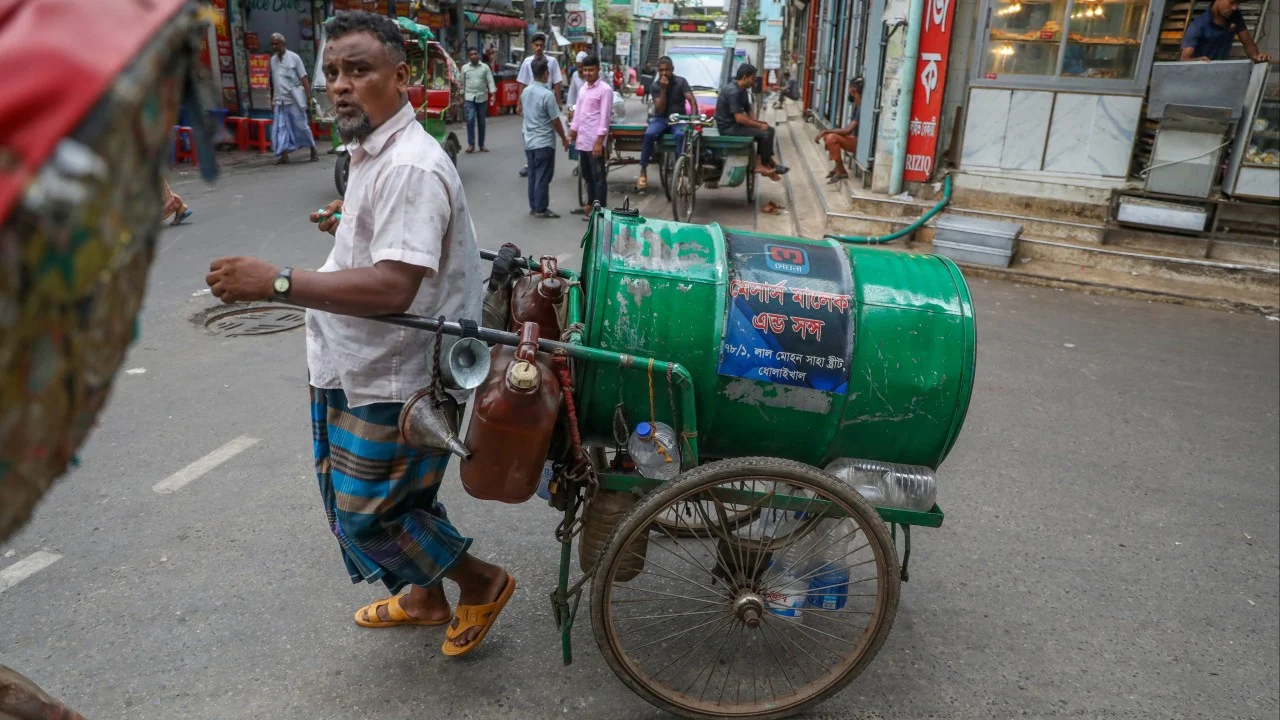
面对超出其控制范围的燃料危机,孟加拉国政府每月花费数亿美元来保护民众免受价格飙升的影响。
Confronted by a fuel crisis beyond its control, Bangladesh’s government is spending hundreds of millions of dollars each month to insulate its people from surging prices.
但随着增长放缓和通胀上升,新政府的改革计划正在接受考验——它还没有太多时间来清理国家的问题银行,或为人工智能时代重塑其年轻、丰富但就业不足的劳动力。
But as growth slows and inflation rises, the new government’s reform plans are being tested before it has had much time to clean up the country’s bad banks or retool its young, abundant – but underemployed – workforce for the AI era.
总理塔里克·拉赫曼于2月17日上任,他当选时承诺推动广泛的经济和社会改革,以在十年内将这个拥有1.75亿人口的国家打造成1万亿美元经济体。
Prime Minister Tarique Rahman took office on February 17, elected on promises of sweeping economic and social reforms to turn the country of 175 million people into a US$1 trillion economy within a decade.
一个临时政府曾在2024年谢赫·哈西娜下台后的艰难月份里引导国家前行。她在学生领导的起义中被推翻,起义者称其执政期间有15年的压迫、腐败和治理失效。
An interim government had steered the country through the treacherous months following Sheikh Hasina’s downfall in 2024. She was ousted by a student-led revolt after what they claimed were 15 years of repression, corruption and bad governance.
她的批评者表示,在那些年里,亲信自由地从国有银行中获利,向其中注入不良贷款,导致医疗和教育体系支离破碎,同时用她的阿瓦米联盟党的忠诚分子填充公务员队伍,而非任用有能力的行政人员。
Her critics say those years saw cronies freely dip into state banks, stuffing them with bad loans, and leaving the healthcare and education systems in tatters while filling the civil service with loyalists to her Awami League party rather than competent administrators.
但就在拉赫曼——哈西娜的对手政治家族的后裔——宣誓就职仅11天后,美国和以色列对伊朗发动了袭击,导致油价和天然气价格上涨。
But just 11 days after Rahman – a scion of a rival political clan to Hasina – was sworn in, the US and Israel attacked Iran, sending the price of oil and gas upwards.
在孟加拉国,该国去年进口了约65%的能源需求,这意味着停电、加油站长队排队,以及从交通到食品的各项成本上升。
In Bangladesh, which imported about 65 per cent of its energy needs last year, that has meant power cuts, long queues at petrol stations and driven up the costs of everything from transport to food.
“能源不仅仅是购买石油、天然气或肥料,”拉赫曼的顾问拉谢德·阿尔·马赫穆德·蒂图米尔在曼谷的IMF–世界银行峰会期间对《本周亚洲》表示。
“Energy is not just buying oil, gas or fertiliser,” Rashed Al Mahmud Titumir, an adviser to Rahman, told This Week in Asia on the sidelines of the IMF–World Bank summit in Bangkok.
“它严重打击了我们的公民,”他说。“我们的估计是,从2月下旬至今,我们额外花费了约41亿美元。”其中一些影响本来可以由这个在气候变暖下比以往任何时候都更炙热的国家的太阳能潜力来吸收。
“It hit our citizens hard,” he said. “Our estimates are that from late February to [now] we have spent an estimated US$4.1 billion in additional costs.”Some of the impact should have been absorbed by the solar power potential in a nation that roasts under the sun more than ever as the climate heats up.
但“前政府没有建设任何可持续的能源安全基础设施”,他说,这是多年管理不善和腐败的遗留问题。
But “the previous government didn’t build any sustainable energy security infrastructure”, he said, part of a legacy of years of mismanagement and corruption.
世界银行和亚洲开发银行已贷款数亿美元,以帮助减轻政府承担能源成本的负担。
The World Bank and Asian Development Bank have loaned hundreds of millions of dollars to help ease the government’s burden to cover energy costs.
国际货币基金组织(IMF)拥有约1万亿美元的贷款能力,自2023年以来已发放近36亿美元——拉赫曼政府希望本周在曼谷重新谈判这笔贷款。
The International Monetary Fund (IMF), which has about US$1 trillion in loan capacity, has also dispersed nearly US$3.6 billion since 2023 – a loan Rahman’s government is hoping to renegotiate this week in Bangkok.
但随着外部压力的增加,本周IMF将孟加拉国2027年的增长预测从今年的3.6%下调至3.2%,使其低于受气候冲击严重影响的尼泊尔和柬埔寨,在发展中的亚洲国家中排名靠后。
But as the outside pressures build, this week the IMF trimmed Bangladesh’s growth projection for 2027 to 3.2 per cent from 3.6 per cent this year, putting it below climate-battered Nepal and Cambodia among developing Asian nations.
它还预测明年通胀将从今年的8.7%上调至10.9%——尽管孟加拉国政府表示,这两项预测尚未完全考虑其对问题银行、负债企业和空心化福利国家的结构性改革的影响。
It also forecast inflation to nudge upwards next year to 10.9 per cent from 8.7 per cent this year – although Bangladesh’s government said both projections had not fully taken into account the impact of its structural reforms of bad banks, indebted businesses and a hollowed out welfare state.
“不幸的是,人民正在为前政权的失误付出代价,”蒂图米尔说。“我们已经将五家银行纳入政府所有……在人们担心会出现挤兑之后,情况现在已经平静。我们希望将纪律引入体系[并]然后为投资提供融资,为扩张提供融资。”他说,未来增长将源于对新制造业的外国投资——包括电子和玩具——基础设施、太阳能、深水港口和新的特别经济区,其中包括孟加拉国南部吉大港的中国支持的安瓦拉经济特区,投资额为13亿美元。
“Unfortunately the people are suffering for the misdeeds of the previous regime,” Titumir said. “We have already brought five banks to be owned by the government … after fears there will be a bank run, that has now calmed. We want to bring discipline into the system [and] then provide finance for investment, finance for expansion.”Future growth, he said, would sprout from foreign investment into new manufacturing – including electronics and toys – infrastructure, solar power, deep-sea ports and new special economic zones, including the US$1.3 billion Chinese-backed Anwara in Chattogram in southern Bangladesh.
孟加拉国还拥有年轻的人口、深厚的制造业经验——包括关键的服装行业——以及大量廉价劳动力,供希望从东南亚迁移的企业使用,因为那里的成本正在上升。
Bangladesh also has a young population, deep experience in manufacturing including the key garment industry, and a seam of cheap workers for firms looking to relocate from Southeast Asia where costs are rising.
但关于孟加拉国如何为能源、技能和基础设施的即时需求做好准备,以便从人工智能革命中获益仍存在疑问,而人工智能革命是全球增长的基石。
But questions remain over how Bangladesh will get fit for immediate needs of energy, skills and infrastructure to gain from the AI revolution, which undergirds global growth.
本周在曼谷,国际货币基金组织的信息是:识别出一个双调全球经济,其中天价能源价格打击了增长,但数万亿美元投入人工智能及其衍生产业——数据中心、半导体和印刷电路板——却在许多国家推动了动能。
The IMF message this week in Bangkok has been to identify a two-tone global economy, where sky-high energy prices have hit growth but the trillions of dollars sunk into AI and its spin-off industries – data centres, semiconductors and printed circuit boards – have driven momentum in many countries.
“谁受到的打击最大?低收入国家。尤其是能源进口国或被排除在技术繁荣之外的国家,”国际货币基金组织总裁克里斯塔利娜·格奥尔基耶娃周三表示。
“Who is taking the biggest hit? Low-income countries. Especially those who are energy importers or left out from technology boom,” IMF managing director Kristalina Georgieva said on Wednesday.
她赞扬亚洲是“全球增长的引擎”,但警告能源危机动荡的国家要紧缩开支,尽管有政治诱惑要推出广泛的补贴。
She hailed Asia as “the engine of global growth” but warned nations roiled by the energy crisis to run a tight ship despite the political temptations to roll out sweeping subsidies.
“首先保护你们的缓冲,保护你们的财政空间,”她说,建议政府向最脆弱群体提供“临时且有针对性的支持”。
“First protect your buffers, protect your fiscal space,” she said, advising governments to give out “temporary and targeted support to the most vulnerable”.
孟加拉国是南亚第二大经济体,正处于转折点。孟加拉国民族党(BNP)新政府在二月的选举中以三分之二多数上台,口号是改革,但它面临着一大批渴望在哈西娜时代之后获得新机遇的人口。
Bangladesh, the second-largest economy in South Asia, is at a turning point. A new Bangladesh National Party (BNP) government came to power with a two-thirds majority in February’s election on a reform banner but it faces a large population anxious for delivery on fresh opportunities after the ulcerous Hasina years.
拉赫曼家族一直与哈西娜家族在南亚国家短暂但动荡的历史中交替执政。
Rahman’s family has traded power with Hasina’s clan for much of the South Asian nation’s short but turbulent history.
这位57岁的拉赫曼在伦敦自流放多年后返回,今年成功参加选举。此前,诺贝尔奖得主穆罕默德·尤努斯领导的临时政府在哈西娜被学生抗议者推翻后,制定了一条穿越混乱和危险时期的路线——这些学生抗议者曾试图用暴力镇压哈西娜。
The 57-year-old returned from years in self-exile in London to successfully contest elections this year after an interim government led by Nobel laureate Muhammad Yunus plotted a route through the chaotic and dangerous period following Hasina’s ousting by student protesters whom she had tried to repress with violence.
“我们过去已经做到了,”总理顾问蒂图米尔补充道,并表示拉赫曼的“政治批准”赋予了他改革的职责。
“We have delivered in the past,’’ Titumir, the prime minister’s adviser added, saying Rahman’s “political approval” has given him a remit for reform.
拉赫曼的母亲卡莉达·齐亚曾在1991年至2006年间三度担任总理。她因政治活动多次被捕,与独立偶像谢赫·穆吉布·拉赫曼之女哈西娜争夺权力。
Rahman’s mother, Khaleda Zia, served three terms as prime minister between 1991 and 2006. She was put under arrest several times for her political activism as she vied with Hasina – the daughter of independence icon Sheikh Mujibur Rahman – for power.
齐亚于去年去世。她的丈夫、前陆军指挥官兼战争英雄齐亚乌尔·拉赫曼在执政五年后于1981年遭暗杀。
Zia died last year. Her husband, former army commander and war hero Ziaur Rahman, was assassinated in 1981 after five years leading the country.