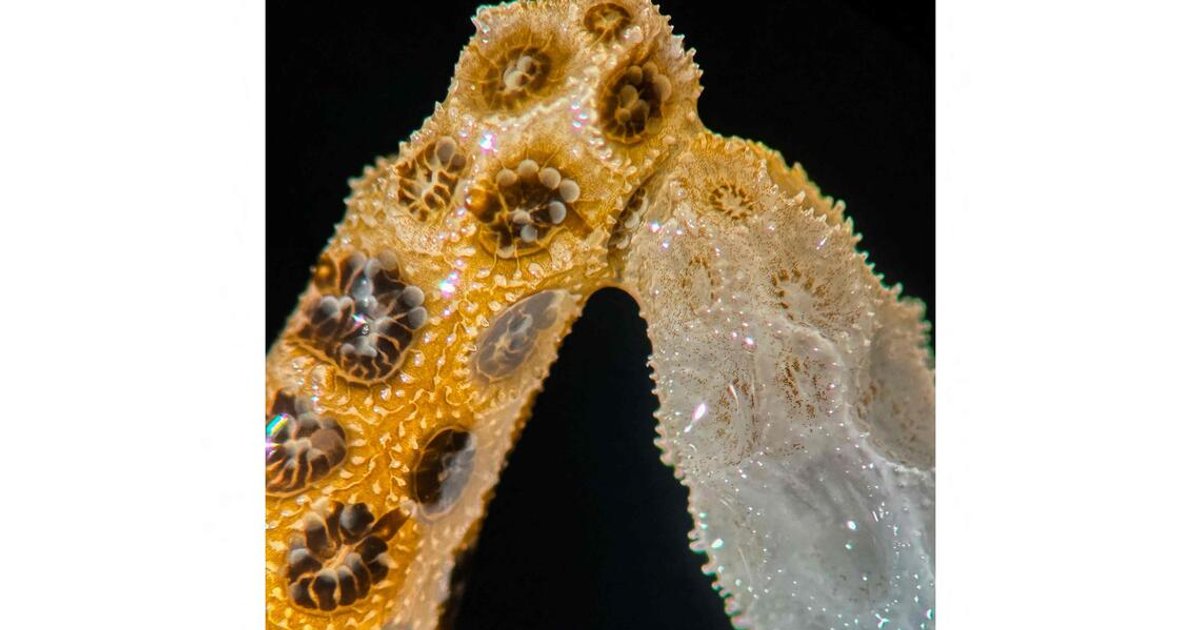
斯坦福大学科学家发现,健康珊瑚与受白化影响的珊瑚接触三到五天时,健康珊瑚可以帮助受白化影响的珊瑚恢复。该研究于10月14日发表在《科学进展》杂志上。
Stanford scientists found healthy corals can help bleached corals recover when they touch for three to five days. The study was published in Science Advances on Oct 14.
这种效应源于健康共生藻通过融合组织在珊瑚之间移动,形成一种“营养高速公路”。受白化影响的珊瑚并非无药可救。
The effect comes from healthy symbionts moving between corals through fused tissue, creating a “nutrient highway”. Bleached corals were not a lost cause.
该方法仅在同一基因型的珊瑚之间有效,而不同基因型的组合会导致刺细胞反应。研究人员现在希望通过将共生藻重新引入珊瑚礁来扩大这一想法的应用规模。
The method only worked with the same genet, and mixed pairings caused stinging cells. Researchers now want to scale the idea by reintroducing symbionts to reefs.
AI生成 华盛顿 — 世界珊瑚礁正面临着由海水温度上升引发的广泛白化所带来的生存威胁,这一问题由气候变化驱动,并因2026年强烈的厄尔尼诺现象而进一步加剧。
AI generated WASHINGTON - The world’s coral reefs face an existential threat from rising seawater temperatures that trigger widespread bleaching, a problem driven by climate change and compounded by 2026’s intense El Nino phenomenon.
但斯坦福大学科学家的一项新实验室研究发现,仅仅将健康、色彩鲜艳的珊瑚与受白化影响的珊瑚接触,就足以让濒死的珊瑚起死回生 — — 如果这一发现能够被放大规模应用,它最终可能为现实世界中的干预措施铺平道路。
But a new lab study by scientists at Stanford University finds that simply placing healthy, colourful coral in contact with their bleached counterparts is enough to bring the dying ones back from the brink – a finding that could eventually pave the way for real-world interventions if it can be scaled.
“结果令人惊叹,”该研究的主要作者丹尼尔·柯林斯告诉法新社,回忆起他在首次看到积极结果时的“顿悟时刻”,并匆忙跑到博士导师办公室分享这一消息。该论文于10月14日发表在《科学进展》期刊上。
“It’s stunning,” lead author Daniel Collins told AFP about the outcome of the experiments, recalling the “eureka moment” when he first saw positive results and rushed to his PhD supervisor’s office to share the news. The paper was published on Oct 14 in the journal Science Advances.
珊瑚礁恢复是一个研究热点,相关工作从使用人工育苗场拯救珊瑚礁,到寻找和培育更耐热的物种不等。
Coral reef recovery is a highly active area of research, with efforts ranging from using artificial nurseries to rescue reefs to finding and cultivating more heat-tolerant species.
柯林斯表示,受白化影响的珊瑚曾因其高死亡率而被基本视为无望 — — 但这项新研究表明它们“真的不应该被视为无望”。斯坦福团队对花椰菜珊瑚的配对进行了一系列测试,发现健康珊瑚片段与受白化影响的珊瑚片段仅需五天的接触,后者就能实现惊人的恢复,此时它们可以被安全地分离开来。
Bleached corals had been largely written off because of their high mortality rate, said Collins – though the new work instead demonstrates they “really shouldn’t be thought of as a lost cause.”The Stanford team ran a series of tests with pairs of cauliflower corals, finding five days of contact between healthy and bleached fragments was all it took for the latter to mount a spectacular recovery, at which point they could be safely pried apart.
该方法的关键在于——团队非正式地将其称为“帮助之手”——将健康的光合作用藻类(也称为共生体)进行转移,珊瑚正是从这些共生体中获取其颜色。
The key to the success of the method – which the team informally dubbed “helping hands” – is the transfer of healthy photosynthetic algae, also known as symbionts, from which corals derive their colour.
珊瑚是由数百到数千个称为水螅虫的微小软体生物组成的海洋无脊椎动物。
Corals are marine invertebrates made up of hundreds to thousands of tiny, soft-bodied organisms called polyps.
它们与共生体具有互利关系:共生体为珊瑚提供其所需绝大部分食物,以换取庇护所,以及进行光合作用所需的水和二氧化碳。但在热应激时期,藻类会产生毒素,迫使宿主将其排出。柯林斯表示,该实验的想法来源于两个方面。
They have a mutualistic relationship with symbionts, which produce the vast majority of food the corals require, in return for shelter, as well as water and the carbon dioxide they need to photosynthesise. But in times of heat stress, algae can produce toxins, forcing their hosts to expel them. Collins said the idea for the experiment came from two sources.
第一个来源是一项研究,该研究表明海洋中的塑料废物通过传播有害病原体,可能促进珊瑚疾病的发生,这让他思考是否可以通过健康促进的转移来逆转这一机制。
The first was a study that showed plastic waste in the ocean can promote disease in corals by transferring harmful pathogens, which made him wonder whether it would be possible to flip that mechanism on its head with a health-promoting transfer.
第二个来源是斯坦福大学的该研究资深作者斯蒂芬·帕伦比(Stephen Palumbi)在实验室中观察到的一次幸事:他注意到一只健康的珊瑚和一只白化的珊瑚相互倾斜并接触在一起,而白化珊瑚开始恢复。规模挑战 实验揭示了重要的限制条件。
The second was a happy accident observed by Stephen Palumbi, the study’s senior author, also at Stanford, who noticed in his lab that a healthy coral and bleached coral had tipped over and were touching each other, and the bleached coral had started to recover. The scaling challenge The experiments revealed important constraints.
珊瑚开始恢复所需的最短接触时间为三天,五天则可确保完全恢复。
Three days of contact was the minimum required for a bleached coral to begin to recover, and five ensured full recovery.
此外,珊瑚必须直接接触——相距仅几毫米,否则不会发生显著变化。
They also had to be in direct contact – a few millimetres apart, and nothing significant happened.
一个主要限制是,只有当两只珊瑚具有相同的遗传背景(即“基因型”)时,该过程才有效。不同基因型的配对会导致珊瑚释放刺细胞,这种敌对反应可类比为人类的器官排斥。
A major limitation was that the process only worked when the two corals shared the same genetic background, or “genet.”Mixed-genet pairings resulted in the corals deploying stinging cells, a hostile response that can be likened to organ rejection in humans.
强大的激光显微镜揭示了机制:接触一天或两天后,珊瑚的组织开始融合,在两者之间形成一种“营养高速公路”。
Powerful laser microscopy revealed the mechanism: after a day or two of contact, the corals’ tissues began fusing, creating a “nutrient highway” between the pair.
最大的挑战在于将这一令人兴奋的实验室发现转化为实际应用的解决方案。
The biggest challenge will be translating an exciting lab finding into a real-world solution.
“我们可能不会在珊瑚礁上让珊瑚相互接触,”柯林斯说,并指出珊瑚礁的巨大规模往往会排除这种选择。
“We likely will not be touching corals to each other on reefs,” said Collins, noting the sheer size of reefs tends to preclude this option.
然而,提取健康的共生藻并进行培养是可行的——团队目前正在考虑如何大规模地将它们重新引入到受白化影响的珊瑚中。
However, it is possible to extract healthy symbionts and culture them – and the team is now thinking about ways to re-introduce them en masse to bleached coral.
这也有助于规避基因不匹配的问题,而该问题适用于珊瑚本身,而非共生藻。
This also has the benefit of side-stepping the genetic mismatch problem, which applies to the corals, not the symbionts.