从抵达港口的货物到支撑在线服务的数据中心,我们日常依赖的许多系统都需要可靠的能源供应。随着企业寻求减排,挑战不在于仅仅选择低碳方案,而在于如何在不中断关键运营的前提下采用这些方案。
From the goods arriving at ports to the data centres powering online services, many of the systems we rely on every day depend on a reliable energy supply. As businesses look to reduce emissions, the challenge is not simply choosing lower-carbon options, but adopting them without disrupting essential operations.
在新加坡第二次数据中心申请征集中,四个入选的方案涵盖200兆瓦的临时分配新增容量,这些方案承诺通过绿色能源路径为超过一半的容量供电。对运营商而言,这意味着在扩张与环境目标之间取得平衡,同时保障其设施所需的韧性。
Under Singapore’s second Data Centre Call for Application, four selected proposals covering 200 megawatts of provisionally allocated new capacity have committed to powering more than half of that capacity through green energy pathways. For operators, this means balancing expansion and environmental goals with the resilience their facilities require.
从零开始减排吗?向低碳运营转型是否意味着替换现有基础设施?壳牌东部商业燃料总经理陈友忠表示,情况并非总是如此。
REDUCING EMISSIONS WITHOUT STARTING FROM SCRATCH Does moving towards lower-carbon operations mean replacing existing infrastructure? Not always, according to Mr Tan Yew-Chong, general manager of commercial fuels (east) at Shell.
“一种常见的误解是,脱碳需要彻底替换现有资产或系统,”他说。“实际上,企业可以采取的步骤因应用场景、运营需求以及可用解决方案的成熟度而异。”这意味着不仅要探索诸如电气化、基础设施升级和新技术等长期转型路径,还要寻找减少已投入使用设备排放的方法。
“A common misconception is that decarbonisation requires the wholesale replacement of existing assets or systems,” he said. “In practice, the steps businesses can take vary according to the application, their operating needs and the maturity of available solutions.”That means exploring not only longer-term shifts such as electrification, infrastructure upgrades and new technologies, but also ways to reduce emissions from equipment already in use.
发电占新加坡排放量的40%企业还必须考虑来自现有柴油驱动资产的排放,包括备用发电机、车队和关键设备。问题在于如何在不中断运营或过早投资新设备的前提下应对这些排放。
Power generation accounts for 40 per cent of Singapore’s emissions Businesses must also consider emissions from existing diesel-powered assets, including backup generators, fleets and critical equipment. The question is how to address these without disrupting operations or investing prematurely in new equipment.
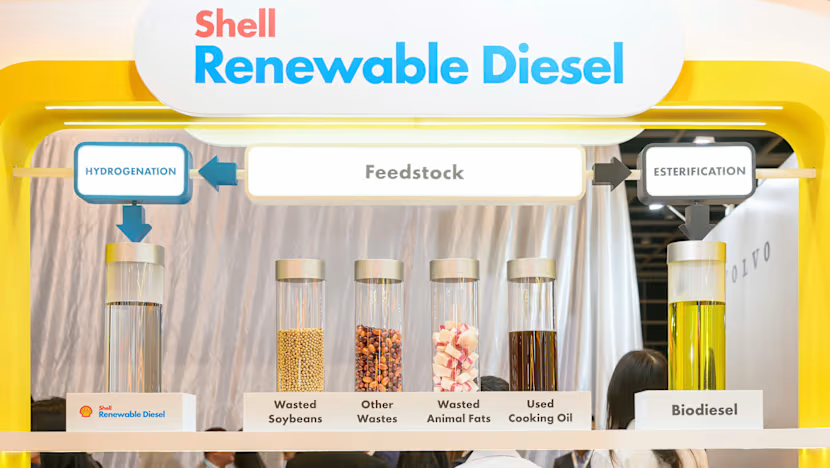
对于适用于柴油的场景,壳牌可再生柴油是一种选择。也被称为加氢处理植物油(HVO),SRD 可用于多种应用,前提是设备兼容性、制造商要求和现场准备情况允许。例如,在香港,该燃料已用于一家医院的锅炉房和一家集装箱终端运营商的柴油车队,展示了其在不同运营环境中的潜力。
For suitable diesel applications, Shell Renewable Diesel is one option. Also known as hydrotreated vegetable oil, SRD can be used in a range of applications, subject to equipment compatibility, manufacturer requirements and site readiness. In Hong Kong, for example, the fuel has been used in a hospital’s boiler room and a container terminal operator’s diesel fleets, demonstrating its potential across different operating environments.
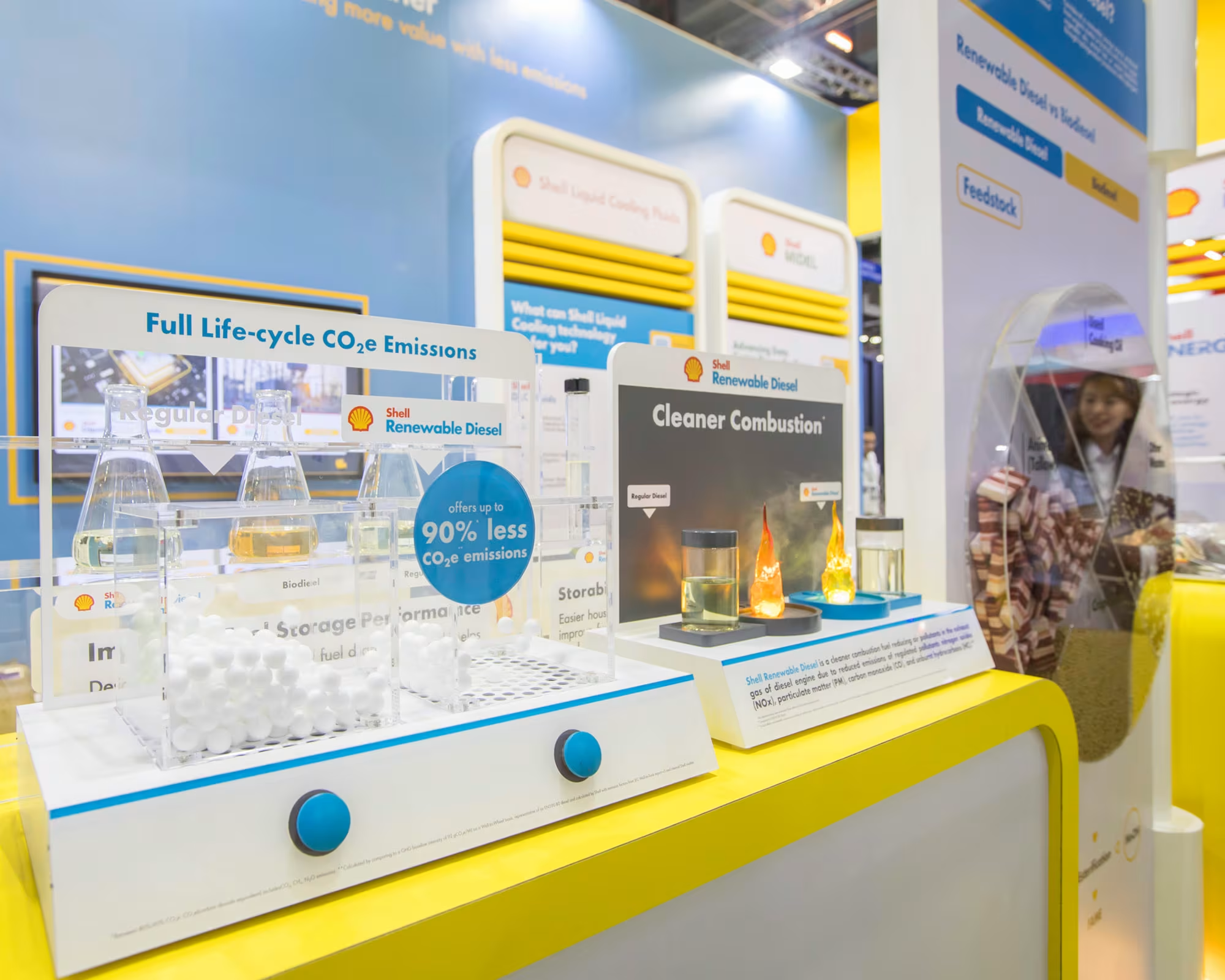
“SRD 可能帮助企业在继续使用现有设备的同时,将与特定柴油使用相关的生命周期二氧化碳当量排放降低多达 90%。”陈先生表示。
“SRD may help businesses reduce lifecycle carbon dioxide-equivalent emissions¹ associated with specific diesel use² by up to 90 per cent³, while continuing to utilise existing equipment,” said Mr Tan.
SRD 由可再生或废弃原料制成,旨在支持更清洁的燃料燃烧并降低生命周期二氧化碳当量排放。
Made from renewable or waste feedstocks, SRD is designed to support cleaner fuel combustion and reduce lifecycle carbon dioxide-equivalent emissions.
SRD 通过加氢处理工艺从可再生或废弃原料生产而来,是一种石蜡型可再生燃料,硫和芳香烃含量低。与传统生物柴油不同,它不含脂肪酸甲酯,从而降低了储存过程中燃料降解和微生物滋生的风险。它也没有通常与柴油燃料相关的气味。
Produced from renewable or waste feedstocks through a hydrotreating process, SRD is a paraffinic renewable fuel with low levels of sulphur and aromatics. Unlike conventional biodiesel, it does not contain fatty acid methyl esters, reducing the risk of fuel degradation and microbial growth during storage. It also lacks the typical odour associated with diesel fuels.
这些特性对于备用电源以及其他可能需要长期储存但需随时可用的应用尤为重要。SRD 被设计用于长期保持燃料质量,以在需要时支持可靠性。
These characteristics are particularly relevant for backup power and other applications where fuel may be stored for extended periods but needs to be ready at short notice. SRD is designed to maintain fuel quality for longer, supporting reliability when called upon.
“客户需要确信他们使用的燃料能够按预期发挥作用,尤其是在停机可能带来重大运营或业务后果的应用场景中。”陈先生补充道。在实践中实现转型 然而,切换燃料不仅仅是一个采购决策。
“Customers need confidence that the fuel they are using will perform as expected, especially in applications where downtime can have significant operational or business consequences,” added Mr Tan. MAKING THE TRANSITION WORK IN PRACTICE Switching fuels, however, is not simply a procurement decision.
将柴油应用转换为 SRD 需要评估设备适用性、储存准备情况、操作程序以及供应链考量。
Moving a diesel application to SRD involves assessing equipment suitability, storage readiness, operational procedures and supply-chain considerations.
对于数据中心而言,备用发电机可能使用频率不高,但必须在电网供电中断时能够立即启动。因此,燃料更换需要考虑整个发电机系统——从储存燃料的状态、油箱和滤清器的准备情况,到测试和应急补给。壳牌的职责不仅限于提供SRD。
For a data centre, backup generators may operate infrequently but must be ready to kick in if grid power fails. A fuel change therefore needs to account for the wider generator system – from the condition of stored fuel and the readiness of tanks and filters to testing and emergency replenishment. Shell’s role extends beyond supplying SRD.
其适用性评估会考虑客户的运营需求,以确定燃料是否可以引入以及如何引入。
Its suitability assessment considers a customer’s operating needs to determine whether – and how – the fuel can be introduced.
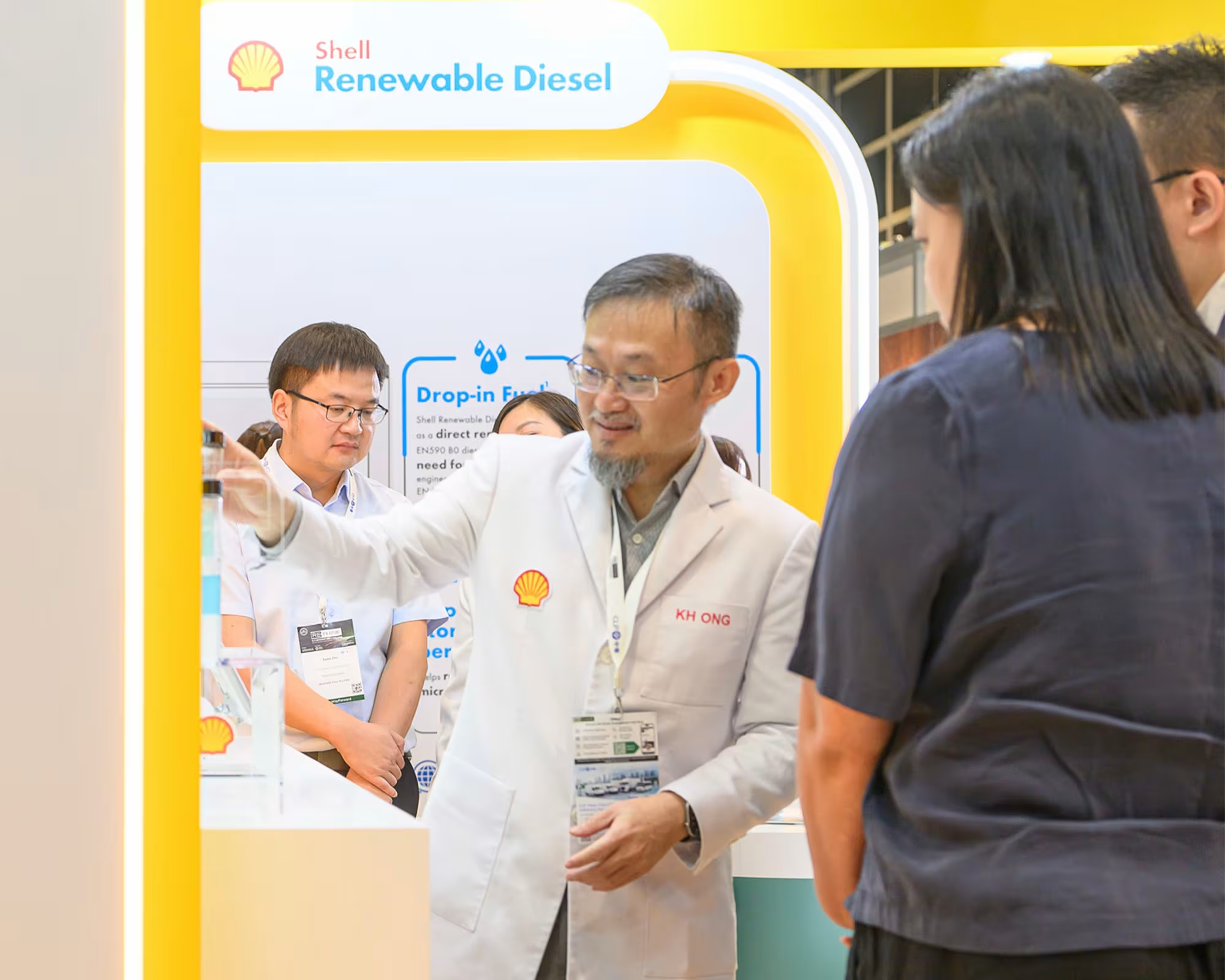
在亚洲各地的行业活动中,壳牌与企业(包括数据中心运营商和物流公司)就诸如SRD之类的低碳解决方案进行交流。
At industry events across Asia, Shell engages businesses, including data centre operators and logistics companies, on lower-carbon solutions such as SRD.
香港一家集装箱终端运营商曾探索使用SRD,以减少其现有柴油动力活动的排放。鉴于设备运行时间是首要考虑因素,壳牌在评估该公司的设备需求、燃料处理和储存准备情况的同时,确保其运营持续进行。
A container terminal operator in Hong Kong explored SRD to reduce emissions from its existing diesel-powered activities. With equipment uptime a priority, Shell assessed the company’s equipment requirements, fuel handling and storage readiness while operations continued.
除了燃料选择之外,组织内的不同部门可能需要不同的方法,并且推进速度也可能不同。例如,物流或工业运营商可能更关注在不影响运行时间、安全或成本确定性的前提下,确定替代燃料的引入点。其他需求可能则需要更广泛的能源和技术选项组合。
Beyond fuel choice, different parts of an organisation may require different approaches and move at different speeds. A logistics or industrial operator, for example, may focus on identifying where alternative fuels can be introduced without affecting uptime, safety or cost certainty. Other needs may call for a broader mix of energy and technology options.
壳牌的能力涵盖能源供应、技术、贸易和客户解决方案。对于数据中心而言,其能源需求不仅限于备用电源,还包括冷却和电力供应,壳牌可能会与其合作开展液冷解决方案、生物甲烷、可再生能源路径、变压器油以及技术咨询。
Shell’s capabilities span energy supply, technology, trading and customer solutions For data centres, where energy needs extend beyond backup power to cooling and electricity supply, Shell may work with them on liquid cooling solutions, biomethane, renewable power pathways, transformer oils and technical consulting.
“能源转型对每家企业来说不会完全相同,”陈先生说。“对于关键行业,进展可能来自长期基础设施改造与可立即采取的实际措施的结合。首要任务是在确保基本运营安全、可靠并按照每家企业能够承受的节奏进行的前提下,减少排放。”壳牌新加坡的产品和服务可能有助于贵企业的排放管理。
“The energy transition will not look the same for every business,” said Mr Tan. “For critical sectors, progress may come through a mix of long-term infrastructure changes and practical steps that can be taken today. The priority is to reduce emissions while keeping essential operations running safely, reliably and at the pace each business can manage.”Shell Singapore products and services that may support your business’s emissions management.
¹产品全生命周期二氧化碳当量(CO₂e)排放与特定产品从油井到车轮的生产和使用相关,包括原料生产和收集、加工、储存、运输、分配和燃烧过程中的排放。
¹Product lifecycle carbon dioxide-equivalent (CO₂e) emissions are associated with the production and use of a specific product, from well to wheel, including emissions from feedstock production and collection, processing, storage, transport, distribution and combustion.
²通过与代表EN590 B0柴油燃料的温室气体排放基准强度进行比较得出,该基准为每兆焦耳92克CO₂e(从油井到车轮的基准),计算方法采用JEC Well-to-Tank报告V5中的排放因子以及壳牌内部研究。
²Calculated by comparing to a greenhouse gas emissions baseline intensity of 92g of CO₂e per megajoule on a well-to-wheel basis, representative of an EN590 B0 diesel fuel. Calculated by Shell with emission factors from the JEC Well-to-Tank Report V5 and internal Shell studies.
³CO₂e排放占比在80%至90%之间。CO₂e包括二氧化碳、甲烷和一氧化二氮的排放。
³Between 80 per cent and 90 per cent CO₂e. CO₂e includes carbon dioxide, methane and nitrous oxide emissions.