福尔摩斯有云:财富眷顾大胆者——也眷顾节俭者。英国石油公司(BP Plc)于2月初决定暂停其每年30亿美元的股票回购计划。此举并非令所有股东满意,但为保留现金以偿还债务,实属必要。数日后,美国和以色列袭击伊朗,导致能源价格大幅飙升。由此带来的意外之财,加上回购节省的资金,创造了一个不容错失的良机:这家英国石油巨头可彻底解决其资产负债表难题。
Fortune favors the bold — and the frugal. BP Plc decided in early February to suspend its $3 billion-a-year share buyback program. The move wasn’t popular with every shareholder, but it was necessary to preserve cash to pay down debt instead. Days later, the US and Israel attacked Iran, sending energy prices sharply higher. The ensuing windfall, plus the buyback savings, have created an unmissable opportunity: The British oil major can solve its balance-sheet problems once and for all.
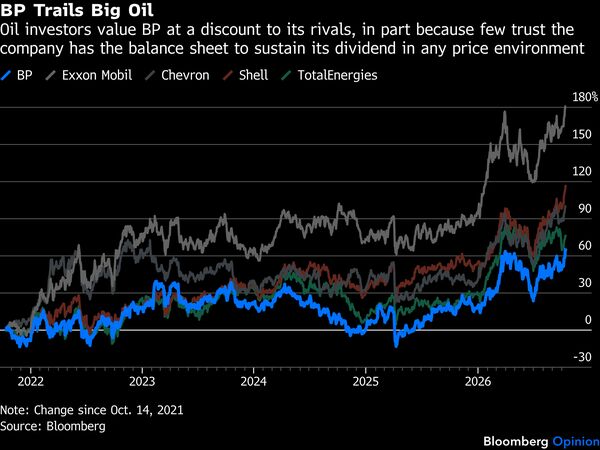
过去25年中的大部分时间里,BP一直是“大石油”公司中负债最重的一家。面对行业冲击,它只有一种应对方式:削减股息。在此期间,公司两次这么做——2010年墨西哥湾漏油事故后,以及2020年疫情期间。毫不奇怪,投资者认为其分红不稳,因此给予BP的估值低于同行。
For muchof the last 25 years, BP has been the most indebted Big Oil company. It had only one way to respond to industry shocks: cutting the dividend. Twice during that period – in 2010 after the US Gulf of Mexico spill, and in 2020 during the pandemic – the company did so. Unsurprisingly, investors assume the payout isn’t safe, and thus value BP at a discount to its peers.
按市盈率计算,BP交易估值为6.7倍,而法国道达尔能源公司(TotalEnergies SE)为7.7倍,英国壳牌公司(Shell Plc)为8.3倍。在纽约上市的美国石油巨头埃克森美孚(ExxonMobil Holdings Corp.)和雪佛龙(Chevron Corp.)交易估值均超过12倍,得益于一个真正看好石油行业的股市。
On a price-to-earnings ratio, BP trades at 6.7 times, compared with 7.7 for France’s TotalEnergies SE and 8.3 times for Shell Plc of the UK. American oil giants ExxonMobil Holdings Corp. and Chevron Corp., listed in New York, trade at a multiple of more than 12 times, benefiting from a stock market that actually likes the oil industry.
除非改变“总距离下一次削减股息只差一步之遥”的市场认知,否则基金经理不会重估BP股价。要实现这一点,BP需要更大的资产负债表灵活性,以便在低迷时期——无论持续多久——都能通过借贷维持对投资者的分红支付,贯穿整个经济周期。
Fund managers won’t revalue BP stock until it changes the perception that it’s always one stumble away from another dividend cut. To achieve that, it needs more balance sheet flexibility so it can borrow during lean times, however long they last, to maintain its payments to investors throughout the economic cycle.
BP的最大股东之一是激进投资者艾略特管理公司(Elliot Management Corp.),该公司应抵制今年或2027年初重新启动股票回购的压力。然而,BP不应仅仅为了增加石油产量或——更别说——进行某些愚蠢的并购项目而加强财务。降低债务固然重要,但下一步的重点应是通过分红和回购向投资者分配资金。到明年年中,股东理应开始收到更丰厚的BP支票。
BP, which counts activist investor Elliot Management Corp. among its top shareholders, should resist pressure to restart share repurchases this year or in early 2027. What it shouldn’t do, however, is bolster its finances just to fund increased oil production or — heaven forbid — embark on some silly M&A project. Reducing debt is important; but the next priority is distributing money to investors — via both dividends and buybacks. By the middle of next year, shareholders deserve to start getting fatter checks from BP.
长期以来,BP一直用错误的视角审视其杠杆,仅关注净债务,却排除其他——重要的——负债,包括混合债券、租赁以及因墨西哥湾石油泄漏而欠美国政府的赔偿金。近几个月来,公司开始认识到其财务义务的规模。值得庆幸的是,受油气价格意外上涨以及回购节省的推动,这些负债正快速下降。公司预计到第三季度末,净债务将降至约145亿美元,低于一年前的约250亿美元。其总负债将约为450亿美元,低于一年前的超过600亿美元。
For too long, the company looked at its leverage through the wrong lens, focusing exclusively on net debt and excluding other — significant — liabilities, including hybrid bonds, leases and compensation owed to the US government for the Gulf of Mexico oil spill. In recent months, however, the company has started to recognize the magnitude of its financial obligations. Thankfully, those are coming down quickly due to the oil and gas price windfalls, plus the buyback savings. The company expects net debt to have dropped to around $14.5 billion by the end of the third quarter, down from about $25 billion a year earlier. Its total liabilities would stand at about $45 billion, down from more than $60 billion a year ago.
与她的许多前任不同,梅格·奥尼尔(Meg O’Neill)似乎真正理解了企业财务状况的重要性。她于今年早些时候成为了英国石油公司(BP)的首席执行官。她在本月早些时候的一次行业会议上表示:“当你身处一个周期性较强的行业中,且你所生产的主要商品价格在每桶50美元到150美元之间波动时,就必须设计出能够适应这种低价环境的商业模式;这就是为什么‘去杠杆化’(即减少企业债务)如此重要的原因。”
Unlike many of her predecessors at BP, Meg O’Neill, who became chief executive officer earlier this year, seems to get the balance-sheet argument. “When you're in a cyclical industry and the main commodity you produce can be priced at something between $50 a barrel and $150 a barrel, you have to design your business to be resilient for that low-price environment,” she told an industry conference earlier this month.
不过,她曾在澳大利亚能源巨头Woodside Energy Group Ltd.担任高管期间推进过一些未能取得成功的发展项目,这一经历让一些投资者感到担忧。该公司已向股东承诺将于12月15日公布其财务计划,从而缓解了投资者们对该公司会推迟到2027年才公布财务信息的顾虑。那么,在任何现实的能源价格环境下,英国石油公司的财务状况何时才能真正保障其股息的稳定呢?
“And that's why deleveraging is so important.” (I should note that her track record at the helm of Australian energy giant Woodside Energy Group Ltd., where she pushed ahead with several growth projects that haven’t panned out, is a worry for some investors.) The company has told shareholders it will update them on its financial plans on Dec. 15, allaying concern it would wait until later in 2027. But at what point would BP’s economic health keep the dividend safe under any realistic energy-price scenario?
我认为英国石油公司应该进一步减少债务;到2027年中期,将净债务降至接近零的水平,甚至实现净现金盈余(尽管这在近年来一直被视为董事会难以接受的激进举措)应该是完全可行的。英国石油公司很快将从出售其Castrol润滑油业务中获得约60亿美元的收入,这笔资金应全部用于偿还债务。此外,削减成本以及出售那些盈利能力不佳的业务(如太阳能业务Lightsource和沼气公司Archaea Energy)也将有助于改善公司的财务状况。
I’d argue that BP should deleverage further. Reducing net debt to nearly zero, or perhaps even achieving a net cash-positive position – heresy in the boardroom in recent years – should be possible by mid-2027. BP will soon reap about $6 billion from the sale of a large stake in its Castrol lubricant business. All the money should go to reduce its liabilities. Cost-cutting would help too, as would selling unprofitable businesses including solar unit Lightsource and biogas company Archaea Energy .
受2010年墨西哥湾石油泄漏灾难、2023年从俄罗斯的痛苦退出以及昂贵失败的绿色“超越石油”战略的影响,BP如今只是其昔日自我的影子。根据我的统计,该公司在过去五年里已累计减记超过250亿美元的失败投资,其中大部分与可再生能源相关。将这些减记与其当前市值相比,后者目前徘徊在1250亿美元左右。在很长一段时间里,BP的领导层首次承认了价值的毁灭。“我们并未善尽对股东资本的托管责任,”奥尼尔说道。
Handicapped by the disastrous 2010 Gulf of Mexico oil spill, a traumatic exit from Russia in 2023 and the expensive failure of its green “Beyond Petroleum” strategy, BP is a shadow of its former self. By my tally, the company has written off more than $25 billion in failed investments over the last five years, most of them linked to renewables. Compare those impairments with its current market value, hovering at $125 billion. For the first time in a long while, BP’s leadership acknowledges that value destruction. “We have not been careful stewards of shareholder capital,” O’Neill said.
利用当前的意外之财来加强资产负债表,使其在未来油价无论跌到多低都不会拖累公司,这将是股东资金的良好用途。但更重要的是接下来的事情:投资者理应获得更多回报。BP目前应明智地使用其资本 — — 并开始思考如何向公司所有者返还更多。
Using the current windfall to bolster the balance sheet, to the point that it doesn’t hobble the company no matter how low oil prices fall in the future, would a good use of shareholder money. But what matters the most is what comes after: Investors deserve to be paid more. BP should spend its capital wisely for now — and start thinking about how to return more to the company’s owners.