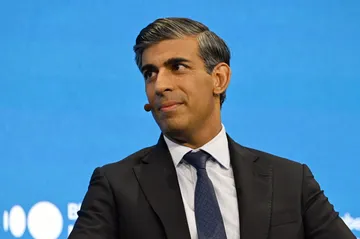
前英国首相里希·苏纳克呼吁所谓的中等国家成为“有毒的虾”,以在更加动荡的全球环境中争取战略经济杠杆。
Rishi Sunak, former UK prime minister, urged so-called middle powers to become a “poisonous shrimp” to carve out strategic economic leverage in a more turbulent global environment.
苏纳克引用了新加坡首任总理李光耀的一个比喻:大鱼会吃掉小鱼,小鱼又会吃掉虾。李光耀在新加坡于1966年独立一年后指出,城邦需要建立起防御机制 — — 就像一只会蜇人的虾 — — 这样才能免受捕食者的侵害。
Sunak drew from a metaphor by Singapore’s first premier Lee Kuan Yew: A big fish will eat a smaller fish, and the smaller fish will eat the shrimp. Lee made the point a year after the Asian nation’s independence in 1966 that the city-state needed to build up its defense mechanisms — like a shrimp that stings — so it would be left alone by predators.
“他当时在思考新加坡在那个世界中的发展道路,结论是:我们必须让自己成为一种有毒的虾。”苏纳克在周三于新德里举行的彭博新经济论坛小组讨论中表示。中等国家“无法像大国那样进行大规模运作。它们能做的就是让自己变得不可或缺。”这种做法反映出一种更具交易性的经济安全观,即获取关键技术可以帮助较小的国家保持自主权,并在与大国的谈判中占据一席之地。
“He was thinking about what Singapore’s path going to be in that world, and it was: we have to make ourselves a poisonous shrimp,” Sunak said in a panel discussion at the Bloomberg New Economy Forum in New Delhi on Wednesday. Middle powers “can’t operate at the scale of the big ones. What they can do is make themselves indispensable.”The approach reflects a more transactional view of economic security, where access to essential technologies can help smaller nations preserve their autonomy and secure a place in negotiations with larger powers.
阅读:中等国家在特朗普时期面临新的生存策略挑战。随着主要经济体之间的竞争重塑全球供应链,苏纳克的信息是,中等国家的生存可能取决于成为其他国家无法替代的“瓶颈点”。该策略不要求主导整个行业,而只需控制其关键部分。
Read: ‘Middle Powers’ Grapple With New Survival Strategies Under Trump As competition between major economies reshapes global supply chains, Sunak’s message was that survival for middle powers may depend on becoming a “choke point” that other countries can’t do without. The strategy doesn’t require dominating an entire industry but controlling a critical part of it.
“这就是你如何确保自己拥有一席之地,而不会像小虾一样被吃掉,”他说。“你带来一些别人需要且想要的东西 — — 你不必提供整顿自助餐。”这种竞争心态在李光耀2015年逝世后依然延续。在印度首都的一次采访中,新加坡副总理 Gan Kim Yong 表示,岛国必须更快、更努力地工作,以在与其他全球财富中心的竞争中保持优势。
“That is how you make sure you have a seat at the table that you can’t be eaten like the little shrimp,” he said. “You bring something to the table that everyone else needs and wants — you don’t have to provide the whole buffet.”The competitive mindset persisted after Lee’s death in 2015. In an interview in the Indian capital, Singapore’s Deputy Prime Minister Gan Kim Yong said the island nation must work faster and harder as it competes with other global wealth hubs.
“我们一直在与全球金融中心竞争,无论是香港、迪拜、伦敦还是纽约,”他在周三接受彭博电视台主持人Haslinda Amin的采访时说。“我们行动迅速,这就是我们的优势。”回到苏纳克的小组讨论,该小组还包括来自加拿大和印度的外长,前澳大利亚总理凯文·鲁德多次回到李先前提出的这个想法。
“We have always been competing with financial centers around the world, in Hong Kong, Dubai, London or New York,” he told Bloomberg TV’s Haslinda Amin on Wednesday. “We can move fast and that is our strength.”Back on Sunak’s panel, which included foreign ministers from Canada and India, former Australian Prime Minister Kevin Rudd repeatedly returned to the idea first introduced by Lee.
“我仍在努力理解‘有毒虾’的概念,”鲁德说,引得现场观众笑声连连。
“I’m still struggling with the concept of poisonous shrimp,” Rudd said, drawing laughter from the audience.