根据房地产咨询公司CBRE的一份报告,随着亚太地区企业扩大人工智能的使用,工作岗位将出现轻微流动,这将导致未来几年办公空间需求增长下降五个百分点。
A mild displacement of jobs across the Asia-Pacific region as companies expand their use of AI would trim five percentage points off growth in office space demand in the next few years, according to property consultancy CBRE.
该报告于周四发布,指出在该地区发达市场(包括香港、新加坡、日本、韩国、台湾、澳大利亚和新西兰)中,3.9%的办公岗位面临人工智能驱动的岗位流动风险。
In a report released on Thursday it said 3.9 per cent of office jobs were vulnerable to artificial intelligence-driven displacement in developed markets in the region, including Hong Kong, Singapore, Japan, South Korea, Taiwan, Australia and New Zealand.
然而,在发展中市场(包括中国大陆、印度、印度尼西亚、马来西亚、菲律宾、泰国和越南)中,只有1.7%的岗位同样面临此类风险。
However, only 1.7 per cent were similarly vulnerable in developing markets including mainland China, India, Indonesia, Malaysia, Philippines, Thailand and Vietnam.
CBRE亚太地区研究主管阿达·蔡(Ada Choi)在接受采访时表示,在中等流动情景下,已使用办公空间仍预计将增长,但增速将放缓至2030年的13%——比该咨询公司基准情景低五个百分点,基准情景假设该地区企业将在不导致岗位流动的情况下吸收人工智能带来的生产率提升。
CBRE’s head of Asia-Pacific research, Ada Choi, said in an interview that occupied office space was still projected to grow under a moderate-displacement scenario, “but at a slower pace of 13 per cent” by 2030 – five percentage points less than under the consultancy’s base case, which assumed firms in the region would incorporate AI-related productivity gains without job displacement.
她表示,中等流动情景是“一种下行敏感性分析”,而非收缩的预测。
She said the moderate displacement scenario was “a downside sensitivity analysis” as opposed to a prediction of contraction.
蔡还说:“该模型还排除了来自新成立的人工智能相关公司、职业和商业形态的潜在上行空间。”报告称,大多数亚太市场预计将处于中等流动假设之下。
“The model also excludes potential upside from new AI-related companies, occupations and business formation,” Choi said. Most Asia-Pacific markets were expected to fall under the moderate displacement assumption, the report said.
但日本可能处于缓慢流动情境之下,尽管技术可得,但由于组织和文化层面的变革阻力,人工智能采用将受到限制,劳动力调整将逐步进行——“岗位流动可能延续至2040年代”。
But Japan was likely to fall under a slow displacement scenario, with AI adoption limited by organisational and cultural barriers to change, despite technological availability, and workforce adjustment occurring progressively – “with displacement extending well into the 2040s”.
与此同时,中国大陆可能面临快速置换情景——“在最短的建模时间范围内,所有被识别为高度易受AI影响的职业都将实现自动化”。报告称,在这种情景下,办公就业将继续扩张,但仅以较慢的速度——在2025年至2030年之间总共增长2%。
Meanwhile, mainland China could fall under a rapid displacement scenario, “where all occupations identified as highly vulnerable to AI are automated over the shortest modelled time frame”. The report said office employment would continue to expand under such a scenario but only slowly – by a total of 2 per cent between 2025 and 2030.
报告补充称,这种情景“在结合了先进的数字生态系统、强大的AI准备度以及旨在加速经济转型的支持性政策框架的市场中最为合理”。
Such a scenario was “most plausible in markets that combine advanced digital ecosystems, strong AI readiness and supportive policy frameworks designed to accelerate economic transformation”, it added.
AI不太可能成为香港办公市场疲软的主要驱动力。Ada Choi,CBRE报告称:“中国大陆凭借其以技术为主导的增长和产业升级的战略重点,表现出与这一轨迹相关的许多特征。”报告未对快速置换情景下的办公空间需求提供预测。
AI is unlikely to be the primary driver of office market weakness in Hong KongAda Choi, CBRE“Mainland China, with its strategic focus on technology-led growth and industrial upgrading, exhibits many of the characteristics associated with this trajectory,” the report said. It did not offer a forecast for office space demand in a rapid displacement scenario.
报告指出,香港及该地区其他发达经济体的劳动力市场特点是办公类就业高度集中、劳动力成本相对较高以及数字准备度强,这使得它们对AI相关置换更为敏感。
The report said the labour markets in Hong Kong and other developed economies in the region were characterised by a high concentration of office-based employment, relatively high labour costs and strong digital readiness, which made them more sensitive to AI-related displacement.
报告称,新加坡、香港和澳大利亚的办公类就业人员占总就业的比例超过35%,而印度和越南则低于10%。
Office workers accounted for more than 35 per cent of employment in Singapore, Hong Kong and Australia compared with less than 10 per cent in India and Vietnam, it said.
CBRE表示,有助于该地区办公房地产市场抵御AI冲击的一个稳定因素是供应放缓。预计2028年的年度办公竣工量将仅相当于该地区明年估计存量的3.2%,远低于新冠肺炎疫情前的5.3%。
One stabilising factor that could help the region’s office property market weather AI disruption was slowing supply, CBRE said. Forecast annual office completions in 2028 would be equivalent to just 3.2 per cent of the estimated stock in the region next year, and well down on the 5.3 per cent seen before the Covid-19 pandemic.
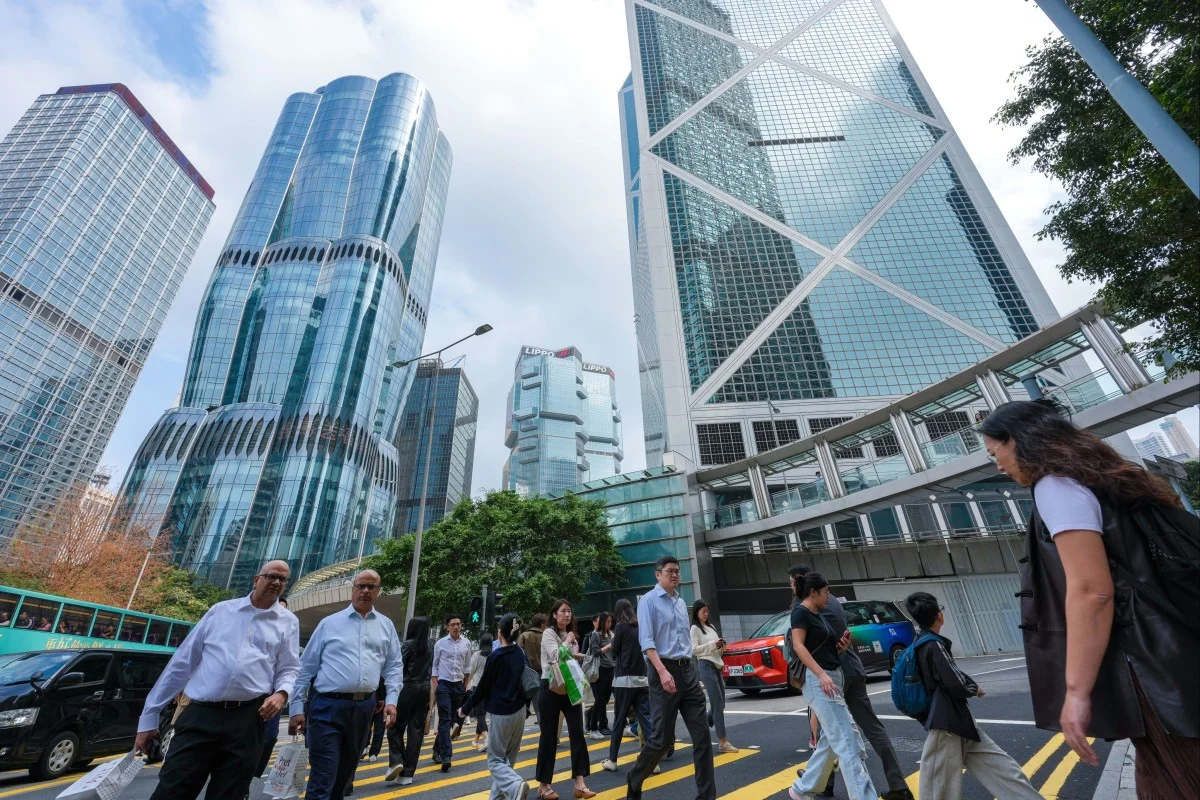
然而,CBRE表示,AI的影响可能会加剧香港市场的两极分化——即像中环这样的顶级位置吸引更多租赁需求。
However, the impact of AI could intensify the market polarisation in Hong Kong that saw top-tier locations such as Central attract more leasing demand, CBRE said.
“AI 不太可能成为香港写字楼市场疲软的主要驱动力,”崔表示。“相反,它更可能加速已经显现的优质资产与次级资产之间的分化。”
“AI is unlikely to be the primary driver of office market weakness in Hong Kong,” Choi said. “Rather it is likely to accelerate the divergence between prime and secondary assets that is already evident.”