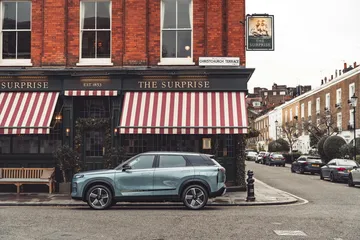
从德国抵达英国,这位作者总会惊讶于道路上中国汽车的数量之多。
Arriving in the UK from Germany, this writer unfailingly notices the astonishing number of Chinese cars on the roads.
英国没有像欧盟(和美国)那样对华汽车进口征收关税,这使英国消费者受益,让他们以相对较低的价格获得高质量、配置丰富的中国汽车。
Declining to follow the European Union (and US) in hitting Sino auto imports with tariffs has benefited British consumers, giving them access to high-quality, generously equipped Chinese vehicles for comparatively little money.
但这种放任自流的做法如今可能损害英国剩余的大规模汽车制造业,同时也阻碍了重建与欧盟关系的任务。
But this laissez-faire approach now risks damaging what’s left of the UK’s large-scale auto manufacturing, while also hampering the task of rebuilding ties with the EU.
尽管英国商务部长乔纳森·雷诺兹坚称其国家不会被布鲁塞尔施压而改变对华汽车进口的立场,但我不禁怀疑这在长期内是否可行。(雷诺兹表示该议题正“在审查中”。)问题的核心在于欧盟推动限制购车补贴、企业车队激励和公共采购,仅限于在集团内部组装、使用当地采购零部件的车辆。
Although UK Business Secretary Jonathan Reynolds insists his country won’t be pressured by Brussels into changing its position on Chinese car imports, I wonder whether that’s tenable over the long term. (Reynolds says the topic is “under review.”) The crux of the problem is the EU’s push to restrict purchase subsidies, corporate-fleet incentives and public procurement to vehicles assembled within the bloc using locally sourced components.
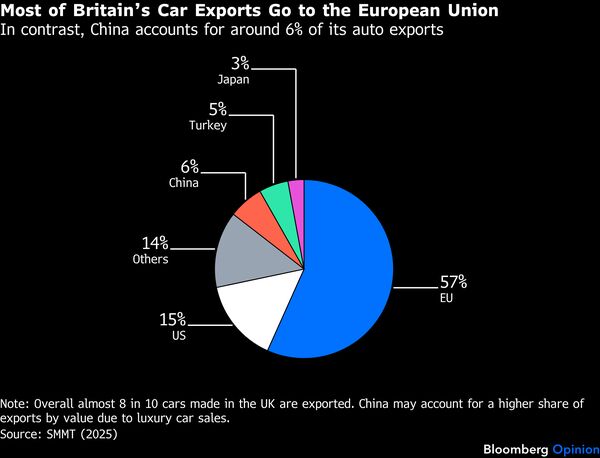
虽然英国的汽车制造业已大不如前,但它仍依赖欧洲吸收其超过一半的汽车出口。这些出口的竞争力及其关联的制造业岗位值得保护。
Although Britain is a diminished automaking nation, it still relies on Europe to absorb more than half of its car exports. The competitiveness of those shipments and the associated manufacturing jobs are worth preserving.
好消息是,欧洲汽车工业希望英国在所谓的《工业加速器法案》下被视为“欧洲制造”。毫无疑问,这部分是出于保护自身投资和供应商的考虑——例如,宝马集团的Mini在牛津拥有一家工厂。
The good news is that Europe’s auto industry wants Britain to count as “Made in Europe” under the so-called Industrial Accelerator Act. Doubtless that’s partly out of a desire to protect its own investments and suppliers — BMW AG’s Mini has a factory in Oxford, for example.
但政策制定者和一些高管正在呼吁实行以物换物。根据《金融时报》的报道,布鲁塞尔希望英国在对华汽车进口方面与欧盟更为严格的政策保持一致。
But policymakers and some executives are calling for a quid pro quo. Brussels wants Britain to align itself with the EU’s more stringent policies toward Chinese auto imports, according to the Financial Times.
欧盟已经对中国的电动汽车征收高达45%的关税(包括现有的10%关税),现在正在对其混合动力汽车实施上限。英国对中国汽车没有进口限制,仅征收标准的10%进口关税。
Having already hit China’s EVs with tariffs of up to 45%, including the existing 10% duty, the EU is now following up with a cap on its hybrids. The UK has no import limits on Chinese cars and charges just the standard 10% import duty.
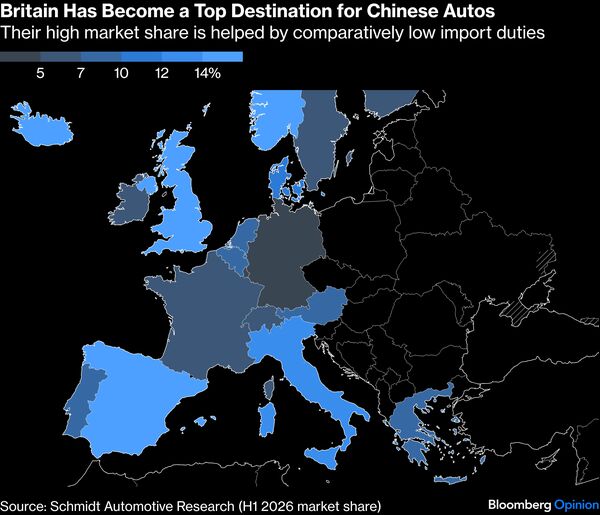
根据施密特汽车研究数据,英国今年迄今为止在西欧售出的所有中国车型中占比近30%,这也是原因之一。9月份在英国购买的汽车中,近四分之一来自中国品牌,而捷途7(亦称“特姆版揽胜极光”)再次成为英国最畅销的新车。该车提供汽油和混合动力版本,起售价仅为29,000英镑(约合38,500美元),价格非常合理。关于英国可能成为中国“特洛伊木马”或通往欧盟的后门的警告可能显得夸大其词。但毫无疑问,英国的开放态度助长了一场正在损害法国和德国车企利益的价格战。
That’s part of the reason why Britain accounted for almost 30% of all Chinese models sold in Western Europe so far this year, according to Schmidt Automotive Research data. Nearly one in four cars purchased in the UK in September came from a Chinese brand, and the Jaecoo 7 — aka the Temu Range Rover — was once again Britain’s top-selling new car. Available in petrol and hybrid versions, prices start at a very reasonable £29,000 ($38,500.) Warnings about the UK turning into a Chinese “Trojan horse”’ or backdoor into the EU can feel overblown. Yet there’s no question Britain’s openness has fueled a price war that’s hurting French and German manufacturers.
那又如何?竞争是件好事:它迫使西方老牌车企接受早该进行的成本削减,并推出了他们自己的低价电动汽车,其中一些表现非常出色。
So what? Competition is a good thing: It’s compelled Western incumbents to embrace long overdue cost-cutting and launch their own lower-priced EVs, some of which are very good.
但尽管我不支持保护主义,我认为欧盟赋予其车企一些喘息空间并激励本地生产是合理的。我也能理解布鲁塞尔为何不希望其英吉利海峡对面的邻国破坏其工业战略。
But although I’m no fan of protectionism, I still think it’s reasonable for the EU to grant its carmakers some breathing space and to incentivize local production. And I can understand why Brussels doesn’t want its neighbor across the Channel undermining its industrial strategy.
当英国首相安迪·伯纳姆正致力于纠正脱欧带来的一些最恶劣后果,并且并未排除某一天重新加入欧盟的可能性时(这将是一个漫长的过程,但可以做梦),英国在关税上的分歧尤其无益。中国之所以将英国视为一个吸引人的汽车销售市场,原因之一是英国消费者比欧洲大陆的消费者更开放。(此外,由于英国大多数汽车工业已被外资控制,爱国消费的空间也更小了。)此外,英国人倾向于——至少对汽车制造商而言——选择比其家庭财务状况所能承受的更昂贵的车辆。
Britain’s divergence on tariffs is especially unhelpful when Prime Minister Andy Burnham is rightly trying to undo some of the most pernicious consequences of Brexit and doesn’t rule out rejoining the bloc at some stage. (That would be a long process but one can dream.) One reason China sees the UK as an attractive place to sell cars is that British consumers are more open-minded than their continental counterparts. (There are also fewer patriotic purchases to make now that most of Britain’s car industry is foreign-owned.) Plus, Brits have an appealing tendency — at least to carmakers — to pick more expensive vehicles than their households’ financial situation might justify.
因此,比亚迪股份有限公司和捷途母公司奇瑞汽车股份有限公司已在英国投资建设广泛的经销商和服务网络。
The upshot is that BYD Co. and Jaecoo owner Chery Automobile Co. have invested in extensive dealer and service networks in the UK.
但就生产而言,英国迄今为止从对华贸易的开放中获益相对有限。诚然,奇瑞正考虑填补日产汽车公司桑德兰工厂的闲置产能,同时在英国开设研发中心。
But in terms of production, Britain has so far gained relatively little from its openness to Chinese trade. True, Chery is looking at filling spare production capacity at Nissan Motor Co.’s Sunderland plant, along with opening a UK R&D center.
但MG虽然现在由中国上汽集团旗下的SAIC Motor Corp.拥有,却仍在很大程度上保留着其英国传统,该公司正计划在西班牙开设一家工厂。(MG在十年前就停止了在英国西米德兰兹地区的汽车生产。)而在匈牙利建厂之后,比亚迪表示西班牙和法国是其下一个欧洲设施的有力竞争者。
But MG, which makes a lot of its British heritage despite now being owned by China’s SAIC Motor Corp., is planning to open a factory in Spain. (MG stopped making cars in the UK’s West Midlands a decade ago.) And after constructing a plant in Hungary, BYD has said Spain and France are front-runners for its next European facilities.
这些中国制造商的本地化努力将帮助他们规避欧盟的关税。英国的吸引力则不那么明显:其能源成本过高,供应链基础已被掏空,且其脱欧后与欧盟的汽车贸易条款仍在变动之中。
These localization efforts by Chinese manufacturers will help them avoid the EU’s tariffs. Britain’s attractions are less obvious: Its energy costs are too high, the supplier base has been hollowed out and the terms of its post-Brexit auto trade with the EU remain in flux.
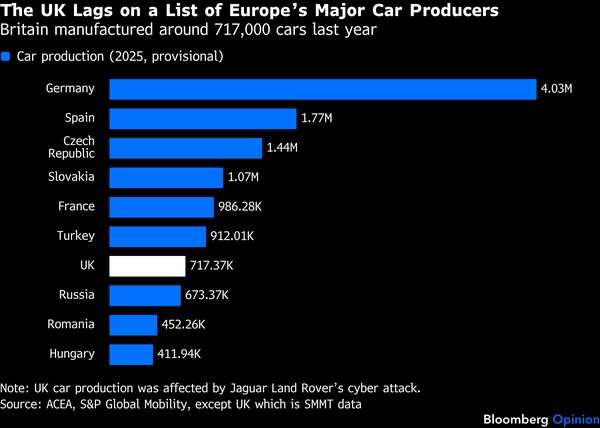
尽管英国无疑在低产量豪华制造方面仍具优势,但留在英国的大规模制造商寥寥无几:名单领先者是日产、捷豹路虎汽车股份有限公司、Mini和丰田汽车公司。去年英国产量略高于70万辆汽车,这是自20世纪50年代以来的最低水平,而仅十年前这一数字仍为170万辆。
Although the UK undoubtedly retains an edge in low-volume luxury manufacturing, there aren't many large-scale manufacturers left in Britain: The list is led by Nissan, Jaguar Land Rover Automotive Plc., Mini and Toyota Motor Corp. Last year the UK made slightly more than 700,000 cars. That’s the fewest since the 1950s and compares with 1.7 million as recently as a decade ago.
被排除在布鲁塞尔《欧洲制造》立法之外将是另一次沉重打击。即便是在这样的情况下,奇瑞也可能难以证明在英国制造业进行大规模投资的合理性。咨询公司Arthur D. Little的首席顾问菲利普·塞德尔告诉我:“英国工厂需要具有竞争力的进入欧洲大陆市场的通道,才能实现经济可行生产所需的规模。”
Being shut out of Brussels’ Made in Europe legislation would be another heavy blow. Even Chery might struggle to justify substantial investment in UK manufacturing under those circumstances. “UK plants need competitive access to the continental European market to achieve the scale required for economically viable production,” Philipp Seidel, principal at consultancy Arthur D. Little, tells me.
当然,如果英国最终决定在关税问题上与布鲁塞尔保持一致,那么中国以自身关税进行报复的风险始终存在——其中包括捷豹路虎等豪华车企在内的公司将面临风险。
Of course, if Britain does end up aligning with Brussels on tariffs, there’s always a danger China retaliates with levies of its own — with luxury carmakers like JLR among those at risk.
但英国现在的损失比过去要小:捷豹路虎在中国的销量已经大幅下降,部分原因是北京降低了高端汽车的消费税门槛。
But the UK has less to lose than in the past: JLR’s China sales have already declined significantly, in part because Beijing lowered its consumption tax threshold for high-end cars.
作为夹在中国和欧盟势力范围之间的中等国家,英国可能被迫做出选择。
As a middle power caught between the Chinese and EU forcefields, Britain may be forced to choose.
无论结果如何,中国汽车注定会继续受到英国消费者的欢迎。它们的品牌如今已经耳熟能详且值得信赖,中国制造商拥有足够的财力来承担任何关税带来的大部分负担,就像它们在欧洲大陆上不得不做的那样。最近被问及关税风险时,捷酷英国区负责人显得相当从容。
Whatever the outcome, Chinese cars are bound to remain popular with UK consumers. Their brands are now familiar and trusted, and Chinese manufacturers have the financial wherewithal to absorb much of the burden of any tariffs, just as they’ve had to do on the continent. When asked recently about the risk of levies, Jaecoo’s UK boss sounded quite relaxed.
如果进口税有助于保护英国的制造业岗位,同时也能提升该国将来重新加入欧盟的可能性,那么为下一辆中国汽车多付一点钱可能是值得的。
If import taxes help preserve British manufacturing jobs, while also enhancing the country’s chances of someday rejoining the EU, then paying a bit more for your next Chinese auto might be worthwhile.