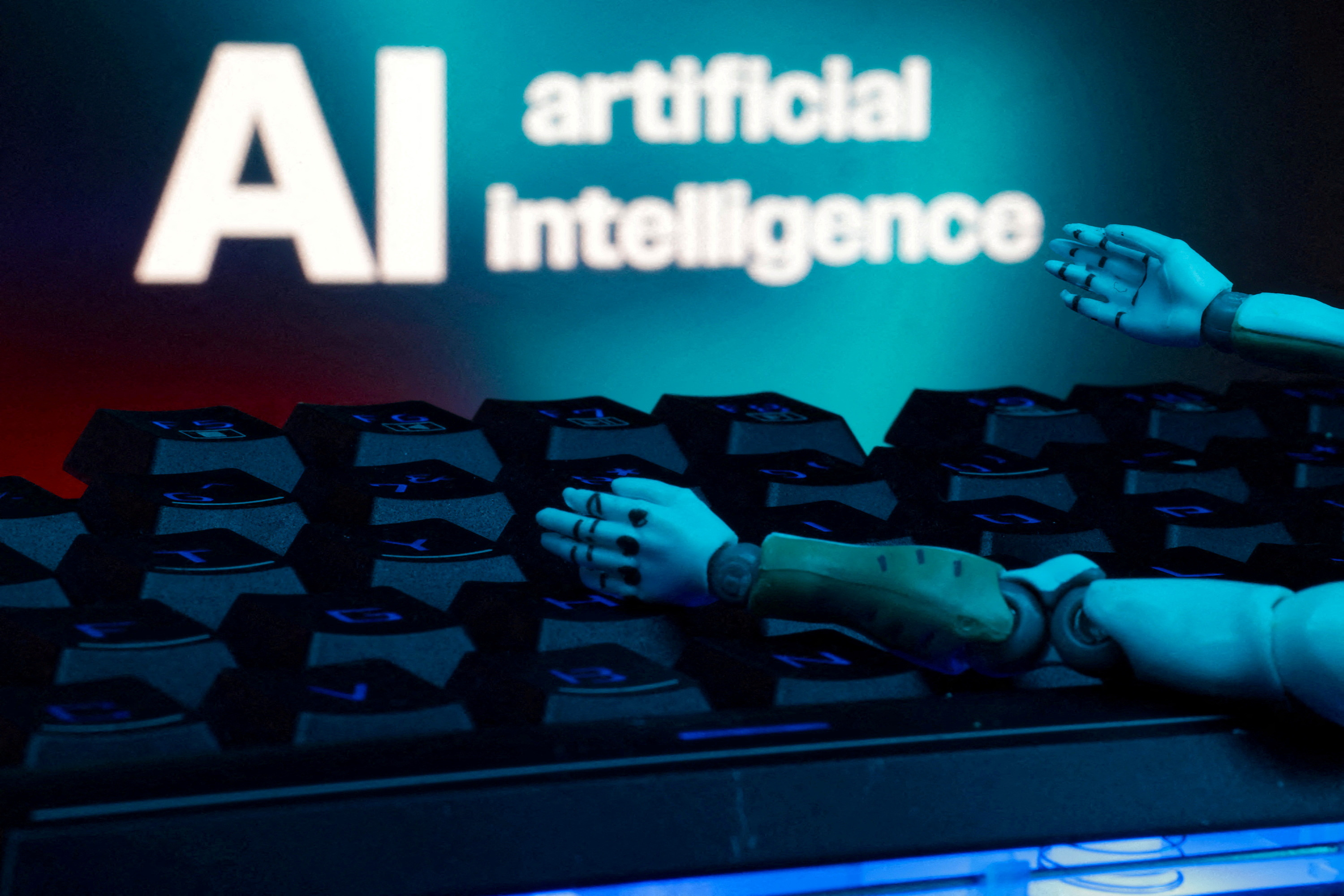
剥去AI这层“毯子”,你可能会发现经济的其他部分正在瑟瑟发抖。即便现实没有如此极端,最新的研究也表明,国家账户中AI带来的“热度”,在其他领域也伴随着“冷点”。
Strip away the AI blanket and you may find the rest of the economy shivering underneath. Even if the reality is less stark, the latest research shows AI heat in national accounts is mirrored by cold spots elsewhere.
毫无疑问,美国在AI投资、融资和基础设施建设方面的狂热繁荣,对整体国内生产总值(GDP)做出了重要贡献。
There's little doubt about the contribution to overall US gross domestic product from the frenzied boom in AI investment, financing and infrastructure building.
多数估算显示,过去两年约三分之一的经济增长源于AI的发展,而去年美国近四分之一的进口商品都与AI相关。
Most estimates show that about a third of economic growth over the past couple of years is due to the AI buildout, and almost a quarter of all US imports last year were AI-related goods.
此外,具体定义方式不同,AI相关股票目前约占标普500指数(.SPX)总市值的一半。
And, depending on how you define it, AI-related stocks now account for about half of the S&P 500 (.SPX) market capitalization.
但纽约联邦储备银行的经济学家朱利安·迪乔瓦尼本周指出,过去两年AI相关进口激增,却并未像预期那样显著扩大贸易和经常账户赤字。
But New York Federal Reserve economist Julian di Giovanni this week focused on the fact that the surge in AI-related imports over the past two years had not materially widened the trade and current account deficits, as might be expected.
在解释原因时,他从经常账户作为储蓄与投资平衡的角度切入,认为如果国内储蓄足以支撑额外投资,那么大规模的投资支出或科技设备进口的激增,未必会影响整体平衡。
In explaining why, he framed the issue in terms of how the current account is a balance of savings and investment, suggesting an investment spending spree or a jump in tech equipment imports need not affect the overall balance if domestic savings are sufficient to fund the additional investment.
用经济学术语来说,经常账户余额等于一国的总储蓄减去其国内总投资。
In economics terms, the current account balance is a country's gross savings minus its gross domestic investment.
回顾自新冠疫情以来过去六年的储蓄与投资情况可以发现,经常账户赤字确实在去年初之前有所扩大,但随后在特朗普政府上台后的一系列关税政策下逐渐收窄。
Mapping savings and investment over the past six years since the COVID-19 pandemic shows the current account gap did indeed widen up to early last year, but has since narrowed during a wave of tariffs from the incoming Donald Trump administration.
不过,迪乔瓦尼在“自由街经济学”博客中指出,近年来赤字扩大的主要原因在于储蓄下降,而非总投资支出的增加。
However, most of the widening deficit of recent years was due to a drop in savings rather than gross investment spending, di Giovanni points out in the Liberty Street Economics blog.
事实上,总投资占GDP的比重八年来基本未变,一直略低于22%,而且自2023年人工智能资本支出热潮真正兴起以来,也没有出现明显变化。疫情前五年,国内总投资平均占GDP的21.3%,而自ChatGPT发布引发这轮热潮以来的三年,这一比例为21.5%。
In fact, aggregate investment as a share of GDP has been basically unchanged for eight years at just under 22% and has shown no particular change since the AI capital expenditure boom took off in earnest after 2023. Gross domestic investment averaged 21.3% of GDP in the five years before the pandemic and 21.5% in the three years since the ChatGPT launch that sparked the frenzy.
迪乔瓦尼的主要观点是,尽管信息技术、设备和软件方面的投资有所增加,但已被其他领域的下降所抵消,包括2022年以来工厂建设的疲软、住宅投资,以及数据中心和技术设备以外的建筑和 equipment 支出。
Di Giovanni's main point is that while investment in information technology, equipment and software has risen, it has been offset by declines elsewhere, including weaker factory construction since 2022, residential investment and spending on structures and equipment outside data centers and technology equipment.
近年来家庭储蓄略有下降,部分原因是股票价值上升带来的财富效应,但其降幅远小于上世纪90年代末互联网泡沫扩张时期。与互联网时代不同,企业储蓄几乎没有下降,这很可能是因为迄今为止,承担大部分资本支出的超大规模企业动用了大量现金储备。
Household saving is down slightly in recent years, due in part to wealth effects from higher equity values, but it's fallen much less than it did during the dotcom expansion in the late 1990s. Business saving has barely fallen, unlike the dotcom era, and that's likely due to the drawdown so far of hefty cash positions by the hyperscalers doing the bulk of the capex.
政府“负储蓄”,即政府预算赤字的扩大,在过去几年中朝着相反的方向发展,这与上世纪90年代末的繁荣形成了另一个鲜明对比。
Government "dis-saving", or widening government budget deficits, has moved in the opposite direction over the past few years and marks another stark contrast to the late 1990s boom.
自疫情以来,经常账户赤字扩大了2.4个百分点,其中政府负储蓄占了1.75个百分点,私人储蓄下降贡献了约0.5个百分点,而企业投资几乎没有任何贡献。
Government dis-saving accounts for 1.75 points of the 2.4 percentage-point increase in the current account deficit since the pandemic, with falling private savings adding about half a point and business investment contributing next to nothing.
迪乔瓦尼总结道:“财政政策的变化一直是经常账户动态的主要驱动因素,私人储蓄的作用较小,投资渠道则没有明显影响。”他同时提醒,如果从现在起债务和股权融资支出加速,情况仍可能发生变化。
"Changes in fiscal policy have been the major driver of current account dynamics, with a smaller role played by private saving and no discernible investment channel," di Giovanni concluded, adding the caveat that a ramping up of debt- and equity-financed spending from here could yet change the picture.
然而,除了国际收支动态之外,一个显而易见的问题是:人工智能热潮究竟掩盖了多少相对疲软,而如果没有这轮热潮,经济和市场现在可能正在经历多大程度的周期性下行。
Beyond the balance of payments dynamics, though, the obvious question is just how much relative weakness the AI boom is covering up and how much of a cyclical downswing the economy and markets might now be suffering in its absence. With so much riding on AI delivering, the temptation is to treat it as "too big to fail."
由于太多东西都押注在人工智能能够兑现承诺上,人们很容易将其视为“大到不能倒”。但如果人工智能热潮突然放缓、融资出现意外或冲击,或者股市大规模抛售来袭,经济也会随之走下坡路——而这其中的原因并不难理解。
But if a sudden slowdown in the AI boom, an accident or shock in financing, or a massive stock sell-off were to hit, the economy would go south along with it — and it's not hard to see why. Enjoying this column? Check out Reuters Open Interest (ROI), your essential new source for global financial commentary. Follow ROI on LinkedIn, and