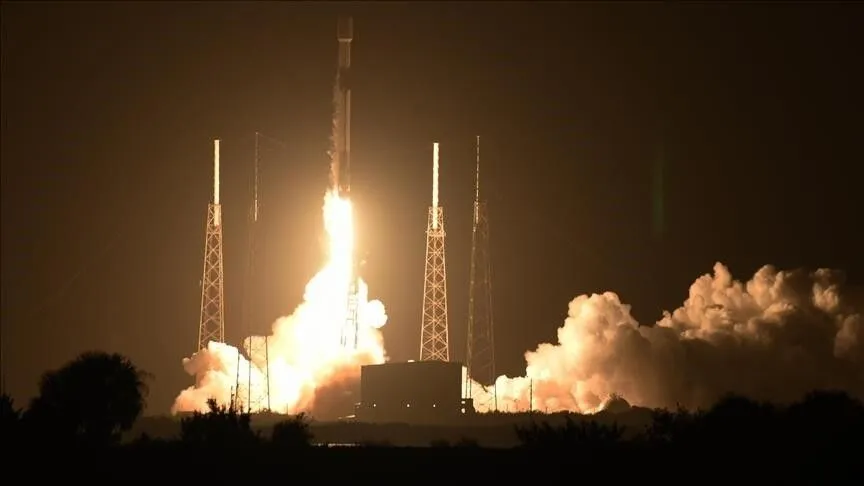
中国成功发射10颗卫星搭载朱雀-2E Y4运载火箭周三,包括八颗旨在提升轨道人工智能计算能力的卫星。
China successfully launched 10 satellites aboard a Zhuque-2E Y4 carrier rocket Wednesday, including eight designed to advance artificial intelligence computing capabilities in orbit.
火箭于当地时间下午7点40分(格林尼治标准时间1140)从中国西北部东风商业航天创新试点区发射升空,将全部10颗卫星送入预定轨道,据国家通讯社新华社报道。
The rocket lifted off at 7.40 pm local time (1140GMT) from the Dongfeng commercial space innovation pilot zone in northwestern China, placing all 10 satellites into their designated orbits, according to state-run Xinhua News Agency.
八颗卫星属于“星算”项目第二组,由中国商业航天公司ADAspace研发。
Eight satellites belong to the second group of the "Star Compute" project, developed by Chinese commercial aerospace company ADAspace.
卫星设计用于黎明-黄昏轨道运行,搭载高性能计算系统、激光通信设备和低光照摄像头。
Designed to operate in dawn-dusk orbits, the satellites carry high-performance computing systems, laser communication equipment, and low-light cameras.
它们将测试多项先进技术,包括10,000瓦液冷系统、大型可展开冷却结构、空间激光通信网络以及在轨道上直接训练AI基础模型。
They will test advanced technologies, including 10,000-watt liquid-cooling systems, large deployable cooling structures, space-based laser communication networks, and the training of AI foundation models directly in orbit.
ADAspace表示,此次任务将有助于加速空间计算技术的发展及商业应用。
ADAspace said the mission would help accelerate technological development and commercial applications of space-based computing.
公司计划建立一个由2,800颗计算卫星组成的轨道AI基础设施网络。
The company plans to establish an orbital AI infrastructure network comprising 2,800 computing satellites.
首批12颗卫星于2025年5月发射。今年1月,公司宣布已在其轨道计算网络上部署阿里巴巴通义千问3 AI模型,实现空间直接AI处理。
The first group of 12 satellites was launched in May 2025. In January, the company announced it had deployed Alibaba's Qwen3 AI model aboard its orbital computing network, enabling AI processing directly in space.
公司计划到2030年建成1,000颗卫星网络,到2035年完成更大规模星座。
The company aims to establish a 1,000-satellite network by 2030 and complete the larger constellation by 2035.