越来越多在灰色地带活动且“基本不受惩罚”的行为日益被归咎于俄罗斯在人们对俄罗斯打击北约领土的担忧加剧之际,北约最高指挥官明确阐述了任何直接袭击的后果,并于周一承诺“我们将战斗”。但属于北大西洋公约组织(北约)的国家已经在应对一种更难打击的威胁,这种威胁正日益肆无忌惮地在其上空盘旋。
Growing numbers operating in grey zone with 'substantial impunity' increasingly blamed on Russia As concerns rise about a Russian strike on NATO territory, the alliance’s top commander spelled out the consequences of any direct attack, promising Monday that “we will fight.”But countries belonging to the North Atlantic Treaty Organization (NATO) are already contending with a menace that is much harder to fight and is increasingly stalking their skies with impunity.
疑似俄罗斯无人机屡次进入北约东翼的领空(如罗马尼亚和波兰),该组织的战机已多次紧急起飞以阻截可能的袭击。
Suspected Russian drones have repeatedly entered NATO airspace on its eastern flank, in countries like Romania and Poland, and the organization's jets have scrambled multiple times to head off a possible attack.
但也有成百上千架暧昧不明的无人机,越来越多地被发现在远至德国、比利时和法国等北约国家的敏感地点(如军事基地、核电站和机场)上空盘旋,导致机场陷入混乱并暴露出防御漏洞。
But there are also hundreds and hundreds of ambiguous drones that have been increasingly spotted over sensitive sites — military bases, nuclear power plants and airports — in NATO countries as far west as Germany, Belgium and France, causing disruptions at airports and exposing gaps in defence.
这具有蓄意制造恐惧和不确定性的蓄意行动的特征——而且这个问题似乎正在恶化。
It has the hallmarks of a deliberate campaign to stoke fear and uncertainty — and the problem appears to be growing.
例如,加拿大广播公司新闻(CBC News)获悉,自2025年1月以来,德国当局已经记录了1,000多起可疑的无人机相关事件。根据该国联邦刑事警察局的数据,在“关键基础设施、军事设施和国防企业”上空,平均每天大约发生1.5起此类事件。
German authorities, for instance, have clocked more than 1,000 suspicious drone-related incidents since January 2025, CBC News has learned. That's about 1.5 incidents a day on average over “critical infrastructure, military facilities and defence companies,” according to the country's Federal Criminal Police Office.
与此同时,根据加拿大广播公司新闻从该国空中交通管制当局获得的一份报告,今年1月至8月期间,德国机场或其领空共发生了261起与无人机相关的干扰事件,同比增加了80%。
Meanwhile, there were 261 overall drone-related disruptions at German airports or in its airspace between January and August, an 80 per cent year-over-year increase, according to a report obtained by CBC News from the country's air traffic control authority.
防务专家表示,在欧洲各地屡次被发现的神秘无人机很难被探测和拦截,因此也很难将其归咎于某方。但综合来看,由此显现的模式强烈表明,它们是俄罗斯混合战争行动的一个组成部分。
The mysterious drones repeatedly spotted across Europe are difficult to detect and intercept and, as a result, hard to attribute. But taken together, the pattern that emerges strongly suggests they are one element of a Russian hybrid campaign, say defence experts.
乌尔丽克·弗兰克是欧洲对外关系委员会的高级政策研究员。(加拿大广播公司)欧洲最顶尖的无人机专家之一乌尔丽克·弗兰克在巴黎接受采访时表示:“绝对数量有所增加。”
Ulrike Franke is a senior policy fellow at the European Council on Foreign Relations. (CBC)“There is an increase in the absolute number,” said Ulrike Franke, one of Europe’s foremost drone experts, in an interview from Paris.
“而且我可以确信地说,这极有可能、甚至是必然与俄罗斯对欧洲的侵略、俄罗斯对乌克兰发动的战争以及它视自身与西方之间进行的战争有关。”混合战争多年来,欧洲各地一直发生神秘的无人机相关事件,引发了外界对隐蔽式“混合战争”的指控,这意味着用非常规手段破坏对手,且未达到公开战争的门槛。但此类事件在去年秋天激增,目前似乎又呈上升趋势。
“And I'm comfortable to say that it is very likely, if not certainly, linked to Russian aggression towards Europe, and the war that Russia is waging against Ukraine and the war it sees itself in against the West." Hybrid warfare Mysterious drone-related incidents have occurred over Europe for years, prompting accusations of a below-the-radar “hybrid warfare,” meaning non-conventional means of undermining an adversary, staying below the threshold of an open war. But such incidents spiked in number last fall and now again appear to be on the rise.

一位发言人告诉加拿大广播公司新闻部,挪威今年迄今已发生300多起事件,导致6次机场运行中断。据报道,在英国,军事基地附近的无人机事件在过去一年中翻了一番。而在比利时,根据一家媒体的报道,敏感地点附近发生了150起事件。
Norway has seen more than 300 occurrences so far this year, leading to six airport interruptions, a spokesperson told CBC News. In the U.K., drone incidents near military bases have reportedly doubled over the past year. And in Belgium, there were 150 incidents over sensitive sites, per one media report.
9月12日,一起疑似无人机目击事件再次导致布鲁塞尔机场航班中断。一周后,另一起事件导致卢森堡机场的19个航班改道,影响了近2,000名乘客。四天后,柏林主要机场在北跑道上方发现无人机后关闭。
On Sept. 12, a suspected drone sighting again interrupted flights at Brussels Airport. A week later, another diverted 19 flights from Luxembourg Airport, affecting nearly 2,000 passengers. Four days later, Berlin’s main airport was shut down after a drone was spotted over its north runway.
欧洲议会及其安全防务委员会成员、比利时前首相埃利奥·迪吕波在接受采访时表示:“这是混合战争。”
“It's hybrid warfare,” Elio Di Rupo, a member of the European Parliament and its security defence committee, and a former Belgian prime minister, said in an interview.
“这不仅是无人机战,还有网络攻击。综合在一起,这是一场真正的战争,但除了无人机之外,我们谁也看不见。”
“It’s not only the drone war, but cyber attacks. And all together, it’s a real war, but we don’t see nobody, except indeed the drones.”Elio Di Rupo spoke with CBC News in Mons, Belgium, about what he says is a new kind of war. (David Iacoluccio/CBC) Exact numbers are hard to come by, making it a challenge to connect the dots across Europe.
埃利奥·迪吕波在比利时蒙斯接受加拿大广播公司新闻部采访,谈论他所说的这场新型战争。(大卫·亚库鲁乔 / 加拿大广播公司)确切数字很难获得,这使得将全欧洲的这些事件串联起来成为一项挑战。
CBC reached out to 11 national air traffic authorities, several EU organizations, research institutes and think-tanks as well as NATO.

加拿大广播公司联系了11个国家的空中交通管理机构、数个欧盟组织、研究机构和智库以及北约。
NATO refused a request for a tally, referring CBC News to national authorities instead, which have various mechanisms to track data. European Union organizations were also unable to provide data, pointing out that defence is a national domain.
北约拒绝了提供统计数字的请求,并将加拿大广播公司新闻部转而求助于各国当局,这些当局拥有不同的数据追踪机制。欧盟组织也无法提供数据,并指出国防属于国家管辖范畴。
In one snapshot, the International Institute for Strategic Studies (IISS) reported 144 suspicious drones flew over sensitive sites with “substantial impunity" in a dozen NATO countries over 18 months ending in February.
在一份概况报告中,国际战略研究所报告称,截至2月份的18个月里,有144架可疑无人机在十几个北约国家的敏感上空“几乎完全不受惩罚地”飞过。
The report adds they were likely launched from a Russian “shadow fleet” — tankers and other vessels that the country uses to clandestinely evade sanctions and export oil.
报告补充说,它们可能是从俄罗斯的“影子舰队”上发射的——这是该国用来秘密规避制裁和出口石油的油轮及其他船只。俄罗斯一再拒绝所有此类指控。
Russia has repeatedly rejected all such accusations.
这张摄于2025年10月法国海岸附近的照片显示了来自俄罗斯所谓“影子舰队”的“博拉凯”号油轮,该油轮涉嫌参与了丹麦上空的无人机飞行。
This photo taken in October 2025 off the coast of France shows the tanker Boracay from Russia's so-called 'shadow fleet' suspected of being involved in drone flights over Denmark.

国际战略研究所报告的作者指出,他们的论点并不是每一次无人机目击事件都是俄罗斯所为,而是整体模式无法通过人为失误或错误部署的业余无人机等其他方式“得到充分解释”。
The authors of the IISS report point out their argument is not that every drone sighting was Russian, but that the overall pattern “cannot be adequately explained” by other means such as human error or hobby drones deployed incorrectly.
报告还指出,即使拥有大量无害的无人机,“(从分析角度来看)也完全符合俄罗斯的作战构想:即构建一个充满模糊性的环境”,在这个环境中,真正的入侵很难与其他人区分开来。
It also says that even having a large number of benign drones is, "if anything, analytically consistent with Russian operational design: engineering an environment of ambiguity," where real incursions are hard to distinguish from others.
弗兰克认同正是这种模式说明了俄罗斯的参与:无人机的类型、一天中的时间、它们的行动。她还赞同不确定性本身就是目的。
Franke agrees it’s the pattern that speaks to Russia’s involvement: the type of drones, the time of day, their movements.
她表示:“俄罗斯受益于我们的歇斯底里,并且它受益于这样一个事实,即无论如何都会出现无人机目击事件。”
She also concurs that the uncertainty is the point.
“这就是这类混合攻击的绝妙之处,它们极难归咎,会有误报……而且它们效果极佳,在开放的民主社会中极难应对。”
“Russia benefits from our hysteria, and it benefits from the fact that of course there are going to be drone sightings, no matter what,” she said.
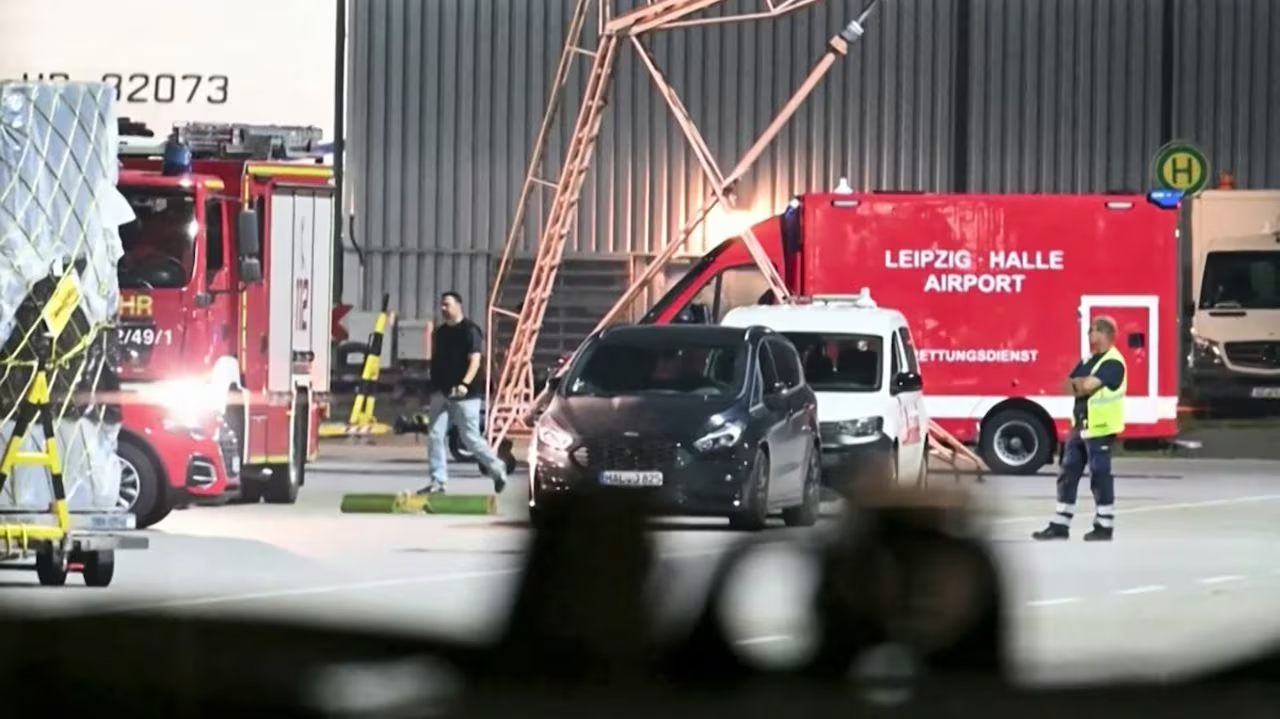
转折点出现在8月4日。当时在德国莱比锡/哈雷机场(Leipzig/Halle Airport),人们发现了一架载有爆炸物的定制无人机,这架无人机停在一架乌克兰安东诺夫货机附近,该机场被用作对乌支援的中转枢纽。8月5日,一架乌克兰安东诺夫货机停在莱比锡/哈雷机场。
“This is the kind of genius of these hybrid attacks that it is so difficult to attribute, that there will be false positives… and [they] work so well, and are so difficult to deal with in open, democratic societies.”Turning point A turning point came on Aug. 4, with the discovery of a custom-built drone carrying explosives near a Ukrainian Antonov cargo plane at Germany's Leipzig/Halle Airport, which is used as a hub for support sent to Ukraine.
德国的调查得出结论,这架无人机是指向俄罗斯卷入的铁证。据报道,自那以后,通过这架无人机获取的信息也一直是绘制其他不断升级的混合行动地图并将它们与俄罗斯情报部门联系起来的关键。
A Ukrainian Antonov cargo plane stands at Leipzig/Halle Airport on Aug. 5.
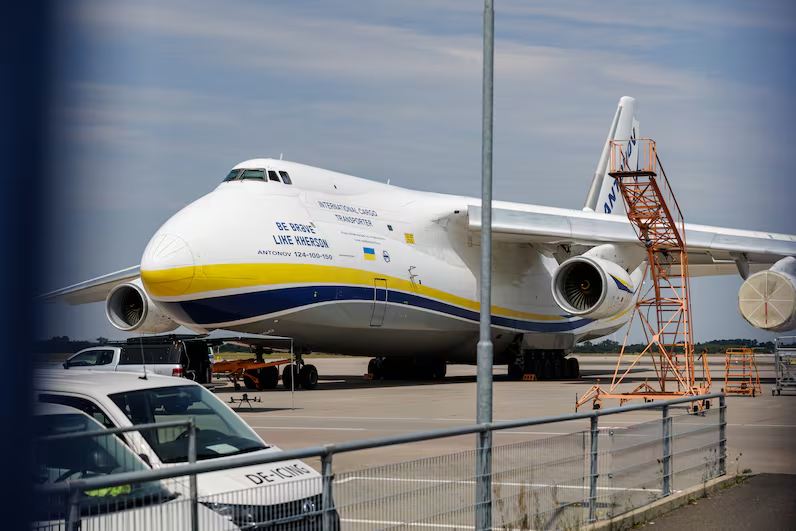
自2022年2月俄罗斯对乌克兰发动全面入侵以来,这起被挫败的莱比锡袭击事件是此类危险企图深入北约领土的最远的一次。
German investigations concluded that the drone was hard evidence pointing to Russian involvement. The information the drone made possible has also reportedly since been key to mapping other escalating hybrid operations and connecting them to Russian intelligence.
布鲁塞尔埃格蒙特皇家国际关系研究所“欧洲在世界”项目副研究员米歇尔·哈斯(Michelle Haas)表示:“这告诉我们,俄罗斯绝对在针对支持乌克兰的国家和公司。”
The foiled Leipzig attack was the furthest into NATO territory such a dangerous attempt has been made since Russia began its full-scale invasion of Ukraine in February 2022.
“其中一个主要目标是进入我们的脑海,让我们相信支持乌克兰的代价太高了。”
“It tells us that Russia is definitely targeting countries and companies that are supporting Ukraine," said Michelle Haas, an associate fellow in the Europe in the World programme at Egmont Royal Institute for International Relations in Brussels.
米歇尔·哈斯是根特国际与欧洲研究所的博士研究员。(David Iacolucci/CBC)莱比锡事件还吸引了欧洲的注意力,并迫使各方做出协调一致的反应,包括对俄罗斯采取外交和经济措施。包括加拿大在内的其他欧盟国家和北约盟友发表了支持德国并警告俄罗斯的声明。
"And one of the main goals is to get into our minds and make us believe that the cost of supporting Ukraine is too high." Michelle Haas is a PhD researcher at the Ghent Institute for International and European Studies. (David Iacolucci/CBC) The Leipzig incident also focused European attention and forced a co-ordinated response that included diplomatic and economic measures against Russia. Other EU countries and NATO allies including Canada issued statements of support for Germany and admonitions of Russia.

“莱比锡标志着在欧盟领土上直接归咎于俄罗斯的新升级,但这属于日益危险的更广泛事件模式的一部分,”欧洲委员会主席乌尔苏拉·冯德莱恩当时表示,暗示了俄罗斯在大局中的责任。
"Leipzig marks a new escalation on European Union soil directly attributed to Russia, but it is part of a broader pattern of increasingly dangerous incidents," said European Commission President Ursula von der Leyen at the time, hinting at Russia’s culpability in the bigger picture.
欧洲领导人起初因担心升级而不愿明确将矛头指向俄罗斯,如今似乎越来越愿意这样做。然而,如何威慑和击退未来类似袭击仍然是一个悬而未决的问题。
Initially reluctant to explicitly point the finger at Russia out of concern about escalation, European leaders now appear to be increasingly willing to do so. How to deter and repel future similar attacks, however, is still an open question.
冯德莱恩承认,此类事件很可能成为欧洲的“新常态”。不过,哈斯表示,必须“非常认真地”对待这些事件。
Von der Leyen acknowledged such incidents may well be “the new normal" in Europe. Still, Haas said, they must be taken “very seriously."
她表示,应该更好地保护关键基础设施。欧洲领导人还必须让公众为更多袭击做好准备,同时又不能引起恐慌,还要“非常明确地表明有事情正在发生”。
Critical infrastructure should be protected better, she said. And European leaders must also prepare the public for more attacks without causing alarm, while being “very clear that there is something happening.”
“这也是一个关于以下方面的问题:我们如何确保不让此事使我们极化或破坏我们的稳定?因为这也是目标的一部分。”
“It’s also a question about: how do we make sure we don’t let this polarize us or destabilize us? Because that’s also part of the goal.”