在以色列对加沙的种族清洗战争期间,欧洲的立场在一定程度上保持一致。
Throughout Israel’s genocidal war on Gaza, Europe’s position has, to an extent, been aligned.
西班牙和爱尔兰共和国等例外国家长期以来在谴责以色列方面更为激烈,但总体而言,从对以色列的无条件团结转向对其行为的担忧,这一转变已在大陆的大部分地区形成。
Outliers such as Spain and the Republic of Ireland have long been more vocal in condemning Israel, but overall, the shift from unconditional solidarity with Israel to concern over its conduct has taken hold in much of the continent.
在巴尔干半岛,专家指出,各国对以色列的截然不同政策反映的是国内考量、交易型外交以及未解决的身份政治,而非对中东的共同愿景。
Across the Balkans, divergent policies towards Israel reflect domestic calculations, transactional diplomacy, and unresolved identity politics rather than a shared vision for the Middle East, according to experts.
“巴尔干国家几乎没有共同立场,因此它们对以色列和加沙的立场五花八门并不奇怪,”国际危机组织分析师马尔科·普雷莱(Marko Prelec)告诉Al Jazeera。“每个国家都各自为政。”普莱尔指出,虽然各国对以色列在加沙的政策表达真正的厌恶,并对巴勒斯坦人——尤其是波斯尼亚穆斯林——抱有同情,但该地区的大多数国家其立场主要基于无关的利益。
“The Balkan countries have almost no common positions at all, and so it’s not surprising their positions towards Israel and Gaza are all over the map,” Marko Prelec, analyst at the International Crisis Group, told Al Jazeera. “Each country goes its own way.”Prelec noted that while there is genuine revulsion towards Israeli policy in Gaza and sympathy for Palestinians – particularly among Bosnian Muslims – most countries in the region take their positions based on unrelated interests.
奥地利格拉茨大学东南欧历史与政治学教授弗洛里安·比伯(Florian Bieber)表示,区域共识几乎不可能实现。
Florian Bieber, professor of Southeast European history and politics at Austria’s University of Graz, said regional consensus is nearly impossible.
“以色列的立场深受国内政治和民族叙事的影响,这使得区域或甚至国家层面的立场变得不太可能,”比伯告诉Al Jazeera。
“The position towards Israel is strongly shaped by domestic politics and also national narratives, which makes a regional or even a country-specific position unlikely,” Bieber told Al Jazeera.
波黑与黑塞哥维那:各实体差异显著 这种碎片化在波黑与黑塞哥维那最为明显,加沙战争加剧了既有的种族-民族分歧。
Bosnia and Herzegovina: Differences from one entity to another Nowhere is this fragmentation more evident than in Bosnia and Herzegovina, where the war in Gaza has deepened existing ethno-national divisions.
波黑政治代表以及联邦地区的大部分公众表达了对巴勒斯坦人的强烈 solidarité,而 Republika Srpska 的领导人则公开亲以色列,部分克罗地亚政治人物也采取了更为亲以色列的态度。
Bosniak political representatives and much of the public in the Federation of Bosnia and Herzegovina have expressed strong solidarity with Palestinians, while leaders in Republika Srpska have been openly pro-Israel, and some Croat political figures have also adopted a more sympathetic tone towards Israel.
“波希米亚人对巴勒斯坦人的团结不仅仅是从意识形态的角度来看,还体现在战争视角以及作为塞族民族主义侵略的受害者的角度上,将巴勒斯坦人的经历与1990年代波希米亚人的经历进行比较,”比尔贝尔(Bieber)解释道。
“Bosniak solidarity with Palestinians is often seen not just through an ideological lens, but also from the perspective of war and being a victim of Serb nationalist aggression, comparing the Palestinian experience with the Bosniak experience in the 1990s,” Bieber explained.
相反,在塞族多数实体——塞尔维亚共和国(Republika Srpska)的领导人,前总统米洛拉德·多迪克(Milorad Dodik)公开拥抚以色列。
Conversely, leaders in the Serb-majority entity, Republika Srpska, led by former President Milorad Dodik, have openly embraced Israel.
外交政策分析家、记者博斯科·雅克斯(Bosko Jaksic)在接受阿尔·贾泽拉(Al Jazeera)采访时表示,对于多迪克而言,“我的敌人的敌人是我的朋友——犹太人和东正教塞尔人对抗穆斯林。这种宗教和民族因素使他能够在与俄罗斯保持亲密的同时,保持与以色列的联系,并通过赞扬[美国总统]唐纳德·特雷勒(Donald Prelec)来执行新的美国策略。”
特雷勒补充说,塞尔维亚的塞族对以色列以及具体的以色列执政党——利库德(Likud)的接触,是“在其在国际上不受欢迎的分离主义亲近行动中寻找盟友的尝试,以及间接加强与‘美国优先’(MAGA)运动部分势力以及特朗普政府的联系”。
Foreign policy analyst and journalist Bosko Jaksic told Al Jazeera that for Dodik, “The enemy of my enemy is my friend – Jews and Orthodox Serbs against Muslims. This religious and ethnic factor allows him to maintain an Israeli connection parallel to his closeness with Russia, while simultaneously performing a new American flip by glorifying [US President] Donald Trump Prelec added that Bosnian Serb outreach to Israel and specifically Likud, the ruling Israeli party, represents “an attempt to find allies for its internationally unpopular flirtation with separatism, and an indirect way to strengthen ties with parts of the MAGA [Make America Great Again] movement and the Trump administration”.
塞尔维亚:武器销售与多元平衡 在塞尔维亚,对以色列的态度将国防经济与外交政策相结合。
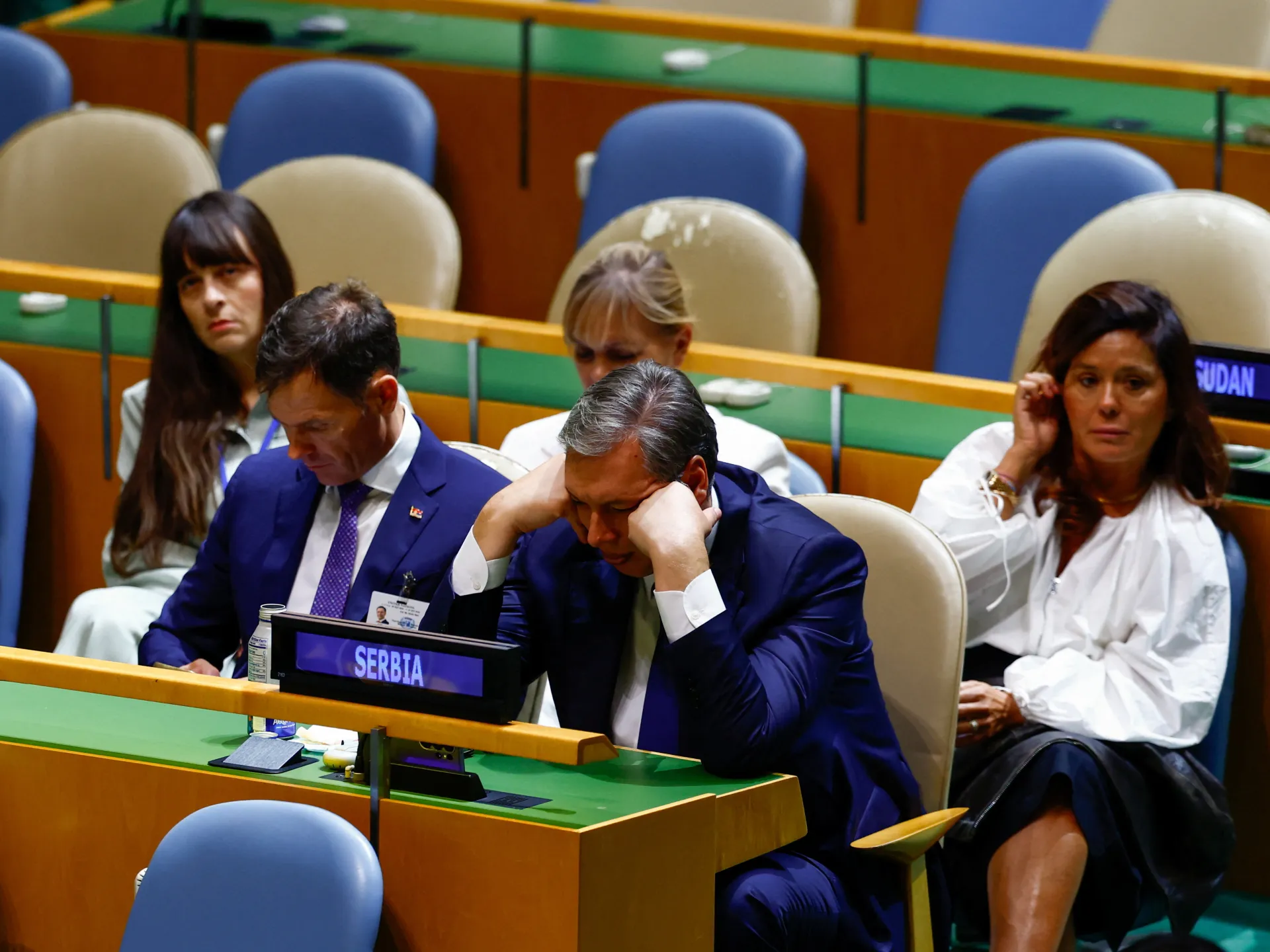
Serbia: Arms sales and multi-vector balancing In Serbia, the approach to Israel blends defence economics with foreign policy.
尽管塞尔维亚与巴勒斯坦关系传统友好,并曾在国际组织中投票支持巴勒斯坦的会员资格,但自2023年10月以来,贝尔格莱德已向以色列出口弹药和武器。
Despite historically friendly relations with Palestine and voting in favour of Palestinian membership in international bodies, Belgrade has exported ammunition and arms to Israel since October 2023.
该关系也已超出贸易范围。去年9月,塞尔维亚开设了一家与以色列关联的无人机组装厂,凸显了双边国防合作日益实际化的层面。
The relationship has also moved beyond exports. In September, Serbia opened an Israeli-linked drone assembly plant underlining the growing practical dimension of bilateral defence cooperation.
圣诺维奇(Sanovic),伦敦国王学院外交政策与大略研究讲师,在接受阿尔·贾泽拉采访时表示,塞尔维亚的国防产业“在客户选择上并不挑剔,追求利润的欲望也是其中之一”。他强调,塞尔维亚拥有更广泛的地缘政治野心。
sanovic, lecturer in foreign policy and grand strategy at King’s College London, told Al Jazeera that Serbia’s defence industry “has not been particularly picky when it comes to its customers, and the desire for profit has been one of the factors”. However, he emphasised broader geopolitical ambitions.
“在过去三年里,在安全合作方面出现了对以色列倾斜的情况,而在外交上,由于塞尔维亚与更广阔的伊斯兰世界有联系,它在多边机构中试图保持谨慎,”他说。
“In the past three years, there has been a tilt towards Israel regarding security cooperation, while diplomatically Serbia tries to be cautious in multilateral institutions due to its ties with the wider Islamic world,” he said.
武克萨诺维奇指出,贝尔格莱德将以色列视为一个伙伴,以“获得以色列游说团体的保护以及进入美国特朗普政府的渠道”,尤其是在塞尔维亚政府面临国内政治反对的情况下。与此同时,雅克西奇警告了其中涉及的国际风险。
Vuksanovic noted that Belgrade views Israel as a partner to “acquire the protection of Israeli lobby groups and access to the Trump administration in the US”, especially as the Serbian government faces domestic political opposition. Meanwhile, Jaksic warned of the international risks involved.
“由于在加沙战争期间对以色列的弹药出口显著增加,塞尔维亚面临被指控共谋种族灭绝的风险,”他说。“除了财务计算之外,塞尔维亚总统试图通过与其意识形态、专制和民族主义盟友——[以色列总理]本雅明·内塔尼亚胡的亲近,来接近特朗普。”科索沃、阿尔巴尼亚以及华盛顿的科索沃和阿尔巴尼亚,对以色列的外交政策仍然与华盛顿的安全联盟保持一致。
“Due to the significant increase in ammunition exports to Israel during the war in Gaza, Serbia risks being accused of complicity in genocide,” he said. “Beyond financial calculations, the Serbian president attempts to use closeness with his ideological, authoritarian, and nationalist ally, [Israeli Prime Minister] Benjamin Netanyahu, to get closer to Trump.”Kosovo, Albania, and the Washington anchor Kosovo and Albania, foreign policy regarding Israel remains anchored to security alliances with Washington.
根据2020年华盛顿协议,科索沃以换取以色列承认其独立为条件承认了以色列,随后在耶路撒冷开设了其大使馆。塞尔维亚曾在2020年承诺将其大使馆迁至耶路撒冷,但最终并未这样做。
Under the 2020 Washington Agreement, Kosovo recognised Israel in exchange for Israeli recognition of Kosovo’s independence, subsequently opening its embassy in Jerusalem. Serbia, which had pledged in 2020 to move its embassy to Jerusalem, ultimately did not do so.
普里什蒂纳在耶路撒冷开设大使馆“挑战了更广泛国际社会的立场”,雅克西奇说。
Pristina opened its Jerusalem embassy “defying the stance of the wider international community”, said Jaksic.
“以色列在西巴尔干地区的影响力日益增长是显而易见的,”他指出。“这包括投资,而在塞尔维亚的情况下,尤其是军事合作。这绝对不排除个人试图通过购买政治豁免权来规避美国制裁,或缓解外交压力的尝试。”在邻国阿尔巴尼亚,总理埃迪·拉马的政府一直保持着与以色列的温暖政治关系。
“Israel’s growing influence in the Western Balkans is evident,” he noted. “That includes investments, and in the case of Serbia, especially military cooperation. This absolutely does not exclude personal attempts to buy political impunity from American sanctions, or to ease diplomatic pressure.”In neighbouring Albania, Prime Minister Edi Rama’s government has preserved warm political ties with Israel.
部分原因是出于作战防御需求,阿尔巴尼亚在遭受网络攻击后加深了与以色列网络安全公司的合作,同时使其更广泛的外交政策与华盛顿和布鲁塞尔保持一致。
Driven partly by operational defence needs, Albania deepened cooperation with Israeli cybersecurity companies after cyberattacks, while aligning broader diplomacy with Washington and Brussels.
行政分歧和意识形态转变 在克罗地亚,由于保守派总理安德烈·普伦科维奇与社会民主党总统佐兰·米兰诺维奇之间出现尖锐的行政分歧,该国在加沙问题上的外交政策陷入瘫痪。
Executive rifts and ideological turnarounds In Croatia, foreign policy on Gaza has been paralysed by a sharp executive rift between conservative Prime Minister Andrej Plenkovic and President Zoran Milanovic of the Social Democratic Party.
普伦科维奇政府一直遵循谨慎的、主流的欧盟做法,而米兰诺维奇则公开谴责以色列在加沙的军事行动,称其行为不成比例,并在该国外交政策领导层中制造了公开的分裂。斯洛文尼亚北部则出现了意识形态的转变。
Plenkovic’s government has followed a cautious, mainstream European Union approach, while Milanovic has openly condemned Israel’s military conduct in Gaza, labelling it disproportionate and creating a public fracture in the country’s foreign policy leadership. Further north in Slovenia there are ideological shifts.
之前的中左翼政府曾采取针对以色列的强硬措施——例如实施武器禁运、禁止从非法定居点进口商品、禁止内塔尼亚胡等高级官员入境——同时承认巴勒斯坦国的地位。在总理耶内兹·扬萨领导下的保守派力量试图逆转这些政策。
The previous centre-left government adopted firm measures against Israel– such as an arms embargo, a ban on imports from illegal settlements, and a ban on the entry of top officials like Netanyahu – as well as recognising Palestinian statehood. Conservative forces under Prime Minister Janez Jansa have sought to reverse these policies.
“在斯洛文尼亚,我们可以看到典型的左右派分裂:民粹主义和极右翼政党因内塔尼亚胡作为类似的政治行为者而支持以色列,”比伯说。“他们将他视为意识形态上的一致,这有助于强化他们将伊斯兰视为威胁的观点,符合他们自己的叙事。” 安静的一致与战略联盟 黑山和北马其顿等较小的北约成员国选择了安静的一致路径。
“In Slovenia, we can see the classic left-right division where populist and far-right parties support Israel because of Netanyahu as a similar political actor,” said Bieber. “They recognise him as ideologically aligned, which helps reinforce their view of Islam as a threat, fitting their own narratives.”Quiet alignment and strategic alliances Smaller NATO members like Montenegro and North Macedonia have chosen a path of quiet alignment.
两国都遵循欧盟和北约的标准表态,呼吁停火和人道主义援助,同时谨慎避免高调的双边争端或大胆的独立外交倡议。
Both adhere to standard EU and NATO statements, calling for ceasefires and humanitarian aid while carefully avoiding high-profile bilateral disputes or bold independent diplomatic initiatives.
更往东,罗马尼亚和保加利亚保持着谨慎的基调,有时倾向于以色列。基于历史性的双边关系以及与美国的深度战略防御伙伴关系,布加勒斯特和索菲亚在联合国的措辞谨慎的声明与持续的军事和情报协调之间取得平衡。
Further east, Romania and Bulgaria maintain a cautious tone that sometimes leans towards Israel. Grounded in historic bilateral relations and deep strategic defence partnerships with the United States, Bucharest and Sofia balance carefully worded statements at the United Nations with ongoing military and intelligence coordination.
与此同时,在希腊,雅典连续的政府一直保持着与以色列的稳固战略军事和能源伙伴关系;雅典最近与以色列签署了一项价值35亿美元的导弹协议。该联盟最初与塞浦路斯一起建立,旨在平衡东地中海的地区海上竞争,尽管在加沙的人道主义危机引发了国内民众的强烈反对和抗议,但该联盟仍然保持稳固。
Meanwhile, in Greece, consecutive governments in Athens have maintained a robust strategic military and energy partnership with Israel; Athens recently signed a $3.5bn missile deal with Israel. Originally forged alongside Cyprus to balance regional maritime rivalries in the Eastern Mediterranean, this alliance has held firm despite significant domestic public backlash and protests over the humanitarian crisis in Gaza.
最终,巴尔干地区的不同反应表明,该地区的中东政策很少与中东本身有关。
Ultimately, the disparate responses across the Balkans demonstrate that Middle Eastern policy in the region is rarely about the Middle East itself.
无论是出于防御利润、宪法竞争,还是在华盛顿寻求政治支持的考量,地区行为体继续几乎完全从交易的角度看待以色列。
Whether driven by defence profits, constitutional rivalries, or the search for political backing in Washington, regional actors continue to view Israel almost exclusively through a transactional lens.