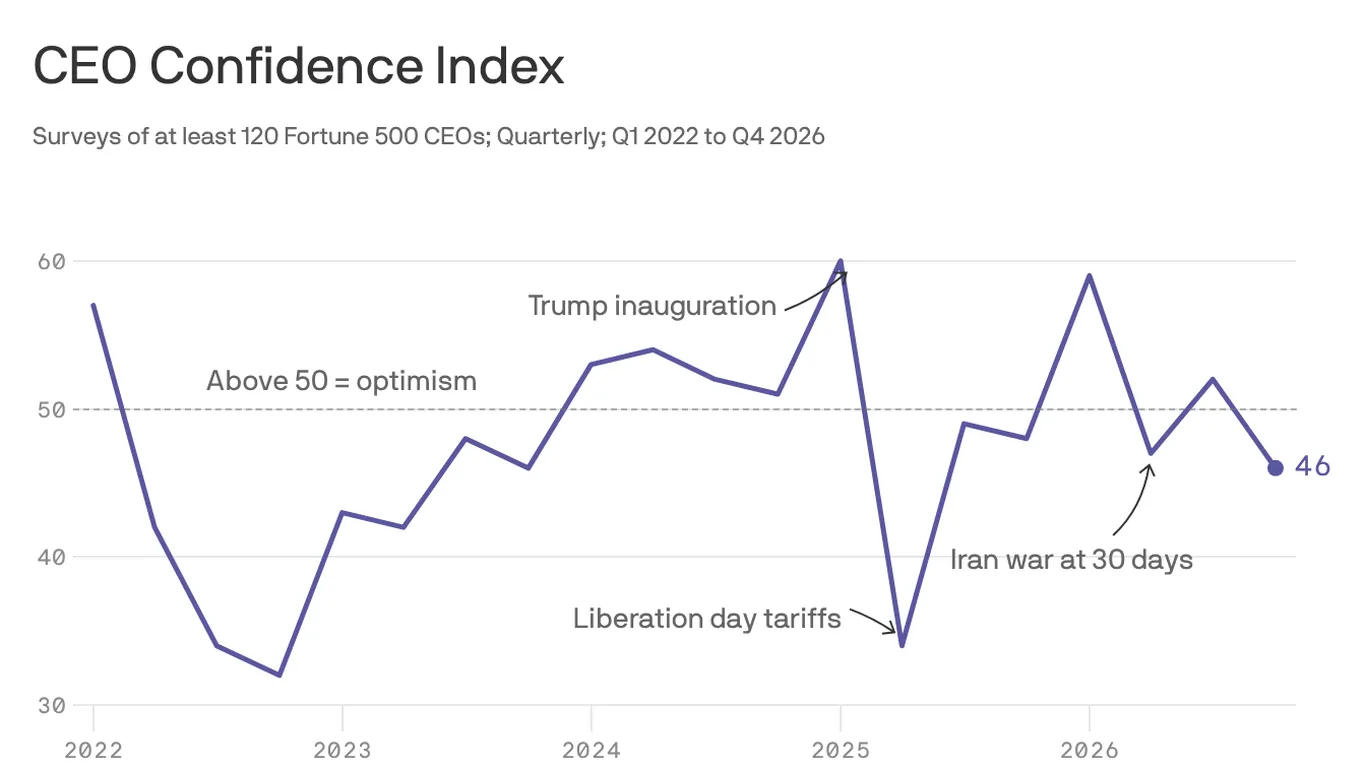
数据:The Conference Board 和 The Business Council;图表:Axios/Emily Peck 美国首席执行官对美国经济的信心本月早些时候跌入负值区间,这是 The Conference Board 周四早上发布的一项调查所发现的。
Data: The Conference Board and The Business Council; Chart: Axios/Emily Peck CEO confidence in the U.S. economy sank into negative territory earlier this month, finds a survey out Thursday morning from the Conference Board Why it matters:
为什么重要:企业领袖的想法与大多数消费者同步,而消费者对经济的看法如今甚至低于疫情期间 • 这种悲观情绪正在成为距离中期选举仅剩几周的一个关键议题。
Business leaders are mind-melding with most consumers, whose opinions on the economy are now lower than during the pandemic • Such sour sentiment is shaping up as a key issue in the midterms just weeks away. Where it stands:
现状:首席执行官信心指数在最近一期降至 46,而仅三个月前仍为 52 — — 任何低于 50 的数字都表示负面情绪。
The CEO Confidence Index fell to 46 in the most recent period, down from 52 just three months ago — any number below 50 connotes negative sentiment.
-
非营利组织 The Conference Board 和 The Business Council 对 2024 年 9 月 21 日至 10 月 5 日期间的 131 位《财富》500 强公司首席执行官进行了调查。
-
该调查衡量大型上市公司首席执行官对当前经济状况的感受,以及他们对未来六个月经济和自身行业前景的预期。
• The nonprofit Conference Board and the Business Council surveyed 131 Fortune 500 CEOs from Sept. 21-Oct. 5. • The survey measures how chief executives at major public companies feel about current economic conditions and their expectations for the economy and their own industries over the next six months.
数据说明: 41% 的首席执行官预计经济状况将恶化 — — 高于上一季度的 19%。
By the numbers: 41% of CEOs expected economic conditions to worsen — up from 19% in the previous quarter.
- 高管们对网络安全、人工智能和地缘政治的担忧相比三个月前显著上升。
• Executives' concerns over cybersecurity, AI and geopolitics rose significantly from three months ago.
- 94% 的首席执行官将网络安全威胁列为他们在人工智能相关问题上的首要担忧之一。
• 94% of CEOs cited cybersecurity threats among their top AI-related concerns. The surge in energy prices —
能源价格飙升 — — 尤其是柴油,它对公司的能源成本至关重要 — — 也导致了信心的下降,The Conference Board 首席经济学家 Dana Peterson 对 Axios 表示。
particularly diesel, which is crucial to companies' energy costs — also contributed to the fall in sentiment, Dana Peterson, chief economist at the Conference Board, tells Axios.
- “这些通胀冲击一个接一个地袭来,正在拖累首席执行官和消费者的信心,”她说。
• "All these inflationary shocks, one after the the other, is weighing down on the confidence of both CEOs and consumers," she says.
深层原因:当首席执行官情绪转暗时,主要的担忧是这种情绪会向经济蔓延,因为他们会削减支出和招聘。
Between the lines: The key worry when CEO moods darken is the spillover into the economy, as they pull back on spending and hiring.
现实检验:尽管他们的看法变得黯淡,但根据调查,首席执行官在大多数情况下仍然维持了他们的支出计划。
Reality check: Despite their dimming views, CEOs have for the most part maintained their spending plans, per the survey.
例如:另一项周四早上发布的调查也发现,89%的美国首席执行官表示,他们预计在未来三年内增加员工人数,因为人工智能将创造更多商业机会。
Case in point: A separate survey also out Thursday morning found that 89% of U.S. CEOs said they expected to increase headcount over the next three years as AI creates more business opportunities.
- “随着我们在流程和平台中加入更多人工智能,容量就会打开,”进行该调查的KPMG首席执行官蒂姆·沃尔什对Axios的纳森·博米说。
• "As we put more AI into our processes and platforms, the capacity opens up," Tim Walsh, the CEO of KPMG, which conducted the survey, told Axios' Nathan Bomey.
- “你看到的情况是,首席执行官们对能够真正扩大业务持乐观态度,这将导致他们拥有更大的员工队伍。”
• "What you're seeing there is CEOs being really optimistic that they can actually expand their business, which is going to result in a bigger workforce for them." The bottom line:
结论:首席执行官们对经济持悲观态度,但这种情绪尚未转化为对投资计划的显著削减。
CEOs are gloomy about the economy, but their dark mood hasn't yet translated into a meaningful pullback in investment plans.