10月6日2026年可能会被铭记为数学史上最重要的一天。开放美国前沿实验室发布了超过700篇学术论文,声称在372个长期困扰学者数十年的问题上取得了进展或解决方案。数学家们仍在努力消化这对其学科意味着什么。
CTOBER 6TH 2026 may be remembered as the biggest day in the history of mathematics. Open an American frontier lab, released more than 700 academic papers claiming progress or solutions for 372 problems that had baffled scholars for decades. Mathematicians are still struggling to digest what it means for their discipline.
其影响有望远超数学本身。是时候思考人工智能将如何影响整个科学领域了。这些数学成果同时代表着人类的一次飞跃;这是一项奇迹,凸显了人工智能突飞猛进的发展,也警示着一个未来——在那个未来中,对宇宙的理解可能属于人类无法穷尽的机器。问题在于:如何在不牺牲理解的前提下实现进步?
The implications promise to go far beyond maths. It is time to grapple with how artificial intelligence will affect science as a whole. The maths results are, simultaneously, a leap forward for humanity; a marvel that underscores the breakneck progress of and a warning of a future in which understanding of the universe could belong to machines that are impenetrable to human minds. The question is how to achieve progress without sacrificing understanding.
阅读我们 专题的其余内容:公司希望成为前沿科学研究者;数学的闪电战正将科学推向陌生的新领域;这将使从零开始设计和构建生物体成为可能;它能否帮助科学家处理文书工作?
Read the rest of our cover package companies want to become frontier scientific researchers s mathematics blitz pushes science into strange new territory will make it possible to design and build organisms from scratch Could help scientists with their paperwork?
数学之所以能如此生动地展现其科学潜力,是因为其证明源自公理而非经验证据,因此原则上可以机械验证。但正如我们在本周特别的《科学与技术》栏目中报道的那样,人工智能也在加速经验科学的进步,部分原因在于其他学科将数学作为工具来使用。
s have so vividly shown their scientific potential in maths because its proofs are derived from axioms, not evidence, and are therefore, in principle, verifiable mechanically. But as we report in our special Science & technology section this week, has also accelerated progress in the empirical sciences, partly because other fields use maths as a tool.
人工智能让天气预报变得更准确。它提出了数百万种潜在有用的新材料,并帮助控制核聚变实验。此外,它能够根据氨基酸序列预测几乎所有已知蛋白质的结构——这一进步曾荣获诺贝尔奖。
has made weather forecasts better. It has proposed millions of possible useful new materials and helped control experiments with nuclear fusion. And it can predict the shapes of almost every known protein from its constituent amino acids, an advance that won a Nobel prize.
可以预见,未来科学领域还将取得更多令人瞩目的进展。其中最令人兴奋的进展可能发生在生物学领域:研究人员正在努力培育抗旱作物、寻找新药物,并试图制造出能够攻击有害细菌的“友好型”病毒。同时,科学家们也在努力构建细胞运作的计算机模型。借助这些计算机模型,他们或许能够完全掌握生物学的原理,从而从零开始创造出全新的生物体。如果真的实现了这一点,那么这些新生物体或许就只不过是另一种可以被像计算机代码一样操控的“工具”罢了。
More remarkable fuelled scientific advances are almost certain. The most exciting possibilities are in biology Researchers are using to design drought-resistant crops, to search for new drugs and to create (we must hope) friendly viruses that attack harmful bacteria. There is an effort to use to build computer models of how cells work. Armed with life in silico scientists may go on to achieve mastery of biology, gaining the ability to create entirely new organisms from scratch. If so, would become just another form of computer code to be manipulated like a string of tokens in an model. Like much that is related to that prospect is giddying and terrifying in equal measure.
然而,这一前景既令人兴奋,也令人恐惧。许多数学家对此感到非常担忧:自 OpenAI 的突破性成果问世以来,他们一直强烈反对实验室对数学领域的入侵。由 900 多名学者组成的“人类数学协会”警告称:“数学家们从未要求进行这样的研究。”他们认为,数学研究的价值并不在于最终的证明结果,而在于研究过程中的努力本身——因为正是这种努力推动了人类对世界的理解。
The first reaction of many mathematicians is to be terrified. Since Open’s breakthroughs, they have been up in arms at the lab’s encroachment into their discipline. The Association for Human Mathematics, a group of over 900 scholars, warns that “mathematicians did not ask for this work to be done.”They say that the pay-off in doing mathematics comes not from the proof, but from the toil, because that is what advances human understanding.
如果只是机械地生成那些虽然正确但难以理解的答案,那就等于直接给学生提供了作业的答案;没有付出努力,就谈不上真正的学习。
Having s churn out incomprehensible but correct solutions is like giving students the answers to their homework: without effort, there is no learning.
这些抱怨其实带有某种“特殊诉求”的意味:学术界并没有比其他任何行业更多的权利来主导知识的产生过程。追求真理的利益惠及所有人,不应被某个特定的学者群体所垄断。那些通过证明某些理论而建立的学术等级制度其实并不神圣;如果必要的话,这些制度必须重新调整,以适应一个需要人类自己生成理论并加以理解的新世界。
These complaints contain an element of special pleading. Academics have no more right to dictate the production of knowledge than any other profession. Truth-seeking benefits everyone and cannot be reserved for a guild of scholars. The hierarchies of academics, climbed by proving things, are not sacred. If needs be, they must be remade for a world in which produces proofs and humans digest them.
在科学领域,理解过程本身应当比研究结果更加重要。每次我们服用扑热息痛来缓解头痛时,其实都是在依赖一种虽然有效但尚未被完全理解的机制。不过,将科学工作交给机器的担忧并非毫无根据。
In science, understanding should not be fetishised over results. Every time you swallow a paracetamol pill to see off a headache, you rely on a mechanism that works but is not fully understood. Yet the fear of handing over science to the machines is not an idle one.
公司投入资源进行科学研究,并非出于利他主义,而是因为,与人类一样,解决问题有助于让模型变得更智能。许多研究人员认为,一个在解决科学问题方面变得更出色的模型,在做其他事情时也会变得更出色。如果是这样,那么没有人能与大型实验室竞争,这些实验室最终将控制那些致力于自我改进、并按某些定义变得难以理解地智能的模型。这些天才科学家将通过人形机器人,或者将模型与实验室设备连接起来的方式,与物理世界接触,Anthropic 已经这样做了。
companies are ploughing resources into science not out of altruism but because, as with humans, solving problems can help make models more intelligent. Many researchers think that a model that gets better at solving scientific problems will get better at doing everything else, too. If so, then nobody will be able to compete with big labs, which will eventually control models that work on improving themselves and become, by some definitions, incomprehensibly intelligent. These genius scientists will connect to the physical world either through humanoid robots or by hooking up models to lab equipment, as Anthropic has already done.
这个未来对科学构成的问题,与其对社会构成的问题大体相同。人们将不得不向机器提供资源,以便它们能够继续取得进展。如果没有人理解它们在做什么,仅仅开出支票就是鲁莽的。没有人能确定这些模型是否在为人类的最大利益而行动。即使实验室能够让机器与人类的利益“保持一致”,从而可以完全信任,但一个人们在科学或更广泛的领域只是询问机器该做什么的社会,将是人类沦为机器宠物的社会。
The problem this future poses for science is much the same as the one it poses for society. People will have to provide resources to machines for them to continue to make progress. If no one understands what they are doing, simply writing the cheques would be reckless. Nobody could be sure that the models were operating in humanity’s best interests. Even if labs manage to “align” machines with the interests of humanity, so that they can be fully trusted, a society where people simply ask s what to do—in science, or more broadly—is one in which humans will become the machines’ pets.
有些人可能愿意接受这一点,如果这意味着,比如说,治愈所有疾病。但在机器与人类之间建立不可动摇的一致性之前,科学始终需要人类参与其中。实验室应该能够利用机器来解决问题,但实验室和计算能力等资源,应由能够对机器在做什么做出明智判断的人来指导和监控。这不可避免地会减缓进展。但如果机器要保持在人类的控制之下,这是必要的。
Some people may be willing to accept that if it means, say, curing all diseases. But at least until there is unshakeable alignment between s and humans, science will always need a human in the loop. Labs should be able to use s to solve problems, but resources such as laboratories and computing power should be directed and monitored by people who can reach an informed judgment about what s are doing. This will, inevitably, slow progress. But it is necessary if s are to remain under human control.
与此同时,由人类主导的机器科学将要求学者们重新定义各自的研究领域。科学家们必须学会欣然接受那些指导性模型,并重视对其研究成果的验证与教学工作——这些都应被视为值得推崇的学术行为。各国政府也需依据同样的标准来分配科研经费。各实验室则应努力成为负责任的科研机构,主动将研究成果提交同行评审,并公开其研究方法与代码。
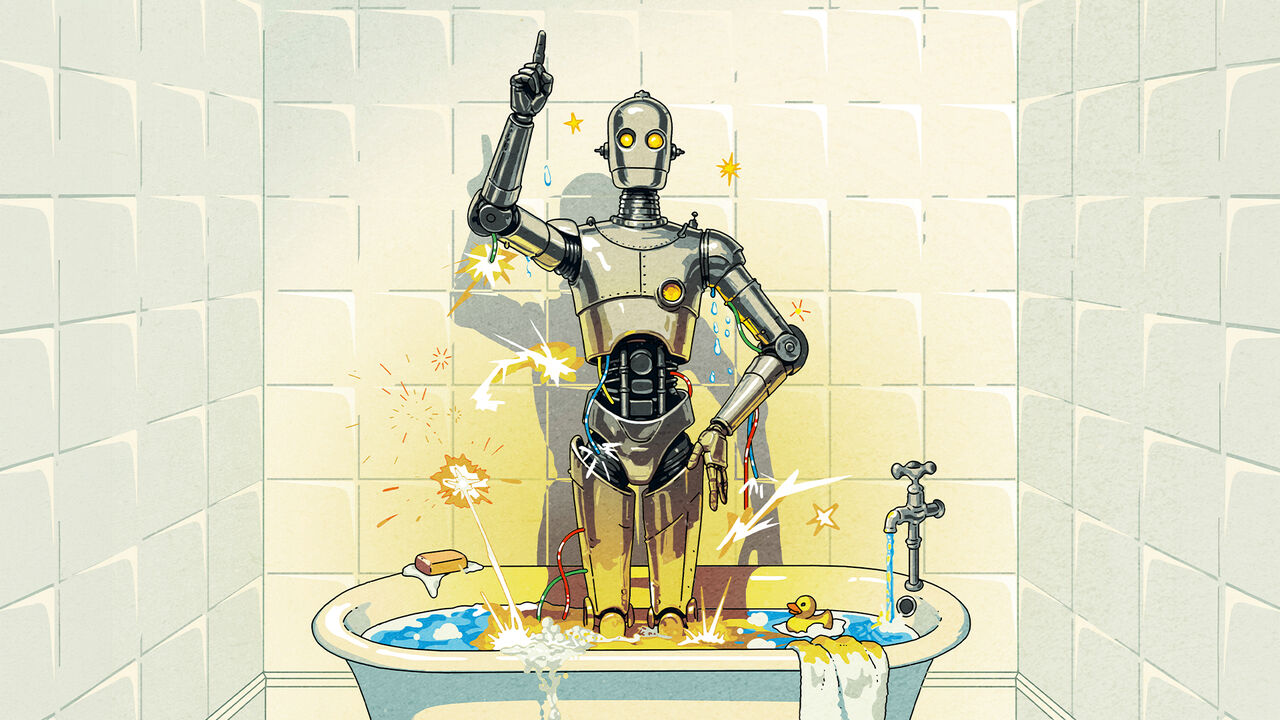
In the meantime, human-guided machine-science will require scholars to reinvent their disciplines. Scientists will have to learn to love—and credit with status and career advancement—guiding models and studying, verifying and teaching their results. Governments will need to allocate research grants on the same basis. For their part, labs should seek to be good scientific citizens, submitting their work for peer review and publishing their methods and code. The baby and the bathtub
检验与消化计算机生成的结果看似并非什么光鲜的工作。事实上,许多人类主导的科学研究都充斥着错误,因为学术界并未对监督他人研究成果的行为给予相应奖励。然而,重新强调验证与审慎态度必将推动科学进步。我们不妨铭记17世纪英国皇家学会确立的座右铭:“Nullius in verba”,意为“不可轻信他人之言”。如今,这种精神同样应适用于机器生成的科研成果。 ■ 仅限Forrs会员:若想了解我们每周 设计思路,请订阅我们的“ 故事”周报。
Checking and digesting a computer’s results may seem like unglamorous work. Much human-produced science is error-strewn because scholars are not rewarded for policing the work of others. But a renewed emphasis on verification and scepticism would improve science. It is worth remembering the Royal Society’s motto, adopted in the 17th century: Nullius in verba or “Take nobody’s word for it”. That same spirit now needs to apply to science made by the machines. ■ Forrs only: to see how we design each week’s cover, sign up to our weekly Cover Story newsletter