北约成员国拉脱维亚正在其与俄罗斯的边境上建造一道自动化反无人机防御墙,人类士兵仅负责决定何时以及是否开火。拉脱维亚国防部长赖维斯·梅尔尼斯对《商业内幕》表示,其目标是探测并中和“飞入的任何无人机”。他解释说,目标是“构建一个自主系统”,利用技术“减少操作这些系统所需的士兵数量”。“士兵唯一需要做的就是最终决定是否中和,”他说。
NATO member Latvia is building a wall of automated anti-drone defenses along its border with Russia, with human soldiers responsible only for deciding when and whether to fire. It aims to detect and neutralize "any drone which flies in," defense minister Raivis Melnis told Business Insider. And the goal, he explained, is to "build an autonomous system" that leverages the technology to "reduce the number of soldiers" required "to operate those systems." "The only thing which will be left for the soldier is the final decision to neutralize," he said.
“否则,探测、追踪和发射,这些都是自主的。”拉脱维亚的决定正值武器和防御技术中的自动化日益普及之际,包括在乌克兰,那里的技术已经进步到即使在与操作员失去连接的情况下,也能利用人工智能和计算机视觉寻找目标、飞行无人机和驾驶机器人。拉脱维亚希望在其新建的雷达、传感器、指挥控制系统和拦截无人机网络中实现这种自主性。
"Otherwise, detection, tracking, and launching, that's autonomous." Latvia's decision comes as automation is becoming increasingly common in weaponry and defense tech, including in Ukraine, where technology has advanced to enable AI and computer vision to find targets, fly drones, and drive robots even when connectivity with an operator is lost. Latvia wants this kind of autonomy across its new network of radars, sensors, command-and-control systems, and interceptor drones.
作为邻国,拉脱维亚特别担心俄罗斯侵略的可能性。它已报告多起无人机入侵事件。这些事件包括拉脱维亚称属于俄罗斯的无人机,或因俄罗斯电子战而进入其领空的无人机。拉脱维亚是一个人口少于200万的国家,它认为自动化是一种在不增加军队的情况下提升作战能力的方式。乌克兰也做出了同样的计算,利用日益自主的武器来帮助抵消俄罗斯更大规模的军队。
As a neighboring country, Latvia is particularly concerned about the possibility of Russian aggression. It has reported multiple drone incursions. These have included drones that it said were Russian or that had entered its airspace as a result of Russian electronic warfare. Latvia, a country of fewer than 2 million people, sees automation as a way to boost its combat power without more troops. Ukraine has made the same calculation, using increasingly autonomous weapons to help offset Russia's larger military.
拉脱维亚无人机制造商Origin Robotics的首席执行官阿格里斯·基普尔斯此前曾对《商业内幕》表示,较小的前线北约国家需要让更少的操作员完成更多任务的系统。“而几乎唯一的答案就是自主性,”他说。该公司制造的无人机被乌克兰军队使用。它还制造了一款名为Blaze的AI赋能无人机拦截器,已被多个北约国家军队采购。
Agris Kipurs, CEO of Latvian drone maker Origin Robotics, previously told Business Insider that the smaller, front-line NATO nations need systems that let fewer operators do more. "And pretty much the only answer to that is autonomy," he said. The company makes drones used by Ukraine's military. It also makes an AI-enabled drone interceptor called Blaze that has been bought by multiple NATO militaries.
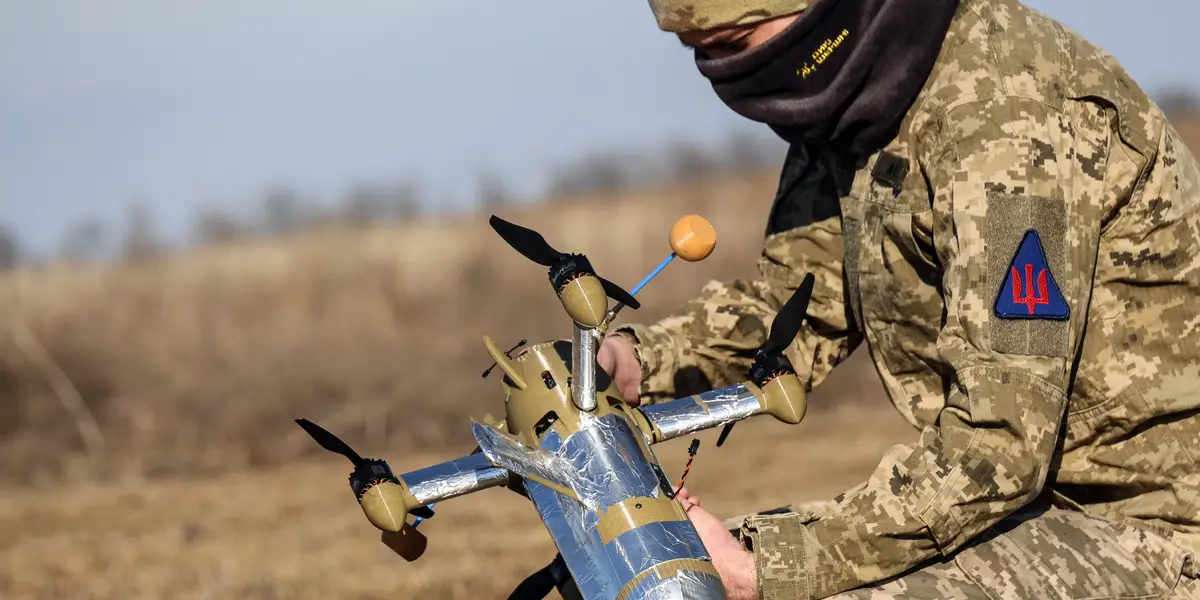
拉脱维亚的新防御项目直接受乌克兰启发,乌克兰已研发低成本武器,如拦截无人机,用于抵御俄罗斯的攻击。拉脱维亚一直是乌克兰最坚定的支持者之一,也是最积极在战场吸取作战经验的军队之一。Melnis 表示,拦截无人机在乌克兰的实战中已证明具有“极高的可靠性和击杀比率”,在乌克兰正在进行的一对一攻击无人机轰炸中尤为如此。
Latvia's new defensive project is directly inspired by Ukraine, which has developed cheap weaponry like interceptor drones to combat Russia's attacks. Latvia has been one of Ukraine's strongest supporters and one of the militaries most keenly adopting battlefield lessons from its fight. Melnis said that interceptor drones have proved to have a "really high reliability and kill ratio in Ukraine, where the Ukrainians are fighting" one-way attack drone bombardments.
乌克兰正在越来越多地依靠自主系统,以降低士兵的认知负担,同时整体增强防务能力。自动化流程虽能减少对人工的需求,但仍需人工参与决策和作战参与。战场技术正日益趋向自主化,但其行动仍受到人类控制的限制。乌克兰表示,原则上仍将保留人工参与,由人决定是否参与作战。拉脱维亚、乌克兰及其他盟友希望利用此类低成本的反无人机防御系统,因为其成本远低于传统高昂的拦截手段,如导弹。
Ukraine is increasingly relying on autonomy to allow systems to decrease the cognitive load on soldiers while strengthening the defense overall. Automating processes reduces the demand for human input, though they remain important for engagement and kill decisions. Tech used on the battlefield is becoming increasingly autonomous; however, there are still limits to how much they can act beyond human control. Ukraine says that it will also keep humans involved on principle, giving them the final decision whether to engage. Latvia, Ukraine, and other allies want to use these kinds of anti-drone defenses because they're so much cheaper than traditional, expensive methods like missiles.
但这些防御系统单独作为应对大量廉价无人机的唯一解决方案并不可持续。Melnis 强调,关键在于拥有一套“成本低廉但可靠的系统”来拦截无人机。他指出,拉脱维亚正在采用“相较于导弹的现代技术和低成本技术”。盟友正在购买和研发此类低成本的反无人机系统。北约秘书长鲁特(Mark Rutte)于六月表示:“长期来看,我们不能继续用昂贵的拦截器射下无人机,我们必须找到与无人机成本相当的拦截技术。”
Those defenses are not sustainable as the only solution against the masses of cheap drones. Melnis said that it's key to have a "cheap but reliable system" to stop drones. Latvia is using "modern technology and a cheap technology in comparison with a missile," he said. Allies are buying and developing these cheaper anti-drone systems. NATO Secretary General Mark Rutte said in June that "long-term we cannot continue by shooting down drones with very costly interceptors, so we have to find interception techniques which are of the same costs as the drones."
拉脱维亚及其他北约盟友曾使用F-35、F-16和 Rafale等战斗机以昂贵的空对空导弹击落进入其领空的无人机。
Latvia and other NATO allies have used fighter jets like F-35s, F-16s, and Rafales to shoot down drones entering their airspace with expensive air-to-air missiles.
梅尔尼斯表示,新系统的设计旨在将喷气式飞机作为备用手段,仅作为“次要手段”来阻止任何穿越防线的无人机。梅尔尼斯表示,反无人机防线不仅对他的国家防御很重要。他说:“边界不是俄罗斯-拉脱维亚边界。”他说:“这是俄罗斯-北约、俄罗斯-欧洲的边界。”他表示,虽然这段边界位于俄罗斯和拉脱维亚之间,“但我们是北约成员国,也是欧盟成员国。”他说,任何越过边界的无人机,“那就是进入北约领空的无人机。那就是进入欧洲的无人机。”
Melnis said the new system is designed to make jets a backup, serving only as "the secondary means" of stopping any drone that penetrates the wall. Melnis said the anti-drone wall is important for more than just his country's defense. The "border is not a Russian-Latvian border," he said. "It is a Russia-NATO, Russia-Europe border." He said that while this stretch of border is between Russia and Latvia, "we are NATO, and we are a European Union country." Any drone that crosses the border, he said, "that's the drone coming into NATO airspace. That's the drone coming into Europe."