根据一位汽车分析师的说法,美国降低燃油经济性标准并停止对违规行为处以罚款后,汽车制造商可能会看到一笔以十亿美元计的财务顺风。
Automakers could see a financial tail wind that runs in the billions of dollars after the U.S. lowered fuel economy standards and stopped issuing fines for violations of those rules, according to an auto analyst.
美国国家公路交通安全管理局(NHTSA)在9月下旬大幅降低了轻型车辆的燃油经济性目标,到2031年平均每加仑行驶里程将降至34.9英里。在此前拜登政府于2024年最终确定的规则下,美国车队当时预计到同一时间将平均每加仑行驶里程达到50.4英里。
The National Highway Traffic Safety Administration in late September sharply reduced fuel economy targets for light-duty vehicles to an average of 34.9 miles per gallon by 2031. Under the previous rules the Biden administration finalized in 2024, the U.S. fleet was then expected to average 50.4 miles per gallon by the same time.
此举是在去年国会投票取消汽车制造商因未能遵守法规而面临的罚款之后进行的。路透社此前报道,几年前,通用汽车和Stellantis因未能达到美国此前车型年份的燃油经济性要求,曾支付数亿美元的民事罚款。
That followed Congress voting last year to eliminate the fines automakers faced for failing to comply with regulations. Several years ago, General Motors and Stellantis paid hundreds of millions of dollars in civil penalties for failing to meet U.S. fuel economy requirements for prior model years, Reuters reported.
TD Cowen的分析师Itay Michaeli表示:“我们已经看到今年因罚款和信用额度产生的成本有所下降,并且这正成为增量收益的顺风。”他补充说:“这可能带来几亿到几亿美元的收益。”新规还取消了汽车制造商用于补偿生产高油耗车辆而进行的信用额度买卖。NHTSA过去曾允许面临超出燃油经济性平均值风险的汽车制造商,从生产低排放或零排放车辆的其他制造商处购买信用额度。
"We've already seen [costs from fines and credits] come down even this year and serve as incremental earnings tail winds," said Itay Michaeli, an analyst for TD Cowen. "And it could be a few to several hundred million dollars." The new rules also eliminate the selling and trading of credits automakers use to compensate for producing fuel-thirsty vehicles. The NHTSA has in the past allowed automakers at risk of exceeding their fuel economy average to buy credits from others that make low- or zero-emission vehicles.
历史上,州和联邦层面的信用额度一直是特斯拉和Rivian等电动汽车生产商的收入来源。
Historically, state and federal credits have been revenue sources for electric vehicle producers such as Tesla and Rivian.
这些变化减轻了那些倾向于生产效率较低车型的汽车制造商的压力——例如SUV、皮卡或高性能跑车。但正如Michaeli所说,这也使汽车制造商能够将其投资组合和资源从为合规而生产的产品转向更具盈利能力的产品。
Those changes take the pressure off automakers that have tended to produce less-efficient vehicles — such as SUVs, pickup trucks or high-performance sports cars. But they also allow automakers to redirect their portfolios and investments away from products made for compliance and toward ones that are more profitable, Michaeli said.
他表示,潜在的策略转变包含三个部分。首先,汽车制造商可以销售更多内燃机车辆,而减少那些通常被称为“合规车”的车型——即销售较慢或利润较低的燃油高效车辆或电动汽车,这些车辆是汽车制造商为了符合燃油经济性或排放法规而生产的。
There are three pieces to the potential strategy shift, he said. First, automakers can sell more internal-combustion vehicles and fewer of what are often called "compliance cars," which are slower-selling or less profitable fuel-efficient vehicles or EVs that automakers make in order to stay on the right side of fuel economy or emissions rules.
在过去一年中,多家汽车制造商已对电动汽车相关投资计提了数十亿美元的减值,这表明这些车辆在美国要实现盈利十分困难。
In the past year, several automakers have written down billions in EV-related investments, showing how those vehicles have been difficult to make profitable in the U.S.
福特于12月宣布了一项195亿美元的特殊费用,作为业务重组和削减电动汽车投资的一部分;而通用汽车则在第四季度记录了71亿美元的损失,这与其在中国市场的业务收缩和重组有关。在保时捷,电动汽车相关的减值导致2025年汽车运营利润下降了98%;而在本田,这一因素也导致公司出现了近70年来的首次年度亏损。
Ford announced a $19.5 billion special charge in December as part of a business restructuring and a pullback in EV investments, while GM recorded a $7.1 billion impact in the fourth quarter related to its own pullback and restructuring in China. At Porsche, EV-related write-downs drove automotive operating profit down 98% in 2025, and Honda's contributed to the company's first annual loss in about 70 years.
第二个可能的变化是迈克尔利所称的“ICE优化”——放宽的法规允许汽车制造商销售更多高利润车型,而这些车型通常配备更大的发动机。
A second possible change is what Michaeli calls "ICE optimization" — the loosened regulations allow automakers to sell more high-margin vehicles, which often come with larger engines.
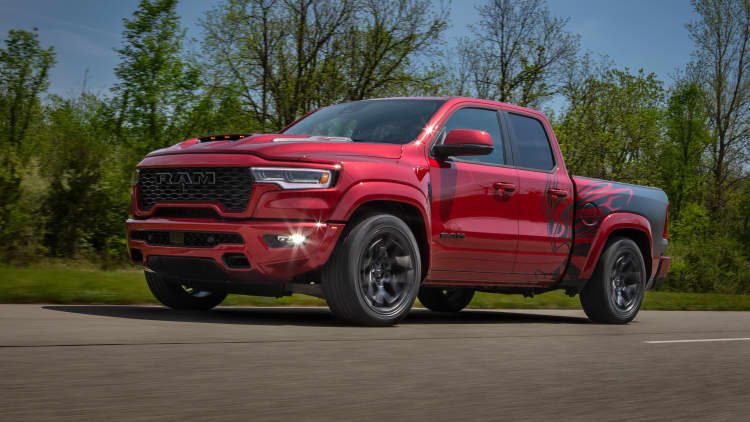
底特律的汽车制造商以及一些外国车企已经重新开始引入V8发动机。斯泰兰蒂斯的Ram品牌已为其全尺寸皮卡系列重新推出了这些耗油大户的发动机。与此同时,通用汽车在9月份表示,将为其全尺寸的Silverado和Sierra皮卡引入新一代小排量V8发动机。福特则扩大了其F-150皮卡车型中V8发动机的可选范围,而F-150是美国最畅销的车型。
Detroit automakers, and some foreign ones, have already been reintroducing V-8 engines. Stellantis' Ram brand has brought the gas-guzzling engines back for its full-size pickup line. GM, meanwhile, said in September that it will bring a new generation of small-block V-8 engines to its full-size Silverado and Sierra pickup trucks. And Ford has increased V-8 availability across its F-150 pickups, the top-selling vehicle in the U.S.
“所以为了某种程度上推进漏斗,” 迈克尔说,汽车制造商可能会这样想:“我不必支付合规成本,我不必购买信用额度。这很好。现在我或许可以卖出更多皮卡,而在这些皮卡中,我可以卖出更多V-8发动机以及这些皮卡的不同配置。” 迈克尔说,第三点是汽车制造商也在将研发投资从专注于满足燃油效率法规的项目转向那些既能提升利润,又能支持进一步投资于动力总成开发或其他技术的项目。
"So to kind of work down the funnel," Michaeli said automakers might be thinking, "I don't have to pay compliance costs, I don't have to buy credits. That's great. Now I can maybe sell more pickup trucks, and within those pickup trucks, I could sell more V-8s and different trims of those pickup trucks." Michaeli said the third piece is that automakers are also redirecting research and development investments away from projects focused on meeting fuel-efficiency regulations and toward those that either boost profits or support further investment in powertrain development or other technology.
在联邦对电动汽车的税收抵免取消以及该细分市场需求回落之后,汽车制造商面临着关于如何投资的重大问题,汽车分析师约翰·墨菲表示。
After both the elimination of federal tax credits for EVs and the market pullback in that segment, automakers are left with big questions about how to invest, said John Murphy, an automotive analyst.
“资产负债表和表上的现金可能需要远高于他们之前的预期,因为动力总成最终应走向何方存在极大的不确定性,”墨菲说。“请记住,动力总成是汽车最昂贵的部分。”尽管监管发生变化,但在过去几个月里,混合动力汽车在美国市场需求激增,一些公司对此增长的准备情况比其他公司更好。墨菲预计这种趋势将继续。
"Balance sheets and cash on balance sheet may need to be far higher than they thought previously, because there's such extreme uncertainty around where powertrains need to ultimately go," Murphy said. "Remember, powertrain is the most expensive part of a vehicle." Despite regulatory changes, hybrids have surged in the U.S. market over the past several months, and some companies have been better positioned for that increase than others. Murphy expects that to continue.
“我们的预测是,在监管制度不变的情况下,混合动力汽车将从去年市场份额的14%增长到本世纪末约34%,”他说。“因此,这是一个正在快速发生的重大转变。我们在某些月份的混合动力汽车份额曾达到约19%。”尽管如此,迈克尔认为电动汽车仍有望继续增长。他说,电动汽车具有极高的客户忠诚度。
"Our forecasts are that hybrids, absent a change in the regulatory regime, will go from 14% of the market last year to about 34% of the market by the end of the decade," he said. "So that's a big shift that's happening quickly. There are some months where we've been about 19% [hybrids]." That said, Michaeli argued that EVs are still likely to continue growth. Electric vehicles have an exceptionally high loyalty rate, he said.
电动汽车车主更可能用另一辆电动汽车替换现有车辆,而混合动力或燃油汽车车主则更可能继续使用相同的动力总成类型,迈克尔说。电动汽车也是其他创新技术(如自动驾驶功能)的首选平台。
EV owners are more likely to replace their vehicle with another EV than hybrid or gasoline-vehicle owners are to stay with the same powertrain type, Michaeli said. EVs are also still preferred platforms for other innovative technologies, such as autonomous driving features.
但Michaeli认为电动汽车具有巨大潜力的主要原因,是美国拥有数量庞大的双车家庭——这一比例在全球最高。Michaeli表示,他认为这些家庭最有可能选择一辆电动汽车和一辆传统内燃机汽车。他说,目前美国道路上约有3亿辆汽车,而根据汽车制造商行业协会“汽车创新联盟”的数据,其中只有约750万辆是电动汽车。
But the main reason Michaeli sees potential for EVs is the sheer number of two-car households in the U.S. — the highest share of such households in the world. Michaeli said he thinks those households are most likely to opt for one EV and one ICE vehicle. There are roughly 300 million vehicles on U.S. roads today, he said. Only about 7.5 million of those are EVs, according to the Alliance for Automotive Innovation, a trade group for automakers.
“许多新一代电动汽车仍在不断推出,”他说。“想象一下,当这些电动汽车进入市场并迅速普及时会发生什么。因此,从结构上对美国的电动汽车需求持悲观态度其实非常困难,因为一旦市场转向,这种转变可能会非常、非常迅速。”
"A lot of next-generation EVs are still coming," he said. "Imagine what happens as those EVs hit the market and ramp. That's why it's really hard to be negative structurally on U.S. EV demand, because when it turns, it can turn very, very sharply."