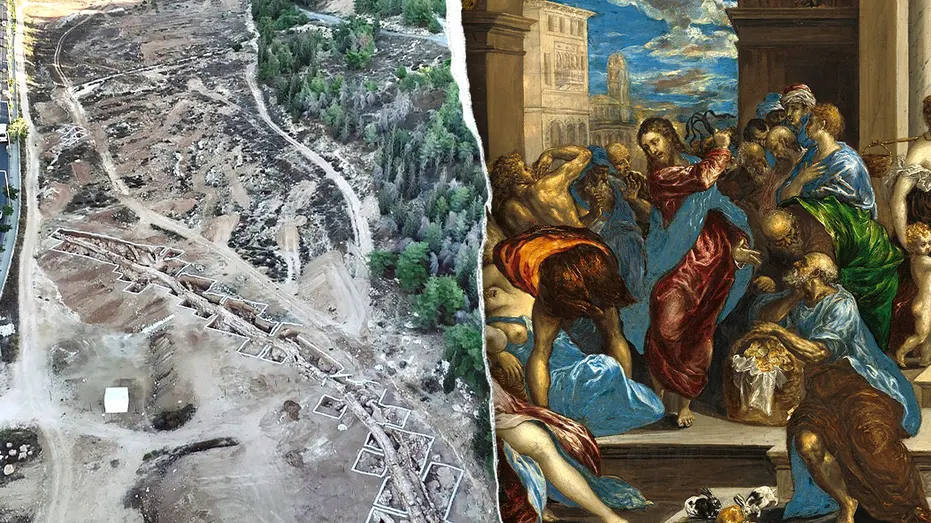
一座2000年历史的古代引水渠最近在耶路撒冷附近被发现 — — 根据一位圣经学者的说法,它很可能曾为耶稣及其门徒提供用水。
A 2,000-year-old aqueduct was recently uncovered near Jerusalem — and it likely supplied water used by Jesus and his disciples, according to a biblical scholar.
考古学家在拉马特拉赫尔基布兹以南发现了一段约984英尺长的古代水道 — — 这条水道曾将伯利恒附近所罗门池的水输送至耶路撒冷圣殿山。
Archaeologists unearthed a roughly 984-foot section of the ancient waterway south of Kibbutz Ramat Rachel — which once carried water from Solomon's Pools near Bethlehem to Jerusalem's Temple Mount.
以色列古物管理局(IAA)于10月11日宣布了这一发现,此前为一项计划中的住宅开发项目进行了考古发掘。
The discovery was announced by the Israel Antiquities Authority (IAA) on Oct. 11, following excavations ahead of a planned residential development.
来自耶稣时代的巨型2000年历史遗迹惊人地保存完好。以色列古物管理局表示,该引水渠最初建于哈斯莫尼王朝时期,并在大约一个世纪前仍断断续续地被使用。
MASSIVE 2,000-YEAR-OLD DISCOVERY FROM TIME OF JESUS EMERGES REMARKABLY INTACT Originally constructed during the Hasmonean period, the aqueduct remained in intermittent use until about a century ago, the IAA said.
该引水渠利用重力将水输送至第二圣殿群 — — 当时犹太宗教生活的中心,用于仪式净化和祭祀后的清洁工作。
The waterway relied on gravity to transport water to the Second Temple complex, the center of Jewish religious life at the time, where it was used for ritual purification and cleaning up after sacrifices.
第二圣殿群也是圣经中耶稣洁净圣殿事件的发生地 — — 当时他推翻了兑换银币者的桌子,并赶走了商人。
The Second Temple complex was also the setting of the biblical account of Jesus cleansing the Temple, during which he overturned the tables of money changers and drove out merchants.
以色列古物管理局发掘主管本雅明·斯托尔坎、吉尔·弗里德和罗特姆·科恩表示:“下引水渠很可能是在哈斯莫尼王朝时期建造的,以供应耶路撒冷的用水。”
The Lower Aqueduct was "probably built in the time of the Hasmonean kings to supply water to Jerusalem," according to excavation directors Benyamin Storchan, Gil Freid and Rotem Cohen of the Israel Antiquities Authority.
考古学家在耶路撒冷附近犹太王国圣经遗址处发现“神秘”古代隧道。发掘主管们在一份声明中表示:“引水渠从伯利恒以南的所罗门池延伸约21公里(13英里)至耶路撒冷。”
ARCHAEOLOGISTS UNCOVER 'MYSTERIOUS' ANCIENT TUNNEL NEAR BIBLICAL KINGDOM OF JUDAH SITE IN JERUSALEM "The aqueduct runs about 21 km [13 miles] from Solomon's Pools, south of Bethlehem, to Jerusalem," the directors said in a statement.
“在大部分路段,水流沿着非常缓和的坡度流动,每公里(0.6英里)仅下降一米(3.3英尺)。”该引水渠将被保存并融入计划中的住宅开发项目的主入口,使游客能够亲眼目睹这一古代工程奇迹。
"Along most of the route, the water flowed along a very gentle gradient, dropping just one meter [3.3 feet] in elevation per kilometer [0.6 miles]." The aqueduct will be preserved and incorporated into the main entrance of the planned residential development, allowing visitors to see the ancient engineering firsthand.
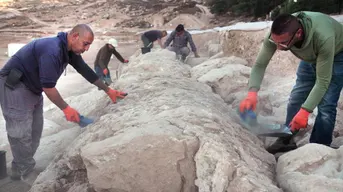
意外发现的古代复杂建筑群出现在与约拿和圣彼得相关的圣经城市附近“要使这一工程发挥作用所需的工程技术真的令人惊叹,”佛罗里达州新学院宗教学副教授道格拉斯·埃斯特斯对福克斯新闻数字版表示。
UNEXPECTED ANCIENT COMPLEX EMERGES NEAR BIBLICAL CITY LINKED TO JONAH AND ST PETER "The engineering that was required to make this work is really amazing," Douglas Estes, an associate professor of religion at New College of Florida, told Fox News Digital.
埃斯特斯说,该引水渠的建造反映了耶路撒冷在古代世界的重要性,并将此类基础设施的重要性与现代摩天大楼的建造进行了比较。
Estes said the aqueduct's construction reflected Jerusalem's prominence in the ancient world, comparing the significance of such infrastructure to the construction of modern skyscrapers.
“哈斯蒙尼王朝的犹太统治者正在修建这条引水渠,而与此同时,罗马人正在修建他们的引水渠,将水输送到卡比托利奥山朱庇特神庙,”埃斯特斯说。点击此处“我们通常认为罗马当时是地中海的主导力量,而耶路撒冷只是一个城邦的小首都,但事实上,他们当时正在同步推进技术发展,并共同修建引水渠。”除了令人印象深刻的工程技术外,埃斯特斯还说,这一发现也揭示了古代耶路撒冷的宗教实践及其与早期基督教的关联。
"The Hasmoneans, Jewish rulers, were building this aqueduct at the same time that the Romans were building their aqueduct that carried water to the Temple of Jupiter on Capitoline Hill," Estes said. CLICK HERE TO "We think of Rome as being the power in the Mediterranean at the time, and we think of Jerusalem as being a small capital of the city-state, but they were actually advancing in technology at the same time and building their aqueducts together." Beyond its impressive engineering, Estes said the discovery also sheds light on religious practices in ancient Jerusalem and their connections to early Christianity.
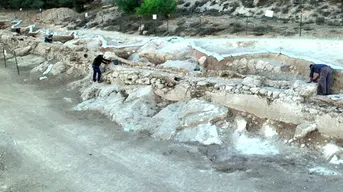
埃斯特斯表示,该引水渠的水既用于实际用途,也用于宗教用途,包括祭祀后的清洁以及在圣殿山进行的净化仪式。
CLICK HERE FOR MORE LIFESTYLE NEWS Estes said the aqueduct's water was used for both practical and religious purposes, including cleaning up after sacrifices and performing purification rituals at the Temple Mount.
埃斯特斯说,他“有信心”认为,耶稣、他的门徒以及其他早期基督徒曾使用过该引水渠供应的水,尽管目前尚未发现他们个人使用的直接考古证据。
Estes said he was "confident" that Jesus, his disciples and other early Christians would have used water supplied by the aqueduct, although direct archaeological evidence of their individual use has not been established.
该系统依赖淡水,或者说“活水”,对基督徒而言也具有象征意义,埃斯特斯说。
The system, which relied on fresh, or "living" water, also carries symbolic significance for Christians, Estes said.
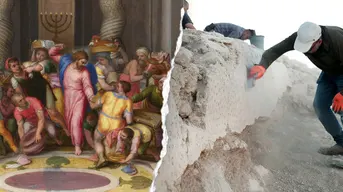
“它将伯利恒的活水输送到圣殿山,以便在祭祀后进行圣化,”埃斯特斯说。
"It brought living water from Bethlehem to the Temple Mount, so that sanctification could take place after sacrifice," Estes said.
对基督徒而言,耶稣就是活水,因此……他从伯利恒而来,如同活[水],成为圣殿,为全人类献上自我牺牲。埃斯特斯补充道:“这条引水渠中蕴含着丰富的象征意义。”
"For Christians, Jesus is the living water, and therefore … he came from Bethlehem as the living [water] to become the temple, to make the sacrifice of himself for all people." Estes added, "There is a rich symbolism that we see here in this aqueduct."