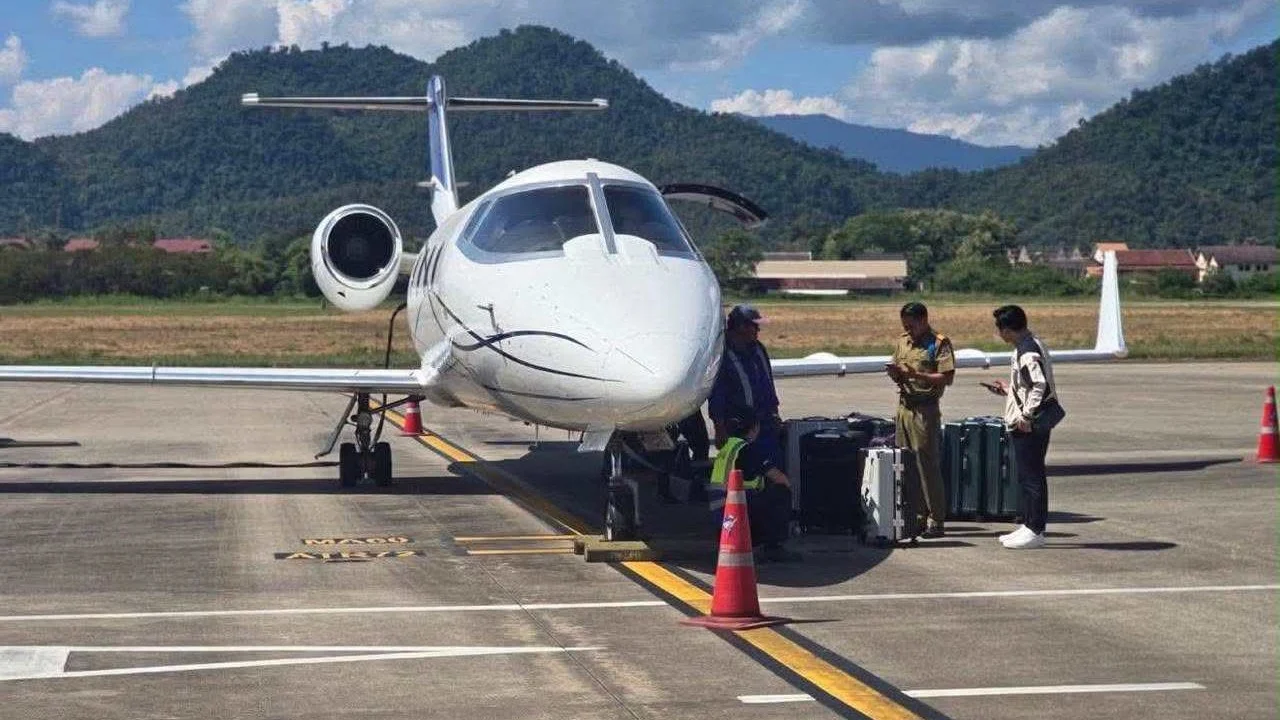
一架从马来西亚包租的私人喷气式飞机——看似原定飞往菲律宾——却在跑道上被老挝缉毒警察拦下。警方在飞机上发现了塞满512公斤冰毒的行李箱,这一事件再次将人们的目光聚焦于湄公河毒品实验室持续不断的毒品输出。
A private jet hired from Malaysia – seemingly destined for the Philippines – but stopped on the tarmac by Laos’ drug police who found suitcases stuffed with 512kg of crystal methamphetamine, has returned the spotlight to the unrelenting flow of narcotics from the Mekong’s drug laboratories.
一年多来,网络诈骗已成为东南亚各国媒体头条和执法部门关注的重点,其年涉案金额高达数百亿美元,是当地最主要的犯罪活动。
Cyberscams have dominated headlines and authorities’ attention across Southeast Asia for over a year as the leading criminal enterprise worth tens of billions of dollars annually.
然而,无论是高纯度的结晶冰毒,还是掺入咖啡因的廉价“亚巴”药片,冰毒仍在该地区肆虐。这些毒品主要从缅甸流向东南亚,再转运至澳大利亚、新西兰和日本等更遥远的利润丰厚的市场。
But methamphetamine – in its high potency crystallised form, or the cheaper caffeine-cut yaba pills – still stalks the region, spewing out mainly from Myanmar to Southeast Asia and then onto lucrative markets further afield in Australia, New Zealand and Japan.
10月1日,老挝北部琅勃拉邦机场因被怀疑成为一条新的毒品运输通道而受到关注。当时,缉毒警察在该机场发现了近24个塞满冰毒的行李箱。
On October 1, Luang Prabang airport in northern Laos came under scrutiny as a new potential narcotics route when drug police found nearly two dozen suitcases stuffed with crystal meth.
六天后,官方媒体报道称,警方逮捕了13人,其中包括一名被认为是走私计划核心人物的菲律宾籍人士、一名新加坡籍飞行员以及一名来自马来西亚的副驾驶。
Officers arrested 13 people, including a Filipino national believed to be central to the smuggling plot, a Singaporean pilot and a co-pilot from Malaysia, state media reported six days later.
菲律宾《询问者报》10月8日的报道称,这架喷气式飞机原定飞往菲律宾,但警方强调,这批毒品的最终目的地仍有待进一步调查。不过,警方承认,菲律宾人确实参与了这次跨国走私行动。
A Philippine Inquirer report on October 8 said the jet was destined for the country, but police stressed that the final destination of the drugs was subject to further investigation. Officers conceded, however, that Filipinos were involved in the transnational smuggling attempt.
通过飞机运输的毒品数量之庞大引起了地区缉毒警方的注意,并引发了一场多国联合调查。此次事件也凸显了复杂的毒品网络如何利用脆弱的港口、机场和边境道路进行转运。
The volume of drugs transported by aeroplane has caught the attention of regional narcotics police, sparking a multi-country investigation and spotlighting how sophisticated drug networks rotate through vulnerable ports, airports and roads to open borders.
来自“金三角”地区——即缅甸、老挝、泰国北部和中国接壤地带——的毒品航班报道极为罕见。冰毒(在泰国被称为“冰”,在菲律宾则称为“沙雾”)通常是通过海运方式运输的。
Reports of drug flights from the Golden Triangle – the area that crosses Myanmar, Laos, northern Thailand and China – are rare. Shipments of crystal meth, known as Ice in Thailand and shabu in the Philippines, are normally routed by sea.
菲律宾缉毒署署长伊萨加尼·内雷斯周一对记者表示,其中一名嫌疑人是一名被称为“法哈德”的菲律宾人,他们曾通过私人喷气式飞机从老挝获取潜在走私行动的线索。
Isagani Nerez, director general of the Philippine Drug Enforcement Agency, on Monday told reporters that one of the suspects was a Filipino known as “Fahad” and that they had been tipped off to a potential smuggling operation via private jets from Laos.
随着涉事三国开始尝试梳理这一贩毒行动,马来西亚缉毒警察称,编号为N73GP的Learjet私人喷气式飞机于9月下旬空载离开该国。
As the three nations involved began to attempt to unspool the trafficking effort, Malaysian drug police said the Learjet N73GP had left their country empty in late September.
“该涉事飞机的租赁费用为49,500美元,”武吉阿曼禁毒刑事调查部门在一份声明中表示,并补充称,他们已在雪邦苏丹阿都阿兹沙机场扣留了该飞机所有者——即为包机租赁该飞机的人——以及另外三人,以便进行讯问。
“The aircraft concerned had been chartered for US$49,500,” Bukit Aman’s Narcotics Criminal Investigation department said in a statement, adding it had detained the aircraft owner who leased the plane for charter and three other people for questioning at Sultan Abdul Aziz Shah Airport in Subang.
此事件促使马来西亚民用航空局(CAAM)展开调查,以查明私人喷气式飞机租赁如何成为国际毒品走私企图的一部分。
The scandal has prompted the Civil Aviation Authority of Malaysia (CAAM) to look into how the private jet hire became part of an international drug smuggling attempt.
CAAM首席执行官诺阿兹曼·马哈茂德接受《本周亚洲》采访时表示,该航空机构“将评估是否需要采取额外措施或加强与相关机构的协调,以应对所发现的任何监管或运营漏洞”。目前尚不清楚被查获的毒品究竟来自何处。
Norazman Mahmud, CEO of CAAM, told This Week in Asia the aviation body “will assess whether additional measures or enhanced coordination with relevant agencies are necessary to address any regulatory or operational gaps identified”. It is unclear so far where the seized drugs originated from.
缅甸陷入战争与无政府状态的漩涡,仍然是亚洲乃至全球甲基苯丙胺的最大生产国——同时也是全球最大的罂粟种植国,其产出的鸦片为海洛因提供原料。
Myanmar, tossed into a vortex of war and lawlessness, remains the top producer of methamphetamine, certainly in Asia if not the world – as well as the globe’s biggest grower of opium poppies that make the base for heroin.
由于与缅甸毒品生产地——掸邦——拥有漫长且难以警戒的边界,老挝成为缅甸毒枭通往更广阔全球市场的关键通道。
With long, unpoliceable borders with Myanmar’s drug-producing Shan state, Laos is a key passageway to the wider global market for Myanmar’s meth lords.
但老挝也是毒品前体化学品的生产国——这些化学品被输送至缅甸用于合成毒品——以及多种其他合成派对药物(包括氯胺酮)的制造基地。
But Laos is also a producer – a conduit for precursor chemicals into Myanmar – and a manufacturing base for a range of other synthetic party drugs including ketamine.
来自缅甸和老挝的毒品主要经泰国向南转运,泰国充当世界上最大的毒品仓库之一,并作为通往马来西亚的走廊,或用于将毒品运送得更远,抵达菲律宾、澳大利亚和日本。但毒品专家称,毒品运输路线并不固定,会随着执法行动而变动。
Drugs from Myanmar and Laos mostly transit south through Thailand, which acts as one of the world’s largest drug warehouses and as a corridor to Malaysia, or for shipping further away to the Philippines, Australia and Japan. But drug experts say routes are fluid and move with enforcement.
“缅甸仍然是东南亚主要的冰毒生产中心,但更广泛的合成毒品生产基础设施显然已延伸至整个地区,”全球打击跨国组织犯罪倡议组织(Global Initiative against Transnational Organised Crime)的伊奥安尼斯·弗拉西斯(Ioannis Vlassis)在接受《亚洲本周》(This Week in Asia)采访时表示。
“Myanmar remains the main methamphetamine production centre in Southeast Asia but the wider synthetic drug production infrastructure clearly extends across the region,” Ioannis Vlassis of the Global Initiative against Transnational Organised Crime told This Week in Asia.
他表示:“当缅甸与泰国边境的管控加强时,老挝走廊会承接部分毒品运输流量。”他还补充说,陆路运输路线已有向东转移至越南、向南转移至柬埔寨以继续运输的迹象。
“When controls tighten along the Myanmar–Thailand border, the Laos corridor absorbs some of that traffic,” he said, adding land routes had shown signs of shifting east into Vietnam and south into Cambodia for onward shipping.
然而,近年来毒品生产已超越缅甸,范围也不再局限于冰毒,而是扩展到了从曼谷、吉隆坡到胡志明市和香港都备受青睐的新型派对毒品。
But drug production has boomed beyond Myanmar in recent years and now goes beyond meth, into the new party drugs favoured from Bangkok and Kuala Lumpur to Ho Chi Minh City and Hong Kong.
去年,越南芽庄查获创纪录的1.4吨氯胺酮和80吨前体化学品;今年5月,泰国春武里府则发现了一个生产广受欢迎的“丧尸”电子烟所用成分乙基己酯的实验室。
A record bust last year in Nha Trang, Vietnam, found 1.4 tonnes of ketamine and 80 tonnes of precursor chemicals, while an etomidate production lab for wildly popular “zombie” vapes was discovered in Thailand’s Chonburi province in May.
弗拉西斯表示,湄公河地区的网络诈骗与毒品贩运活动存在“高度重叠”,这两类犯罪组织都使用相同的“保护提供者、腐败官员、运输渠道、掩护企业以及资金转移通道”。
Vlassis said there was a “major overlap” between Mekong cyberscam and drug trafficking operations, with both crime enterprises using the same “protection providers, corrupt officials, transport connections, front businesses and channels for moving money”.
他指出,塔基列克周边边境地区、老挝金三角经济特区和泰国美索地区都暴露出利益交织的情况,尽管“同一批犯罪分子”可能并不同时经营诈骗园区和大型毒品交易活动。
Border areas around Tachilek, the Golden Triangle Special Economic Zone in Laos and Mae Sot in Thailand revealed overlapping interests, he said, although “the same actors” were likely not running scam compounds as well as major drug operations.
湄公河地区的犯罪团伙拥有深入的网络,能够采购化学品和安排运输,贿赂腐败官员以开放边境,并且能够轻松承受大规模缴获带来的损失。这些团伙持续将目标锁定在亚洲最富有的毒品市场——澳大利亚和新西兰,而两国与毒品产地之间的距离也推高了麻醉品的价格。
Mekong crime gangs with deep networks that can buy chemicals and transport, bribe corrupt officials to open borders, and easily absorb the losses of massive seizures, continue to target the richest drug markets in Asia – Australia and New Zealand, whose distance pumps up the price of narcotics.
“大宗货物可以通过渔船和较小的商船运输,而乘客和包裹渠道则负责运送较小的货件,”共同撰写了9月份发布的湄公河甲基苯丙胺贸易报告的弗拉西斯(Vlassis)表示。
“Bulk loads can travel on fishing boats and smaller commercial vessels, while passenger and parcel channels carry smaller consignments,” said Vlassis, who co-wrote a report published in September on the Mekong meth trade.
“对于澳大利亚和新西兰而言,这意味着识别并切断上游供应链的努力必须考虑到该地区多个出发点和多种运输方式。”
“For Australia and New Zealand, this means that efforts to identify and disrupt upstream supply need to account for multiple departure points and transport methods across the region.”