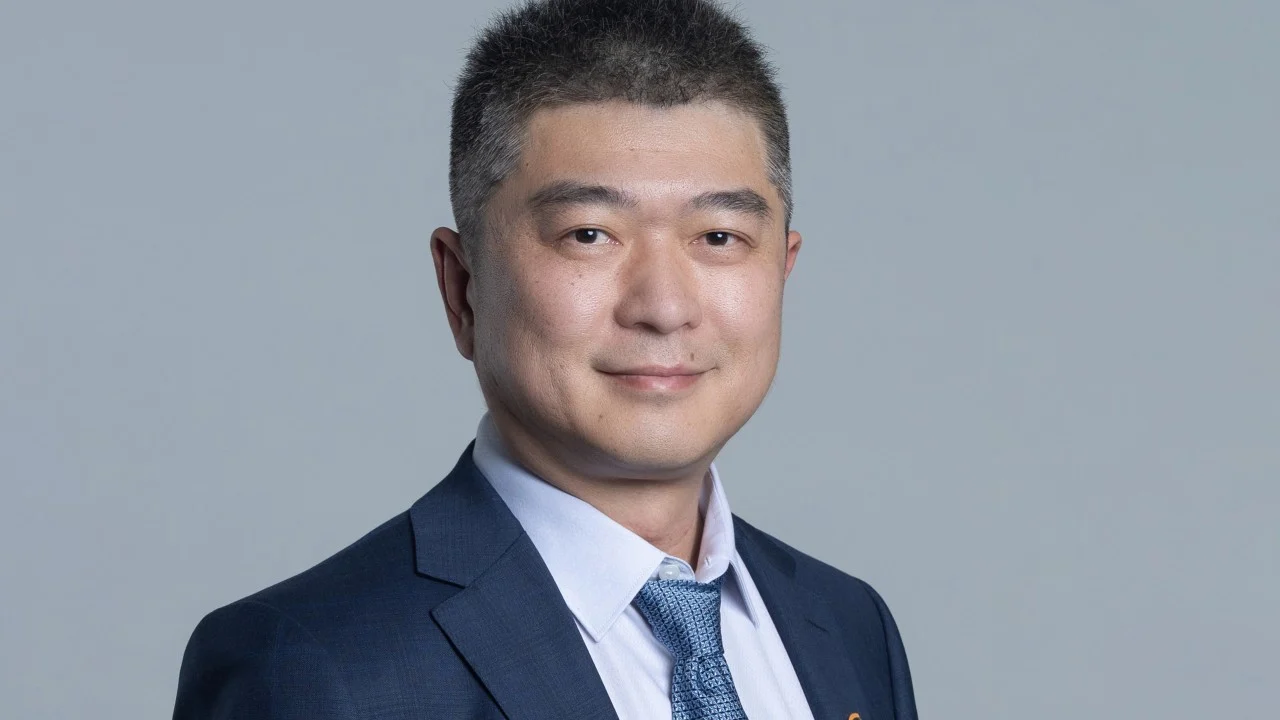
顶尖生命科学家吴军近期离开美国回到祖国,他认为全球许多顶尖胚胎研究人员现在都在中国工作。
Leading life scientist Wu Jun, who recently left the United States to return to his homeland, believes many of the world’s top embryo researchers are now working in China.
吴军因干细胞研究而闻名,尤其是与干细胞衍生胚胎模型相关的研究。他正在浙江省杭州市西湖大学的一间办公室里接受采访。他的一些物品仍装在袋子里,随意放在旁边的柜子上,尚未拆包。
Wu, well known for his stem cell research, particularly related to the stem cell-derived embryo model, is speaking in an office at Westlake University, in Hangzhou in the eastern province of Zhejiang. Some of his belongings remain in bags placed haphazardly on a nearby cabinet, waiting to be unpacked.
“这只是临时办公室,我的实验室和办公室还在筹建中。”吴军说。
“This is just a temporary office; my lab and office are still being set up,” Wu said.
尽管今年早些时候他被晋升为得克萨斯大学西南医学中心(UT Southwestern)的终身教授,但他一个月前已正式加入新单位,担任干细胞生物学与再生医学讲席教授。他的前雇主曾真诚挽留他,甚至考虑提出还价,但他婉言谢绝了。“我回国的决定早已作出,再多的钱也留不住我。”他说。
He officially joined his new institution as chair professor of stem cell biology and regenerative medicine a month ago despite being promoted to a tenured professorship at the University of Texas Southwestern Medical Centre (UT Southwestern) earlier this year. His former employer made sincere efforts to retain him, including considering a counter-offer, but he politely declined. “My decision to return had already been made; no amount of money would have kept me there,” he said.
在西湖大学网站上,他的新雇主列出了吴军的成就,包括他在多能干细胞(PSC)基础与转化研究方面的“重大贡献”——多能干细胞是未分化细胞,能够生成体内任何细胞或组织。
On the Westlake website, his new employer lists Wu’s achievements, including his “significant contributions” to basic and translational research in pluripotent stem cells (PSCs) – undifferentiated cells capable of generating any cell or tissue in the body.
他还因在种间嵌合体——含有多个物种细胞的实验生物体——以及基于干细胞的胚胎模型生成方面的开创性工作而受到赞誉。
He is also praised for his leading pioneering efforts in the generation of interspecies chimeras – experimental organisms containing cells from various species – and stem cell-based embryo models.
在美国生活了二十多年,在那里接受培训并立足之后,这位49岁的生物学家正站在科学界一股浪潮的浪尖:成就卓著的学者正从美国流向中国。坚定他决定的一个因素是中国在这一研究领域的人才集中度。
After more than two decades in the US where he trained and established himself, the 49-year-old biologist is riding the crest of a wave in the scientific community: accomplished academics moving from the US to China. A factor cementing his decision was the concentration of talent within this research field in China.
“包括在我们实验室和其他实验室受过培训的人,在研究基于干细胞的胚胎模型的研究人员中,我认为许多人现在都在中国。”他说。
“Including those trained in our lab and other labs, among the researchers working on stem cell-based embryo models, I think many are now in China,” he said.
作为该领域领先实验室的负责人,他指出,他在德克萨斯州培养的许多博士后研究员已经回到中国,并正以世界级水平开展工作。
As the head of a leading laboratory in this field, he noted that many of the postdoctoral researchers he trained in Texas had returned to China and were operating at a world-class level.
“中国在进行人类胚胎发育、基于干细胞的胚胎和器官模型等领域的研究方面具有明显优势,”他说。
“China has an obvious advantage in conducting research in fields such as human embryonic development, stem cell-based embryo and organ models,” he said.
更广泛地说,吴表示,西湖大学吸引了大量曾在世界顶尖实验室接受培训的年轻、充满活力且富有创新精神的科学家。
More broadly, Wu said, Westlake University had attracted a large number of young, dynamic and innovative scientists trained in many of the world’s most prestigious laboratories.
“他们将这些理念、知识等带回大学,从而营造出充满活力的科学氛围,”他说。
“They bring these ideas, knowledge and so on back to the university, which creates a vibrant scientific energy,” he said.
中国对前沿生命科学的重视是促使他离开德克萨斯州优越条件的另一个因素,他补充说,中国为人类胚胎模型研究提供了更具支持性的环境。
China’s emphasis on cutting-edge life sciences was another factor prompting him to leave the excellent conditions in Texas, he said, adding that China offered a more supportive environment for human embryo model research.
吴出生于山东省1977年,毕业于山东大学医学院,获得临床医学学士学位。
Born in Shandong in 1977, Wu received his bachelor’s degree in clinical medicine from the Shandong University school of medicine.
2003年,在2000年代初的出国留学热潮中,他前往美国,在田纳西大学诺克斯维尔分校攻读生命科学博士学位。随后,他在南加州大学和位于圣地亚哥的独立索尔克研究所完成了博士后培训。
In 2003, during the study-abroad boom of the early 2000s, he headed to the US to obtain a PhD in life sciences from the University of Tennessee, Knoxville. He then completed postdoctoral training at the University of Southern California and the San Diego-based, independent Salk Institute.
2017年,他在索尔克研究所任职期间,其团队创造了世界上首例人-猪嵌合胚胎,引起全球关注。在这项实验中,人类干细胞被注入猪胚胎——尽管有2075个胚胎被植入母猪体内,但只有186个继续发育至28天阶段。
In 2017, during his tenure at Salk, his team’s creation of the world’s first human-pig chimeric embryos attracted global attention. In the experiment, human stem cells were injected into a pig embryo – although of the 2,075 embryos implanted into a sow, only 186 continued to develop to the 28-day stage.
2018年,吴加入德克萨斯大学西南医学中心分子生物学系,担任助理教授。这位新星科学家领导的实验室持续宣布科学进展,使他在2023年晋升为副教授,仅三年后,即2026年,晋升为正教授。
In 2018, Wu joined UT Southwestern’s molecular biology department as an assistant professor. The laboratory led by the rising star scientist consistently announced scientific advances, resulting in his promotion to associate professor in 2023 and, just three years later, to full professor.
吴建平因其科学贡献获得了多项国际荣誉。其中,他于2024年获得了国际干细胞研究学会颁发的杰出青年研究员奖。
Wu gained several international accolades for his scientific contributions. Among them, he received the Outstanding Young Investigator Award from the International Society for Stem Cell Research in 2024.
他获得了美国生殖医学学会颁发的发现与创新基金奖,并被纽约干细胞基金会评为2021年罗伯逊干细胞研究员。
He received a Discovery and Innovation Grant Award from the American Society for Reproductive Medicine and was named a 2021 Robertson Stem Cell Investigator by The New York Stem Cell Foundation.
在这间临时办公室里,这位生物学家回忆起他与西湖大学的缘分始于八年前,当时他刚加入德克萨斯大学西南医学中心。
In his temporary office, the biologist recalled that his connection with Westlake University began eight years ago, just as he was joining UT Southwestern.
大约在同一时间,他得知他的同事于洪涛——一位在这所美国大学工作了近二十年的顶尖科学家——选择加入这所位于杭州的新型研究型大学。
Around the same time, he learned that his colleague, Yu Hongtao – a leading scientist who had been at the American university for nearly two decades – had chosen to join the new research-focused university in Hangzhou.
在后来的几年里,应于洪涛和其他学者的邀请,吴建平多次在西湖大学进行学术讲座,他说这加深了他对该机构的了解。
In later years, at the invitation of Yu and other academics, Wu delivered academic seminars at Westlake on several occasions, which he said deepened his understanding of the institution.
到了今年,考虑到自己的职业发展轨迹以及家人的支持和期望,他觉得接受全职职位的时机已经成熟。
By this year, he felt the timing was right to accept a full-time position, taking into account his career trajectory as well as the support and expectations of his family.
在新机构,吴建平将领导一个从事干细胞胚胎学和嵌合体生物学研究的实验室。
At his new institution, Wu will lead a laboratory engaging in stem cell embryology and chimera biology.
作为讲席教授——该校教授体系中的最高级别——他正在筹建实验室,预计将有数十名博士和博士后研究人员加入。
As a chair professor – the highest rank in the university’s professorial hierarchy – he is setting up a laboratory and expects to be joined by dozens of doctoral and postdoctoral researchers.
他表示将继续探索最基础的科学问题,例如生命如何在分子和细胞层面发育。
He said he would continue to explore the most fundamental scientific questions, such as how life develops at a molecular and cellular level.
这包括利用多能干细胞构建人类早期胚胎发育的体外模型。他的目标是帮助理解生物发育、攻克疾病并实现器官再生等长远愿景。
This includes using pluripotent stem cells to build in vitro models of early human embryonic development. He aims to aid the understanding of biological development, conquer diseases and realise long-term visions, such as organ regeneration.
他的团队将继续攻克各类复杂难题,其中包括人类与动物嵌合体的相关研究。若研究取得成功,未来有望帮助科学家在动物体内培育出可供移植的人体器官。
His team will continue to tackle complex challenges, including research on human-animal chimeras. If successful, this could eventually help scientists develop human organs in animals for transplant.
他新建立的实验室还计划将人工智能技术融入干细胞研究,借助算法来加快器官生成的筛选流程。
His new laboratory is also expected to integrate AI into stem cell research, using algorithms to accelerate the screening process for organ generation.