当加州奥克兰市残障电动轮椅使用者兼艺术家吉尔莲·克罗凯特(Jillian Crochet)等待乘坐公交车时,她早已面临许多其他乘客所没有的延误。即使车厢并不太拥挤,人们也总是占用轮椅专用位置,导致她可能需要多等20分钟才能等到下一班公交车。而这一等待时间或许很快还会进一步延长。
When Jillian Crochet, a disabled power wheelchair user and artist in Oakland, California, waits to take the bus, she already faces delays that many other riders don’t. People are invariably blocking the wheelchair spot, even if it’s not too crowded, and she can end up waiting 20 minutes longer for a new bus. That wait may soon get even longer.
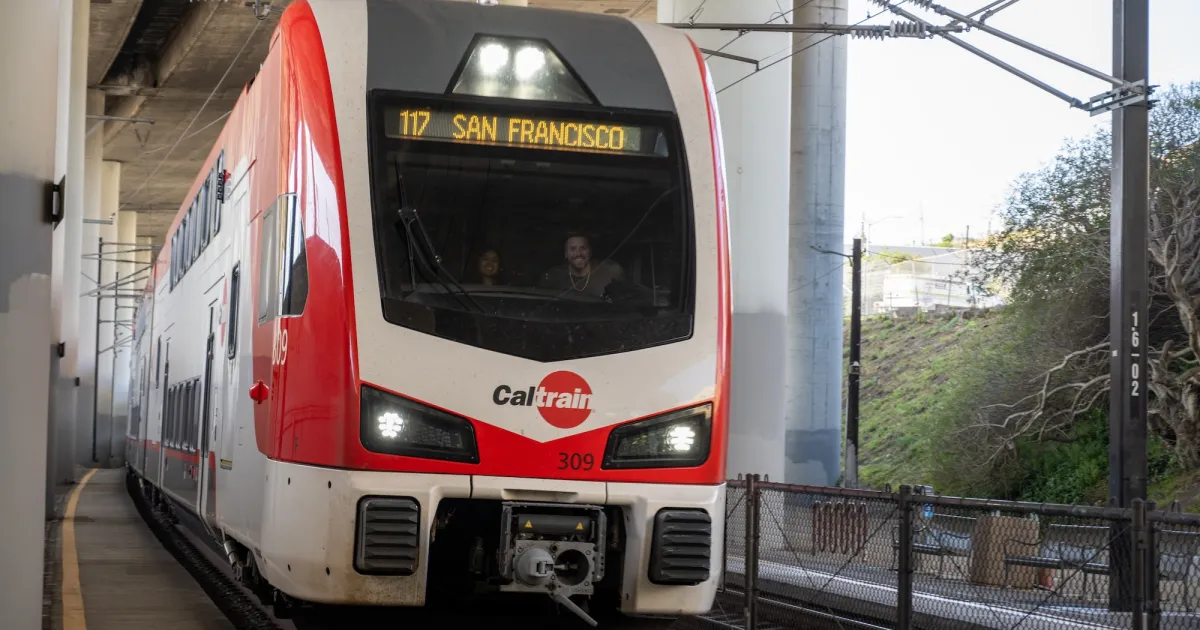
旧金山湾区的许多公共交通项目正面临资金危机。服务于该地区人口最稠密五个县的湾区捷运系统(BART)正在考虑削减70%的运营服务,并关闭多达15个车站,占其全部50个车站的约30%。该地区主要的本地通勤铁路系统——加州列车(Caltrain)——也可能终止周末服务,并关闭多达三分之一的车站。旧金山的Muni系统和阿拉米达县及康特拉科斯塔县的AC Transit这两个主要本地交通系统,也可能被迫关闭部分线路。
The San Francisco Bay Area is facing a funding crisis for many of its public transit programs. Bay Area Rapid Transit (BART), which serves riders across five of the area’s most populous counties, is considering cutting 70 percent of its service and closing up to 15 of 50 stations, some 30 percent. Caltrain, the area’s leading local commuter rail system, could discontinue weekend service and shutter up to a third of its stations. Two major local transit systems, San Francisco’s Muni and AC Transit in Alameda and Contra Costa counties, could also shut down lines.
辅助交通服务同样会受到冲击,其影响甚至可能超出交通削减必然带来的等待时间延长和可用座位减少等问题。
Paratransit would also be impacted, even beyond the potentially longer wait times and fewer slots that transit cuts will inevitably cause.
“关于辅助交通,人们最不了解的一点是,它与我们的固定路线服务紧密相连,”东湾辅助交通无障碍委员会成员米歇尔·鲁西(Michelle Rousey)表示。“因此,如果削减固定路线线路,也必然意味着要削减辅助交通服务。”今年11月,湾区的阿拉米达县、康特拉科斯塔县、圣马特奥县和圣克拉拉县的选民将投票决定是否通过一项销售税提案:在未来十年内,每美元商品征收最多一美分的税款,以继续资助公共交通及改善项目。
“The biggest thing about paratransit [that] people don’t realize is it’s tied to our fixed route,” said Michelle Rousey, a member of the East Bay Paratransit Access Committee. “So if you cut fixed-route [lines], you’re inevitably cutting paratransit users too.”In November, voters in the Bay Area counties of Alameda, Contra Costa, San Mateo and Santa Clara will vote on whether or not to pass a sales tax of up to one cent on the dollar for over a decade to continue to fund transit and improvement projects.
该提案的支持者估计,此举每年将带来近10亿美元的收入。尽管反对者提起诉讼,声称该投票提案存在偏见和误导性——但法官驳回了这一主张,认为其“缺乏说服力”——目前该提案尚未遭遇大规模的组织性反对。
Proponents of the measure estimate it’ll bring in just under $1 billion annually. Despite a court case by opponents arguing that the ballot measure was biased and misleading—which a judge ruled against, finding it “unpersuasive”—the ballot measure has received relatively little organized pushback.
实际上,旧金山地区的选民正面临一项公投:在一个高度依赖汽车、同时也是美国最富裕地区之一的地方,公众是否愿意接受更多税收来资助公共福利。
In effect, San Francisco–area voters are faced with a referendum on whether the general public in a highly car-dependent area—and one of the richest parts of the country—will consider further taxes to fund a public good.
该地区公共交通的资金危机因新冠疫情初期乘客数量骤减而进一步恶化,且目前乘客量仍不足以支撑BART及其他交通服务的运营。一家名为“硅谷联合企业”(Joint Venture Silicon Valley)的非营利组织于10月初发布的一项民意调查显示,在五个湾区县参与投票的选民中,有48%的人支持这项税收提案,因此最终结果仍悬而未决。
The area’s transit funding crisis was exacerbated by ridership that plunged at the beginning of the Covid pandemic and remains too low to fill the coffers of BART and other services. A poll published in early October by Joint Venture Silicon Valley, a nonprofit that has provided regional data for over 30 years, found that 48 percent of voters surveyed across the five Bay Area counties voting on the tax supported it, leaving the outcome an open question.
“过去几年,联邦政府的资助帮助这些机构维持了运转,当时显然还有人希望乘客数量能够恢复,”支持该投票提案的竞选活动发言人杰夫·克雷坦(Jeff Cretan)表示。但湾区的公共交通仍处于危机之中,除了11月的投票提案外,别无其他可行方案。
“For a few years there was federal funding that helped keep the agencies going, as obviously there was hope that ridership would recover,” said Jeff Cretan, a spokesperson for the campaign in support of the ballot measure. But Bay Area public transit is still in crisis, leaving no adequate options beyond the November ballot measure.
在州一级,尽管加利福尼亚州幅员辽阔且富裕,但其公共交通的资助水平却不如一些其他大州。
At the state level, California—despite its size and wealth—does not fund its transit as well as some large states.
“宾夕法尼亚州和纽约州在公共交通系统预算中所占的比例,比BART这类机构要高得多,”克雷坦告诉我。此外,旧金山还有一项独立的投票提案,旨在通过地块税和房产税继续资助市一级的公共交通,预计每年可带来约1.8亿美元的收入。
“Pennsylvania, New York, they deliver more of the proportion of the transit systems’ budgets than places like BART do,” Cretan told me. San Francisco also has a separate ballot measure for a parcel and property tax to continue funding city-level public transit, which would generate around $180 million annually.
湾区的公共交通体系本身已存在诸多不足,尤其是在残障人士无障碍出行方面。在我采访的六名以上依赖公共交通的湾区残障及老年居民——这些群体对公共交通的依赖程度尤其高——都强调,充足的公共交通资金对于保障他们的自主生活至关重要。
Bay Area transit already has gaps and shortcomings, especially around accessibility for disabled people. In interviews, more than half a dozen transit-dependent disabled and aging Bay Area residents I spoke to—groups that are disproportionately reliant on public transit—highlighted the importance of adequately funded transit for their autonomy.
“湾区的公共交通网络极不均衡,”圣何塞州立大学米内塔交通研究所教育总监阿莎·韦因斯坦·阿格拉瓦尔告诉我。“有些社区,尤其是部分老城的市中心,拥有相当完善的公交和铁路服务网络。但湾区还有非常非常多的地方,要么几乎没有任何公共交通服务,要么班次稀少到基本没什么用。”对于居住在戴利市的自闭症艺术家、同时患有长新冠的杰姬·刘来说,像湾区这样的地区竟然让公共交通资金问题发展到危机程度,这感觉就像“一记耳光”。刘女士依靠公共交通前往旧金山看医生。
“The Bay Area has a very uneven transit network,” San Jose State University’s Mineta Transportation Institute education director Asha Weinstein Agrawal told me. “There are some communities, particularly the downtowns of some of the older cities, that have quite a rich network of bus and rail service. But there are many, many parts of the Bay Area where there’s [already] virtually no transit service, or it is so infrequent as to be of relatively little use.”For Jackie Liu, an autistic artist with Long Covid who lives in Daly City, the fact that a region like the Bay Area has allowed transit funding to reach a crisis point feels like a “slap in the face.”Liu depends on public transit to get to her doctor’s appointments in San Francisco.
“考虑到我们正处在这个国家最富裕经济区域的核心地带,”刘女士说——该地区拥有全美最密集的首富群体——“我只是觉得,这鲜明地暴露出我们社会中存在的严重不平等。”
“Considering the fact that we are in the heart of one of the most economically prosperous regions of the economy for the upper echelons,” Liu said—the area boasts the country’s highest concentration of billionaires—“I just feel like it’s a stark demonstration of the inequality that exists in our society.”