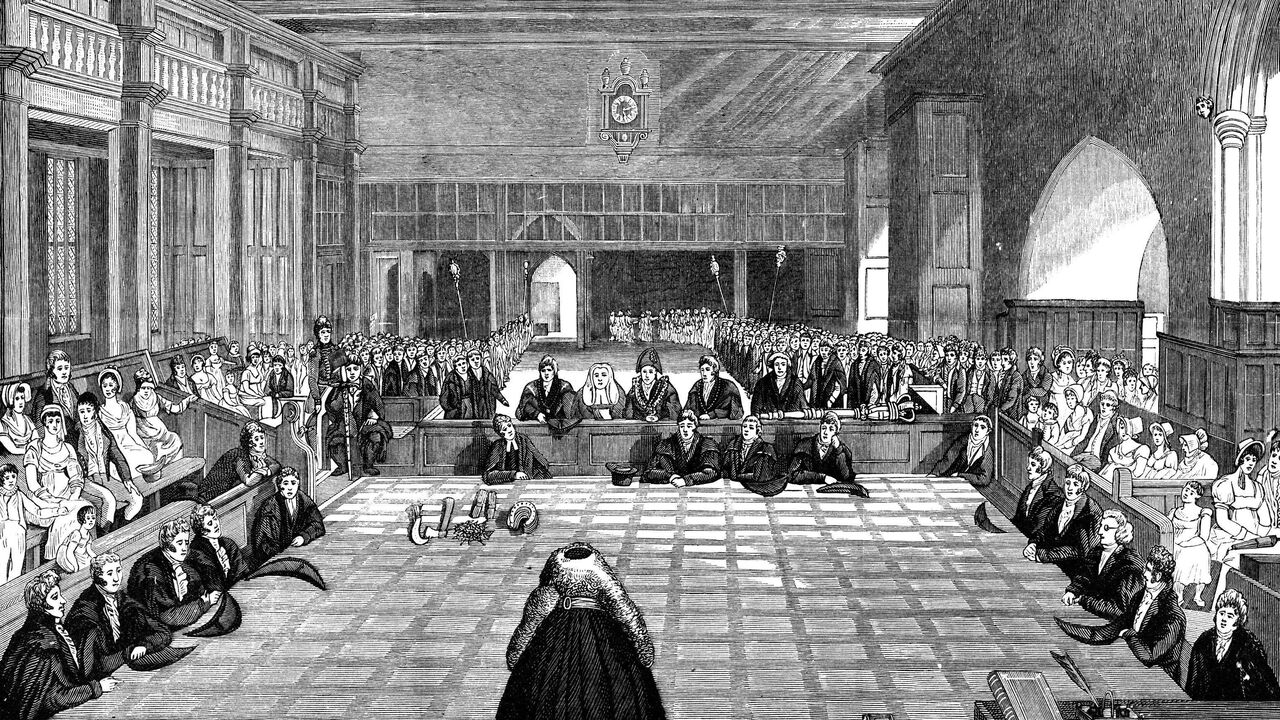
在皇家法院一处陈旧的房间里,一名戴着三角帽的男子正在收取一笔款项。他是国王的“事务记录官”,这一职位过去负责记录王室应收的款项。这就是一年一度的“免租仪式”,今年于10月14日举行。最早有记载的仪式可追溯至1211年。每年,伦敦城都会向君主缴纳一笔费用,以换取两块土地的使用权:六只巨大的马蹄铁、61枚钉子以及两把刀,一把钝刀,一把利刀。
In a fusty room at the Royal Courts of Justice, a man in a tricorn hat receives a payment. He is the king’s remembrancer, an office once charged with keeping track of money owed to the crown. This is the annual Ceremony of Quit Rents, held this year on October 14th. The earliest recorded one was in 1211. Each year the City of London pays a levy to the monarch for two plots of land: six giant horseshoes, 61 nails and two knives, one blunt and one sharp.
随后,事务记录官会检查这些物品。一名官员试了试那把钝刀——传统上这是一把镰刀——它应当能够弯曲榛木枝,而不会将其切断。接着,他挥动利刀,需要用它将木枝劈开。待马蹄铁和钉子清点完毕后,付款便算完成,伦敦城也能继续享有这两块土地12个月的使用权。
The remembrancer then inspects the wares. An official tries the blunt knife—traditionally a billhook—which should be able to bend a hazel stick without cutting it. Next he wields the sharp one, which needs to chop through the wood. Once the horseshoes and nails have been counted, the payment is accepted and the City can enjoy its tenancies for another 12 months.
至少从理论上是这样。如今已无人确切知道这些租地具体位于何处,不过有人根据线索做出了合理推测。其中一块地位于什罗普郡的某个地方,此前一名叫尼古拉斯的男子曾租下那里的荒地,之后又将租约转交他人。另一块地则在伦敦斯特兰德街附近,距离《经济学人》杂志的办公室仅一步之遥。这块地来自一位名叫沃尔特的铁匠,他为此支付了使用铁匠铺的费用(因此才有了马蹄铁)。
In theory, at least. These days no one knows exactly where the rented land is, though some have made educated guesses. The first parcel is somewhere in Shropshire, where a man named Nicholas rented moorland before passing his tenancy on. The other is near London’s Strand, a stone’s throw from The Economist’s office. It came from a blacksmith called Walter, who paid for access to a forge (hence the horseshoes).
尽管具体位置尚不确定,但这并未阻止王室主张其应得的权益。在当今的金融城,企业们会雇用大批律师来起草协议,然后再设法从中脱身。但对国王的“事务记录官”而言,合同是神圣不可侵犯的。
Uncertainty over the postcodes has not stopped the crown claiming its due. In today’s Square Mile firms hire armies of lawyers to draft agreements and then wriggle out of them. But for the king’s remembrancer contracts are sacred.
这种仪式正是英国闻名于世的典型事物之一。在这个遵循普通法的国家,先例层层累积,维持表面形式显得至关重要。正因如此,伦敦塔每晚9点53分都会准时上锁,已有700年历史;而国王举办年度天鹅清点仪式的时间,甚至还要更久。
The ceremony is the sort of thing Britain is famous for. In this common-law country, precedent piles on precedent and keeping up appearances is paramount. Hence the Tower of London has been locked at 9.53pm every night for 700 years, and the king has held an annual swan-counting event for even longer.
其他“退出地租”也屡见不鲜。几个世纪以来,伦敦市每年都要向王室支付11英镑(15美元),作为“南华克镇”的地租。在东安格利亚、莱斯特和伦敦的部分地区,人们通过献上玫瑰来履行古老的协议。惠灵顿公爵之所以能继续拥有他的乡村庄园,是因为他每年六月都要向国王递交一面法国国旗(这与滑铁卢战役有关)。
Other “quit rents” abound. For centuries the City has paid the crown £11 ($15) a year for the “town of Southwark”. In parts of East Anglia, Leicester and London people honour ancient deals by handing over roses. The Duke of Wellington hangs onto his country mansion only so long as he delivers a French flag to the king each June (something to do with Waterloo).
皇家法院在秋季举行的仪式是这类活动中最古老的。从公众席观看的人们承认,这场仪式纯属无稽之谈。但有人却说,这是一种“可爱的无稽之谈”。
The autumn ceremony at the Royal Courts of Justice is the most ancient such occasion. Those watching from the public gallery admit the event is nonsense. But, says one, it is “lovely nonsense”.