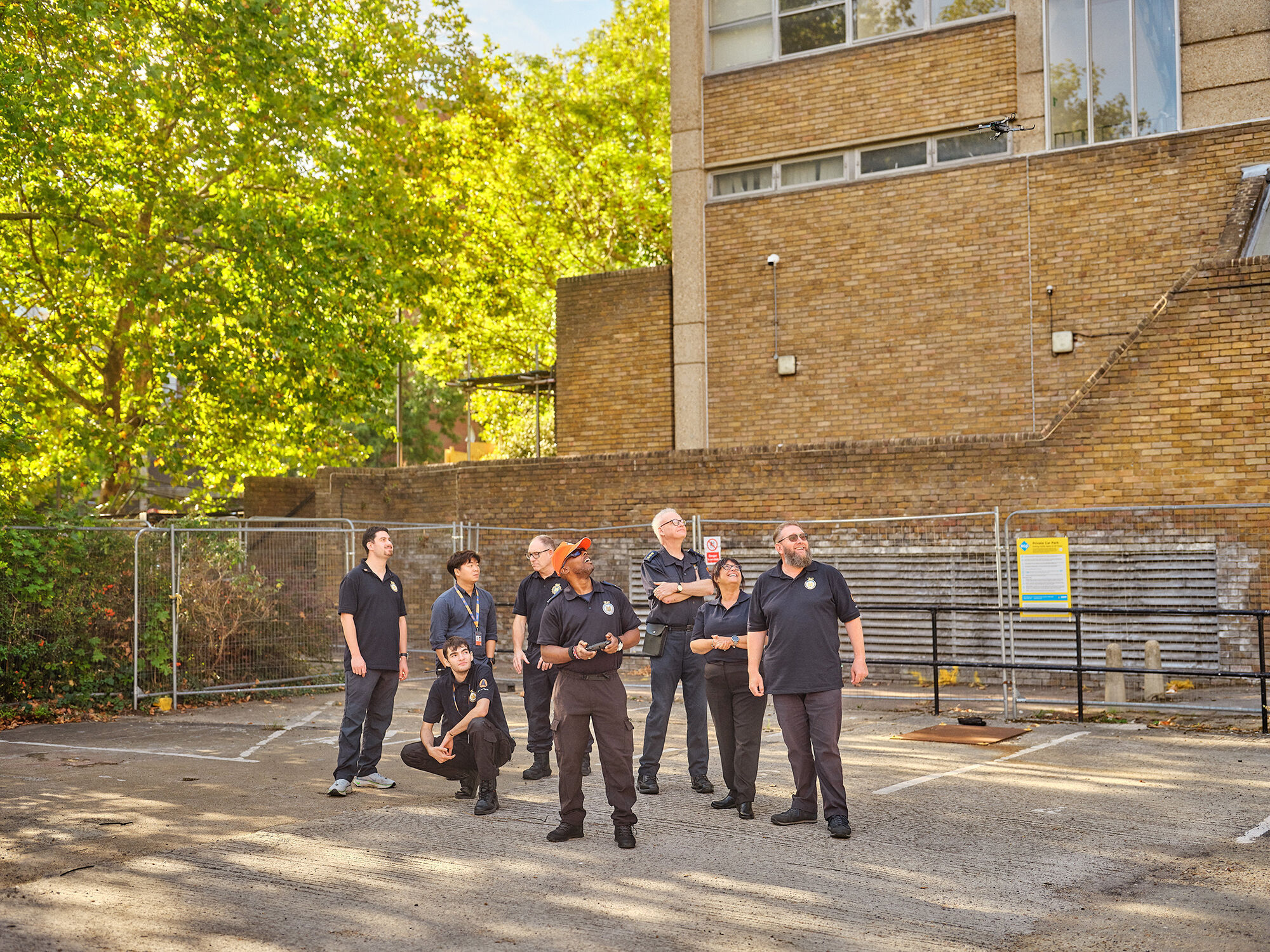
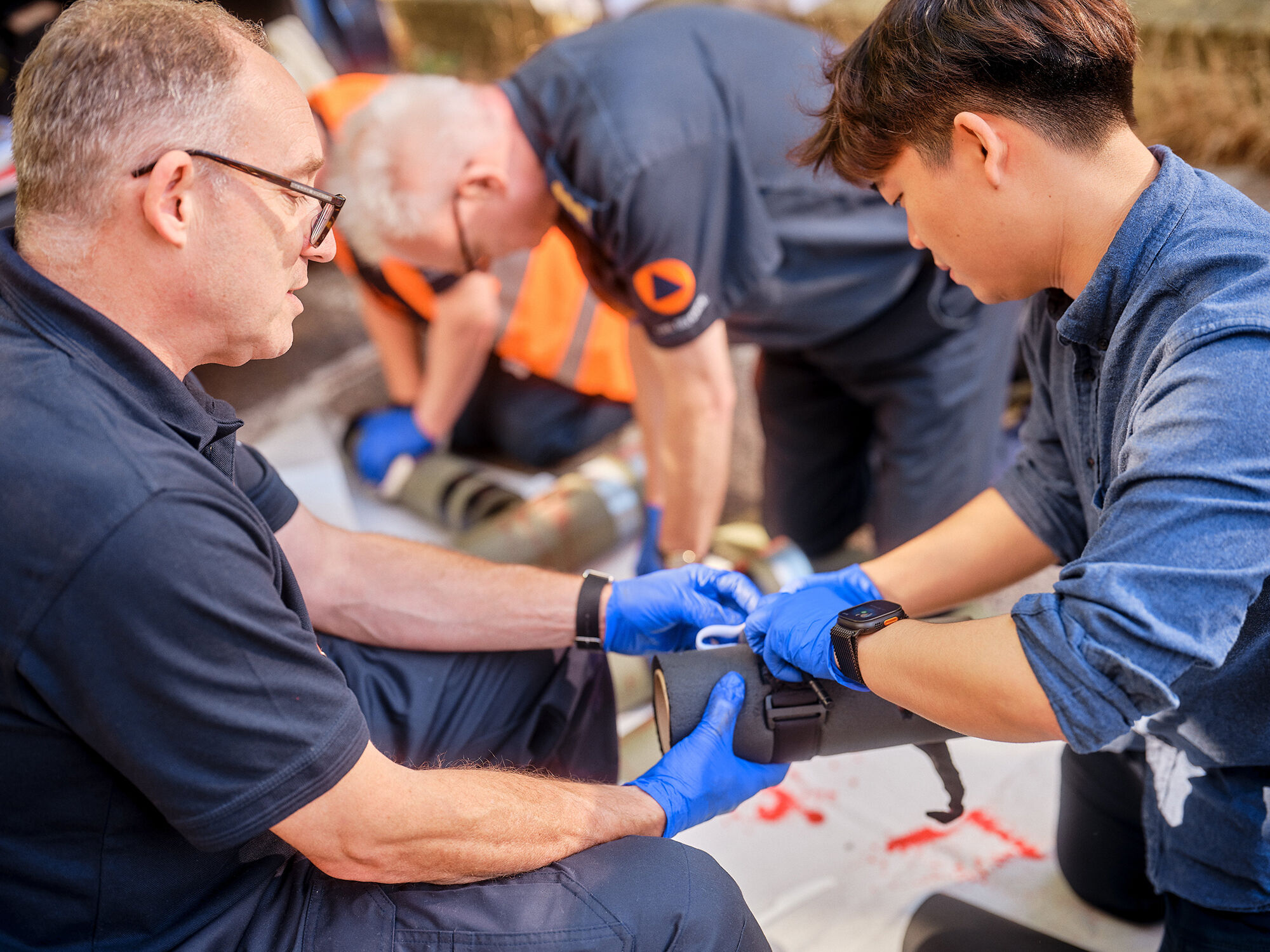
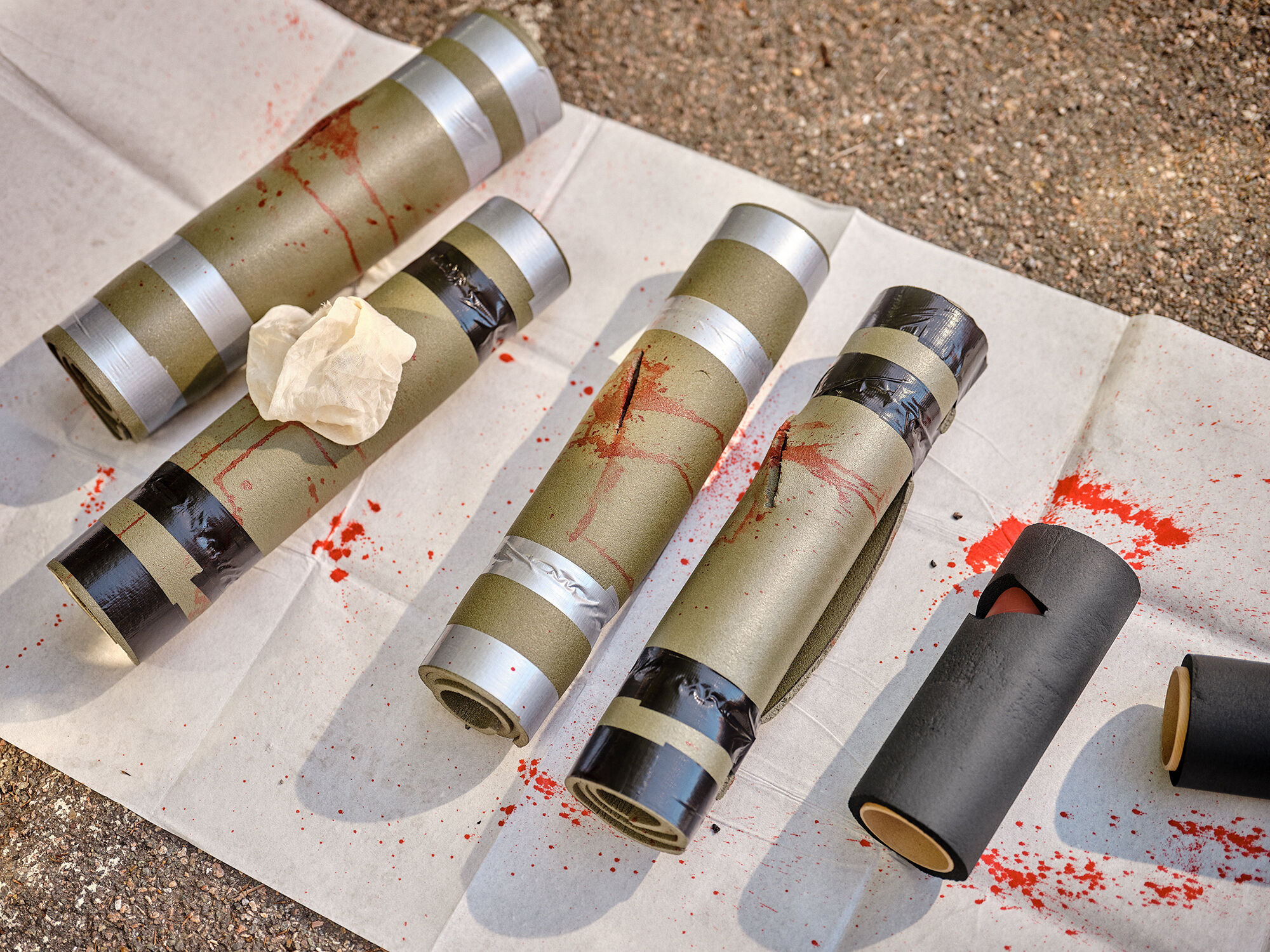
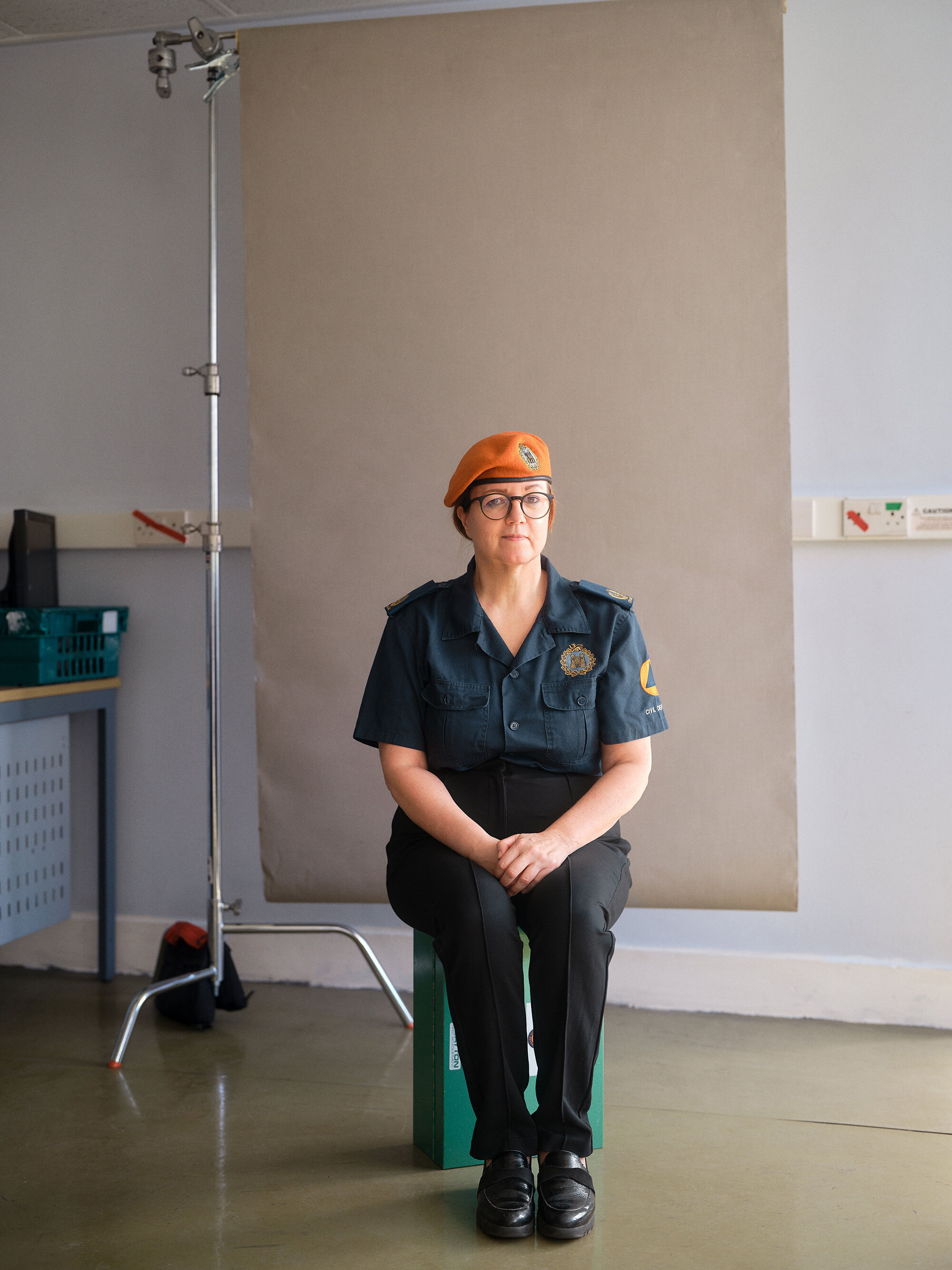
在伦敦北部一家废弃的医院里,科林·哈姆斯沃思正在训练他的志愿者团队。这些志愿者们戴着橙色的贝雷帽,学习如何为受伤的肢体使用止血带,以及如何操作无人机。哈姆斯沃思先生创立了“联合民援队”(Joint Civil Aid Corps),旨在在国家危机期间为英国的紧急救援服务提供支持。他认为,该团队的成员必须穿着统一的制服并严格遵守纪律——因为一旦遇到紧急情况,穿着牛仔裤、争吵不休的人根本无法胜任救援工作。
AT A DISUSED hospital in north London, Colin Harmsworth puts his army through their paces. Clad in orange berets, they learn how to strap tourniquets to bleeding limbs and operate drones. Mr Harmsworth founded the Joint Civil Aid Corps to help Britain’s emergency services during a national crisis. Its members, he says, must be uniformed and disciplined: when duty calls, it’s no good turning up in jeans and arguing.
从理论上讲,这个项目的规模非常庞大,是经过14年深思熟虑后才最终形成的。作为前骑兵士兵的哈姆斯沃思从“民防队”(Civil Defence Corps)中获得了灵感:在冷战时期,民防队的任务就是从被轰炸后的废墟中搜救英国民众。他设想这支志愿者队伍的规模将达到8万人以上,遍布全国,所需预算超过1.8亿英镑(约合2.4亿美元)。
On paper the vision is sprawling, the product of 14 years of deliberations. Mr Harmsworth, a former cavalry soldier, took inspiration from the Civil Defence Corps, which in the cold war was tasked with digging Britons out of whatever remained of bombed cities. He imagines a force of more than 80,000 volunteers, spanning the country, and a budget north of £180m ($240m).
这支队伍将包括医疗人员、后勤人员、气象学家以及一支乐队。然而目前,志愿者的人数还只有几百人,他们必须自己购买制服。作为这支队伍的“指挥官”,哈姆斯沃思正在寻找一位慈善家来帮助他实现这个梦想。
There would be roles for medics, quartermasters, meteorologists and a drum corps. For now, however, volunteers number in the low hundreds and must buy their own uniforms. Mr Harmsworth, the “commandant”, is on the hunt for a philanthropist to make his dream reality.
这些戴着贝雷帽的志愿者们,其实象征着英国社会的缩影。曾经被视为异想天开的计划,如今已经成为了政府关注的重点——如何动员整个社会共同应对危机。与哈姆斯沃思一样,政府官员们虽然擅长制定冗长的政策文件,但却缺乏资金支持。至于在危机面前,英国政府是否比“联合民援队”更具应对能力,目前仍是个未解之谜。
His beret-wearers, meanwhile, are the British state in microcosm. Once dismissed as an eccentric pursuit, the task of galvanising Britons for “whole-of-society” responses to crises now preoccupies Whitehall. Like Mr Harmsworth, officials are adept at producing long policy papers but short of cash. Whether the state is in better shape for a crisis than the Joint Civil Aid Corps remains unclear.
政府部长们正在计划采取一系列强硬措施来应对各种紧急情况。一项公共宣传活动将敦促英国民众储备食物、水、手电筒和无线电设备,以备恶劣天气等紧急状况之需。类似措施在其他欧洲国家早已实施,但一项政府调查显示,只有32%的英国民众的储备物资能够维持一天或更短的时间。明年,数百名官员和部长将参加名为“Albiston Shadow”的军事演习,以测试英国政府对敌对势力发起的混合式攻击(即同时使用常规和网络攻击)的应对能力。这些被称为“国防准备计划”的机密文件自2004年以来首次得到更新。
Government ministers are planning a flurry of “big-muscle moves” on the topic. A public-information campaign will soon encourage Britons to stockpile food, water, torches and radios in preparation for emergencies such as bad weather. Similar measures already abound in other European countries, but a government survey found that 32% of Britons have supplies for only a day or less. Next year hundreds of officials and ministers will take part in Exercise Albiston Shadow, a war game to test the state’s reaction to hybrid attacks by a hostile power. The home-defence “war books”, as classified plans are known, are being updated for the first time since 2004.
部长们还在起草《国防准备法案》,其中包含了在危机时刻动员武装部队预备役及相关产业的条款。同时,名为“Resilient Voice System”的紧急通信系统也在升级中。与政府关系密切的智库ThinkLabour提议成立一支类似北欧国家那样的志愿性“国家韧性部队”。
Ministers are also preparing the Defence Readiness Bill, with provisions for mobilising armed-forces reserves and industries in a crisis. An emergency communications channel, the Resilient Voice System, is being upgraded. ThinkLabour, a think-tank with close government ties, proposes a volunteer National Resilience Corps that resembles groups in the Nordic states (and Mr Harmsworth’s vision).
这些措施需要防范的主要威胁之一就是冲突。前首相基尔·斯塔默曾在春季警告称,到2030年,英国可能会与重新武装的俄罗斯发生战争。上周在柏林,基尔·斯塔默的继任者安迪·伯纳姆表示,敌对国家的破坏活动和网络攻击日益频繁。政府认为,格洛斯特郡的FAIRFORD空军基地所遭受的袭击疑似来自伊朗的策划。
One threat such measures must guard against is conflict. Sir Keir Starmer, the previous prime minister, warned in the spring that Britain might be at war with a rearmed Russia by 2030. Last week in Berlin Andy Burnham, Sir Keir’s successor, said sabotage and cyber-attacks by hostile states were growing more frequent. The government thinks Iran was behind what seemed to be an attempted attack on RAF Fairford, an airbase in Gloucestershire.
官员们还必须为自然灾害(如疫情、洪水和野火)制定应对方案。此外,英国薄弱的基础设施也可能在紧急情况下成为威胁。在2026年发布的《国家风险评估报告》中,官员们将某个地区因基础设施故障而失去水源的概率从原来的不到1%上调至5%至25%,并指出这种后果将是“灾难性的”。
Officials must also plan for natural disasters such as pandemics, floods and wildfires. And Britain’s shoddy infrastructure might give way, too. In the 2026 edition of the National Risk, officials updated the odds of a whole region losing its water supply from below 1% to 5-25%. The impact, they said, would be “catastrophic”.
长期以来,人们对灾难的恐惧与担忧一直存在;英国政府过去常常担心公民会忽视那些关于如何应对灾难的建议。据非营利组织“国家应急委员会”(National Preparedness Commission)的托比·哈里斯(Toby Harris)称,人们对冷战时期推出的“保护与生存”(Protect and Survive)宣传活动的嘲笑至今仍被人们铭记。
The catastrophising was long overdue. Britain’s state used to fear citizens would scorn advice on how to meet disaster. The ridiculing of the cold-war-era “Protect and Survive” information campaign is still remembered in Whitehall, says Toby Harris of the National Preparedness Commission, a non-profit venture.
如今,至少在内阁办公室(Cabinet Office)内部,人们的观念已经发生了巨大变化,另一家智库“大西洋理事会”(Atlantic Council)的伊丽莎白·布劳(Elizabeth Braw)指出这一点。在新冠疫情期间,英国民众出人意料地严格遵守了封锁措施;有50万人在24小时内报名成为志愿者。一项调查显示,84%的受访者希望政府能告诉他们如何应对各种危机。
Now there has been a “sea change in mentality, at least in the Cabinet Office”, says Elizabeth Braw of the Atlantic Council, another think-tank. During the covid-19 pandemic Britons followed lockdown rules surprisingly strictly; 500,000 signed up to volunteer within 24 hours. A survey found that 84% wanted the state to tell them how to prepare for crises.
那么,英国政府的应对计划现在是否合理了呢?问题在于:英国政府经常将武装部队用于处理民用事务(如奥运会的安保工作、野火扑救以及公共部门的罢工事件)。然而,另一家智库RUSI的埃德·阿诺德(Ed Arnold)指出,在发生冲突时,所有可用的军队都可能被投入到战斗中。因此,尽管英国政府在应对单一危机方面表现尚可,但在同时应对多起危机时却显得力不从心。
Are its plans now sound? One problem is that Britain often uses its armed forces for civilian problems such as security at the Olympic games, wildfires and public-sector strikes. In a conflict, though, all available troops might be engaged in fighting, says Ed Arnold of RUSI, yet another think-tank. And so while the state can respond well to one crisis, it is bad at planning for several occurring at once.
此外,如果公众根本不了解政府的应急计划内容,那么所谓的“全社会共同参与”的应急机制也就形同虚设。在这方面,英国政府一如既往地表现出对保密的极端倾向。
Moreover, a “whole-of-society” plan is not much help if society does not know what it is. And here, as in so much else, Britain’s state displays a pathological inclination to secrecy.
偶尔透露出的政府内部信息实在令人不安。以环境、食品与农村事务部(Department for Environment, Food and Rural Affairs, DEFRA)为例:该部门为应对食品供应中断的情况制定了相关预案,但官员们担心供应链存在脆弱性——例如,电网可能遭受网络攻击。食品行业被列为13个“关键国家基础设施”领域之一。然而,DEFRA对政府各部门之间在这些领域的协调工作缺乏信心,而且目前还没有涵盖整个食品行业的相关企业和设施的数据库。
Occasional glimpses behind the curtain are not reassuring. Consider preparations at the Department for Environment, Food and Rural Affairs (DEFRA) for interruptions to food supplies. Officials fear supply chains are vulnerable—to cyber-attacks on the power grid, for instance. Food is designated one of 13 “critical national infrastructure” sectors. But Defra has “very little confidence” that cross-government governance of such sectors is joined up, and a database of relevant businesses and sites is yet to cover the food industry.
目前,各企业尚未见到环境、食品与农村事务部为应对食品危机所制定的应对方案。英国国家审计署冷静指出,这意味着“这些计划在实际执行中可能难以奏效”。相关行业企业也未被邀请参与政府组织的危机演练。负责地方危机管理的各地方韧性论坛同样未获知在超市货架空空如也时该采取何种措施。
Businesses, meanwhile, have not seen the “playbook” Defra has drawn up for a food crisis. The National Audit Office has observed, drily, that this means the “plans may not work in practice”. The industry has not been invited to Whitehall’s crisis exercises. Nor have Local Resilience Forums, the provincial bodies meant to manage crises, been told what to do when the supermarket shelves are bare.
资金短缺也是问题之一。英国政府官员夸耀称,明年英国将实现北约设定的新目标——将国内生产总值的1.5%用于提升“国家韧性”。然而实际支出额并不会超出原先的预算规划。环境、食品与农村事务部的官员认为,制定一套完整的紧急食品供应预案成本过高,因此只选择了一个“最低限度可行的方案”。资金问题同样令哈姆斯沃思深感困扰。
Money is part of the problem. Ministers boast that Britain will next year hit a new NATO target of spending 1.5% of GDP on “resilience”. Yet it will not spend a penny more than originally planned. Defra officials deemed the cost of a full emergency food plan too steep, opting for a “minimum viable product”. Money frustrates Mr Harmsworth, too.
“内心深处,我深知自己有能力把事情办好,”他说,“但前提是必须获得充足的资金支持。” ■ 欲获取关于英国重大事件的深度专业分析,欢迎订阅我们的每周独家通讯《Blighty》。
“In my heart of hearts, I know I can make it work,” he says. But only “if I have sufficient funding to do it.” ■ For more expert analysis of the biggest stories in Britain, sign up to Blighty, our weeklyr-only newsletter.